
Molecular sieve 3A, 4A & 13X for deep gas drying
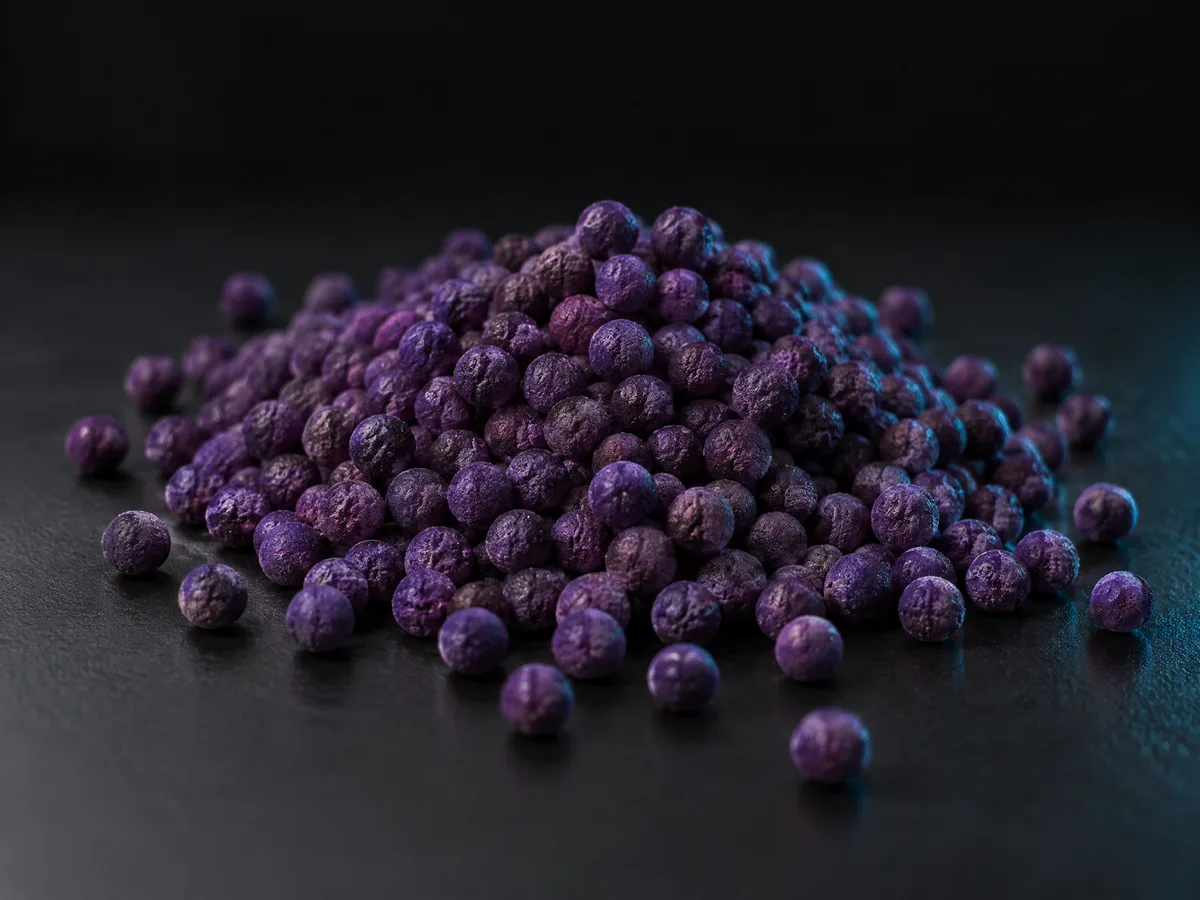
3A · 4A · 13X · synthetic zeolite beads · loose fill by the kg
When a gas has to be really dry – hydrogen for fuel cells or metal hydrides, sample gas for analysers – silica gel is not enough. Molecular sieves are zeolites with uniform pores of a defined size. They hold water so strongly that very low dew points are reached.
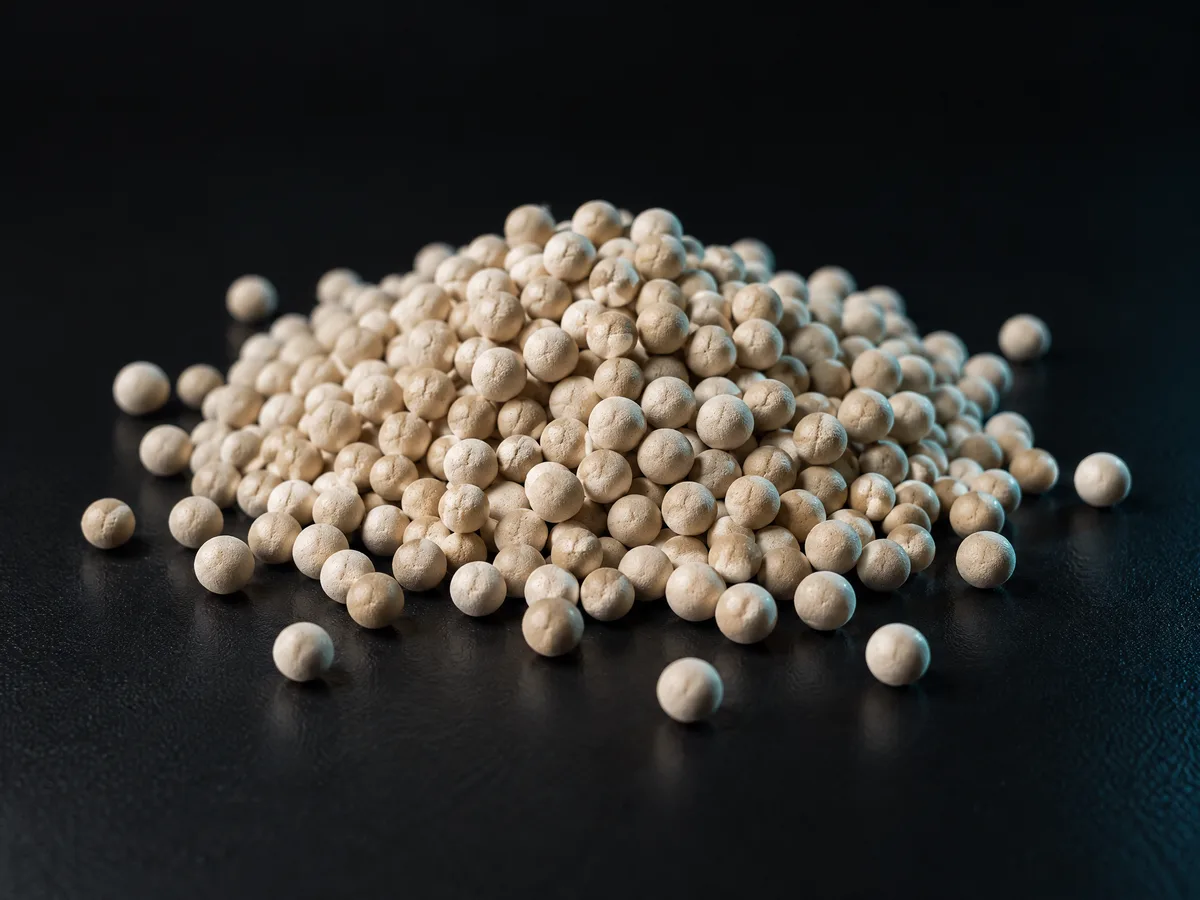
Removes
3A: water from H₂, olefins and polar gases with minimal co-adsorption. 4A: general gas drying. 13X: water and CO₂ together, mercaptans.
Info
Very low dew points. Regenerable by heating with dry purge gas.
Typical problems
- Moisture in hydrogen damages fuel cells, metal hydrides and catalysts
- Water condenses in sample lines and falsifies analyser readings
- CO₂ and water together must be removed before cryogenic or sensitive processes
Benefits
- Very low outlet dew points, even at low inlet moisture
- 3A dries hydrogen with minimal co-adsorption
- Regenerable with heat and dry purge gas – or simply replaced
- Bed volume can be calculated from flow, moisture and service interval
How it works
The pore size decides what is adsorbed: 3A (≈3 Å) lets only water in and excludes larger molecules – ideal for hydrogen and olefins. 4A (≈4 Å) is the general-purpose type. 13X (≈10 Å) also takes CO₂, H₂S and mercaptans. Water is bound very strongly, so the outlet stays dry until the mass-transfer zone reaches the end of the bed.
Example process train
Hydrogen drying (e.g. electrolyser outlet)
Example: H₂ from a PEM electrolyser, water-saturated, a few L/min to Nm³/h.
1 · Coalescing filter
RF-C element, grade HE (99.99 % @ 0.01 µm)
Removes liquid water and droplets so the sieve only sees vapour
2 · Optional pre-dryer
Silica gel layer (SG)
Takes the bulk moisture and extends the sieve life
3 · Molecular sieve adsorber
Loose-fill adsorber housing with 3A
Deep drying to a low dew point
4 · Particulate after-filter
RF-P element
Retains sieve dust before fuel cell, hydride or analyser
Instrument / natural gas drying
Example: sample gas or N₂ for analysers.
1 · Coalescing filter
RF-C element, grade HE
Liquids and aerosol out
2 · Molecular sieve
4A (water) or 13X (water + CO₂)
Drying, optionally CO₂ removal
3 · Particulate after-filter
RF-P element
Dust protection for the instrument
Limits & notes
- Liquid water destroys the capacity – always install a coalescing filter upstream
- Thermal regeneration needs roughly 175–315 °C (type-dependent) and dry purge gas
- Adsorption releases heat; capacity falls at higher temperature
- Service life is an estimate – size with the adsorber calculator and confirm with your operating data
Service life depends on load and operating data – figures on request are estimates.
Which medium fits your gas?
Send us gas, flow, pressure, temperature and the contaminant to remove – we propose housing, fill and pre-/after-filters.