Oxygen is not just another process gas
Every material that is merely “flammable” in air becomes violently combustible in pure oxygen. A trace of hydrocarbon grease on a valve seat, a particle of rust accelerated by flow, even a polymer seal under adiabatic compression — any of these can be an ignition source in an oxygen-enriched environment.
This is why oxygen filtration is fundamentally different from all other gas filtration. It is not just about particle removal — it is about eliminating ignition risks and ensuring every component in the gas path is compatible with the most aggressive oxidiser in common industrial use.
Why standard filters are not suitable for oxygen
A standard industrial gas filter may use materials that are perfectly acceptable in air, nitrogen, or natural gas — but become dangerous in oxygen service:
Incompatible materials
Nitrile seals (standard in most filters) can ignite under adiabatic compression in oxygen. Aluminium housings burn violently in high-pressure oxygen. Hydrocarbon lubricants on threads and seals are an immediate ignition risk. Standard filters must never be used in oxygen service without explicit material verification.
Material requirements for oxygen service
| Component | Acceptable Materials | Not Acceptable |
|---|---|---|
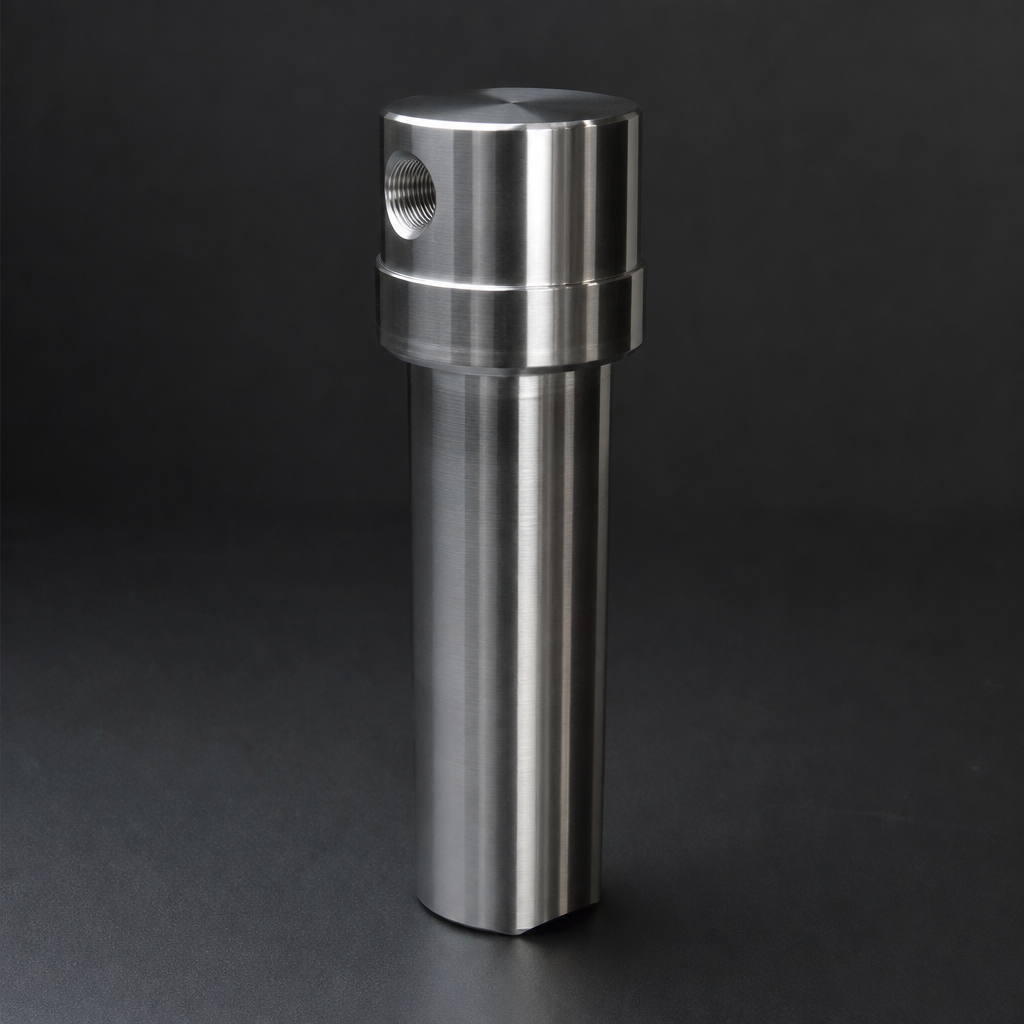
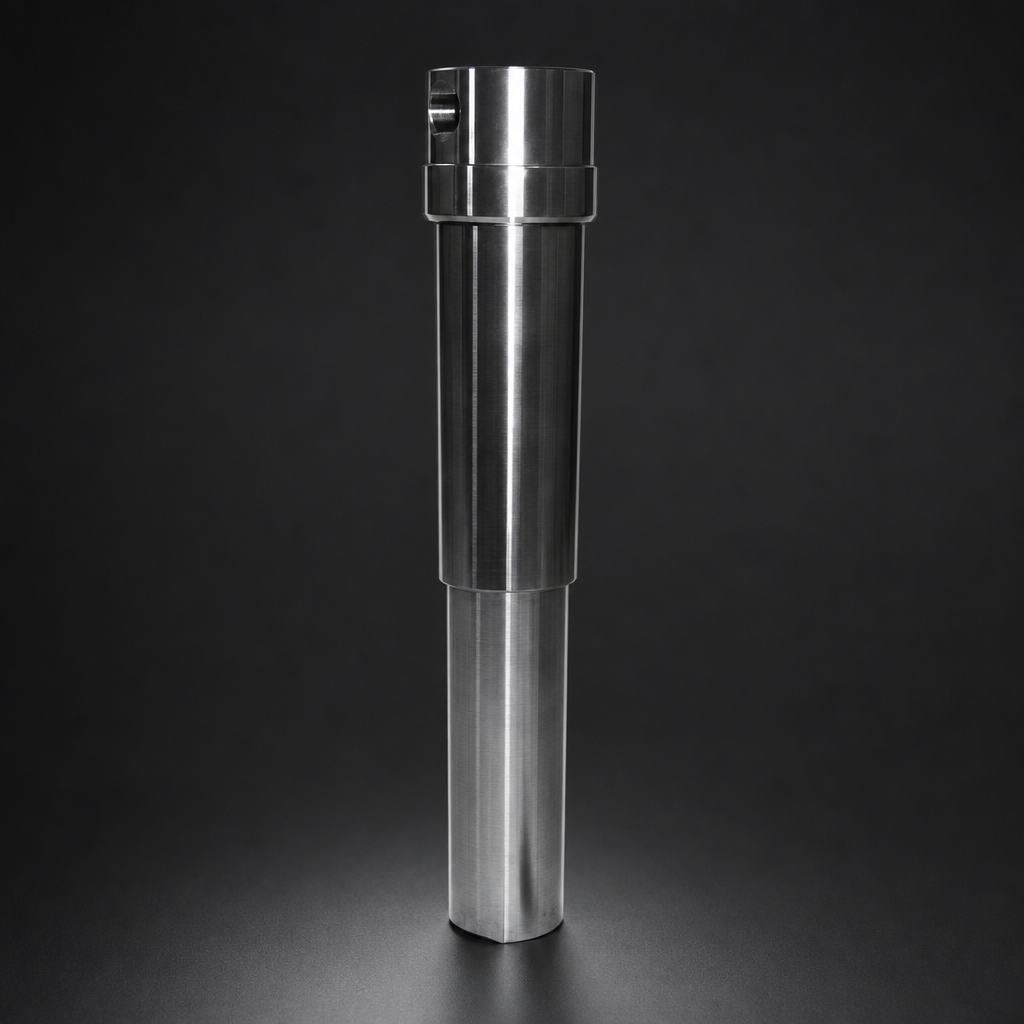
| Housing body | 316L stainless steel, Monel, brass (low pressure) | Aluminium (high pressure), carbon steel |
| Seals / O-rings | Viton (FKM), PTFE, Kalrez | Nitrile (NBR), EPDM, silicone |
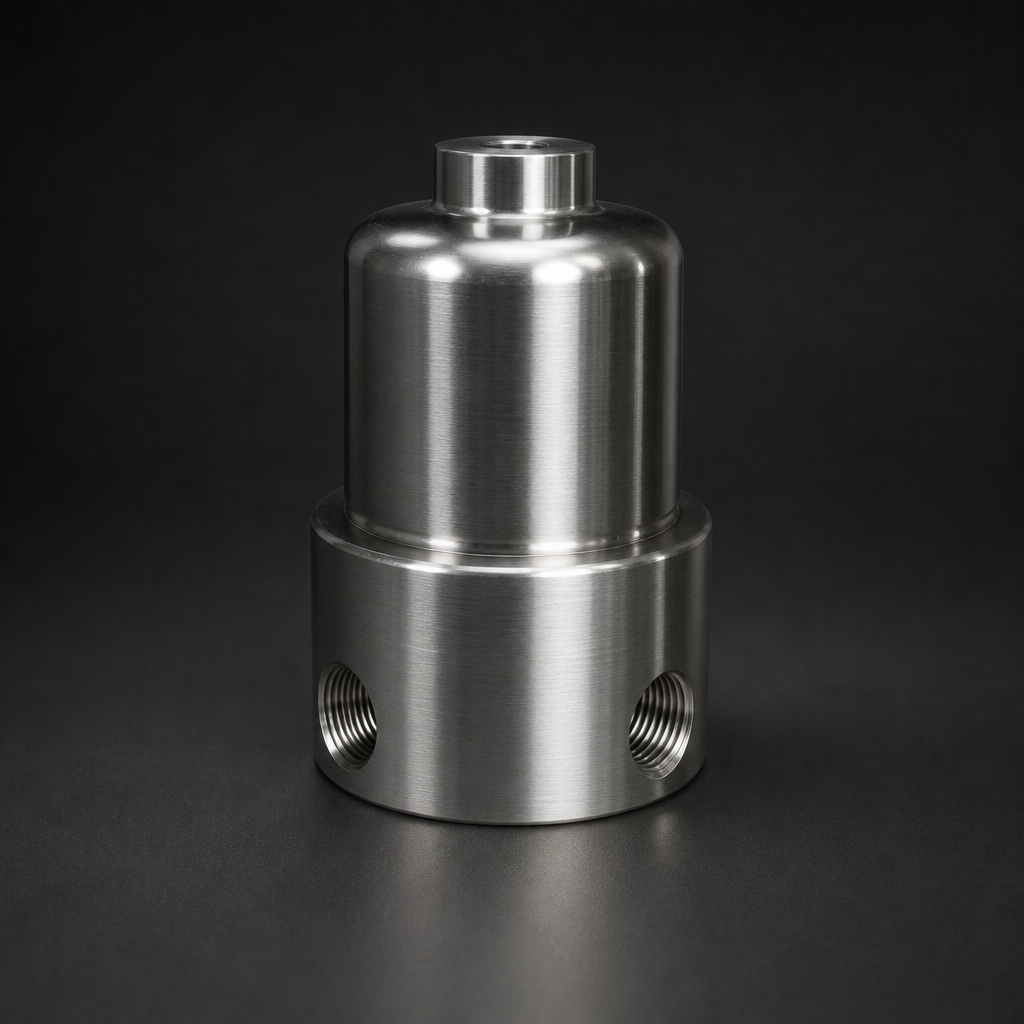
| Filter media | Borosilicate glass fibre (oil-free), sintered SS, PTFE | Cellulose, oil-wetted media |
| Internal components | 316L stainless steel | Brass springs, zinc-plated parts |
| Thread sealant | PTFE tape (oxygen-grade), Loctite 567 | Standard PTFE paste, pipe dope |
What oxygen cleaning means
“Oxygen-cleaned” is not a vague quality claim — it is a defined degreasing and inspection process that removes all traces of hydrocarbon contamination from internal surfaces:
Disassembly
Complete disassembly of the housing. All components cleaned individually — assembled cleaning is not sufficient.
Degreasing
Multi-stage solvent degreasing to remove manufacturing oils, machining fluids, and fingerprints. Hydrocarbon residue < 50 mg/m².
Inspection
UV light inspection and/or wipe test to verify cleanliness. Any hydrocarbon fluorescence requires re-cleaning.
Packaging
Clean components sealed in oxygen-compatible packaging (no plastic wrap that may leave residue). Tagged "Oxygen Cleaned" with date.
Standards and guidelines
Oxygen cleaning and material compatibility are governed by ASTM G93 (cleaning methods), EIGA Doc 33 (cleaning for oxygen service), and BAM (Bundesanstalt für Materialforschung) testing for material compatibility in oxygen. Specify these when ordering filters for O₂ service.
Filtration on the oxygen side of electrolysers
While most attention in electrolysis focuses on the hydrogen product, the oxygen byproduct also requires filtration:
- Moisture removal: Oxygen from electrolysis is saturated with water vapour
- Electrolyte traces: In alkaline systems, KOH aerosol is present on the O₂ side as well
- Sensor protection: Oxygen purity sensors need clean, dry gas for accurate readings
If the oxygen is vented, basic filtration may be sufficient. If it is captured for medical, industrial, or water treatment use, the full oxygen-compatible filtration chain applies.
Practical guidelines
- Never install a standard filter in oxygen service — even temporarily
- Specify oxygen cleaning when ordering — it cannot be done reliably in the field
- Inspect replacement elements — ensure they are supplied oxygen-cleaned and sealed
- Control assembly conditions — no workshop grease, no bare-hand contact with wetted surfaces
- Pressurise slowly — rapid pressurisation causes adiabatic heating that can ignite contaminants
Key Takeaway
Oxygen filtration is a safety discipline, not just a cleanliness exercise. Every component must be material-compatible, oxygen-cleaned, and free of hydrocarbon contamination. 316L stainless steel housings with Viton or PTFE seals and borosilicate glass fibre elements are the standard for safe, reliable oxygen service.
Specify an oxygen-compatible filter
Contact our technical team for oxygen-cleaned housings and elements — or use the Engineering Tool to identify the right housing model for your O₂ application.