
Engineering Insights
Technical Blog
Practical filtration knowledge for engineers and process specialists. No marketing fluff — just the technical detail you need to make better decisions.
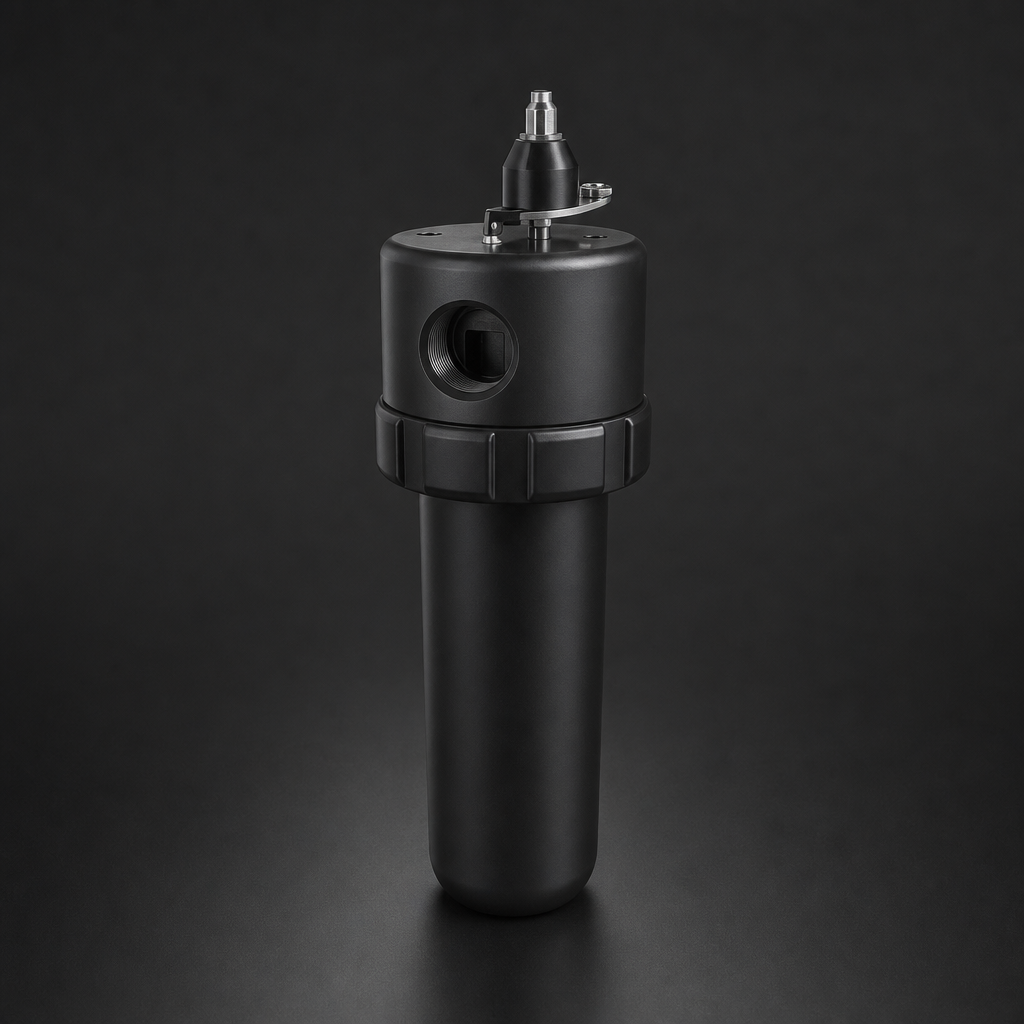
Domnick Hunter Filter Element Cross-Reference — Finding Compatible Replacements
When a Domnick Hunter compressed air filter element reaches end of life, finding a compatible replacement requires more than a dimensional match. This guide cross-references the most common E-series, A-series, EZ inline, and AC adsorber elements to their R+F FilterElements equivalents, with system-level guidance on housing compatibility.
Read article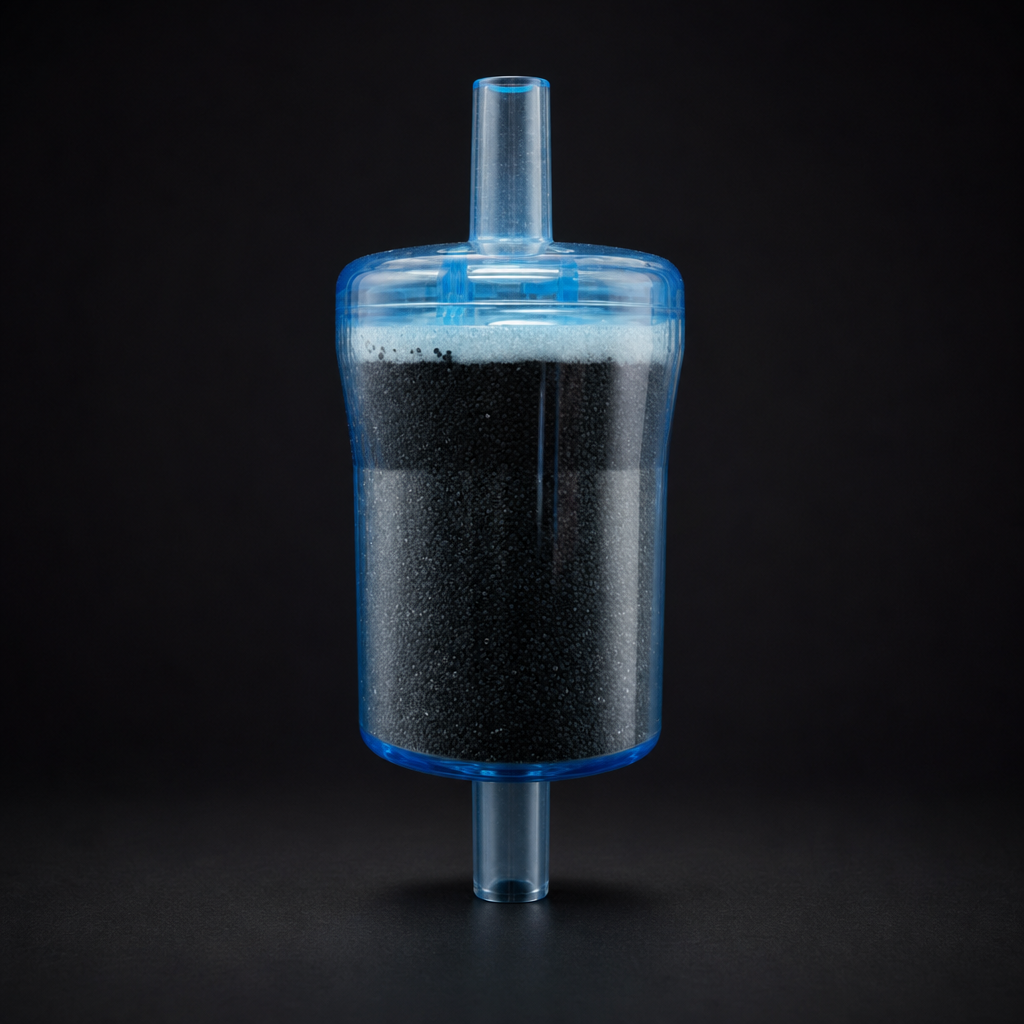
CO₂ Scrubbers and Adsorber Housings for Chemical Vapour Removal
Chemical vapours — VOCs, CO₂, and solvent traces — pass straight through conventional filters and silently degrade process gas quality. This guide explains how RF-AC and RF-DIA adsorber housings remove these contaminants, how to design a complete vapour-removal filtration train, and what to check for ISO 8573-1 Class 1 compliance.
Read articleCatchpots and Drain Vessels — Essential Accessories for Coalescing Filter Systems
Exposing a coalescing filter directly to bulk liquid slugs saturates the element and shortens its service life. A catchpot upstream removes free liquid before it reaches the filter media. This guide covers catchpot sizing, drain vessel configurations, and integration with R+F coalescing filter housings.
Read article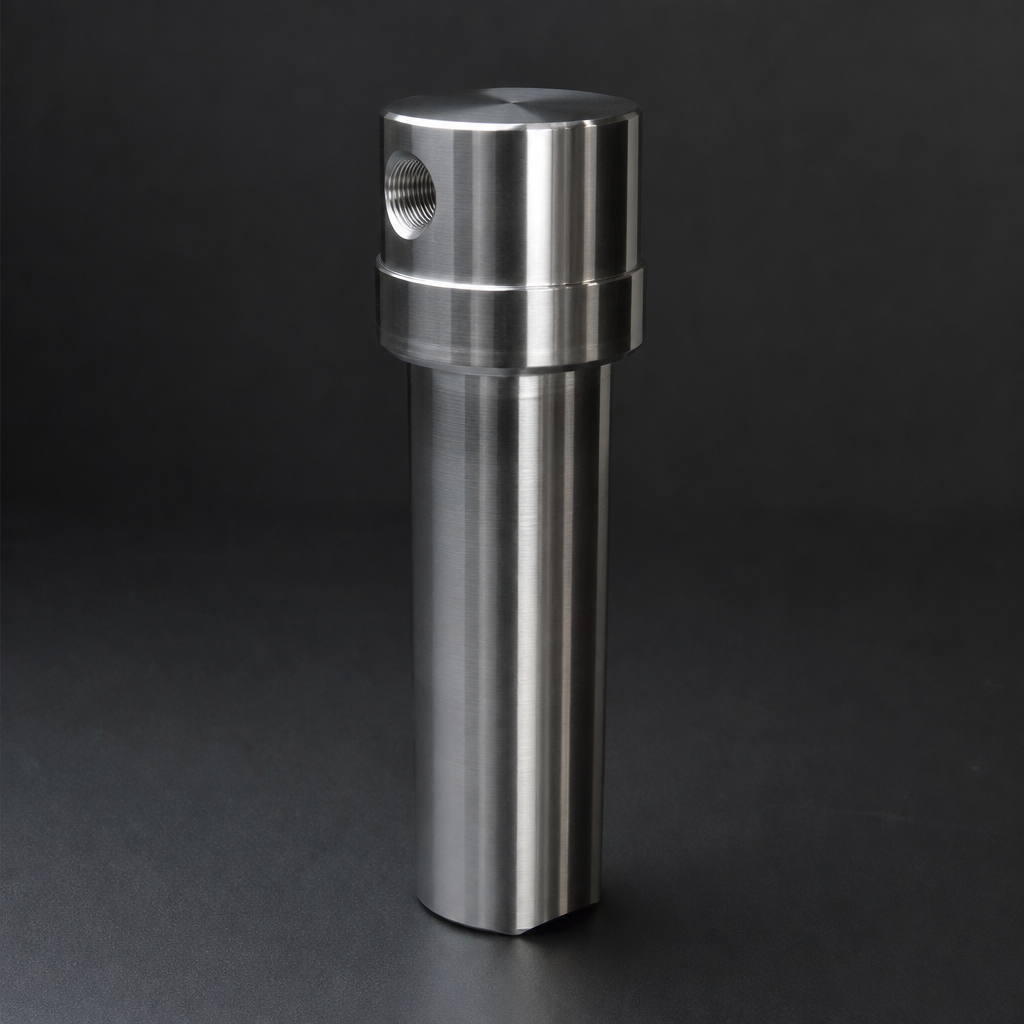
316L Stainless Steel Filter Housings — Material Traceability and Certification
When a process gas filter housing fails in service, the consequences extend far beyond downtime. This guide explains what material traceability and certification mean in practice for 316L stainless steel filter housings, which standards apply, and how R+F FilterElements housings are designed to meet these requirements from the outset.
Read articleWhy Your Chlorine Analyser Keeps Blocking — Food Industry Filtration Solutions
Chlorine analysers in produce-washing circuits are frequently fouled by fine particulate and entrained droplets that standard basket strainers cannot remove. A cyclone pre-separator paired with an RF-DIL inline filter extended sensor cleaning intervals from six hours to seven days in a real-world case study.
Read articlePTFE Membrane Housings for Compact Sample Conditioning Systems
PTFE membrane housings provide an absolute liquid barrier in compact sample conditioning systems, protecting downstream analysers from condensate and liquid carryover. This guide covers membrane grades, three-port configuration, screw-cap maintenance, and material selection for aggressive sample streams.
Read article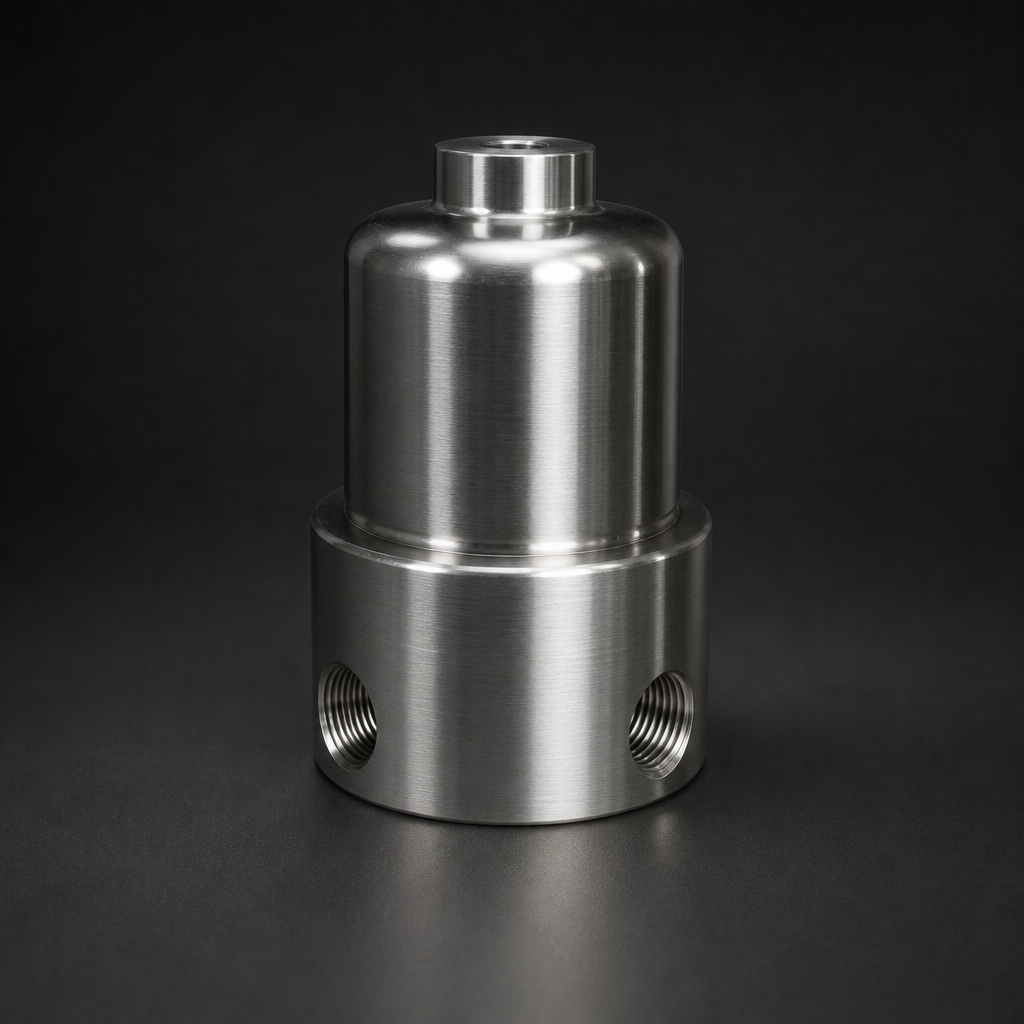
Sample System Filters — Flexibility in Gas and Liquid Analyser Protection
Protecting a process analyser from contamination demands careful selection of particulate, coalescing, and membrane filters. This guide covers fast-loop sample system design, element selection for analyser protection, and maintenance best practice for high-pressure gas sampling applications.
Read articleHeated Filter Housings for Diesel Exhaust and Emission Analyser Systems
Diesel exhaust and emission monitoring systems require filter housings that stay hot to prevent condensation and protect analyser accuracy. This guide covers heated housing types, element selection for high-temperature service, and installation best practice for CEMS and engine test cell applications.
Read articleFloat Valve Housings for Analyser Protection — Preventing Liquid Carry-Over
Liquid carry-over is one of the most damaging failure modes in process analyser systems. Float valve filter housings provide an automatic, mechanical last line of defence — stopping condensate and slug flow before it reaches your instrument. This guide explains how float valve technology works, when to specify stainless steel versus polymer housings, and how to integrate the RF-H-170 into a layered sample conditioning strategy.
Read articleHow to Select the Correct Filter Housing for Your Application
Choosing the wrong filter housing is one of the most costly mistakes in process gas system design. This guide covers the three critical decision points — material, configuration, and sizing — to help engineers specify the right housing first time.
Read articleHow to Remove Water from Diesel and Liquid Hydrocarbon Samples Using PTFE Membranes
Free and dissolved water in diesel and liquid hydrocarbon samples causes analyser failures, viscosity errors, and corrosion. PTFE hydrophobic membranes exploit surface-tension physics to form an absolute water barrier while allowing hydrocarbons to permeate freely. This guide covers the RF-GMS-170 membrane separator and how to integrate it into a sample conditioning train.
Read articleBiogas Filters for the Upgrading Process — From Waste to Biomethane
Raw biogas from anaerobic digestion contains water, H₂S, siloxanes, and oil aerosols that must be removed before upgrading to biomethane. This guide explains the three-stage filtration train — catchpot, RF-C coalescing filter, and RF-AC activated carbon adsorber — and how to select the right R+F FilterElements products for your upgrading technology.
Read article
Supercritical CO₂ Botanical Oil Extraction — Filtration Requirements
Supercritical CO₂ extraction operates at 74–300 bar, placing extraordinary demands on filtration systems. This guide covers pressure-rated 316L stainless steel housings, food-grade seal selection, and the correct filter elements for each stage of a botanical oil extraction loop.
Read articleCO₂ Scrubbers and Adsorber Housings for Chemical Vapour Removal
Chemical vapours and CO₂ in gas streams require adsorption — not just filtration. This guide explains how adsorber housings work, when to use the RF-AC and RF-DIA series, and why pre-filtration with a coalescing filter is essential to protect the adsorber media.
Read articleCatchpots and Drain Vessels — Essential Accessories for Coalescing Filter Systems
Coalescing filter elements are designed to capture fine aerosol droplets — not to handle slugs of bulk liquid. Catchpots and drain vessels are the essential accessories that protect your filter system from flooding, extend element service life, and ensure reliable liquid removal in compressed gas applications.
Read article316L Stainless Steel Filter Housings — Material Traceability and Certification
Specifying a 316L stainless steel filter housing for process gas duty means more than choosing a corrosion-resistant material. Full material traceability to EN 10204-3.1, weld-free construction for NACE MR-01-75 sour service compliance, and CE marking under PED 2014/68/EU are the engineering foundations that keep personnel safe and processes compliant.
Read articleWhen Standard Filters Fail: Protecting Chlorine Analysers in Produce Washing Systems
Chlorine analysers in produce washing systems are routinely blocked by particulate-laden wash water, causing false readings and plant shutdowns. R+F FilterElements worked with OEM customers to solve this using cyclone filter housings that extend service intervals from hours to weeks. This article explains the problem, the solution progression, and how to select the right configuration.
Read articlePTFE Membrane Housings for Compact Sample Conditioning Systems
Trace moisture in a gas sample can flood sensor cells, cloud optical paths, and corrupt chromatograph columns. PTFE membrane housings provide an absolute liquid barrier at the final stage of the conditioning train, protecting analysers without restricting flow or altering sample composition.
Read articleSample System Filters — Flexibility in Gas and Liquid Analyser Protection
Process analysers depend on clean, representative samples — but fast-loop sample systems face contamination from particulates, liquid aerosols, and moisture traces. Selecting the right combination of particulate, coalescing, and PTFE membrane filters is critical for analyser longevity and measurement accuracy.
Read articleHeated Filter Housings for Diesel Exhaust and Emission Analyser Systems
Condensation in sample lines is the leading cause of emission analyser failure in diesel exhaust monitoring. Heated filter housings maintain the sample above its dew point, preserving gas composition and protecting sensitive analyser components. This guide covers housing selection, element specification, and installation best practice.
Read articleFloat Valve Housings for Analyser Protection — Preventing Liquid Carry-Over
Liquid carry-over from a flooded coalescing filter housing is one of the most damaging failures in analytical instrumentation. Float valve housings detect rising liquid levels and shut off gas flow before liquid reaches the analyser, triggering an alarm and preventing costly damage.
Read articleHow to Select the Correct Filter Housing for Your Application
Selecting the wrong filter housing is one of the most common — and costly — mistakes in process system design. This guide covers the three decisions that matter: material, configuration, and sizing, with worked examples from R+F FilterElements' full RF-H series range.
Read articleRemoving Water from Diesel and Liquid Hydrocarbon Samples with PTFE Membranes
Free and emulsified water in diesel and liquid hydrocarbon sample streams can destroy analyser accuracy and damage conditioning equipment. PTFE hydrophobic membranes offer an absolute, chemical-free barrier that rejects water while allowing hydrocarbons to pass freely — protecting your on-line analysers and delivering representative samples every time.
Read articleBiogas Filters for the Upgrading Process — From Waste to Biomethane
Biogas upgrading converts anaerobic digestion output into grid-quality biomethane — but only if the right filtration train protects the upgrading equipment. Discover how a three-stage approach using catchpot separation, RF-C coalescing filtration, and RF-AC activated carbon adsorption removes every class of contaminant. R+F FilterElements supplies the complete filtration train for biogas upgrading skids.
Read articleSupercritical CO₂ Botanical Oil Extraction — Filtration Requirements
Supercritical CO₂ extraction demands filter housings rated to 100–200 bar in 316L stainless steel with PTFE or FKM seals — standard compressed-air filters are not suitable. This guide covers feed-gas conditioning, recirculation protection, and post-separator polishing duties, with R+F FilterElements housing and element recommendations for each stage.
Read article
OEM vs. Aftermarket Filter Elements: Quality, Lead Time and Cost
OEM filter elements carry a premium price and long lead times — but do they outperform quality aftermarket alternatives? This guide compares both options using the GE gas turbine FLT486 as a real-world case study, covering filtration efficiency, dimensional compatibility, cost savings, and warranty considerations.
Read articleGas Turbine Lube Oil Filtration: Why Coalescing Filters Matter for GE Frame 7 & 9
Lube oil mist filtration is a critical but often overlooked system in GE Frame 7 and Frame 9 gas turbines. This guide covers the FLT486 specification, how coalescence works, and why the RF-C-FLT486 element from R+F FilterElements is a proven direct replacement for OEM part 328A7187P003.
Read articleHydrogen Purification from Acid-Based Electrolysers — Why Standard Filters Fail and What Works
Acid-based electrolysers produce hydrogen contaminated with fine sulphuric acid aerosols that destroy standard compressed-air filters within hours. This guide explains why 316L stainless steel housings, K-type PVDF-bonded elements, and PTFE seals are essential — and how to configure a three-stage filtration system that works.
Read articleWelding Gas Filtration — Shielding Gas Quality and Its Impact on Weld Integrity
Contaminated shielding gas is a leading — and frequently overlooked — cause of porosity, spatter, and weld oxidation in MIG and TIG welding. Moisture, particulate, and oil vapour in the gas stream compromise the protective envelope around the weld pool. Point-of-use filtration at the welding station with RF-DIL and RF-H-150 series filters provides a direct, cost-effective solution.
Read articleLaser Cutting Gas Supply — Assist Gas Purity and Its Effect on Cut Quality
Contamination in laser cutting assist gas — moisture, oil aerosol, and particulate — causes dross, discolouration, and costly lens damage. This guide explains the purity requirements for N₂ and O₂ assist gas and the three-stage filtration train that protects your laser machine.
Read articleAdditive Manufacturing — Inert Gas Filtration for Metal 3D Printing
SLM and DMLS metal 3D printing processes generate metal condensate, spatter, and soot that contaminate the inert gas atmosphere. Discover how a three-stage filtration train using RF-H-150, RF-C coalescing elements, and RF-AC activated carbon achieves ISO 8573-1 Class 1 purity in argon and nitrogen recirculation systems.
Read articleBiomedical Research Gas Filtration: Protecting Cell Cultures and Incubators
Gas-borne contamination is a leading cause of cell culture failure in biomedical research. This guide explains how to protect CO₂ incubators, anaerobic chambers, and sterile culture vessels with the right point-of-use filtration strategy using RF-DIL disposable inline filters and RF-H-150 process gas housings.
Read articleFilter Housing Connections — BSP vs NPT, Flanged vs Threaded, and When Each Is Used
Choosing the wrong connection type for a filter housing causes leaks, costly rework, and safety risks. This guide explains BSP vs NPT threads, flanged connections for high-pressure process gas, and tube fittings for instrumentation — so you can specify the right housing first time.
Read articleATEX and Explosive Atmospheres — Filter Selection for Hazardous Areas
Installing a filter in a Zone 1 or Zone 2 hazardous area demands more than standard hardware — it requires all-metal housings, correct earthing, and ATEX-certified equipment. This guide covers the key material, design, and documentation requirements for gas filtration in explosive atmospheres.
Read article
Rietschle and Elmo Rietschle Vacuum Pump Filter Replacements
Rietschle and Elmo Rietschle vacuum pumps require specialist exhaust filter elements rated for high temperatures and oil-laden gas streams. This guide covers the most common pump families, how to identify the correct replacement element, and why R+F FilterElements RF-CS series delivers equivalent performance to OEM parts.
Read articleLeybold and Edwards Vacuum Pump Oil Mist Separator Replacements
Leybold and Edwards vacuum pump exhaust filters carry a significant OEM price premium. R+F FilterElements offers direct replacement RF-CS elements and universal RF-H-420 housings that match OEM performance at substantially lower cost, typically from stock.
Read articleMann+Hummel and Kaeser Filter Element Cross-Reference
Kaeser compressors widely use Mann+Hummel filter elements. This guide cross-references the most common coalescing, particulate, and activated carbon elements to R+F FilterElements alternatives that meet ISO 8573-1 purity classes. Learn how to verify dimensional and performance compatibility before fitting any replacement.
Read articleFesto and IMI Norgren Filter Replacements — Cross-Reference for Pneumatic Systems
Festo MS-LFM and Norgren Excelon filter elements can be replaced with dimensionally matched R+F equivalents without compromising system performance. This guide provides a practical cross-reference by size and filtration grade, helping maintenance teams source compatible elements quickly and cost-effectively.
Read articleSudden Pressure Drop Increase — Emergency Diagnosis When Production Is Affected
A sudden DP spike across your filter is not routine fouling — it signals an upstream upset, a maintenance error, or a structural element failure. This guide covers the three most common causes and the emergency response steps to restore production fast.
Read articleFilter Housing Leaking — Causes, Diagnosis, and When to Replace the O-Ring
A leaking filter housing can mean anything from a degraded bowl seal to a silent internal bypass that contaminates your downstream process. This guide covers every external and internal leak path, how to diagnose each one systematically, and when an O-ring swap is enough versus when the housing must be replaced.
Read articleCompressed Air System Auditing After a Quality Complaint — Where to Start
When a quality complaint is traced to compressed air, guessing is expensive. This guide walks through a systematic four-stage audit — compressor room, treatment train, distribution network, and point of use — to find the root cause fast.
Read articleIncorrect Filter Element Installed — How to Recognise and Fix a Mismatched Element
A filter element that physically fits a housing is not necessarily the correct one. Mismatched elements cause unexplained differential pressure increases, contamination breakthrough, and seating failures. This guide explains how to recognise the symptoms and verify compatibility before the next service.
Read articleRust Particles in Your Gas Supply — Identifying and Eliminating the Source
Reddish-brown staining on your filter element is a clear sign of iron oxide contamination from corroded pipework. This guide explains how to identify the source, assess severity, and choose between pipe replacement and additional filtration to protect your gas system.
Read articleFoaming Condensate Drains — What Causes It and How to Prevent Drainage Failure
Foaming condensate is one of the most common causes of auto drain failure in compressed air and process gas systems. When oil-water emulsions foam, timer drains discharge air instead of liquid and zero-loss drains chatter continuously — both leading to filter housing flooding and downstream contamination. This guide explains the root causes and practical solutions.
Read articleFilter Element Post-Mortem — What a Used Element Tells You About Your System
A used filter element carries a detailed record of everything that passed through your system. This guide shows how to read colour, weight gain, and structural condition to diagnose contamination sources, failure modes, and system upsets before they cause downtime.
Read articleDownstream Equipment Failures — How to Trace the Root Cause to Upstream Filtration
Valve stiction, analyser drift, and premature bearing wear are rarely random — they are contamination events. This guide provides a systematic five-step diagnostic approach to trace downstream equipment failures back to their true root cause: upstream filtration that has failed silently.
Read articleWater in Your Gas Line — Condensation, Dew Point, and the Filter's Role
Even with a dryer showing −40 °C pressure dew point, liquid water can still appear at the point of use. Understanding why dew point shifts with pressure — and how coalescing filters remove what dryers cannot — is essential for reliable gas system performance.
Read articleOil in Your Compressed Air — Where It Comes From and How to Remove It Systematically
Oil contamination in compressed air originates from three distinct sources: compressor lubricant carryover, atmospheric hydrocarbon vapour, and pipe residue. Each source requires a different detection and removal strategy. This guide explains how to identify the dominant source and apply the correct two-stage filtration solution.
Read articleLiquid Drainage in Coalescing Filters — Why Orientation and Gravity Matter
A coalescing filter can only perform to its rated efficiency if coalesced liquid drains away cleanly. Mounting orientation, gravity, and drain type are the three installation factors that determine whether your filter protects downstream equipment — or contaminates it.
Read articleParticle Size Distribution in Gas Streams — Why It Matters for Filter Selection
Matching filter grade to the actual particle size distribution of your gas stream is the single most effective way to avoid both under-filtration failures and costly over-filtration pressure drop. Different contamination sources — atmospheric dust, compressor oil aerosol, pipeline corrosion — produce distinct PSDs that demand different filter grades.
Read articleOil Vapour vs. Oil Aerosol — Why Your Coalescing Filter Cannot Remove Both
Coalescing filters are highly effective at removing oil aerosol droplets, but oil vapour — a gas-phase contaminant — passes straight through without being captured. Achieving ISO 8573-1 Class 1 total oil requires a two-stage approach: coalescing filtration followed by activated carbon adsorption. This guide explains the physics behind each contamination phase and how to select the right RF-C and RF-AC elements for your system.
Read articleTemperature Effects on Filter Performance — What Happens Above the Element Rating
Filter elements have temperature ratings for good reason — exceeding them, even briefly, causes permanent binder degradation, media migration, and seal failure. This guide explains the failure mechanisms and how to select the right element type for high-temperature duty.
Read articleFlow Rate and Filter Sizing — Why Actual Conditions Differ from Catalogue Values
Catalogue flow rates are stated at 1 bar(a) and 20 °C — but your actual operating conditions will almost certainly differ. Pressure, temperature, and gas type all shift real throughput, and getting the conversion wrong leads to undersized or oversized filters. This guide walks through the formulas and shows how to apply them when selecting R+F branded housings and elements.
Read articleDifferential Pressure Monitoring — The Single Most Important Filter Maintenance Metric
Differential pressure is the most reliable indicator of filter element condition — yet many plants still rely on fixed time-based schedules. This guide explains how to monitor DP, where to mount gauges, how to interpret trends, and when to set alarm thresholds for compressed air and process gas filtration systems.
Read article
Activated Carbon Vapour-Phase Adsorption in Process Gas Systems
Coalescing filters remove liquid aerosols, but oil vapour, hydrocarbons and odours pass straight through. Here is how activated carbon vapour-phase adsorption delivers the final polishing step in a process gas train — and how to size and re-charge a dedicated bulk adsorber.
Read articleFilter Media Types Compared — Glass Fibre, PTFE, Sintered Metal, and Activated Carbon
Choosing the wrong filter medium can cause premature failure, contamination breakthroughs, and costly downtime. This guide compares glass fibre, PTFE, sintered metal, and activated carbon — covering how each works, its temperature and chemical limits, and which R+F element type to specify.
Read articleWhat Does "99.99% Efficiency" Actually Mean? — Understanding Filter Test Standards
Two filters can both claim 99.99% efficiency yet perform very differently in service. The figure is only meaningful when paired with the test particle size, aerosol type, and flow rate at which it was measured.
Read articleStoring and Handling Filter Elements — Best Practice Before Installation
Filter elements are precision components that can be compromised long before installation. Incorrect storage conditions, exceeded shelf life, and poor handling practices reduce filtration performance from day one. This guide covers best practice for every element type in the R+F range.
Read articleWhy Cheap Filter Elements Cost More Than You Save — Total Cost of Ownership
The unit price of a filter element is rarely its true cost. Low-quality elements carry hidden penalties in energy consumption, maintenance frequency, and contamination risk that can multiply total spend several times over. This guide walks through a worked TCO calculation and the quality indicators that matter.
Read articleBecker and Busch Vacuum Pump Exhaust Filter Replacements
Becker and Busch vacuum pump exhaust filters are among the most commonly replaced consumables in European industrial facilities. This guide shows how to cross-reference OEM part numbers to R+F FilterElements equivalents and when to replace the element alone versus the complete housing assembly.
Read articleAtlas Copco Compressed Air Filter Replacements — DD, PD, and QD Series Alternatives
Atlas Copco DD, PD, and QD filter housings are installed across thousands of European industrial sites. R+F FilterElements offers fully compatible replacement elements — cross-referenced by dimension and ISO 8573-1 class — at a fraction of OEM cost.
Read articleAmmonia Slip in SCR Systems — Why Your NOₓ Measurement May Be Wrong
SCR systems inject ammonia to reduce NOx emissions — but excess ammonia reaching the analyser creates false readings that can put your plant out of compliance. Here is how acid wash filter elements solve the problem at the sample conditioning stage.
Read articleFilter Element Change-Out Intervals: Calendar vs. Condition-Based
Replacing filter elements on a fixed 12-month calendar is simple and auditable, but often wasteful. Condition-based monitoring using differential pressure gauges can extend element life by 30–60% without compromising filtration performance. This guide explains when each approach is appropriate and how to set up a practical DP monitoring programme.
Read articleHow to Measure a Filter Element for Cross-Referencing — A Step-by-Step Guide
Ordering the wrong replacement filter element is a costly and avoidable mistake. This step-by-step guide shows you how to measure outer diameter, inner diameter, overall length, end-cap type, and media grade so you can cross-reference any filter element with confidence.
Read article
CLD Cross-Sensitivity to Ammonia — The Hidden Error in NOₓ Emission Monitoring
Chemiluminescence detectors cannot distinguish between NO from combustion and NO produced by ammonia oxidation in the converter. The result: systematically inflated NOx readings downstream of SCR systems.
Read articleSMC Filter Element Replacements — Alternatives for Pneumatic Filter-Regulator Units
SMC AF, AFF, and AFD series filter-regulator elements can be replaced with dimensionally matched alternatives from R+F FilterElements. RF-C coalescing and RF-P particulate elements fit existing SMC housings directly, with no adapters required. This guide covers how to identify the correct replacement, compare performance specifications, and build a practical stocking strategy for multi-line facilities.
Read articleBeko Technologies Filter Replacements — Finding Compatible Alternatives
Beko Clearpoint filter elements can be replaced with compatible R+F alternatives without modifying the housing. This guide covers dimension cross-referencing, performance matching across all Beko filtration grades, and practical procurement advice for plant engineers.
Read articleUF/Donaldson Replacement Elements — Cross-Reference Guide
UF/Donaldson compressed air filter housings are installed across thousands of European industrial facilities. This guide shows how to cross-reference P-SRF, P-MF and P-AC elements to dimensionally and performance-equivalent R+F FilterElements alternatives — without housing modification.
Read article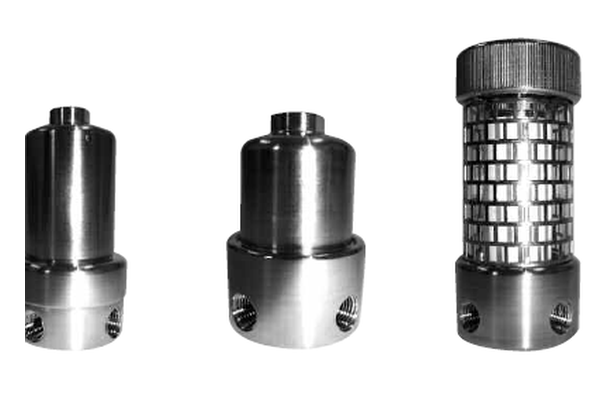
Sample Conditioning for Emission Monitoring After SCR — Getting the Gas Matrix Right
The gas stream leaving an SCR catalyst is hot, wet, and loaded with particulate, residual ammonia, and ammonium salts. Each contaminant demands its own conditioning step — miss one and your emission data is compromised.
Read articleParker Balston Filter Replacements — How to Find the Right R+F Alternative
Parker Balston filters are among the most commonly replaced elements in compressed air and process gas systems. This guide shows how to cross-reference Balston codes by dimensions and find the correct R+F FilterElements equivalent — from coalescing RF-C elements to particulate RF-P grades.
Read articleLithium-Ion Battery Manufacturing — Dry Room Gas Supply and Filtration
Dry rooms for lithium-ion battery electrode coating demand ultra-dry air or nitrogen below −40 °C dew point and particle counts at ISO Class 5 or better. A multi-stage filtration train — coalescing, particulate, adsorption, and point-of-use — is essential to protect yield and cell quality. R+F FilterElements offers the RF-DIL, RF-H-150, and RF-AC series for every stage of battery manufacturing gas supply.
Read articleFibre Optic Cable Production — Gas Purity for Preform and Drawing Processes
Even ppb-level contamination in carrier gases can cause signal attenuation in optical fibres. This guide covers filtration strategies for MCVD and OVD preform manufacture and fibre drawing, including SilcoNert-coated housings and point-of-use inline filters.
Read articlePCB Manufacturing — Compressed Air Quality for Soldering and Assembly
Contaminated compressed air is one of the most overlooked causes of solder defects and PCB failures in electronics manufacturing. This guide covers the air quality classes required at each assembly stage — from pick-and-place to reflow soldering — and how to select the right filtration equipment to protect your production line.
Read articleFlat Panel Display Manufacturing — Clean Gas for OLED and LCD Production
Flat panel display fabs demand gas purity standards rivalling the semiconductor industry. From nitrogen blanketing during OLED deposition to ultra-clean dry air for photolithography, every process step requires a precisely matched filtration strategy. This guide covers the key requirements and recommended R+F FilterElements solutions.
Read articleBulk Gas Delivery to Semiconductor Fabs — Filtration from Tank to Tool
Bulk N₂, Ar, and H₂ delivery systems in semiconductor fabs accumulate contamination at every stage — from cryogenic vaporisers to valve manifold boxes. Staged filtration using RF-DIL point-of-use filters and RF-H-150/160 process gas housings is the only reliable way to guarantee purity at the tool inlet.
Read articleSemiconductor Fab Gas Filtration — Sub-ppb Purity at the Point of Use
In semiconductor fabrication, gas purity at the point of use must reach sub-ppb levels — and the filter housing itself is often the largest contamination source. This guide explains how all-metal, electropolished, SilcoNert-coated housings like the RF-H-110-SN eliminate metallic particle shedding, outgassing, and moisture ingress from UHP gas delivery systems.
Read articleMeat Processing and Modified Atmosphere Packaging — Gas Quality for Shelf Life
Modified atmosphere packaging relies on precise CO₂, N₂, and O₂ mixtures to extend meat shelf life — but contaminated gas can ruin product quality and breach food-safety regulations. Filtration at the gas mixing station is the critical control point most processors overlook. This article explains what contaminants matter, which standards apply, and how to specify the right filter train.
Read articleBeverage Bottle Blowing — Why Air Quality Determines Bottle Clarity
High-pressure blow-moulding air at 30–40 bar contacts every PET bottle produced. Oil contamination causes haze and off-taste. Discover how ISO 8573-1 Class 1.2.1 filtration with R+F high-pressure filters protects your product quality.
Read articleBakery and Flour Processing — Compressed Air in Dust-Explosive Environments
Flour dust is a classified explosive substance, making compressed air filtration in bakeries and flour mills a dual safety and food-quality challenge. This guide covers ATEX zone requirements, three-stage filtration design, and how to achieve ISO 8573-1 Class 1 oil-free air for product-contact applications.
Read articleWine and Spirits Production — Inert Gas Blanketing and Filtration
In wine and spirits production, inert gas blanketing with N₂ and CO₂ protects your product from oxidation — but only if the gas itself is clean. Poorly filtered blanketing gas can introduce oil taints, particulate haze, and microbial contamination that ruins entire batches. This guide explains how to design a three-stage gas filtration train that meets food-grade purity requirements.
Read articleDairy Processing — Compressed Air for Pneumatic Valves and Product Contact
Compressed air in dairy plants contacts your product at every stage — from pneumatic valve actuation to direct filling operations. Specifying the wrong filtration grade risks contamination, audit failures, and costly recalls.
Read articleBrewery CO₂ and Mixed Gas Filtration — Protecting the Pour and the Product
Contaminated CO₂ and mixed gas are a hidden threat to beer quality, foam stability, and shelf life. This guide explains how compressor oil enters the gas supply chain and how a correctly specified filter train — using 316L stainless steel housings and coalescing, particulate, and activated carbon elements — protects every stage of brewery gas use.
Read articleIsolator and RABS Gas Supply — Filtered Air for Contained Environments
Gas supply quality is a critical process parameter in pharmaceutical isolators and RABS. This article covers sterile filtration requirements, pressure cascade design, and exhaust filtration for both standard aseptic and containment applications.
Read articleAutoclave Steam Quality — How Contaminated Steam Compromises Sterilisation
Contaminated or out-of-specification steam is one of the most common — and most overlooked — causes of autoclave sterilisation failures. EN 285 defines strict limits for non-condensable gases, superheat, and dryness fraction at the steriliser inlet. Correct steam filtration is the first line of defence.
Read articleEU GMP Annex 1 and Gas Filtration — What Changed in the 2023 Revision
The 2023 revision of EU GMP Annex 1 introduces mandatory sterilising-grade filters in Grade A and B environments, pre-use integrity testing, and explicit filter redundancy requirements. Facilities must now document gas filtration within a site-wide Contamination Control Strategy.
Read articleFreeze Dryer (Lyophiliser) Gas Supply — Filtration for Backfill and Stoppering
Sterile nitrogen backfill is the last step before vial stoppering in lyophilisation — and the gas supply line is often the weakest link in contamination control. This guide covers how to specify a GMP-compliant 0.2 µm sterile filter train for freeze dryer gas supply, including SIP-compatible housings, integrity testing, and hydrophobic media selection for vacuum stoppering applications.
Read articleCleanroom Gas Supply — Particle-Free Nitrogen and Compressed Air for ISO Class 5
Supplying particle-free gas to an ISO Class 5 cleanroom demands more than bulk gas purity — it requires point-of-use filtration to counter contamination introduced by distribution pipework, regulators, and final connections. This article explains where contamination enters your gas supply and how to eliminate it.
Read articleFermentation Gas Supply — Sterile Air and Oxygen for Bioreactors
Sterile gas supply is critical to every fermentation process. This guide covers 0.2 µm membrane filter selection, SIP sterilisation, autoclavable vs disposable options, and oxygen sparging safety for bioreactor applications.
Read articleCompressed Air for Pharmaceutical Manufacturing — GMP Requirements and Qualification
Pharmaceutical compressed air is a regulated utility that must meet strict GMP requirements and ISO 8573-1 purity classes. This guide covers filtration train design, IQ/OQ/PQ qualification, and the ongoing monitoring needed to stay compliant.
Read articleSterile Vent Filters for Pharmaceutical Vessels — Design, Integrity Testing, and Replacement
Pharmaceutical vessel vents are a direct contamination pathway — yet they must breathe freely. This guide covers PTFE membrane selection, bubble point and diffusion integrity testing, and EU GMP Annex 1-compliant replacement criteria for sterile vent filters.
Read articleCompressor Crankcase Ventilation — Oil Mist from Reciprocating Compressors
Large reciprocating compressors generate significant oil mist and blow-by gas that creates fire, health, and environmental risks. Coalescing vent filtration is the engineering solution — but correct sizing and element selection are critical to achieving compliance and protecting your facility.
Read articleTurbine Lube Oil System Venting — How to Stop Oil Mist from Bearing Housings Becoming a Fire Hazard
Gas and steam turbine bearing housings continuously vent oil mist that poses a serious fire hazard near hot surfaces. Selecting the correct coalescing vent filter — sized for temperature, flow, and drain-back — is a safety-critical engineering decision.
Read articleOil Mist Collectors for Machine Tools — Protecting Workers and Equipment
Every CNC machining operation generates oil and coolant mist that poses real respiratory risks to workers. This guide compares centrifugal, electrostatic, and coalescing collection technologies, and explains how to select the right R+F FilterElements coalescing element for your application.
Read articleStationary Gas Engine CCV — Filtration for Biogas, Natural Gas, and Dual-Fuel Engines
Gas engines burning biogas or running in dual-fuel mode produce blow-by gases rich in H₂S and acidic aerosols that destroy standard filter elements. Selecting the correct K-type acid-resistant element and stainless steel housing is essential for reliable CCV performance in CHP applications.
Read articleGearbox and Hydraulic Reservoir Ventilation — Preventing Moisture Ingress
Every thermal breathing cycle draws humid, particle-laden air into your gearbox or hydraulic reservoir. Without effective breather filtration, moisture and contamination accelerate wear and shorten oil life. This guide explains how to choose and size the right breather filter for your application.
Read articleMarine Engine Crankcase Ventilation — IMO and Classification Society Requirements
Marine diesel engines running on heavy fuel oil generate blow-by gases with extreme soot loading and acidic condensate that standard CCV separators cannot handle. IMO MEPC regulations and classification society rules impose strict requirements on oil mist separation, crankcase pressure management, and drainage. This guide explains how to specify large-capacity coalescing elements that meet class survey requirements.
Read articleSpecialty Gas Delivery Systems — Contamination Control from Cylinder to Process
High-purity cylinder gas can carry invisible particulate contamination from regulators and tubing that invalidates calibration and damages sensitive instruments. Point-of-use filtration with RF-DIL and RF-DIA inline filters is the critical last line of defence in any specialty gas delivery system.
Read articleSyngas and Reformer Gas Filtration — High-Temperature Challenges
Syngas from steam methane reformers and gasifiers presents extreme filtration challenges: temperatures up to 900 °C, catalyst fines, tar aerosols, and sulphur compounds. Sintered metal filter elements are the only viable medium for hot-gas duty. This article explains how to select the right element alloy, pore size, and housing for each stage of the syngas process train.
Read articleHelium Recovery and Recycling — Why Filtration Before the Recovery System Is Critical
Helium is one of the world's scarcest industrial gases — and recovering it from process streams is no longer optional for cost-conscious operations. But a recovery system is only as effective as the gas quality entering it. Contamination from oil, particulates, or moisture can foul compressors, membranes, and adsorbers within the reclaim loop, turning a cost-saving investment into a maintenance liability.
Read articleSteam Filtration — Removing Particles and Condensate from Process Steam
Process steam carries particles, rust, and entrained condensate that can compromise product quality and trigger compliance failures. Selecting the right filter element — sintered metal for high-temperature duty — is a process-critical decision for food, pharma, and industrial applications.
Read articleEthylene Oxide Sterilisation — Gas Filtration in Medical Device Manufacturing
Ethylene oxide sterilisation demands precise gas filtration at every stage — from sterilant supply to residual abatement. Contaminated EtO can compromise sterility assurance and create serious safety hazards. This guide explains how to select and size the right filters for each point in the process.
Read articleAcetylene Filtration — Safety Requirements for a Decomposition-Prone Gas
Acetylene is uniquely hazardous among industrial gases — it can decompose explosively without oxygen above 1.5 bar gauge pressure. Filtration systems for acetylene service must respect strict pressure limits, prohibit copper-containing materials, and be paired with mandatory flash-back arrestors.
Read articleChlorine and HCl Gas Filtration — Material Selection for Extreme Corrosion
Chlorine and HCl gas destroy standard filter materials through oxidation, stress corrosion cracking, and acid attack. This guide covers Hastelloy housing selection, PTFE seal and element specification, and application-specific recommendations for chlor-alkali, PVC, and water treatment plants.
Read articleArgon and Inert Gas Filtration — Welding, Heat Treatment, and Semiconductor
Contamination in argon and inert gas supplies causes welding porosity, heat treatment defects, and semiconductor process failures. This guide explains where contamination enters the supply chain and how to select the right filtration system for your application.
Read articleCO₂ Gas Filtration — Applications from Beverage Carbonation to CCUS
Carbon dioxide is one of the most widely handled industrial gases in the world, yet its filtration requirements are frequently underestimated. From food-grade beverage carbonation to high-pressure CCUS injection pipelines, the purity and dryness of CO₂ at every stage directly affects product quality and equipment longevity. This guide examines the specific challenges of CO₂ gas filtration across the full application spectrum.
Read articleNitrogen Blanketing and Inerting: Purity Requirements and Filtration
Nitrogen blanketing protects tanks and reactors from oxidation and contamination — but the nitrogen itself can carry particles and oil aerosols that undermine that protection. This guide explains the purity requirements for nitrogen blanketing filtration and how to select the right N2 inerting gas filter for chemical and pharmaceutical applications.
Read articleGas Engine and Turbine Protection — Inlet Filtration for Power Generation
Gas engines and micro-turbines in CHP plant are highly sensitive to particles, liquid water, and oil aerosols in the fuel gas stream. Inadequate inlet filtration leads to accelerated wear, fouled injectors, and costly overhauls. This guide explains how to specify the right filtration train using R+F FilterElements process gas housings and elements.
Read articleBiomethane Grid Injection — Meeting Gas Quality Standards with Filtration
Biomethane grid injection demands strict compliance with DVGW G 260 and EN 16723 gas quality standards. Filtration is the final polishing step that removes particles, liquid aerosols, and heavy hydrocarbons before the gas enters the network. This guide explains how to select and size the right filtration train for your injection point.
Read articleGas Pressure Regulation Stations — Why Filters Before the Regulator Save Millions
Pipeline contamination is the leading cause of pressure regulator failure in natural gas and biogas stations. A correctly specified gas pressure regulator filter upstream of every PRV is the most cost-effective protection available. This article explains the particle sizes that cause the most damage and how to select the right filter for your station.
Read articleH₂S Removal from Biogas and Sour Gas — Filtration and Material Challenges
H₂S in biogas and sour natural gas corrodes standard filter components rapidly, risking both equipment failure and safety incidents. Selecting K-type elements, 316L stainless steel housings, and NACE MR0175-compliant materials is essential for reliable sour gas filtration. This article explains the key material challenges and how to address them.
Read articleCNG Vehicle Fuelling — High-Pressure Filtration at the Dispenser
At 200–250 bar, a CNG dispenser filter is the last line of defence against particulate contamination that can damage nozzles and vehicle fuel systems. This guide explains what to specify and why.
Read articleLandfill Gas Filtration: How to Remove Siloxanes, Moisture, and Particulates Before They Destroy Your Engine
Landfill gas carries siloxanes, moisture, and particulates that can destroy engines within months. This guide explains how a properly designed multi-stage filtration train — coalescing, activated carbon adsorption, and final particulate removal — protects your LFG-to-power plant and maintains engine warranty compliance.
Read articleNatural Gas Metering Stations — Filter Requirements for Custody Transfer
Custody transfer metering demands clean, dry gas — yet pipelines routinely carry dust, glycol carryover and compressor oil that can destroy meter accuracy within weeks. This guide explains how to select and size filtration for turbine and ultrasonic metering stations to protect measurement integrity and avoid costly disputes.
Read articleBiogas Upgrading — Pre-Filtration Before the Membrane or PSA Stage
Raw biogas contains siloxanes, hydrogen sulphide, moisture, and compressor oil aerosols — all capable of causing irreversible damage to membrane modules and PSA adsorbent beds. A properly designed multi-stage pre-filtration train is the most cost-effective way to protect your upgrading asset and keep biomethane output on specification.
Read articleVacuum Furnace Filtration — Protecting Pumps from Metal Vapour and Soot
Vacuum furnaces used for sintering, brazing, and heat treatment generate metal vapour condensation, soot, and binder burnout residue that can rapidly destroy vacuum pump systems. Selecting the correct vacuum furnace pump filter is critical to maintaining process integrity and avoiding costly pump rebuilds. This guide explains the contamination mechanisms and the filtration solutions available from R+F FilterElements.
Read articleRoots Blower and Booster Pump Filtration — Inlet Protection at High Flow Rates
Roots blowers and booster pumps operate at high flow rates where even small particles can cause catastrophic damage. Correct inlet filtration — sized for the actual free air delivery — is the single most effective measure to protect your vacuum system. This guide explains how to select and size the right roots blower inlet filter for your application.
Read articleCentral Vacuum Systems in Hospitals — Exhaust Filtration and Emission Control
Hospital central vacuum and WAGD systems exhaust a complex mixture of oil mist, biological aerosols, and volatile anaesthetic agents. Without a correctly specified exhaust filter, these contaminants pose infection control and occupational health risks. This guide covers HTM 02-01 requirements and how to select the right filter for your facility.
Read articleCNC Vacuum Clamping — Protecting the Pump from Wood Dust and Coolant Mist
CNC vacuum clamping tables expose vacuum pumps to fine wood dust, MDF fibre, and coolant mist — a combination that causes rapid wear and premature failure. A two-stage filtration system, combining a pre-separator with a fine inlet filter and an exhaust oil-mist filter, provides complete protection. This guide covers product selection, installation best practice, and maintenance intervals for CNC machining environments.
Read articleLaboratory Vacuum Systems — Filtration for Rotary Evaporators and Vacuum Ovens
Solvent vapours from rotary evaporators and vacuum ovens are a leading cause of premature vacuum pump failure. This article explains why cold traps often fall short and how coalescing filtration with chemically resistant stainless steel housings provides more reliable, lower-maintenance pump protection.
Read articleVacuum Packaging Machines — Protecting Pumps from Process Contamination
Every cycle of a vacuum packaging machine draws food particles, moisture, and marinades directly towards the pump. Without proper filtration at both the inlet and exhaust, pump wear accelerates rapidly and costly downtime follows.
Read articleVacuum Pump Oil Consumption — How Exhaust Filters Recover Lost Oil
Oil-sealed vacuum pumps can lose up to 0.5 litres of oil per day through their exhaust — a significant and often overlooked operating cost. Coalescing exhaust filters from the R+F FilterElements RF-H-420 to RF-H-456 series recover more than 99% of that oil, with a typical payback period of under three months.
Read articleDry Vacuum Pumps — Inlet Filtration to Prevent Internal Contamination
Dry vacuum pumps — scroll, claw, and screw types — rely on tight internal clearances that make them highly vulnerable to particulate contamination and moisture ingress. Without proper inlet filtration, even small quantities of process dust can cause premature seizure and costly downtime. This guide explains the filtration strategies that keep dry pumps running reliably.
Read articleNitrogen Generation from Compressed Air — Pre-Filtration for PSA and Membrane Systems
Oil contamination is the single biggest threat to on-site nitrogen generators — whether PSA or membrane type. A correctly specified three-stage nitrogen generator pre-filter train protects your carbon molecular sieves and hollow-fibre membranes from irreversible damage, keeping N2 purity on-spec and avoiding costly bed replacements.
Read articlePneumatic Valve and Actuator Protection — Filtration at the Machine Level
Contaminated compressed air is one of the leading causes of pneumatic valve and actuator failure. Particles above 5 µm cause spool valve stiction, while oil vapour swells O-ring seals — and a standard FRL unit may not be enough to stop either. This article explains how dedicated point-of-use inline filtration closes the gap.
Read articleEnergy Cost of Filtration — How to Calculate the True Cost of Pressure Drop
Every bar of pressure drop across your compressed air filtration train costs real money in electricity. This guide shows you how to calculate the annual energy cost of pressure drop, why oversized filter housings pay for themselves quickly, and how to use the R+F Engineering Tool to optimise your system.
Read articleCompressed Air Dryer Types Compared: Which One Needs What Filtration?
Choosing the wrong dryer type — or skipping proper filtration — is one of the most expensive mistakes in compressed air system design. This guide compares refrigerant, desiccant, and membrane dryers, and explains exactly what filtration each one requires upstream and downstream.
Read articleBreathing Air Filtration — Standards, Grades, and What Your Workers Depend On
When compressed air is used for breathing, contamination is a life-safety issue, not a compliance formality. EN 12021 sets strict limits on CO, oil, moisture, and CO₂ that every supplied-air system must meet. This guide explains what those limits mean in practice and how to achieve them reliably.
Read articleFood-Grade Compressed Air: How to Meet BRC, IFS, and ISO 8573-1 Requirements
BRC and IFS audits increasingly scrutinise compressed air quality in food and beverage facilities. This guide explains ISO 8573-1 Class 1.2.1, how to build a compliant filtration train, and what documentation auditors expect to see.
Read articleSpray Painting and Surface Finishing — The Air Quality That Paint Demands
Contaminated compressed air is the hidden cause of fish-eye defects, silicone spotting, and adhesion failures in spray painting. Achieving ISO 8573-1 Class 1.2.1 air quality with a correctly specified three-stage filtration train is the only reliable way to protect your finish quality and reduce costly rework.
Read articleCondensate Management in Compressed Air Systems — Drains, Traps, and Filters
Condensate flooding is one of the leading causes of coalescing filter failure in compressed air systems. This guide explains how to choose the right drain type — manual, timer, or zero-loss float — and how R+F FilterElements' RF-H series with float-drain (F suffix) variants keeps your filter elements performing as specified.
Read articleCompressed Air Audits — How to Assess Your Current Air Quality
A compressed air quality audit reveals hidden contamination that silently damages equipment, spoils products, and inflates energy costs. This step-by-step guide walks you through every stage — from a simple visual inspection to particle counting and oil vapour measurement — so you know exactly what your system is delivering and what it should be.
Read articleOil-Free Compressors Still Need Filters — Three Contaminants You Did Not Expect
Oil-free compressors are widely trusted to deliver clean compressed air, but the label 'oil-free' refers only to the compression mechanism — not the air quality at the point of use. Atmospheric oil vapour, condensate, and internal wear particles can all contaminate your system downstream. Here is what you need to know.
Read articleHydrogen Drying — Protecting Desiccant Beds from Contamination
Desiccant beds in hydrogen drying systems are highly vulnerable to oil aerosols, liquid slugs, and particulate fines. This article explains why hydrogen's unique physical properties demand dedicated pre-filtration and how to specify the right hydrogen dryer protection filter for PSA and TSA applications.
Read articleGreen Ammonia Cracking — How to Filter the Gas After the Reformer Stage
Gas leaving an ammonia cracker contains catalyst fines, residual NH₃, and moisture — all of which must be removed before hydrogen reaches purification equipment or end-use applications. A correctly specified three-stage filtration train is essential to protect PSA beds, palladium membranes, and PEM fuel cells.
Read articleHydrogen Blending in Natural Gas Networks — Filtration Implications
As hydrogen blending into natural gas networks accelerates across Europe, operators face new filtration challenges that standard carbon-steel equipment simply cannot meet. From hydrogen embrittlement to seal degradation and contamination control, the right filter selection is critical. This article explains what changes when H₂ enters the mix — and how to stay ahead of it.
Read articleHydrogen Pipeline Filtration — Protecting Compressors and Metering Equipment
Particulate contamination, compressor oil carryover, and entrained moisture are the three silent threats to hydrogen pipeline infrastructure. Selecting the correct pre-filtration upstream of compressor stations and custody-transfer metering is not optional — it is the difference between reliable operation and costly unplanned downtime.
Read articleElectrolyte Carryover in Alkaline Electrolysis — KOH Mist Removal Strategies
KOH aerosol carryover is one of the most damaging and underestimated problems in alkaline electrolysis systems. Standard filter elements corrode rapidly in caustic environments, making material selection critical. This article explains why a two-stage coalescing and particulate approach — using chemically resistant K-type elements — is the correct engineering solution.
Read articleFuel Cell Protection — How Particle Contamination Destroys Membrane Performance
Particle contamination above 5 µm can physically puncture PEM membranes, while trace metal ions such as iron and copper poison the catalyst layer — often irreversibly. Proper fuel cell inlet filtration is not optional; it is the single most cost-effective measure to protect stack longevity.
Read articleHydrogen Refuelling Stations — High-Pressure Filtration at 350 and 700 bar
Hydrogen refuelling stations operate at pressures up to 700 bar, placing extreme demands on every component in the dispensing system. Choosing the wrong filter housing, seal material, or element grade can result in hydrogen embrittlement, leaks, or contamination of the vehicle's fuel cell stack. This guide explains what to look for.
Read articleISO 14687 Hydrogen Fuel Quality — What Filtration Can and Cannot Achieve
ISO 14687 defines the purity thresholds that hydrogen must meet before entering a fuel cell stack. Filtration is essential for particles and water, but chemical contaminants such as CO and sulphur compounds demand additional treatment steps.
Read articleHydrogen Storage — Why Gas Purity Degrades Between Electrolyser and Tank
Hydrogen produced at the electrolyser rarely arrives at the storage vessel in the same condition it left. Piping corrosion, valve debris, and pressure-cycling condensation all introduce contaminants that degrade gas purity and threaten downstream equipment. Point-of-use filtration is the most reliable defence.
Read articlePEM vs. Alkaline Electrolysis — Filtration Requirements for Each Technology
PEM and alkaline electrolysers both produce high-purity hydrogen — but their filtration requirements are worlds apart. Here is what you need to know before specifying filter elements for either technology.
Read article
Borosilicate Glass Microfibre — Why It Is the Gold Standard in Process Gas Filtration
Borosilicate glass microfibre delivers unmatched thermal stability, chemical resistance, and sub-micron efficiency — making it the material of choice for demanding process gas filtration.
Read articleHow to Size an Industrial Gas Filter in Under Two Minutes
Selecting the right filter housing used to mean flipping through brochure tables and cross-referencing flow charts. Our free online sizing tool replaces that process with a four-step wizard that recommends housings and elements based on your actual operating conditions.
Read article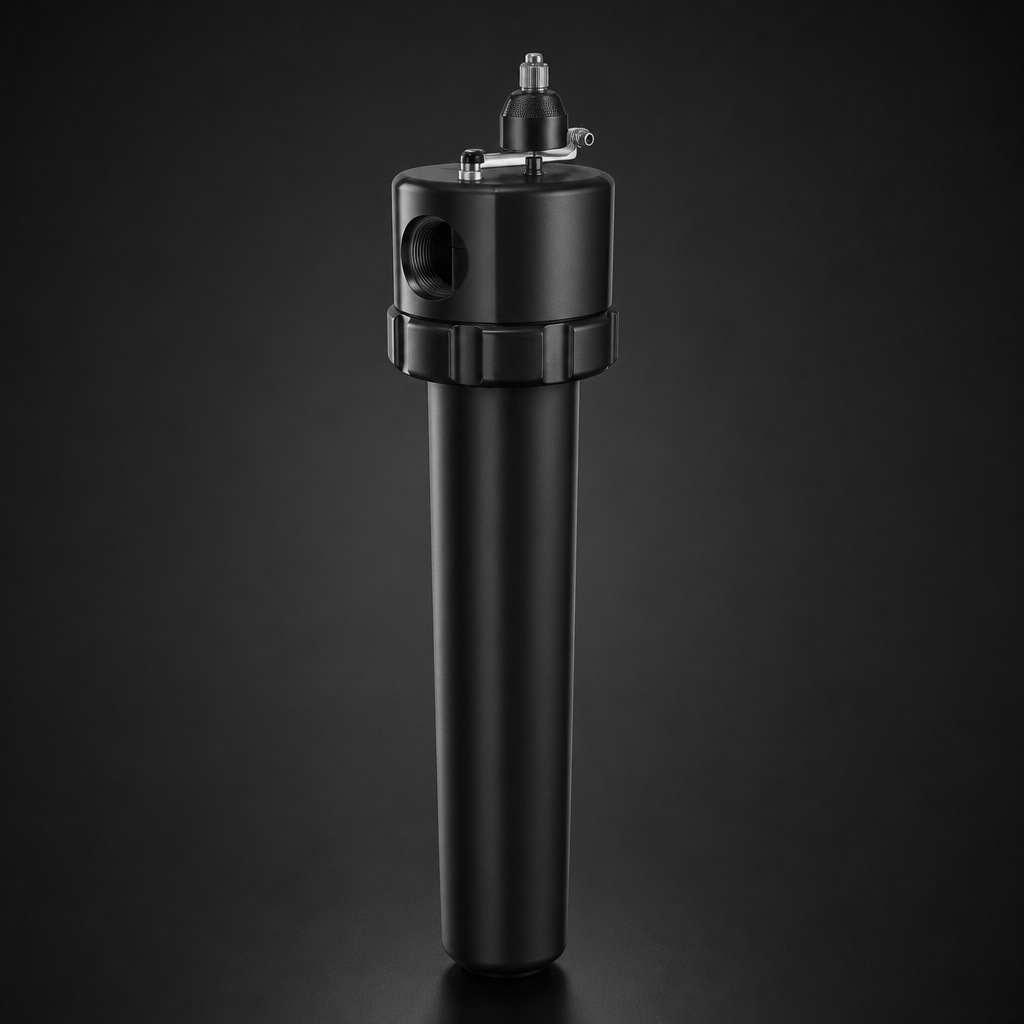
Pressure Drop in Gas Lines — Causes, Measurement, and How Correct Filter Selection Minimises It
Pressure drop across a filter is not a defect — it is the inevitable consequence of forcing gas through a porous medium. But when it is excessive, it wastes energy and money. Here is how to minimise it.
Read article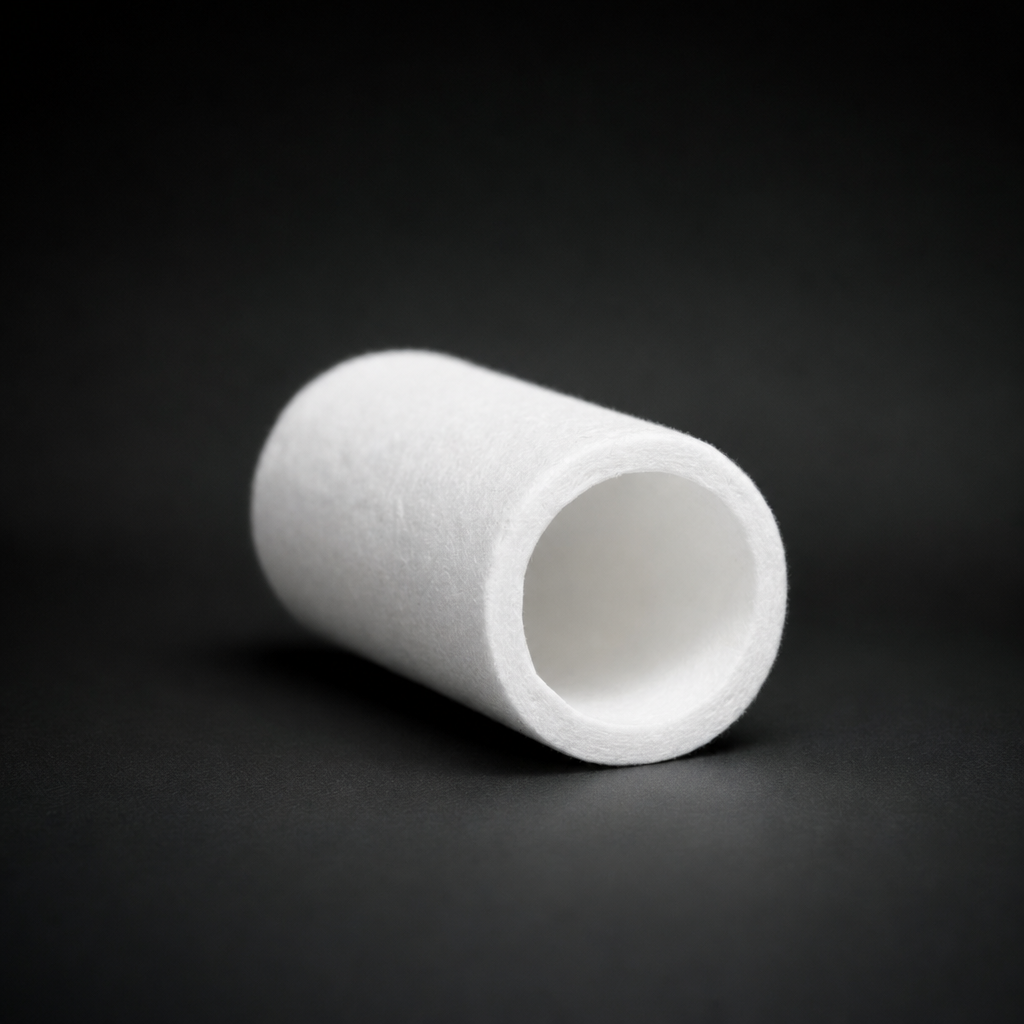
Particles vs. Aerosols vs. Oil Mist — Identifying Your Contamination and Choosing the Right Filter
Before choosing a filter, you need to know what you are filtering. Particles, aerosols, and oil vapour require fundamentally different filtration approaches. Here is how to identify what you are dealing with.
Read article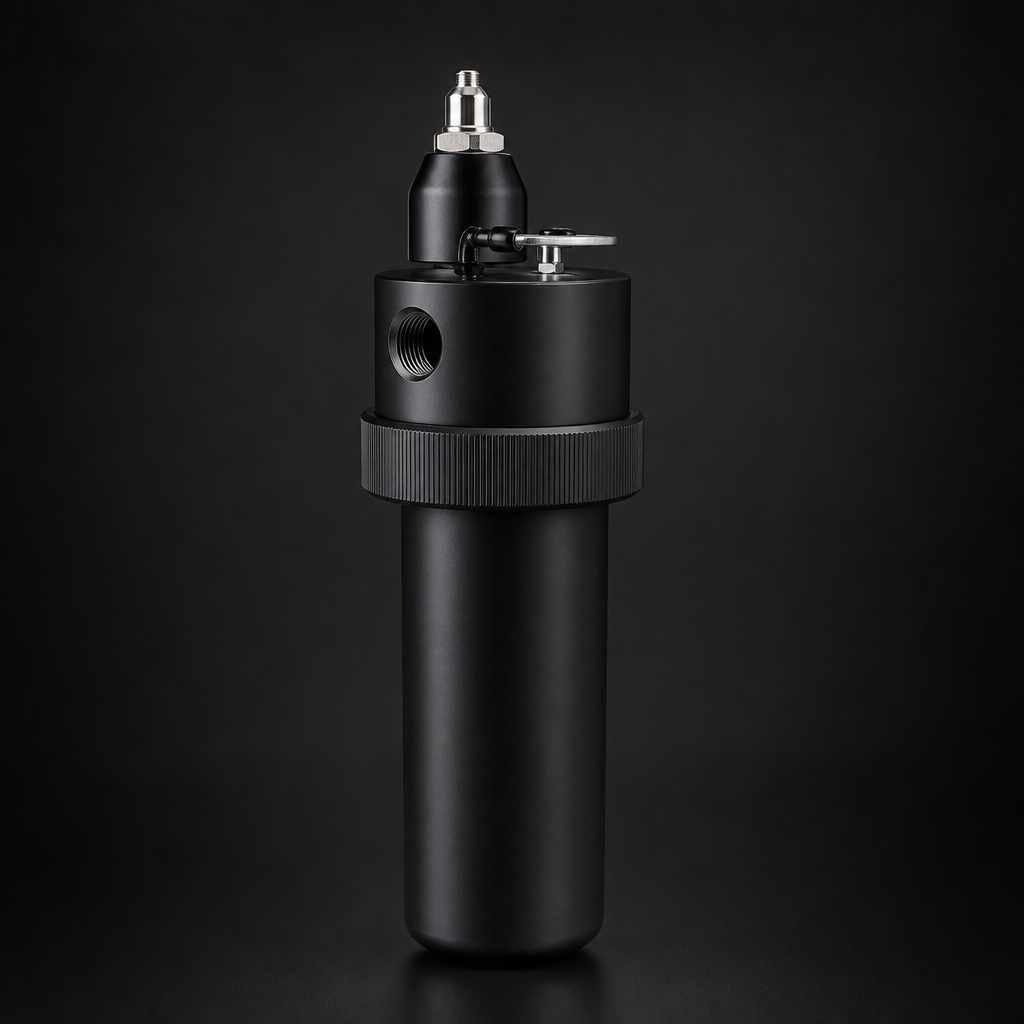
Coalescence Filters Explained — How Aerosols Form, and Why a Separator Is Not the Same as a Coalescer
Your system has a bulk separator. Is that enough? Almost certainly not — because separators and coalescers handle fundamentally different particle sizes. Here is why the distinction matters.
Read articleFilter Before or After the Compressor? Common Installation Mistakes in Compressed Air and Process Gas Systems
Installing a high-quality filter in the wrong location is the same as having no filter at all. Here are the placement mistakes that engineers make repeatedly — and the correct system layout.
Read articleProtecting Analytical Instruments — Why Small Particles Cause Big Measurement Errors
A 0.3 µm particle in your analyser sample line can cause hours of troubleshooting. Here is how proper sample conditioning filtration prevents measurement drift, false alarms, and premature sensor failure.
Read articleHydrogen from Electrolysis — Typical Contaminants and a Practical Filtration Concept
Green hydrogen from electrolysis is only as clean as the filtration downstream of the electrolyser. Moisture, electrolyte droplets, and particles all need removing before the gas reaches storage, pipelines, or fuel cells.
Read article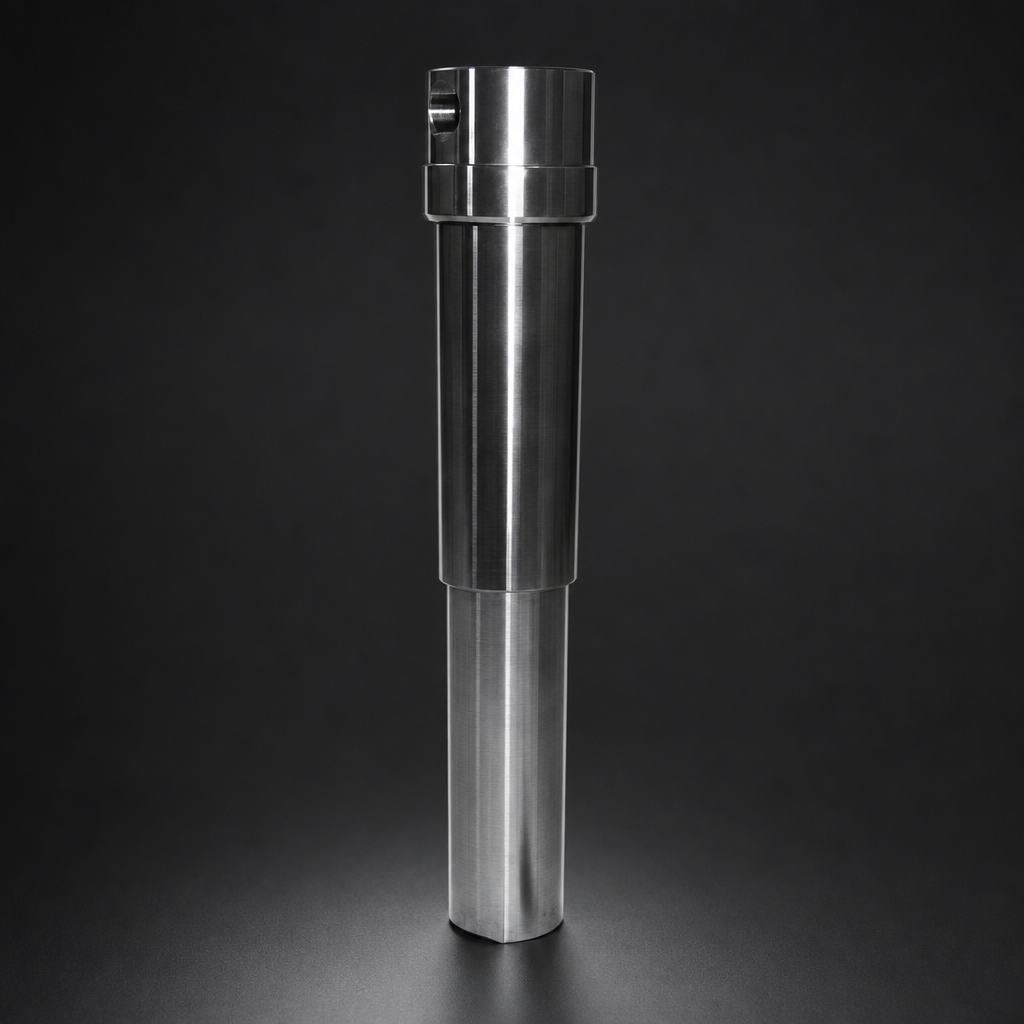
Oxygen Filtration — Material Requirements, Safety Considerations, and Purity Protection
Oxygen is not just another process gas — it is an aggressive oxidiser that turns ordinary materials into fire hazards. Filter housings and elements for oxygen service must meet strict material and cleanliness requirements.
Read article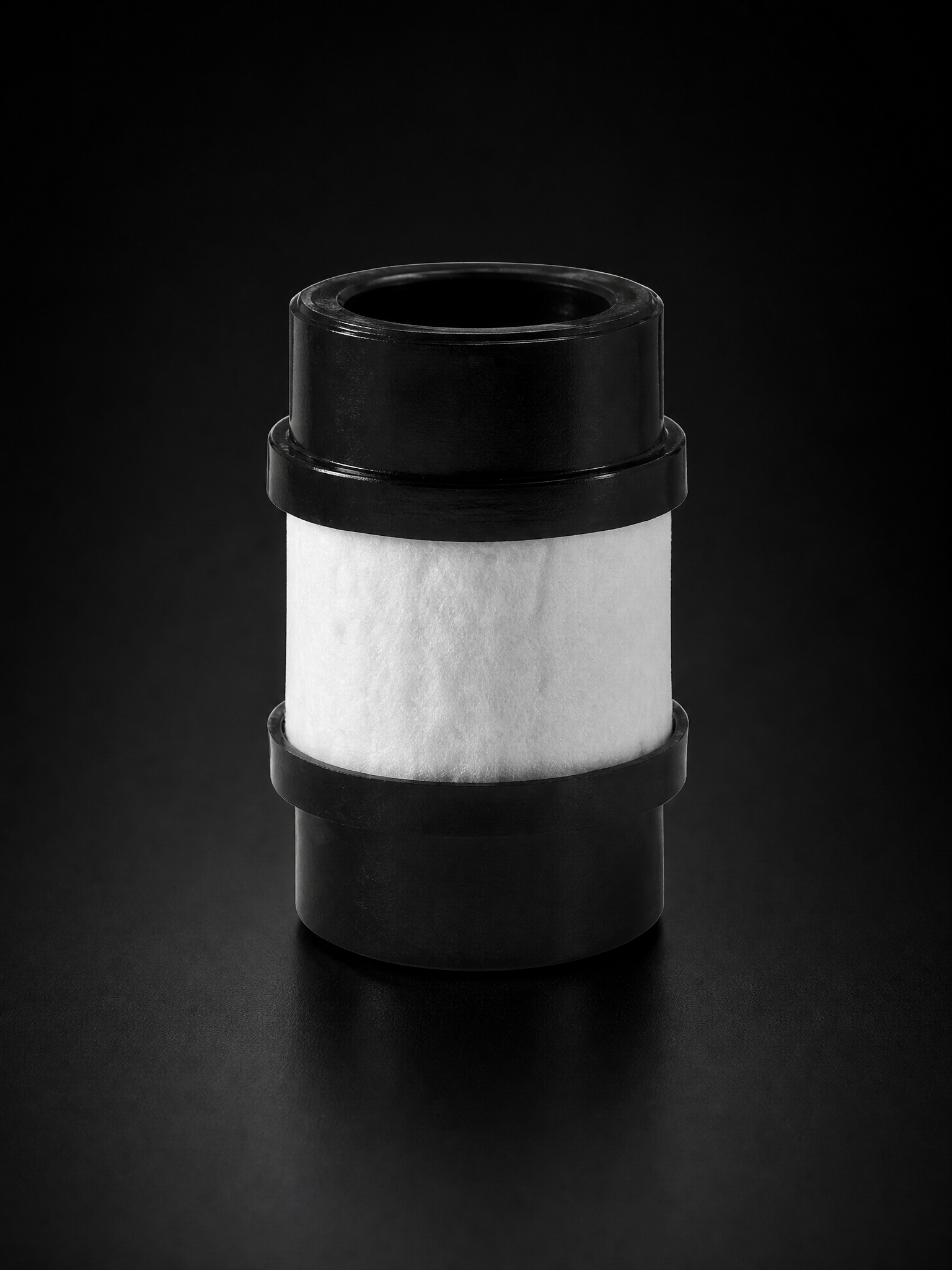
Protecting Your Dryer — What Must Be Removed Before TSA, PSA, and Adsorber Beds
Desiccant beds and adsorber cartridges are expensive. When oil aerosol or liquid water reaches them, the damage is irreversible. Pre-filtration is the only protection — and it is frequently omitted or undersized.
Read article
Filter Blocking Too Quickly? 9 Causes — and How to Systematically Rule Them Out
If your filter elements are lasting weeks instead of months, the filter itself is rarely the problem. Here are nine systematic causes to check — from upstream contamination to incorrect element grade.
Read articleMaterial Compatibility — Choosing Filter Media and Housings for Aggressive Gases, Moisture, and Chemical Traces
Selecting the wrong material for your filter housing or element is not just a maintenance problem — it is a safety risk. Here is how to match materials to your gas composition.
Read article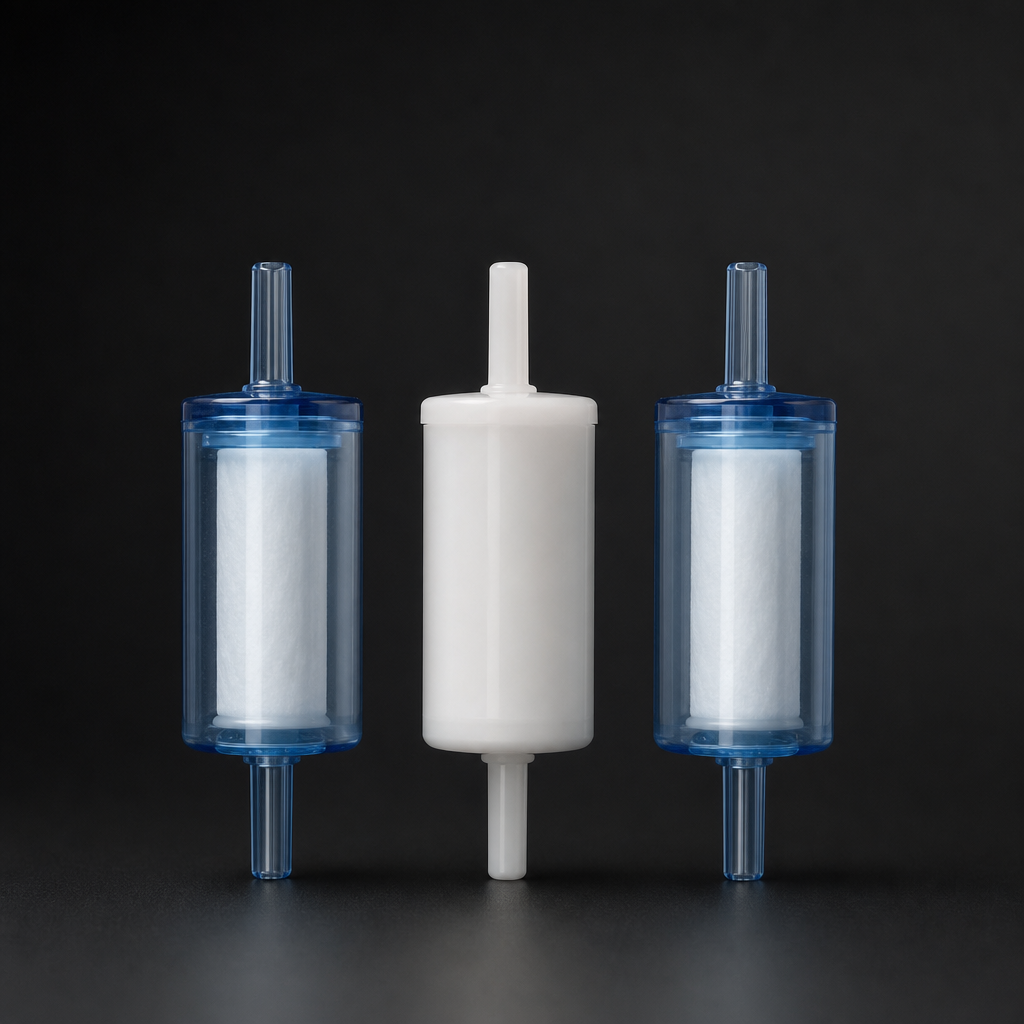
Sterile and High-Purity Gas Filtration — What Particle Class and Separation Efficiency Mean in Practice
Your specification says "99.99% efficiency at 0.01 µm" — but what does that actually mean for your process? Here is a practical, standards-light explanation of high-purity gas filtration.
Read articleCrankcase Ventilation Filtration — Extending Element Life in CCV and OCV Systems
Blow-by gas from engines carries oil mist, soot, and acidic vapours that destroy filters prematurely — unless the coalescing element is properly matched to the operating conditions. Here is what determines whether your CCV filter lasts months or years.
Read articleDisposable Inline Adsorbers — What They Can Do, What They Cannot, and How to Use Them Correctly
Inline adsorbers are compact, effective, and often misunderstood. Here is what activated carbon cartridges actually remove, how long they last, and the mistakes that render them useless.
Read articleSizing in 10 Minutes — What Data an Engineer Needs to Correctly Specify a Process Gas Filter
You need a process gas filter. Your supplier needs data. Here is the complete checklist — six parameters that determine every aspect of the filter specification, from housing material to element grade.
Read articleCoalescing vs. Particulate Filter Elements — Which One Do You Actually Need?
Your gas line is contaminated. But is it aerosol or particulate? The answer determines which filter element you need — and getting it wrong costs time, money, and potentially your downstream equipment.
Read articleVacuum Pump Exhaust Filtration — Why Oil Mist Is Costing You More Than You Think
That faint oil haze drifting from your vacuum pump exhaust? It is not just unpleasant — it is eating into your maintenance budget, contaminating your workspace, and may be putting you on the wrong side of emission regulations.
Read article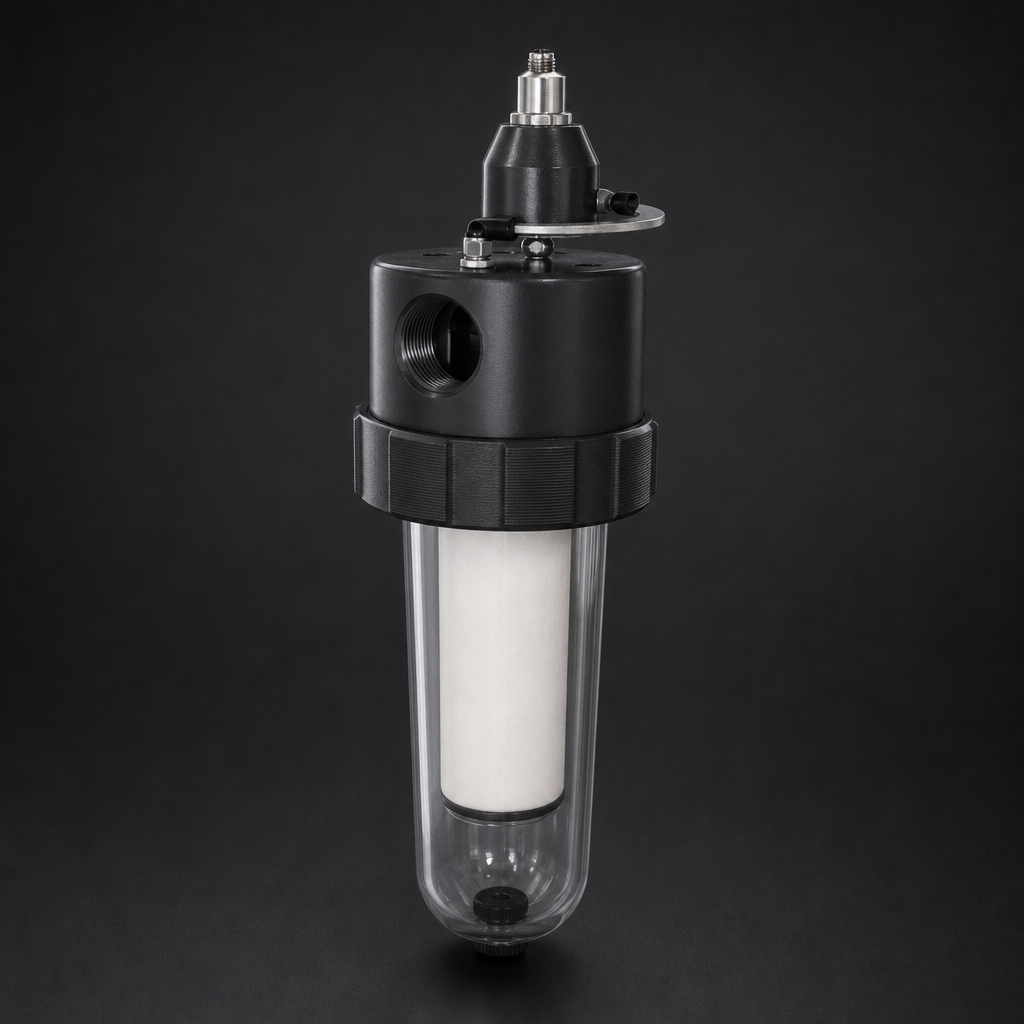
ISO 8573-1 Compressed Air Quality — What Engineers Actually Need to Know
ISO 8573-1 defines compressed air quality — but the standard itself can be confusing. Here is a practical breakdown of purity classes, what they mean for your process, and how to achieve them.
Read article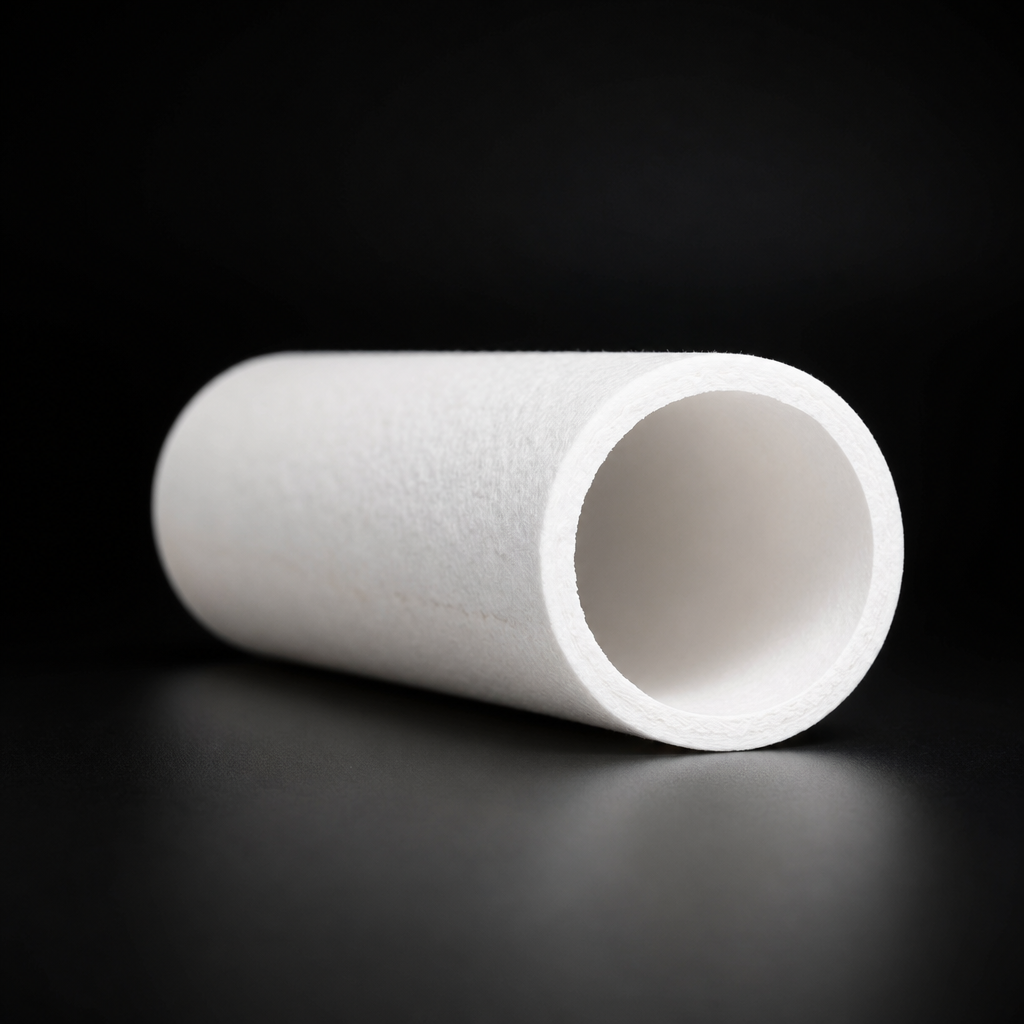
OEM Replacement Filter Elements — How to Safely Identify the Right Replacement Without Risk
Your current filter element needs replacing, but the original manufacturer is expensive, slow, or no longer available. Here is how to identify the right alternative — safely and without risk to your process.
Read article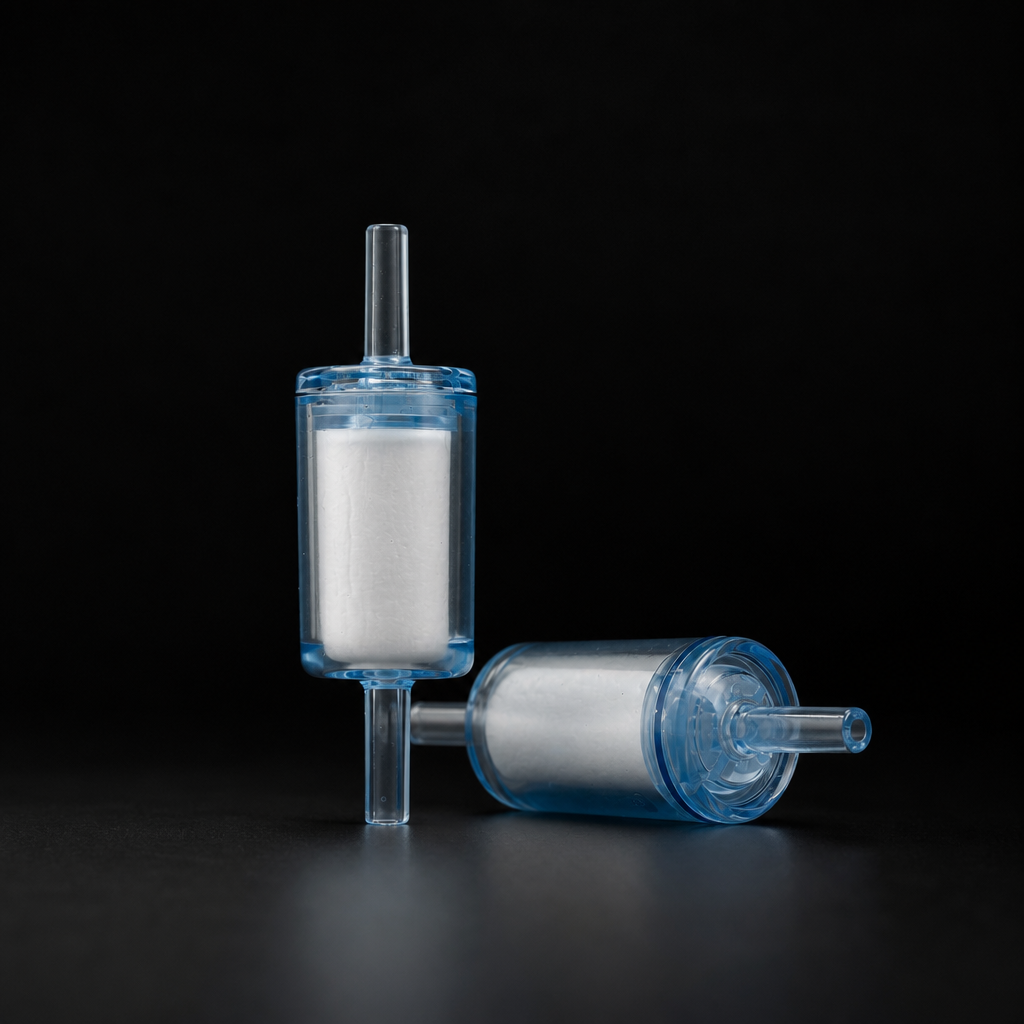
Final Filtration Before Use — Why Last-Metre Gas Filtration Is So Often Underestimated
Your gas was clean when it left the treatment plant. By the time it reaches the point of use, it is not. Pipe scale, valve debris, seal particles, and condensate accumulate in every metre of distribution piping.
Read article