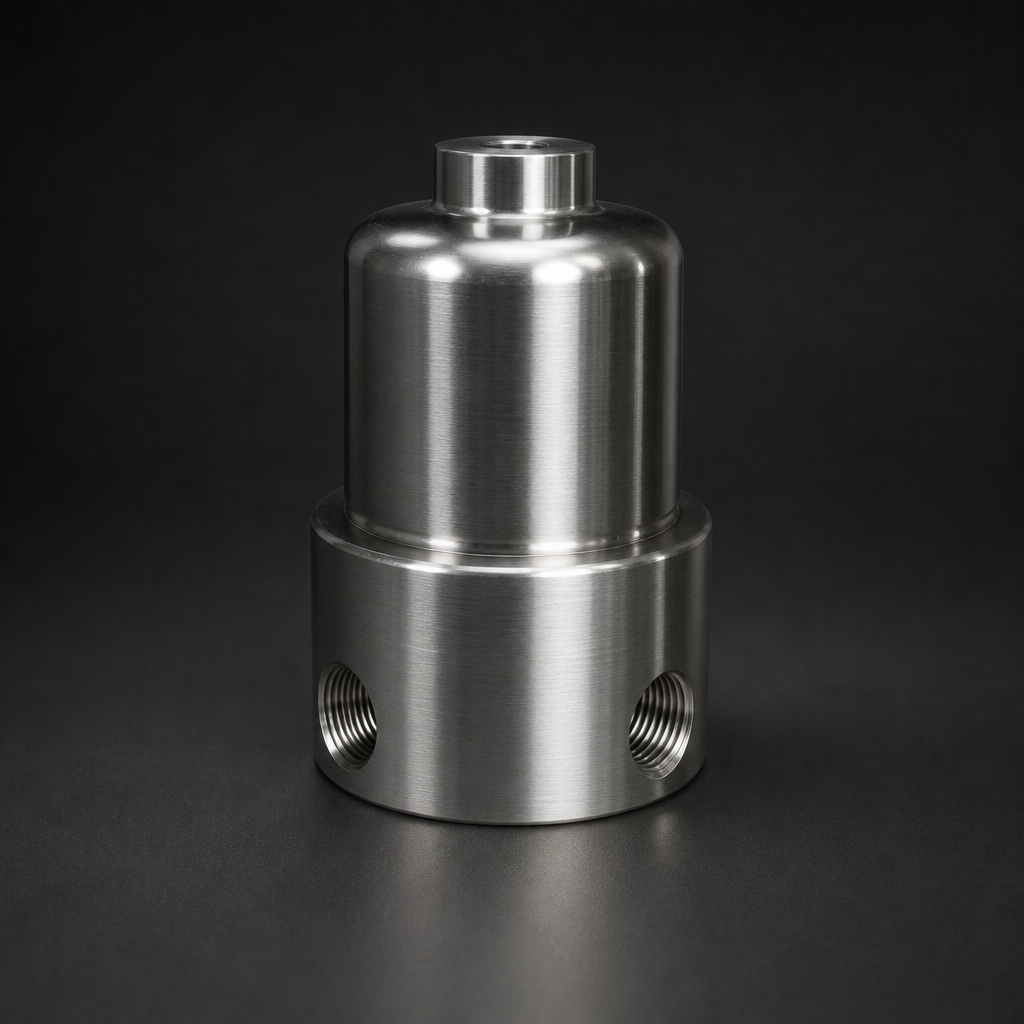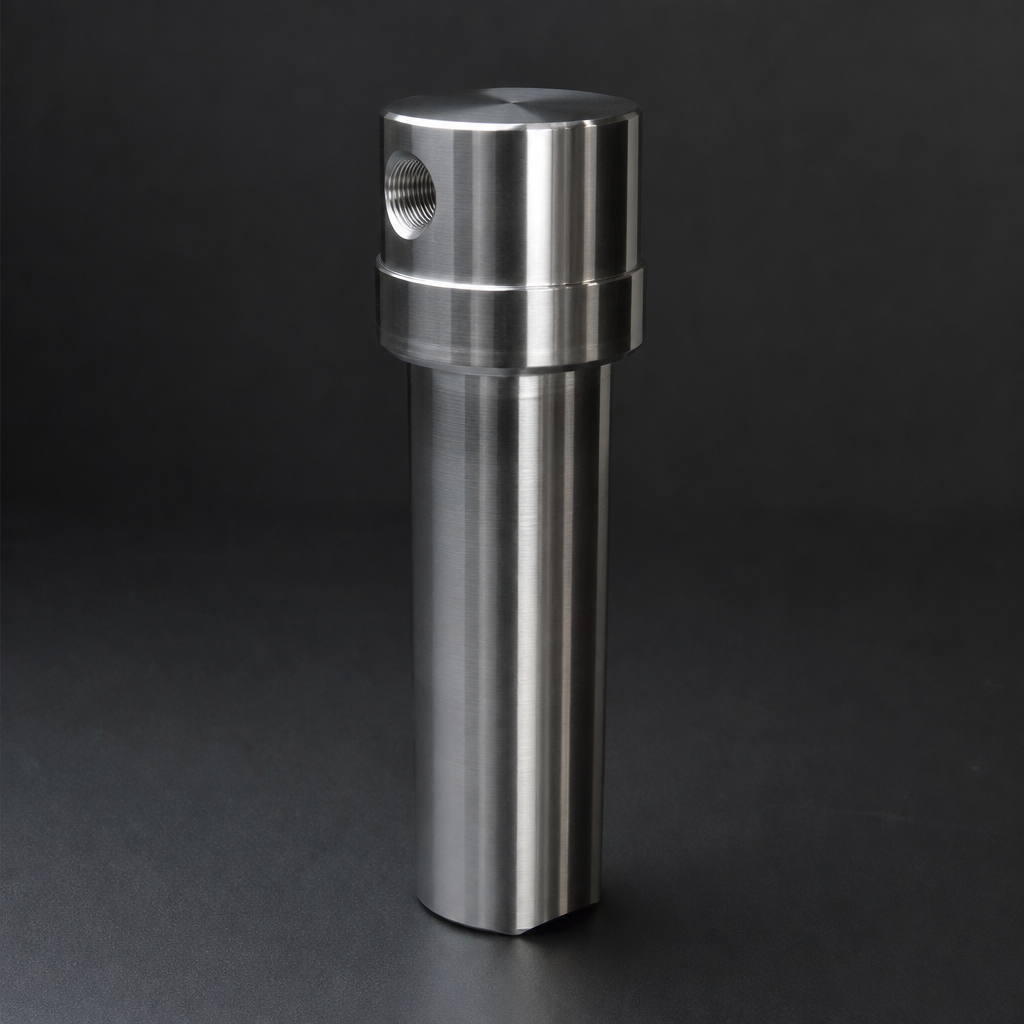

The problem: your gas line is contaminated — but what is it?
You have a process issue. Your gas analyser readings are drifting. Your pneumatic valves are sticking. Your instrument sample lines are showing signs of contamination. You know you need a filter — but which type of filter element?
This is where most engineers hit a fork in the road: coalescing elements and particulate elements look similar, fit into the same housings, and are sometimes described with confusingly overlapping language. But they do fundamentally different things.
Choosing the wrong one means you either fail to remove the contaminant — or you waste money on unnecessary filtration. Neither outcome is acceptable in a production environment.
What particulate filter elements actually do
Particulate filter elements remove solid particles from a gas or liquid stream. Dust, rust, scale, pipe debris, catalyst fines — anything that exists as a discrete solid particle in the flow.
The mechanism is straightforward: the element acts as a physical barrier. Particles larger than the rated pore size are captured on or within the filter media. The clean gas passes through.
How particulate elements are constructed
Standard particulate elements use borosilicate glass microfibre media wound around a support core. The fibre density and winding pattern determine the filtration rating. Grades range from pre-filtration (removing particles above approximately 5 µm) through to ultra-high efficiency (capturing sub-micron particles down to 0.01 µm).
For aggressive chemical environments or high temperatures, sintered stainless steel and PTFE membrane elements are available. These are reusable and can withstand conditions where glass fibre would degrade.
Material selection tip
Borosilicate glass microfibre is the standard for most industrial gas filtration. For temperatures above 200 °C or aggressive chemical environments (H₂S, strong acids), consider sintered stainless steel or PTFE membrane elements instead — these are reusable and can be ultrasonically cleaned.
Particulate element grades at a glance
| R+F Grade | Performance | Typical use |
|---|---|---|
| PF (Pre-Filter) | Removes coarse particles > 5 µm | Upstream protection, bulk debris removal |
| ST (Standard) | General-purpose particulate removal | Instrument protection, pipeline filtration |
| ME (Medium Efficiency) | Removes fine particles > 1 µm | Gas analysis sample conditioning |
| HE (High Efficiency) | 99.99% at 0.1 µm | High-purity gas systems, analyser protection |
| UX (Ultra-X) | 99.9999% at 0.01 µm | Critical applications, semiconductor gas supply |
What coalescing filter elements actually do
Coalescing elements remove liquid aerosols from a gas stream. Oil mist, water droplets, hydrocarbon condensate — anything that exists as fine liquid droplets suspended in the gas.
This is a fundamentally different challenge. Liquid aerosols are not solid particles. They are tiny droplets (often below 1 µm) that behave more like a fog than a dust cloud. A standard particulate element may capture some aerosol, but it will quickly become saturated and re-entrain the liquid downstream.
How coalescence works
A coalescing element uses progressively denser layers of glass microfibre to intercept aerosol droplets. As tiny droplets are captured within the media, they merge (coalesce) into larger droplets. These larger droplets then drain by gravity to the bottom of the filter housing, where they are removed through a drain port.
Aerosol enters element
Sub-micron oil or water droplets carried by the gas stream enter the coalescing media from the outside.
Droplets are captured
Fine glass microfibres intercept and hold the tiny droplets within progressively denser media layers.
Droplets coalesce
Captured micro-droplets merge into larger, heavier droplets that can no longer remain suspended.
Oil drains by gravity
The coalesced liquid drains to the housing sump and is removed through the drain port — recovered, not wasted.
The key difference: a coalescing element is designed to handle liquid loading continuously. It does not simply block and hold — it captures, merges, and drains. This is why coalescing elements have a specific flow direction and must be installed in the correct orientation.
Why this matters: oil in compressed air
Consider a typical compressed air system. The compressor introduces oil aerosol into the air supply. A particulate filter downstream will capture the largest droplets, but the sub-micron oil mist passes straight through. Within weeks, downstream equipment — pneumatic cylinders, control valves, even paint spray systems — starts showing contamination.
A properly rated coalescing element (Grade HE, 99.99% at 0.1 µm) removes this oil mist to below 0.01 mg/m³. That is the difference between a functional system and an expensive maintenance problem.
The critical question: aerosol or particulate?
Before selecting an element, you need to identify the primary contaminant in your gas stream:
Solid particles only
Dust, rust, scale, catalyst fines → Particulate element
Liquid aerosol only
Oil mist, water fog, condensate → Coalescing element
Both solids and liquids
Mixed contamination → Two-stage filtration: particulate pre-filter followed by coalescing element. Reversing this order is a common mistake — solids block the fine coalescing media rapidly.
Practical rule of thumb
If you can see a visible mist or haze in the gas stream, or if you find liquid accumulation in downstream equipment, you almost certainly need a coalescing element — not just a particulate filter.
Common applications and the right element type
| Application | Primary contaminant | Element type |
|---|---|---|
| Compressed air treatment | Oil aerosol + water | Coalescing (HE grade) |
| Gas analyser sample conditioning | Particulate + condensate | Particulate + coalescing (2-stage) |
| Vacuum pump exhaust | Oil mist | Coalescing |
| Natural gas pipeline filtration | Dust, scale, pipeline debris | Particulate (ST or ME grade) |
| Crankcase ventilation (CCV) | Oil mist + blow-by particles | Coalescing + particulate (2-stage) |
| High-purity gas supply | Sub-micron particulate | Particulate (UX grade) |
| Process gas before instruments | Condensate + corrosion particles | Coalescing (primary) + particulate (secondary) |
Two-stage filtration: when you need both
In many real-world applications, the gas stream contains both solid particles and liquid aerosol. This is where two-stage filtration becomes essential.
Stage 1: Particulate pre-filter
Removes bulk solids and protects the coalescing element from premature blockage by soot, rust, or scale.
Stage 2: Coalescing element
Removes liquid aerosol from the now particle-free gas. Coalesced liquid drains to the housing sump.
Do not reverse the order
If the coalescing element is placed first, solid particles block the fine microfibre media rapidly, causing excessive pressure drop and short element life. Always filter solids first, then coalesce liquids.
Crankcase ventilation: a practical example
Crankcase ventilation (CCV) systems on large diesel and gas engines produce a challenging mix of oil mist, combustion blow-by particles, and soot. Effective CCV filtration typically requires:
- A coalescing stage to capture and drain oil aerosol back to the crankcase
- A particulate stage to capture soot and carbon particles
- High-temperature capability (exhaust gases can exceed 100 °C)
- Low pressure drop to avoid affecting crankcase pressure balance
How to specify a replacement element
When ordering replacement filter elements, you need three pieces of information:
- Physical dimensions — inner diameter and element length (these must match your housing)
- Element type — coalescing (C-type) or particulate (standard, K, S)
- Performance grade — PF, ST, ME, HE, or UX (depending on your filtration requirement)
The R+F filter element range covers inner diameters from 12 mm to 51 mm and lengths from 32 mm to 476 mm. Every element is available in both coalescing and particulate configurations across all performance grades.
Quick decision guide
| Symptom | Likely contaminant | Recommended action |
|---|---|---|
| Visible mist or haze in gas stream | Liquid aerosol | Install coalescing element |
| Liquid pooling in downstream equipment | Liquid aerosol (heavy loading) | Install coalescing element + check drain |
| Black or brown deposits in pipework | Solid particulate (rust, soot) | Install particulate element |
| Rapid element blockage | High solid loading upstream | Add particulate pre-filter before coalescer |
| Analyser drift or false readings | Mixed (aerosol + particulate) | Two-stage: particulate + coalescing |
| Oil consumption increasing (CCV) | Oil mist carry-over | Coalescing CCV filter + oil return |
Key Takeaway
Particulate elements stop solids. Coalescing elements remove liquid aerosol. Many applications need both, in the correct order. If you are unsure which type your application requires, contact our technical team — we can review your process conditions and recommend the right element configuration.
Not sure which element you need?
Our free Engineering Tool walks you through application, conditions, and flow rate — then recommends the right housing and element combination.