Why Your Dryer Is Only as Good as the Filtration Around It
A compressed air dryer is one of the most significant capital investments in any industrial compressed air system. Yet a surprising number of installations fail to deliver the promised dew point — not because the dryer is faulty, but because the filtration upstream and downstream is inadequate or absent entirely.
Oil aerosols coat desiccant beds and reduce adsorption capacity within weeks. Liquid water slugs crack refrigerant heat exchangers. Particulate contamination blocks membrane pores and shortens element life dramatically. In every case, the root cause is the same: the dryer was installed without the filtration it needs to function correctly.
This guide compares the three main compressed air dryer technologies — refrigerant, desiccant, and membrane — and sets out the specific filtration requirements for each. Whether you are specifying a new system or troubleshooting an underperforming one, understanding these requirements will protect your investment and ensure consistent air quality at the point of use.
The Three Dryer Technologies at a Glance
Before examining filtration requirements, it is worth understanding what each dryer type does and where it is best suited.
Refrigerant Dryers
Refrigerant dryers cool the compressed air to approximately +3 °C, causing water vapour to condense and drain away. They deliver a pressure dew point (PDP) of around +3 °C to +10 °C — sufficient for most general industrial applications where the pipework is not exposed to freezing temperatures.
Refrigerant dryers are robust, energy-efficient at full load, and relatively low in capital cost. Their weakness is sensitivity to oil contamination: oil films on the heat exchanger surfaces reduce thermal efficiency, and oil carry-over into the condensate separator can cause drain blockages and water re-entrainment.
Desiccant (Adsorption) Dryers
Desiccant dryers pass compressed air through a bed of activated alumina or molecular sieve, adsorbing water vapour to achieve pressure dew points as low as −40 °C or even −70 °C. They are the correct choice for outdoor pipework in cold climates, instrument air, breathing air, and any application where liquid water formation must be absolutely prevented.
Desiccant dryers are highly sensitive to oil contamination. Even a few parts per million of oil aerosol will coat the desiccant granules, blocking adsorption sites and causing rapid capacity loss. A contaminated desiccant bed cannot be regenerated by normal cycling — it must be replaced entirely, at significant cost.
Membrane Dryers
Membrane dryers use bundles of hollow-fibre membranes that are selectively permeable to water vapour. Wet air passes through the fibre bores; water vapour permeates through the membrane wall and is swept away by a small purge stream of dry air. They deliver dew points typically in the range of −20 °C to −40 °C, depending on flow rate and purge ratio.
Membrane dryers have no moving parts, require no electrical supply, and are ideal for remote or hazardous locations. However, they are extremely sensitive to liquid water and oil — both will permanently damage the membrane fibres. They also generate a continuous purge flow (typically 10–25% of inlet flow), which must be accounted for in system sizing.
Compressed Air Dryer Comparison Table
| Parameter | Refrigerant Dryer | Desiccant Dryer | Membrane Dryer |
|---|---|---|---|
| Typical PDP | +3 °C to +10 °C | −40 °C to −70 °C | −20 °C to −40 °C |
| ISO 8573-1 Class (moisture) | Class 4–6 | Class 1–2 | Class 2–3 |
| Moving parts | Yes (compressor, fan) | Yes (valves, blower) | None |
| Energy consumption | Low–medium | Medium–high | Low (purge loss) |
| Oil sensitivity | Medium | Very high | Very high |
| Liquid water sensitivity | Medium | High | Extreme |
| Typical application | General industry | Instrument air, outdoor | Remote/hazardous areas |
Why a Dryer Without Proper Pre-Filtration Is Money Wasted
Every dryer manufacturer specifies inlet air quality requirements. These are not suggestions — they are the conditions under which the dryer will perform as rated and the warranty will remain valid. In practice, the compressed air leaving a typical oil-lubricated rotary screw compressor contains:
- Oil aerosols at concentrations of 2–10 mg/m³ (ISO 8573-1 Class 5 or worse)
- Oil vapour at 0.1–0.5 mg/m³
- Liquid water and water aerosols, particularly at high ambient humidity
- Rust, pipe scale, and compressor wear particles
Without pre-filtration, all of this contamination enters the dryer. For a refrigerant dryer, oil accumulates in the heat exchanger and condensate separator, reducing efficiency and causing drain failures. For a desiccant dryer, oil poisoning of the bed is irreversible. For a membrane dryer, liquid water or oil will destroy the membrane fibres within hours of exposure.
The cost of replacing a desiccant bed or a membrane module far exceeds the cost of the filter elements that would have prevented the damage. Pre-filtration is not an optional extra — it is the foundation on which dryer performance depends.
Stage 1 — Coalescing pre-filter (general purpose):
Filtration Requirements by Dryer Type
Before a Refrigerant Dryer
The primary concern upstream of a refrigerant dryer is bulk liquid removal and oil aerosol reduction. A two-stage pre-filter arrangement is standard practice:
- Stage 1 — General purpose coalescing filter: Removes bulk liquid water, liquid oil, and aerosols down to 1 µm. This protects the refrigerant heat exchanger from liquid slugs and reduces the oil load on the downstream stage.
- Stage 2 — High-efficiency coalescing filter: Removes oil aerosols to ≤ 0.01 mg/m³ (ISO 8573-1 Class 1 oil). This ensures the condensate leaving the dryer is clean enough for compliant disposal and prevents oil films forming on heat transfer surfaces.
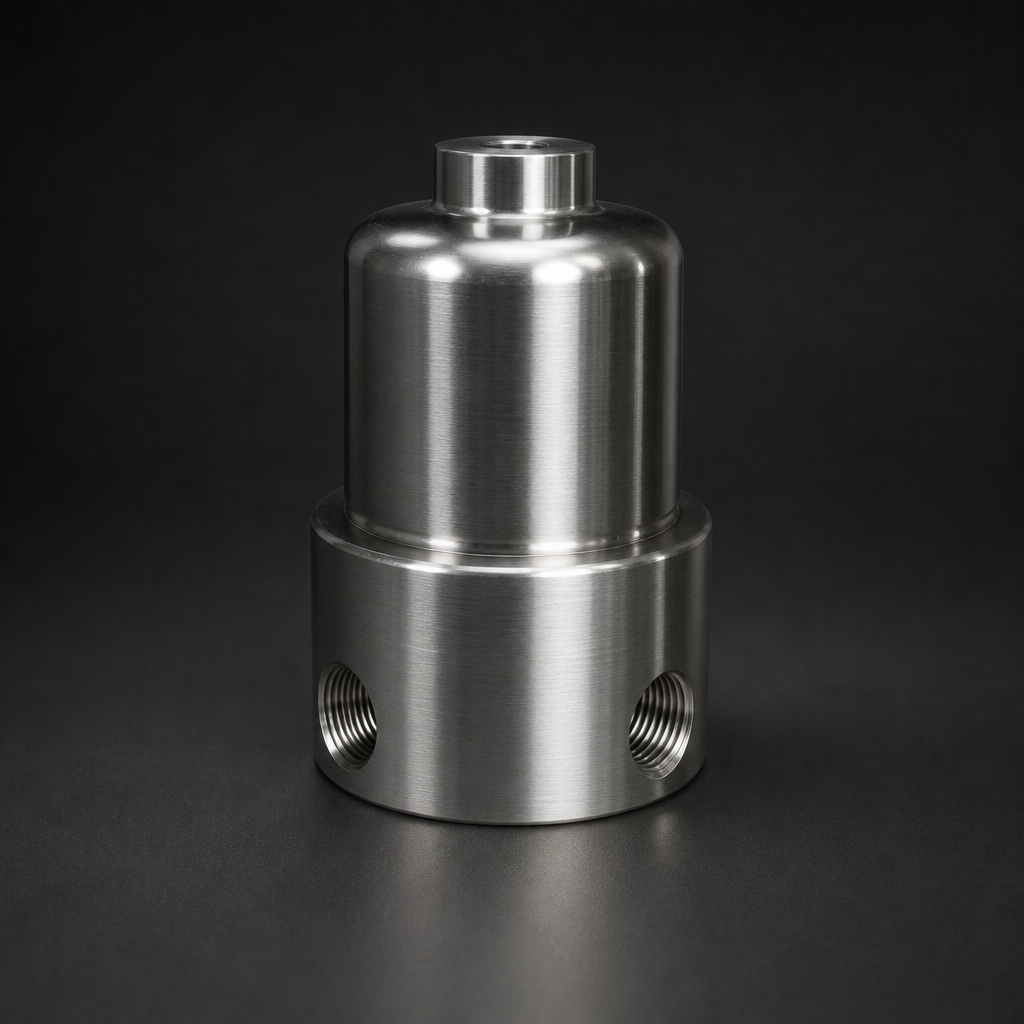
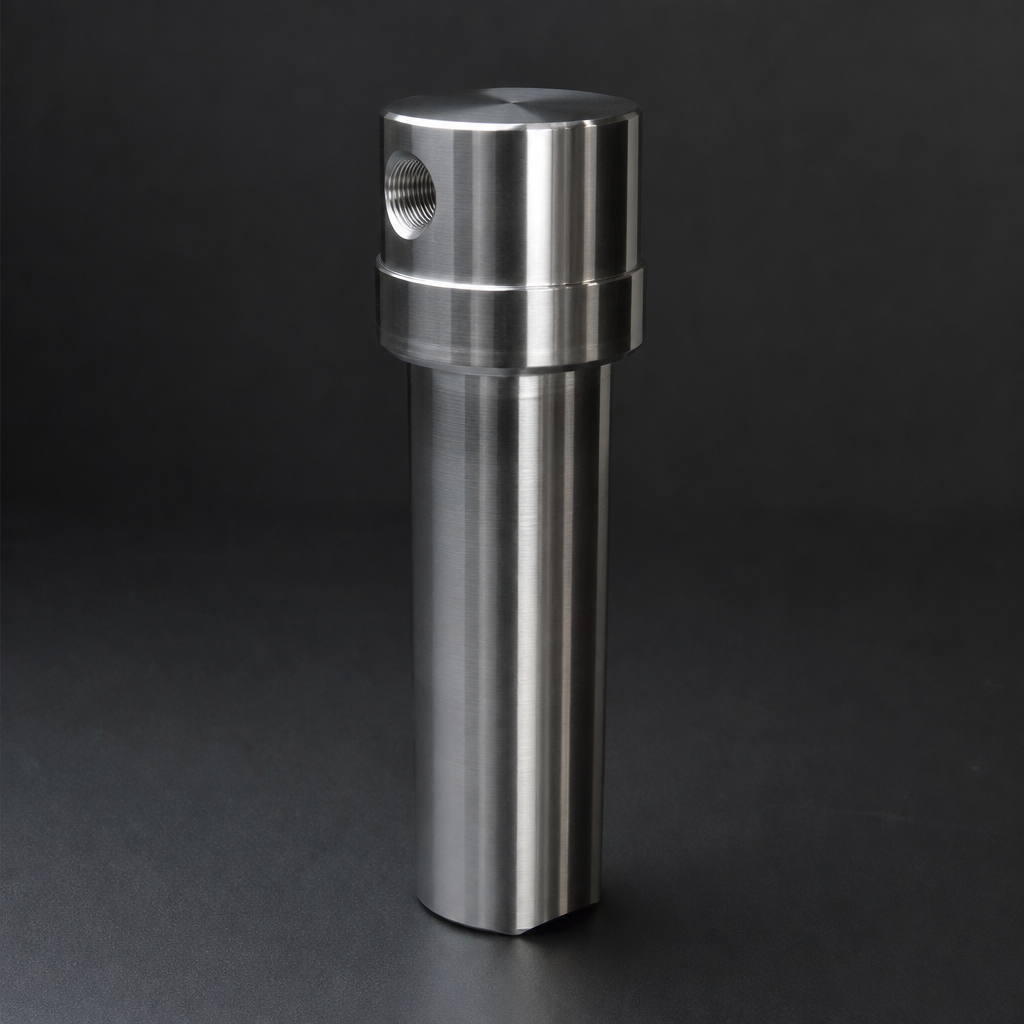
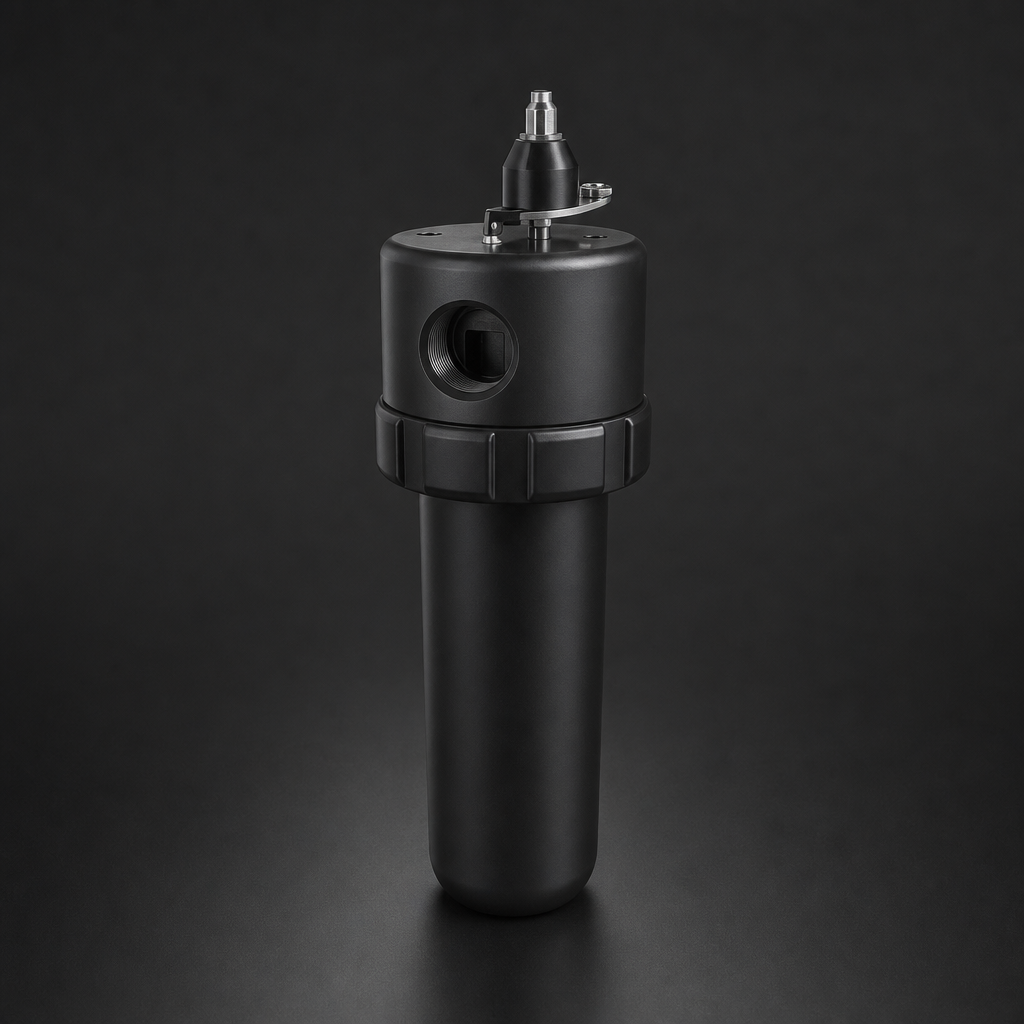
R+F FilterElements offers the RF-H-310 to RF-H-395 series of compressed air filter housings, paired with RF-C coalescing elements (borosilicate glass microfibre, 99.99% efficiency ≥ 0.1 µm) for both pre-filter stages. The RF-H-385AI is a popular choice for larger flow rates, accommodating multiple elements in a single housing to minimise pressure drop.
Before a Desiccant Dryer
Desiccant dryers demand the most rigorous pre-filtration of any dryer type. The recommended arrangement is a three-stage train:
- Stage 1 — Coalescing pre-filter (general purpose): Bulk liquid and aerosol removal to 1 µm.
- Stage 2 — High-efficiency coalescing filter: Oil aerosol removal to ≤ 0.01 mg/m³.
- Stage 3 — Activated carbon adsorber: Oil vapour removal to ≤ 0.003 mg/m³ (ISO 8573-1 Class 1 oil vapour). This stage is critical — oil vapour passes straight through coalescing elements and will poison the desiccant bed over time.
The RF-AC activated carbon adsorber elements, available from R+F FilterElements, are designed specifically for this duty. They use a high-activity activated carbon bed to adsorb oil vapour and other hydrocarbons, protecting the desiccant investment downstream. For guidance on selecting between coalescing and adsorption elements, see our article on coalescing vs particulate filter elements.
It is also worth noting that the air entering a desiccant dryer should be as cool as possible — installing an aftercooler upstream reduces the water load on both the filters and the desiccant bed, extending service life significantly.
Before a Membrane Dryer
Membrane dryers are the most sensitive of the three types to inlet contamination. The membrane fibres will be permanently damaged by liquid water, liquid oil, or oil aerosols above approximately 0.1 mg/m³. Pre-filtration must therefore achieve:
- Complete removal of all liquid water and water aerosols
- Oil aerosol removal to ≤ 0.01 mg/m³
- Particulate removal to ≤ 1 µm (to prevent fibre blockage)
A two-stage pre-filter arrangement — general purpose coalescing followed by high-efficiency coalescing — using RF-C series elements in RF-H series housings will meet these requirements. For applications where oil vapour is also a concern (e.g., oil-lubricated compressors in warm climates), an activated carbon stage should be added.
Downstream Filtration: The Step Most Engineers Forget
Pre-filtration protects the dryer. Downstream filtration protects everything after it — and this step is overlooked far more often than it should be.
After a Refrigerant Dryer
Refrigerant dryers do not introduce new contamination, but they do not remove particulate either. A downstream particulate filter using RF-P series elements (99.99% efficiency ≥ 0.3 µm) is recommended to capture any pipe scale or debris mobilised by the change in air temperature and flow conditions through the dryer.
After a Desiccant Dryer
This is the most critical downstream filtration requirement. Desiccant granules are friable — they shed fine dust during normal operation and especially during regeneration cycles. This desiccant dust is abrasive and hygroscopic; it will damage pneumatic valves, actuators, and instruments, and it will re-adsorb moisture from the air, partially defeating the purpose of the dryer.
A dedicated after-filter using RF-P particulate elements rated to 1 µm or finer must be installed immediately downstream of every desiccant dryer. This is a non-negotiable requirement, and most desiccant dryer manufacturers specify it explicitly in their installation instructions. For more detail on protecting adsorbers and dryers, see our dedicated guide on protecting dryers and adsorbers.
After a Membrane Dryer
Membrane fibres can shed microscopic fragments over time, particularly as they age. A downstream particulate filter is recommended to capture any such debris before it reaches sensitive instruments or process equipment. An RF-P element rated to 0.3 µm in an RF-H series housing is the appropriate choice.
Use our free Engineering Tool to get a filtration recommendation for your specific application in under 2 minutes.
Recommended Filter Trains by Dryer Type
| Dryer Type | Upstream Filtration | Downstream Filtration | R+F Elements |
|---|---|---|---|
| Refrigerant | General coalescing + high-efficiency coalescing | Particulate filter (1 µm) | RF-C (×2), RF-P |
| Desiccant | General coalescing + high-efficiency coalescing + activated carbon | Particulate filter (1 µm or finer) — mandatory | RF-C (×2), RF-AC, RF-P |
| Membrane | General coalescing + high-efficiency coalescing (+ activated carbon if oil vapour present) | Particulate filter (0.3 µm) | RF-C (×2), RF-AC (optional), RF-P |
Sizing the Filters Correctly
Filter housings must be sized for the actual flow rate at line pressure, not free air delivery (FAD). Oversizing reduces velocity and can cause re-entrainment of coalesced liquid; undersizing increases pressure drop and operating cost. R+F FilterElements offers housing sizes from the compact RF-H-310 up to the large-body RF-H-395 series for flows up to 12,000 Nm³/h.
For help selecting the correct housing and element combination for your specific flow rate, pressure, and temperature conditions, use the R+F sizing wizard or contact the R+F FilterElements engineering team directly.
A Note on ISO 8573-1 Compliance
Many end users and OEMs specify compressed air quality to ISO 8573-1, which defines classes for particulate, water, and oil contamination. The filter train installed — both upstream and downstream of the dryer — determines the ISO 8573-1 class achievable at the point of use.
The dryer alone does not determine the oil class. A desiccant dryer with no pre-filtration will deliver a very low dew point (Class 1 or 2 moisture) but potentially Class 5 or worse oil content. A well-filtered refrigerant dryer can achieve Class 1 oil with a Class 4 dew point — appropriate for many general industrial applications.
Specifying the correct ISO 8573-1 class for your application, and then selecting the dryer and filter combination that achieves it at the lowest total cost of ownership, is the correct engineering approach.
Summary: Protect Your Dryer Investment with the Right Filtration
The compressed air dryer comparison above makes clear that all three technologies — refrigerant, desiccant, and membrane — require specific filtration to perform as designed. The differences lie in the severity of the requirement and the consequences of getting it wrong.
For refrigerant dryers, two-stage coalescing pre-filtration and a downstream particulate filter are standard practice. For desiccant dryers, the stakes are higher: three-stage pre-filtration including activated carbon is essential, and a downstream after-filter for desiccant dust is mandatory. For membrane dryers, the membrane fibres are irreplaceable once damaged — rigorous pre-filtration is the only protection.
R+F FilterElements, a German-based filtration specialist, offers a complete range of filter housings and elements engineered to meet these requirements across all flow rates and pressures. From the compact RF-H-310 series to large-body multi-element housings, and from standard RF-C coalescing elements to RF-AC activated carbon adsorbers, the full filter train for any dryer type is available from a single source.
To discuss your specific application or request a filter train recommendation, contact R+F FilterElements or explore the full compressed air filter range.
- Before examining filtration requirements, it is worth understanding what each dryer type does and where it is best suited.
- Every dryer manufacturer specifies inlet air quality requirements.
- Stage 1 — General purpose coalescing filter:
- Pre-filtration protects the dryer.