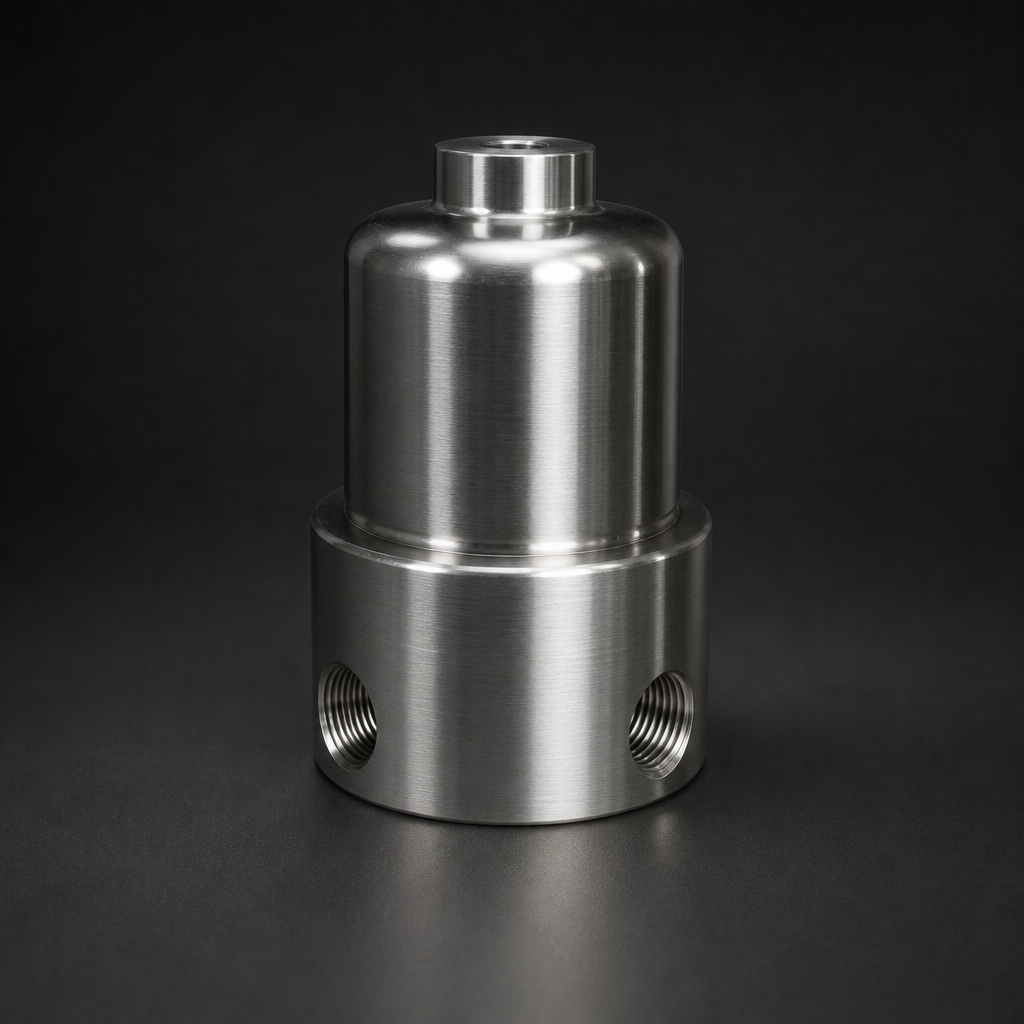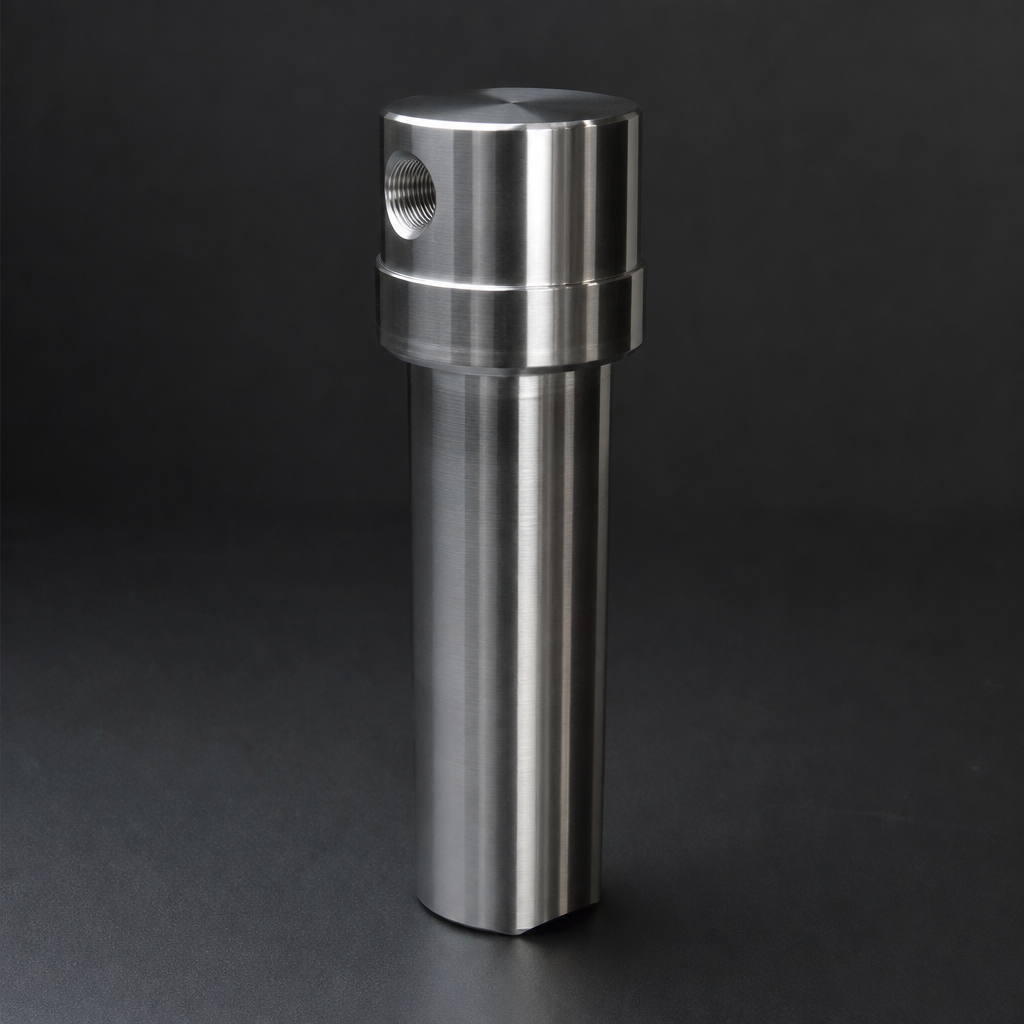
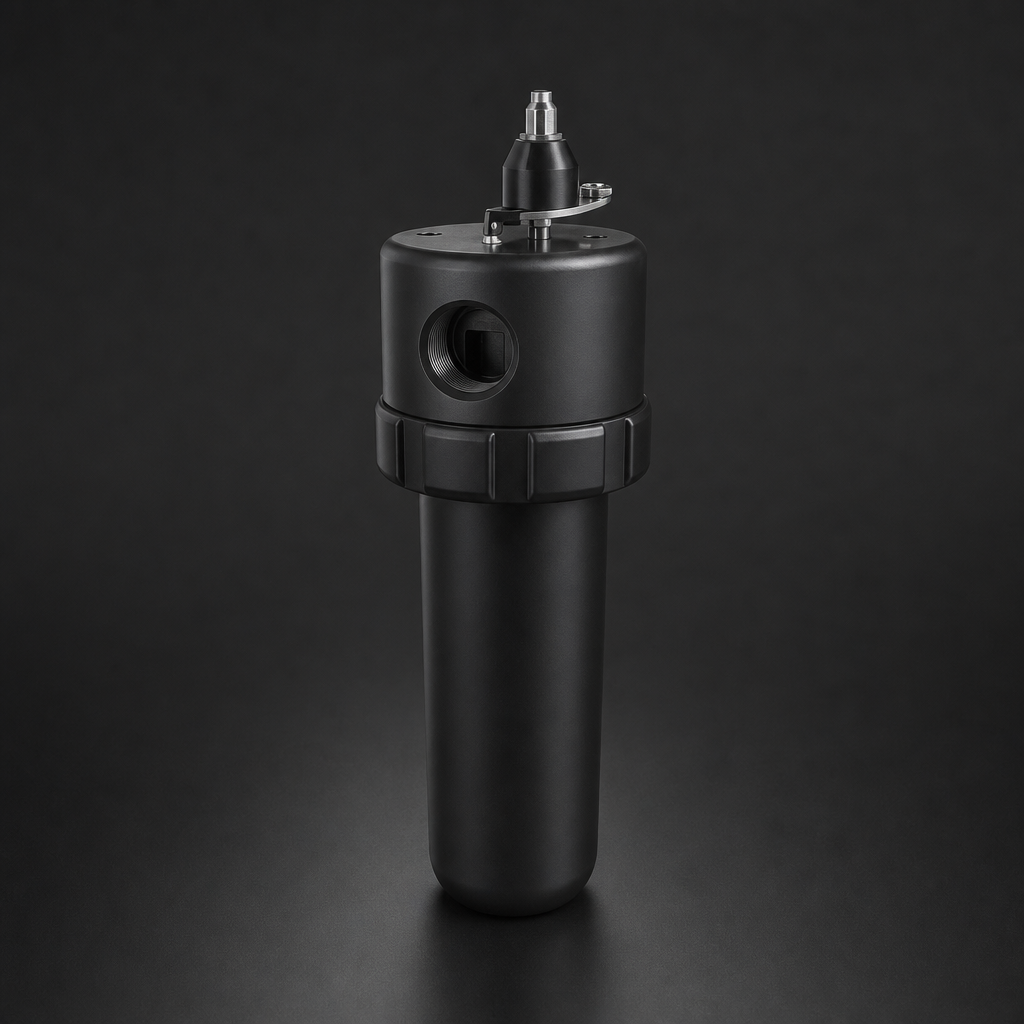
When a Domnick Hunter compressed air filter reaches the end of its service life, the instinct is to order the same part number again. But what happens when the OEM element is discontinued, lead times stretch to weeks, or the price has climbed far beyond budget? A functional cross-reference to a compatible replacement element is often the most practical solution — provided you understand what "compatible" actually means in a compressed air filtration context.
This guide covers the most common Domnick Hunter (now Parker Hannifin) filter element series, explains how they map to R+F FilterElements coalescing and particulate elements, and highlights the system-level considerations you must address before swapping elements in an existing housing.
Understanding the Domnick Hunter Element Series
Domnick Hunter organised its compressed air filter elements into several distinct series, each targeting a different filtration duty. Knowing which series you are working with is the first step in finding a reliable replacement.
E-Series Coalescing Elements (E006AA – E620AA)
The E-series is the workhorse of the Domnick Hunter range. These borosilicate glass microfibre coalescing elements are designed to remove liquid aerosols and oil mist from compressed air streams. The numeric portion of the part number (006, 012, 025, 085, 150, 300, 620) broadly indicates the element's flow capacity in Nm³/h at rated conditions. The suffix letters denote the filtration grade:
- AA — General-purpose coalescing (≤ 0.5 mg/m³ residual oil)
- AO — High-efficiency coalescing (≤ 0.01 mg/m³)
- AX — Activated carbon adsorption (≤ 0.003 mg/m³ oil vapour)
A-Series Particulate Elements
A-series elements are dry particulate filters, typically used upstream of coalescing stages to protect the finer coalescing media from bulk contamination. They are rated to remove solid particles down to 1 µm or 5 µm depending on grade.
EZ Inline Elements
The EZ inline range covers compact, point-of-use filter elements for smaller flow rates and space-constrained installations. These are often found in instrument air and analyser supply lines.
AC Adsorber Elements
AC-series elements contain activated carbon granules or impregnated media for oil vapour and odour removal. They are the final polishing stage in a three-stage compressed air treatment train.
PF Particulate Elements
PF elements are high-efficiency particulate filters, often used in food, pharmaceutical, and electronics applications where solid particle counts must meet stringent cleanliness standards.
Cross-Reference: Domnick Hunter to R+F FilterElements
The table below maps the most frequently requested Domnick Hunter element part numbers to their functional equivalents in the R+F FilterElements range. Dimensional compatibility with the original Domnick Hunter housing is noted separately — see the system-level section below.
| Domnick Hunter Part | Grade / Duty | R+F Equivalent | Notes |
|---|---|---|---|
| E006AA | General coalescing | RF-C-12032 | Verify end-cap OD and seal type |
| E012AA / E012AO | General / high-eff. coalescing | RF-C-12057 | AO grade: confirm 0.01 mg/m³ spec |
| E025AA / E025AO | General / high-eff. coalescing | RF-C-25064 | Check bypass valve spring rate |
| E085AA / E085AO | General / high-eff. coalescing | RF-C-25178 | Most common mid-range replacement |
| E150AA / E150AO | General / high-eff. coalescing | RF-C-51230 | Confirm housing bowl clearance |
| E300AA / E620AA | High-flow coalescing | RF-C-51476 | Large-body housings; check port size |
| E006AX / E085AX | Activated carbon adsorption | RF-AC (matching size) | Carbon bed depth must be equivalent |
| A-series (particulate) | Dry particulate, 1–5 µm | RF-P (matching size) | Confirm micron rating matches duty |
System-Level Considerations Before Swapping Elements
Replacing a filter element is not always a straightforward swap. Compressed air filter housings from different manufacturers — and even different generations of the same manufacturer — can differ in ways that prevent direct element interchange. Before ordering a cross-reference replacement, check the following:
End-Cap Geometry and Seal Type
Domnick Hunter housings use a proprietary end-cap design with a specific outer diameter and seal groove profile. R+F FilterElements coalescing elements (RF-C series) are designed for use in R+F compressed air filter housings (RF-H-310 to RF-H-395 series). If you are fitting an RF-C element into an existing Domnick Hunter housing, you must confirm that the end-cap OD and seal groove match — or consider a full housing replacement.
Bypass Valve Compatibility
Many Domnick Hunter housings incorporate a differential pressure bypass valve that opens if the element becomes blocked. The bypass valve spring rate is calibrated to the element's clean differential pressure. A replacement element with a different initial ΔP characteristic may cause the bypass to open prematurely or not at all. Consult the housing's technical data sheet for the bypass cracking pressure.
Flow Direction
Coalescing elements are directional — liquid aerosols must flow from the outside of the element to the inside (outside-in flow) so that coalesced droplets drain by gravity to the bowl. Confirm that the replacement element is rated for the same flow direction as the original.
When a Full Housing Replacement Makes More Sense
If the Domnick Hunter housing is more than ten years old, or if the bowl threads, drain valve, or differential pressure indicator are showing wear, a full housing replacement is often more cost-effective than sourcing a compatible element for an ageing unit. R+F compressed air filter housings accept standard RF-C and RF-P elements and are available in sizes covering 0–12,000 Nm³/h. The R+F cross-reference tool can help identify the right housing and element combination for your flow rate and pressure.
For point-of-use and instrument air applications where the original EZ inline element is no longer available, the RF-DIL disposable inline filter range offers a compact, cost-effective alternative that does not require a dedicated housing.
Need help selecting the right filter element replacement?
Use our free Engineering Tool to get a filtration recommendation for your specific application in under 2 minutes.
Maintaining ISO 8573-1 Compliance After a Cross-Reference
If your compressed air system is certified to ISO 8573-1, any element replacement must maintain the declared air quality class. The replacement element must meet or exceed the original element's rated efficiency for the relevant contaminant class (oil aerosol, solid particles, water). R+F FilterElements RF-C coalescing elements are independently tested to ISO 12500-1 and achieve 99.99% efficiency at ≥ 0.1 µm — equivalent to or better than the Domnick Hunter AO grade.
For adsorption duty (AX grade equivalents), the RF-AC activated carbon element achieves residual oil vapour below 0.003 mg/m³, meeting ISO 8573-1 Class 1 for oil vapour. Ensure the carbon bed volume in the replacement element is equivalent to the original to maintain the rated service life between changes.
- Domnick Hunter organised its compressed air filter elements into several distinct series, each targeting a different filtration duty.
- The table below maps the most frequently requested Domnick Hunter element part numbers to their functional equivalents in the R+F FilterElements range.
- Replacing a filter element is not always a straightforward swap.
- If your compressed air system is certified to ISO 8573-1, any element replacement must maintain the declared air quality class.
Related Reading
- Coalescing vs Particulate Filter Elements — Which Do You Need?
- ISO 8573-1 Compressed Air Quality Classes Explained
- Crankcase Ventilation Filtration — Protecting Your Compressor
Use our Cross-Reference Tool → or speak with our engineering team to confirm compatibility with your existing housing.