Every time a gearbox or hydraulic reservoir heats up during operation and then cools down at rest, it breathes. Warm air expands and is expelled; cool air is drawn back in. That incoming air carries two threats: airborne particulate and atmospheric moisture. Without effective breather filtration, both enter the oil sump unchecked — accelerating wear, promoting corrosion, and shortening the service life of expensive gear sets and hydraulic components.
This article explains the thermal breathing mechanism, the difference between desiccant and particulate breather filters, and how to select the right R+F FilterElements solution for your application.
The Thermal Breathing Cycle — Why Reservoirs Inhale Contamination
A gearbox or hydraulic tank is not a sealed vessel. It must be vented to atmosphere to allow oil level changes as cylinders extend and retract, and to prevent pressure build-up from thermal expansion. During a typical duty cycle:
- Heating phase: Internal temperature rises, air pressure increases, and moist warm air is expelled through the breather.
- Cooling phase: Temperature drops, internal pressure falls below atmospheric, and ambient air is drawn back in through the same breather port.
In humid industrial environments — coastal plants, wash-down areas, or outdoor installations — the ingested air can carry relative humidity above 80 %. As this moisture-laden air contacts cooler oil surfaces, water condenses and emulsifies into the lubricant. Even small quantities of water (as little as 0.05 % by volume) can reduce oil film strength by up to 50 %, dramatically increasing metal-to-metal contact and wear rates.
Particulate Ingress — The Second Threat
Alongside moisture, unfiltered breather ports allow fine dust and airborne particles to enter the reservoir. ISO 4406 cleanliness targets for hydraulic systems typically demand fluid cleanliness at 16/14/11 or better. Ambient air in industrial environments routinely contains particles at concentrations that would push unprotected oil to 22/20/17 within weeks of commissioning.
Gear tooth surfaces, pump vanes, and servo valve spools are precision-machined to tolerances of 1–5 µm. Particles in this size range act as abrasive lapping compounds, generating further wear debris in a self-accelerating contamination cycle. Effective breather filtration at ≤ 3 µm absolute is therefore essential to maintain system cleanliness.
Desiccant Breathers vs. Particulate Breathers — Choosing the Right Technology
Two primary breather technologies are available, each addressing a different contamination vector. Understanding their operating principles is essential for correct selection.
| Feature | Desiccant Breather | Particulate Breather |
|---|---|---|
| Primary function | Moisture adsorption + particle removal | Particle removal only |
| Desiccant media | Silica gel (colour-change indicator) | None |
| Filtration rating | 3 µm absolute (typical) | 3–10 µm absolute |
| Service life indicator | Colour change (blue → pink) | Differential pressure indicator |
| Best suited for | Humid environments, outdoor installations, coastal sites | Dry, controlled indoor environments |
| Typical cost | Higher (desiccant media) | Lower |
For most industrial gearbox and hydraulic applications in Northern Europe — where ambient humidity regularly exceeds 70 % RH — a desiccant breather is the recommended choice. The silica gel bed adsorbs moisture from incoming air before it can reach the oil surface, while the integrated particulate filter element removes solid contaminants simultaneously.
Need help selecting the right breather filter?
R+F FilterElements Breather Solutions
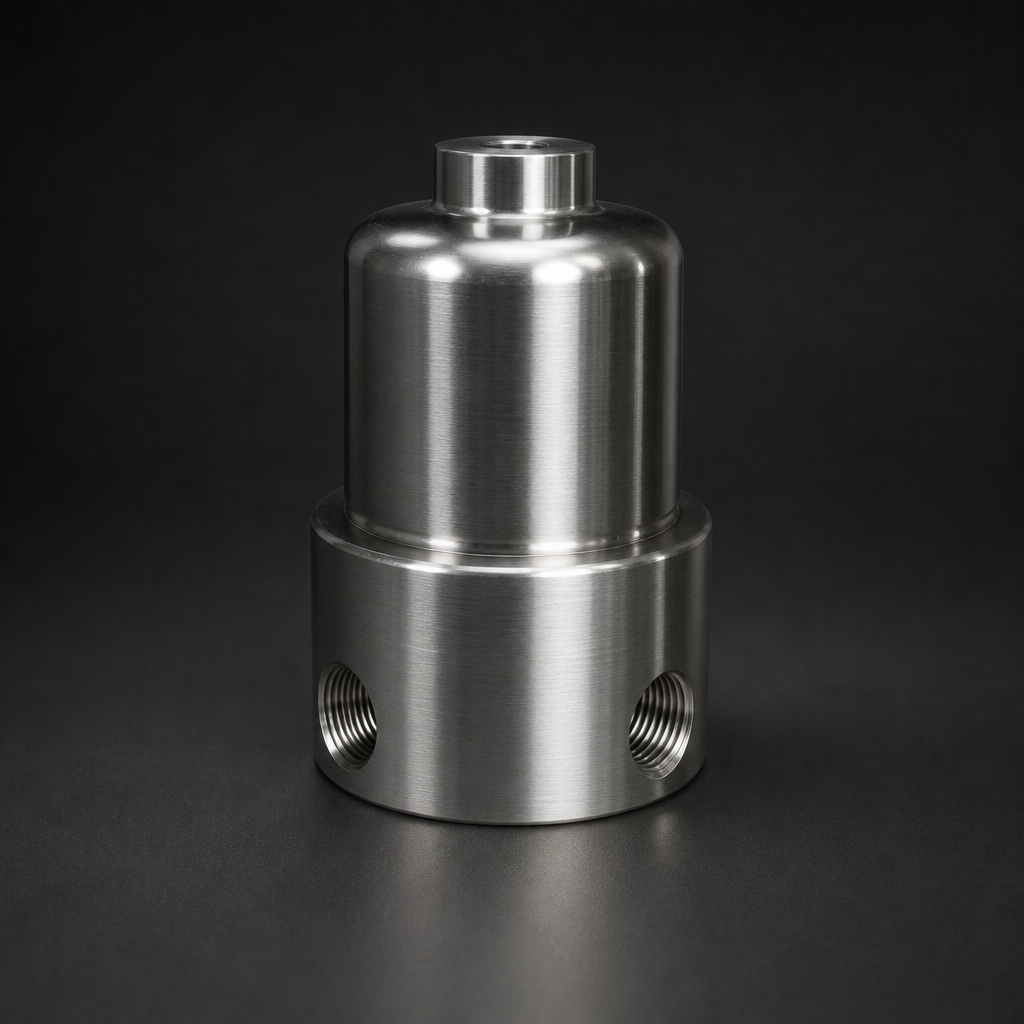
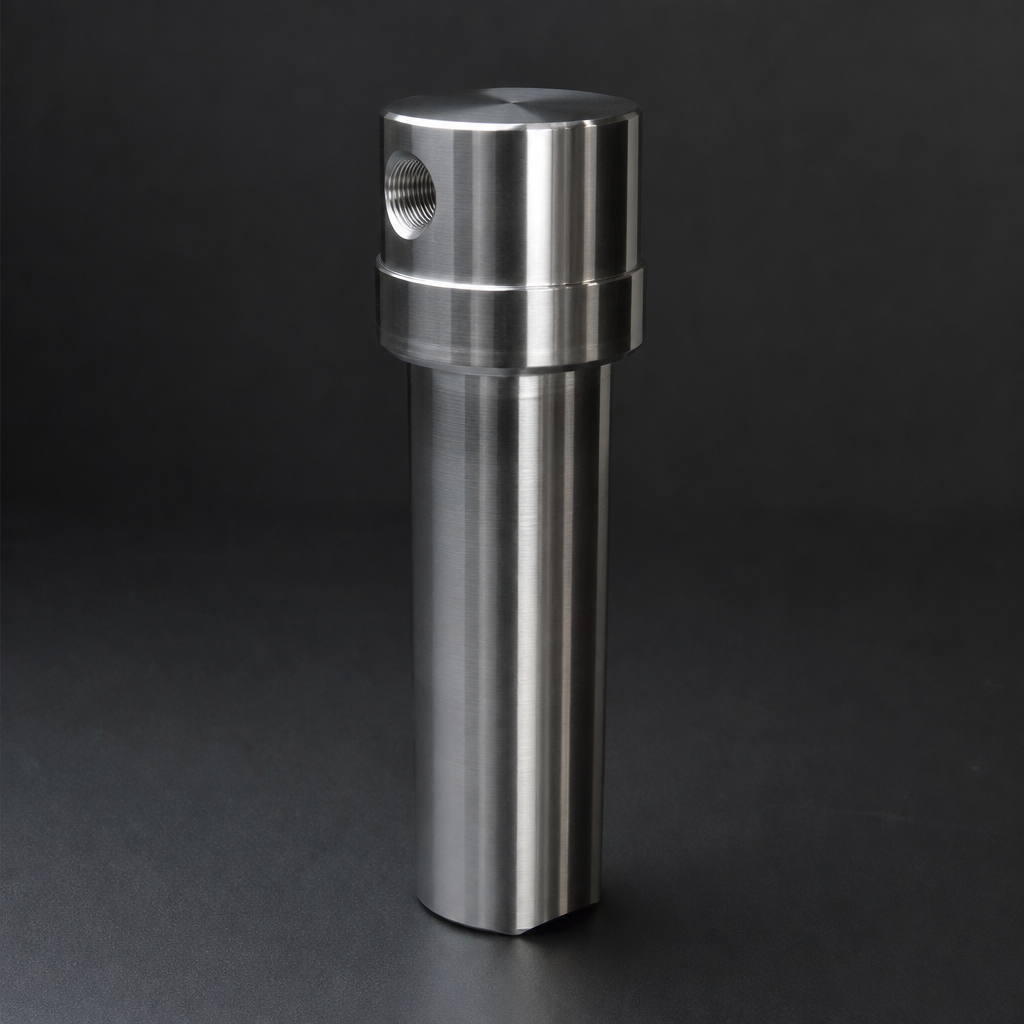
R+F FilterElements offers its own range of breather filter assemblies and replacement elements designed for gearbox and hydraulic reservoir ventilation. Two key product codes cover the majority of industrial applications:
RF-P-25064 — Particulate Breather Element
The RF-P-25064 is a borosilicate glass microfibre particulate element rated at 99.99 % efficiency ≥ 0.3 µm. It is available in standard (100 °C) and S-type (200 °C) variants, making it suitable for gearboxes operating in elevated-temperature environments such as steel mills or cement plants. The element fits directly into R+F-branded breather housings and is also compatible with many OEM breather assemblies via adaptor fittings.
RF-C-12032 — Coalescing Breather Element
Where oil mist is present in the expelled air stream — common in high-speed gearboxes — the RF-C-12032 coalescing element captures and drains entrained oil droplets, preventing external contamination of the surrounding equipment. Its borosilicate microfibre construction achieves 99.99 % efficiency ≥ 0.1 µm, ensuring that both fine particulate and oil aerosols are retained.
Use our free Engineering Tool to get a filtration recommendation for your specific application in under 2 minutes.
Sizing a Breather Filter for Your Reservoir
Correct sizing ensures that the breather does not restrict airflow during rapid oil level changes — for example, when multiple hydraulic cylinders retract simultaneously. The key parameters are:
- Maximum flow rate: Sum of all cylinder rod volumes retracting simultaneously, expressed in litres per minute.
- Allowable pressure drop: Typically ≤ 0.05 bar across the breather at maximum flow to avoid cavitation at the pump inlet.
- Port size: Match the breather port thread (BSP or NPT) to the reservoir vent connection.
- Operating temperature: Select standard or S-type elements based on ambient and oil temperature.
Our Engineering Sizing Tool allows you to input cylinder bore, stroke, and cycle time data to calculate the required breather flow capacity automatically. For complex multi-actuator systems, our engineering team can provide a detailed sizing review — contact us to discuss your requirements.
Installation and Maintenance Best Practices
Even the best breather filter will underperform if incorrectly installed or maintained. Follow these guidelines to maximise service life and protection:
- Mount the breather vertically (port facing down) to prevent water pooling on the filter media.
- Inspect desiccant colour indicators monthly — replace when more than 50 % of the silica gel has changed colour.
- Check differential pressure indicators on particulate breathers at each planned maintenance interval.
- Never reuse a saturated desiccant breather — silica gel regeneration in the field is unreliable and risks releasing adsorbed moisture back into the reservoir.
- Log breather replacement dates alongside oil analysis results to correlate moisture ingress with service intervals.
For applications where oil analysis is not routinely performed, consider upgrading to a desiccant breather with an integrated check valve. This prevents back-flow of humid air during rapid pressure equalisation events and extends the effective service life of the desiccant bed.
Further guidance on contamination control strategies is available in our article on coalescing vs. particulate filter elements and our overview of crankcase ventilation filtration. For compressed air systems feeding hydraulic power units, see our ISO 8573-1 compressed air quality guide.
- A gearbox or hydraulic tank is not a sealed vessel.
- Alongside moisture, unfiltered breather ports allow fine dust and airborne particles to enter the reservoir.
- Two primary breather technologies are available, each addressing a different contamination vector.
- R+F FilterElements offers its own range of breather filter assemblies and replacement elements designed for gearbox and hydraulic reservoir ventilation.
Related Reading
- Coalescing vs. Particulate Filter Elements — Which Do You Need?
- Crankcase Ventilation Filtration — Protecting Engines and Compressors
- ISO 8573-1 Compressed Air Quality — A Practical Guide
Try our Engineering Sizing Tool → or discuss your requirements with our team.