Green hydrogen is only as clean as its filtration
Electrolysis produces hydrogen by splitting water — a fundamentally clean process. But “fundamentally clean” and “ready for use” are very different things. The hydrogen leaving an electrolyser carries moisture, trace contaminants, and — depending on the technology — electrolyte aerosol that must be removed before the gas reaches compression, storage, pipelines, or fuel cells.
Contamination profiles by electrolyser type
The contamination you need to filter depends heavily on the electrolysis technology. PEM (Proton Exchange Membrane) and alkaline electrolysers produce different contaminant profiles:
| Contaminant | PEM Electrolyser | Alkaline Electrolyser |
|---|---|---|
| Moisture (H₂O) | High — saturated at operating temp | High — saturated at operating temp |
| Electrolyte aerosol | Minimal (solid polymer membrane) | KOH aerosol — caustic, corrosive, damaging to fuel cells |
| Particulate | Low — membrane fragments, catalyst fines | Moderate — diaphragm particles, scale |
| Oxygen cross-over | Low (< 1%) | Low to moderate depending on differential pressure |
KOH carry-over: the alkaline-specific problem
Alkaline electrolysers use 25–30% potassium hydroxide (KOH) solution as electrolyte. Fine KOH aerosol droplets carry over with the hydrogen gas. If this reaches downstream equipment — particularly PEM fuel cells — it poisons the membrane irreversibly. Effective coalescing filtration is mandatory for alkaline hydrogen.
A practical multi-stage filtration concept
Stage 1: Coalescing separator
Immediately after the electrolyser. Removes bulk moisture and large electrolyte droplets. Typically a 316L housing with CS-grade coalescing element.
Stage 2: High-efficiency coalescer
Removes sub-micron KOH aerosol (alkaline) or residual moisture droplets (PEM). Grade HE, 99.99% at 0.1 µm. 316L stainless steel construction.
Stage 3: Dryer (PSA or membrane)
Reduces moisture content to target level. PSA for very low dewpoints; membrane dryers for moderate drying requirements.
Stage 4: Final particulate filter
Point-of-use protection before compression or storage. Removes any residual particulate from piping, valves, or dryer carryover.
Material requirements for hydrogen service
Hydrogen presents specific material challenges that differ from other process gases:
- Hydrogen embrittlement: Carbon steel and certain alloys become brittle under sustained hydrogen exposure. Housing materials must be 316L stainless steel or aluminium (for low-pressure applications).
- Seal compatibility: Standard Nitrile seals have limited hydrogen resistance at elevated temperatures. Viton (FKM) or PTFE seals are preferred.
- Permeation: Hydrogen molecules are extremely small and can permeate through certain polymeric materials. Metallic housings are strongly preferred over plastic or composite designs.
R+F high-pressure housings for H₂
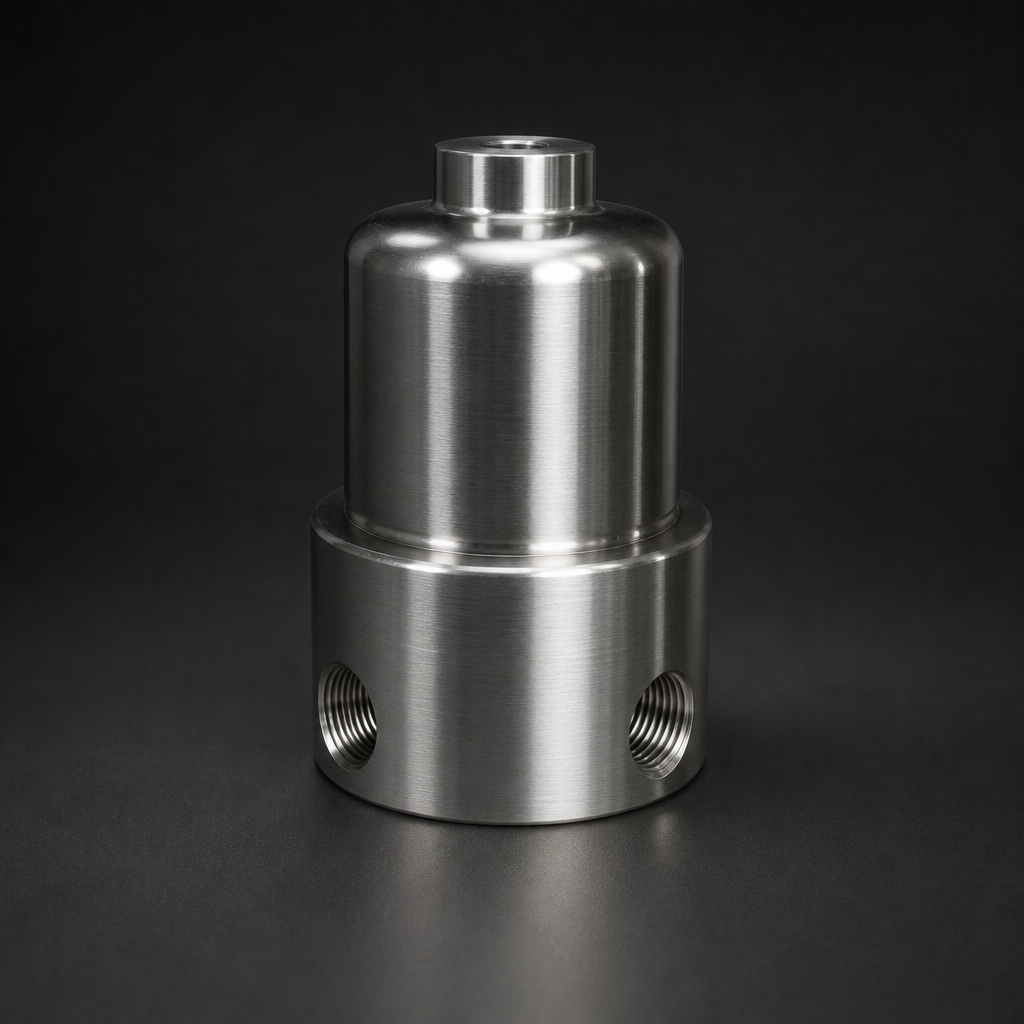
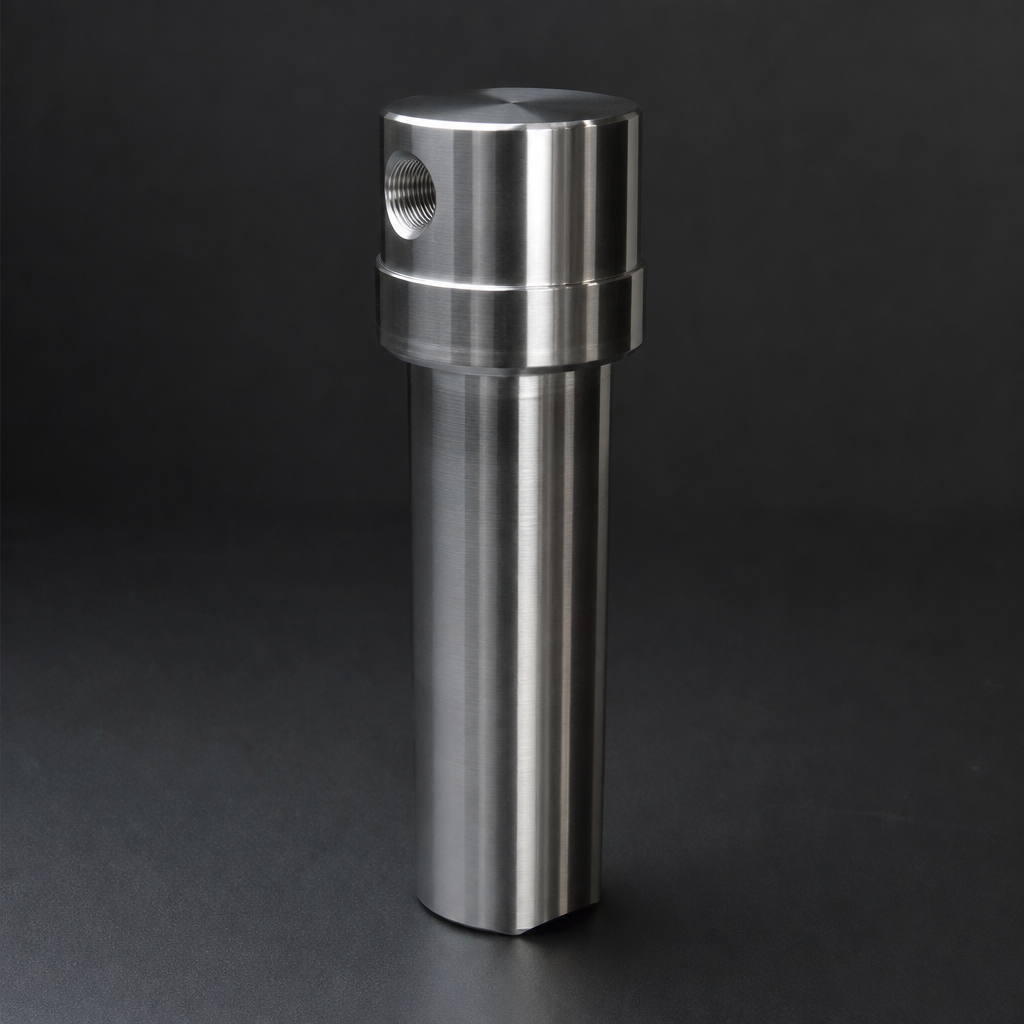
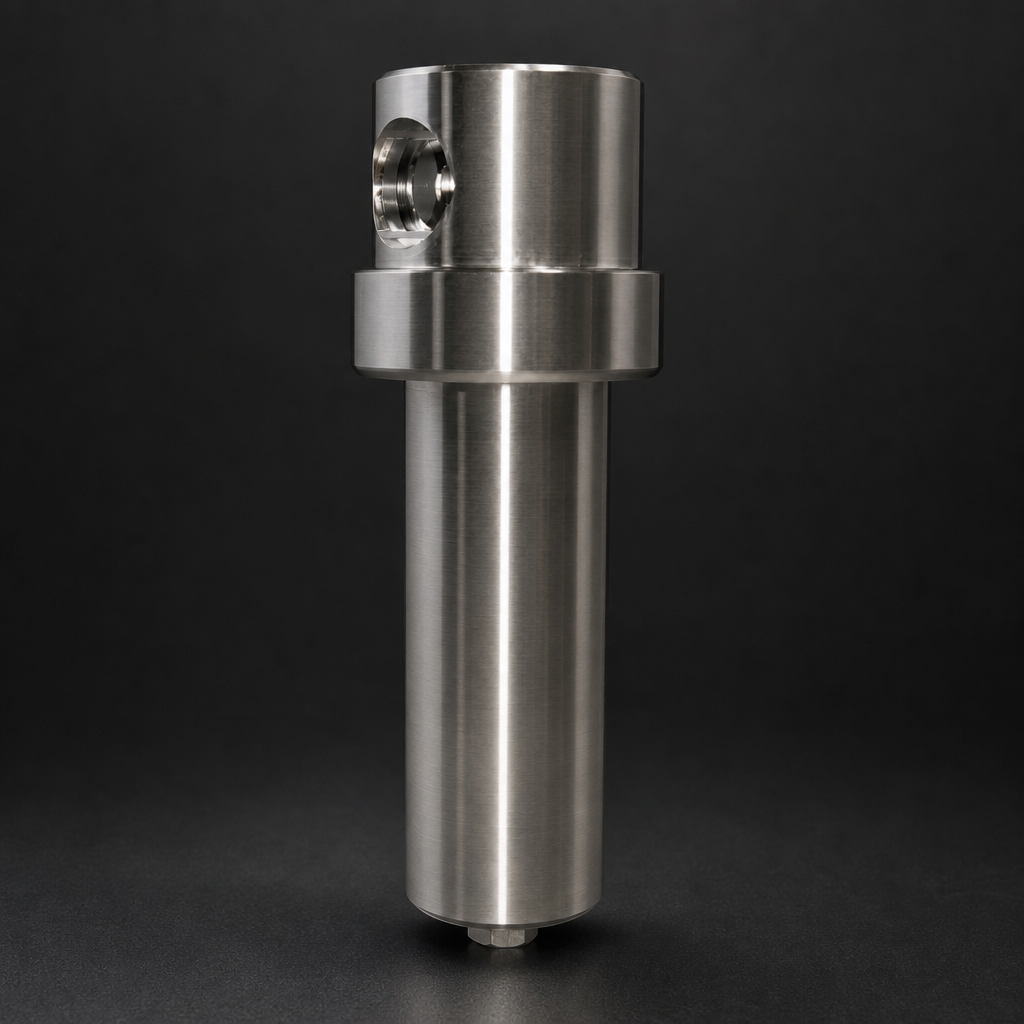
Our RF-H-150 and RF-H-160 series are 316L stainless steel housings rated to 100 bar (HP versions 200 bar, VP versions 400 bar), with Viton or PTFE seal options. They are specifically suitable for hydrogen service in electrolysis, compression, storage, and refuelling applications.
ISO 14687 and fuel cell requirements
Hydrogen for fuel cell vehicles must meet ISO 14687 Grade D (previously SAE J2719). Key purity limits:
| Contaminant | Max. Concentration |
|---|---|
| Water (H₂O) | ≤ 5 µmol/mol (5 ppm) |
| Total hydrocarbons | ≤ 2 µmol/mol |
| Oxygen (O₂) | ≤ 5 µmol/mol |
| Particulate | ≤ 1 mg/kg |
| Ammonia (NH₃) | ≤ 0.1 µmol/mol |
Key Takeaway
Hydrogen from electrolysis requires multi-stage filtration: coalescing separation for moisture and electrolyte aerosol, drying for water vapour, and final particulate filtration for point-of-use protection. Alkaline systems require particular attention to KOH carry-over. All wetted parts must be hydrogen-compatible — 316L stainless steel with Viton or PTFE seals.
Specify filtration for your H₂ system
Select 'Process Gas Filtration' in the Engineering Tool and enter your hydrogen operating conditions for matched housing recommendations.