If your rotary vane or screw vacuum pump is exhausting oil mist into the workshop, you already know the problem: contaminated air, housekeeping headaches, and a compliance risk that grows with every hour of operation. Leybold and Edwards are two of the most widely installed vacuum pump brands in European industry, and both supply proprietary exhaust filter assemblies — but OEM replacement elements and housings carry a significant price premium. This guide explains how R+F FilterElements vacuum exhaust filters can replace Leybold and Edwards oil mist separators, either as a complete assembly or as a drop-in element, without compromising performance.
Why Vacuum Pump Exhaust Filtration Matters
Rotary vane vacuum pumps lubricate their vanes with oil. Under normal operation, a proportion of that oil is carried out of the exhaust port as a fine aerosol — droplets typically in the 0.1–5 µm range. Without an effective oil mist separator, this aerosol is released directly into the working environment. The consequences range from nuisance (oily surfaces, odour) to serious (respiratory exposure, fire risk from accumulated oil on hot surfaces, and regulatory non-compliance under ATEX or workplace air-quality directives).
Leybold (part of the Atlas Copco group) and Edwards (part of Atlas Copco's vacuum division) both fit exhaust filter assemblies as standard on their rotary vane pumps. The Leybold SOGEVAC and TRIVAC ranges, and the Edwards E2M and RV series, are among the most common pumps found in laboratories, pharmaceutical production, and industrial vacuum systems across Europe.
OEM Exhaust Filter Assemblies: What You Are Paying For
OEM exhaust filter assemblies from Leybold and Edwards are engineered to fit their specific pump exhaust ports. The housings are typically aluminium or glass-filled nylon, with a bayonet or threaded connection. The filter elements inside are coalescing-type: borosilicate glass microfibre media that captures oil aerosol and drains it back to the pump sump via a return line.
The challenge with OEM elements is cost and lead time. Leybold and Edwards replacement elements are sold exclusively through their own service networks, and list prices are typically 40–80% higher than equivalent third-party elements of the same specification. Lead times of 2–4 weeks are common for less popular pump models, which means unplanned downtime if an element blocks unexpectedly.
The R+F Replacement Approach: Assembly or Element-Only
R+F FilterElements offers two routes for replacing Leybold and Edwards exhaust filtration, available through the R+F vacuum pump exhaust filter range:
Option 1: Complete Replacement Assembly
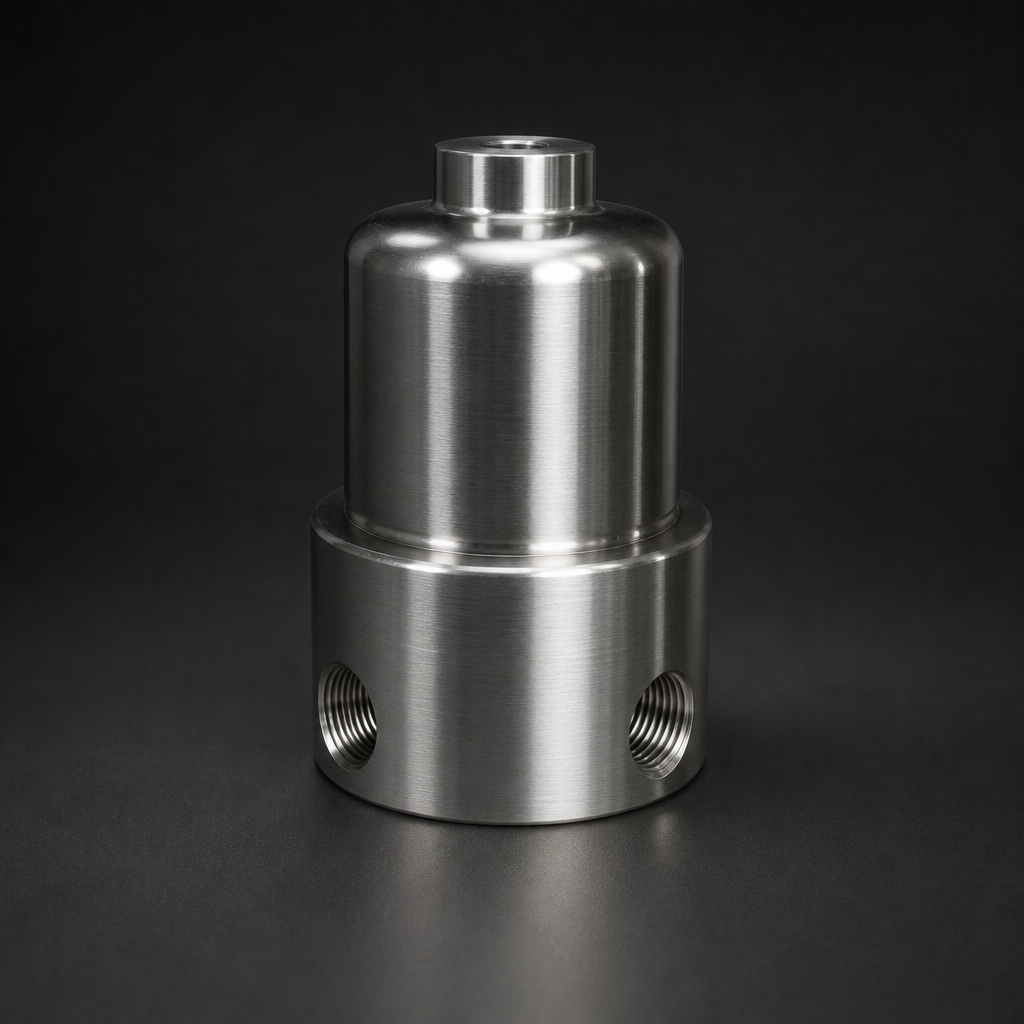
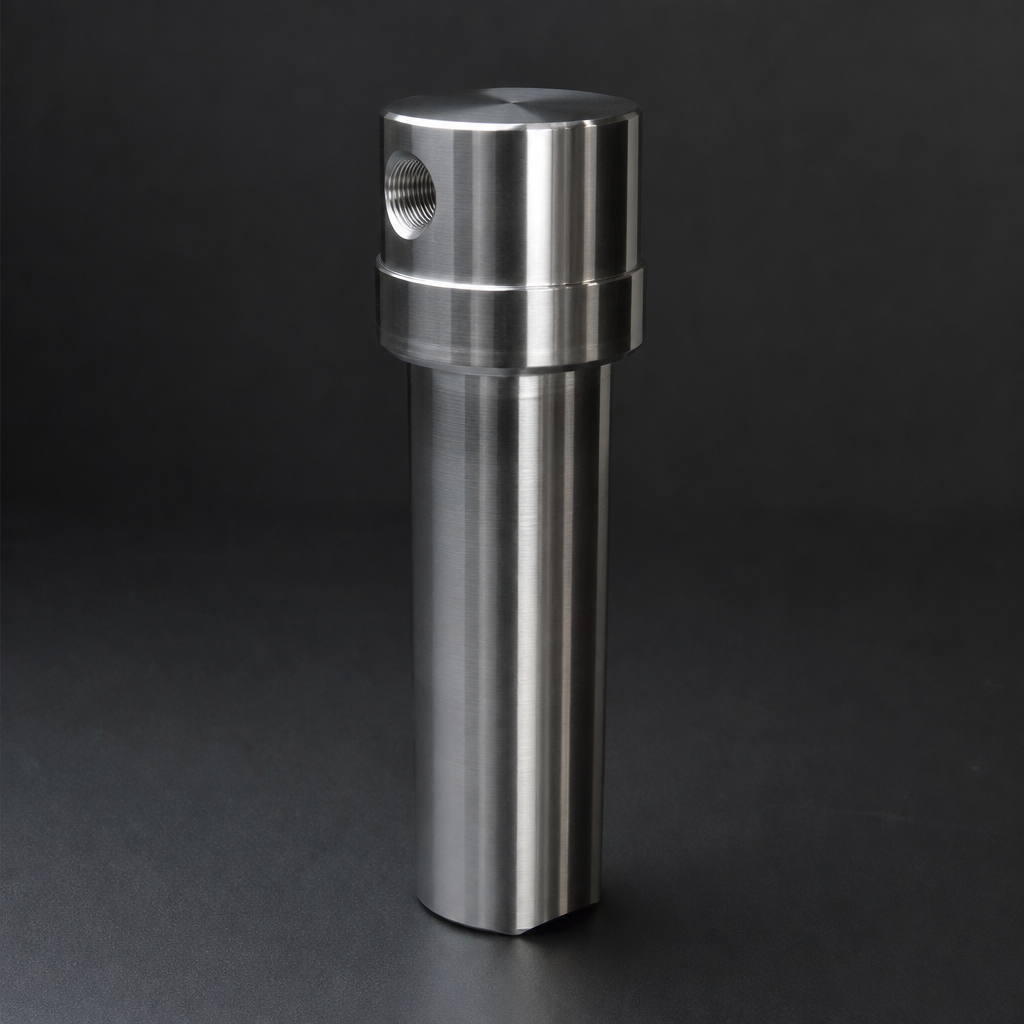
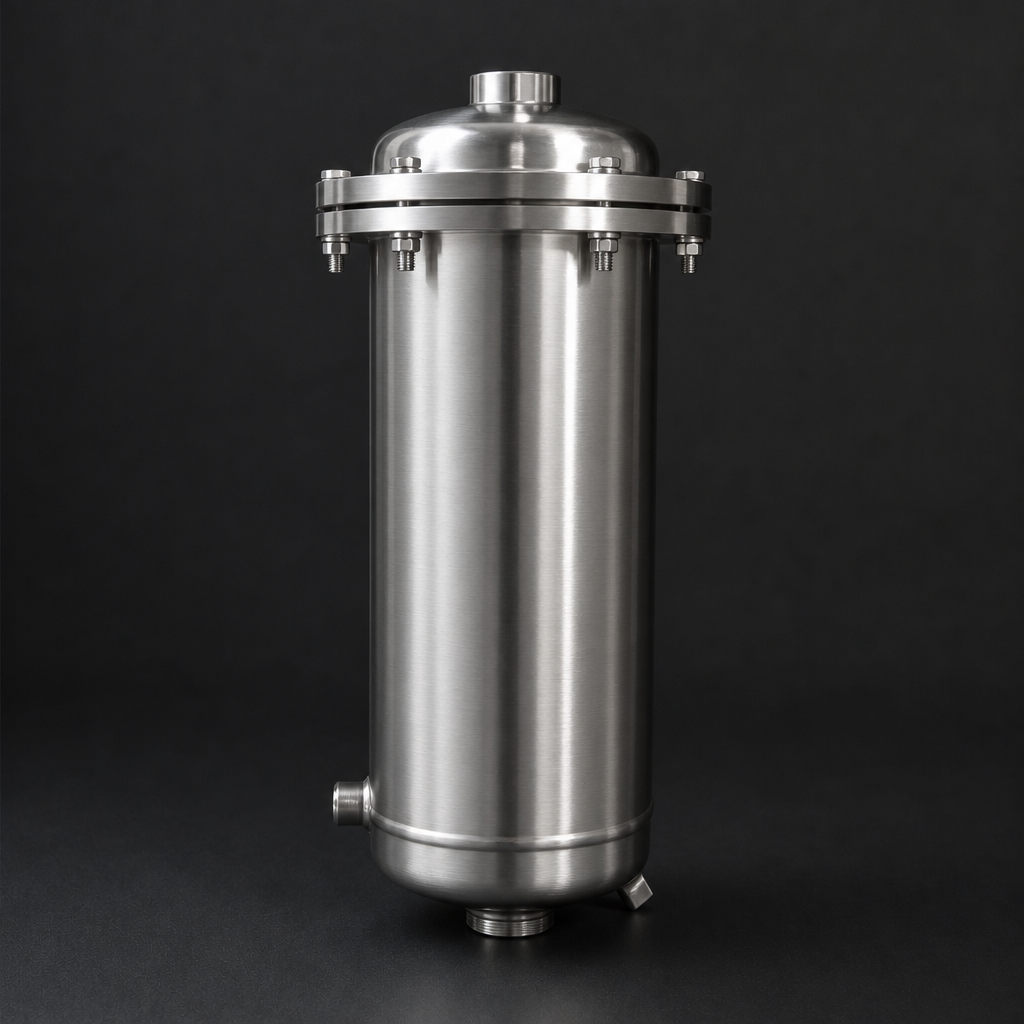
The RF-H-420 to RF-H-456 series of vacuum exhaust filter housings are designed as universal replacements. They accept standard R+F CS-type elements and connect to pump exhaust ports via adaptors. This approach is recommended when the OEM housing is damaged, corroded, or when the pump is being relocated and a new installation is more practical than reusing the original assembly.
The RF-H-420 series covers single-element configurations for pumps up to approximately 100 m³/h free air delivery. The RF-H-456 multi-element housing handles larger pumps up to 765 m³/h. Both housings are available in aluminium (standard) or 316L stainless steel for aggressive environments.
Option 2: Element-Only Replacement
Where the OEM housing is in good condition, the most cost-effective solution is to replace only the filter element. R+F RF-CS vacuum coalescing elements use silica-bonded borosilicate glass microfibre media — the same technology as OEM elements — and are available in the standard dimensions used by Leybold and Edwards assemblies. The silica binder (rather than the resin binder used in standard compressed-air elements) is essential for vacuum exhaust service, where exhaust temperatures can reach 80–120 °C continuously and spike higher during pump warm-up.
For element-only replacement, R+F maps OEM part numbers to the correct RF-CS element via its OEM cross-reference database. Common Leybold elements (such as those used in SOGEVAC SV 25–SV 300 pumps) and Edwards elements (E2M series, nXDS scroll pumps) are covered. Where a direct dimensional match exists, the element is listed as a confirmed replacement; where dimensions are close but not identical, R+F's engineering team can advise on adaptor rings or alternative housings.
Need help selecting the right filter?
Use our free Engineering Tool to get a filtration recommendation for your specific application in under 2 minutes.
Comparing OEM vs R+F Replacement Options
| Parameter | OEM (Leybold / Edwards) | R+F Replacement |
|---|---|---|
| Element media | Borosilicate glass microfibre | Borosilicate glass microfibre (RF-CS) |
| Binder type | Silica (heat-resistant) | Silica (heat-resistant, up to 200 °C) |
| Filtration efficiency | ≥ 99.97% @ 0.3 µm | ≥ 99.97% @ 0.3 µm |
| Housing material | Aluminium / nylon | Aluminium or 316L SS (RF-H-420 series) |
| Availability | OEM service network only | Direct from R+F, typically ex-stock |
| Typical element cost | High (OEM margin) | 40–60% lower than OEM list price |
| Oil return line | Integrated (pump-specific) | Integrated (universal fittings) |
When to Replace the Whole Assembly vs Element Only
The decision between a complete assembly replacement and an element-only swap depends on the condition of the existing housing and the operational context. As a general rule:
- Replace element only if the OEM housing is undamaged, the oil return line is clear, and the housing seals are in good condition. This is the lowest-cost and fastest route.
- Replace the complete assembly if the housing is cracked, corroded, or if the pump is being moved to a new location where a universal housing is more practical. The RF-H-420 series is also preferred when multiple pumps of different OEM brands are in service — standardising on a single housing type simplifies spares holding.
For facilities running mixed fleets of Leybold and Edwards pumps alongside other brands, the RF-H-420 to RF-H-456 universal housings offer a compelling consolidation opportunity. A single housing type with a single element SKU can cover a wide range of pump capacities, reducing the number of line items in the maintenance stores.
If you are unsure which element or housing matches your specific pump model, the R+F Engineering Sizing Tool allows you to input pump capacity and exhaust port size to identify the correct replacement. Alternatively, the R+F technical team can cross-reference OEM part numbers directly.
- Rotary vane vacuum pumps lubricate their vanes with oil.
- OEM exhaust filter assemblies from Leybold and Edwards are engineered to fit their specific pump exhaust ports.
- R+F FilterElements offers two routes for replacing Leybold and Edwards exhaust filtration, available through the R+F vacuum pump exhaust filter range:
- Replace the complete assembly
Installation and Maintenance Considerations
Vacuum pump exhaust filters should be changed on a condition-monitored basis rather than at fixed intervals. The primary indicator is differential pressure across the element: most OEM assemblies include a visual indicator (pop-up button or gauge) that signals when the element is saturated. R+F housings in the RF-H-420 series include a ¼" NPT port for a differential pressure gauge or switch, allowing integration with building management systems for predictive maintenance.
Oil return lines must be kept clear. A blocked return line causes oil to accumulate in the housing, increasing differential pressure and eventually bypassing the element. Check the return line at every element change. For pumps operating in dusty environments, consider adding an RF-DIL inline particulate pre-filter upstream of the exhaust filter to extend element life.
Related reading:
- Coalescing vs Particulate Filter Elements: Which Do You Need?
- Crankcase Ventilation Filtration: Protecting Engines and the Environment
- ISO 8573-1 Compressed Air Quality: A Practical Guide
Try our Engineering Sizing Tool → or discuss your requirements with our team.