The wrong material is not just a maintenance problem — it is a safety risk
In standard compressed air filtration, material selection is straightforward: aluminium housings, Nitrile seals, and borosilicate glass fibre elements handle the vast majority of applications. But when the gas contains hydrogen sulphide, ammonia, chlorine, acid traces, or caustic moisture, standard materials fail — sometimes dangerously.
Housing materials
| Material | Suitable For | Not Suitable For |
|---|---|---|
| Aluminium | Clean compressed air, nitrogen, CO₂ (dry), noble gases | H₂S, ammonia, chlorine, wet CO₂, strong acids/bases, oxygen (>21%) |
| Carbon steel | Natural gas (dry, sweet), nitrogen (dry) | Wet gases, sour gas (H₂S), CO₂, any corrosive environment |
| 316L Stainless Steel | Most process gases, wet gases, moderate H₂S, ammonia, hydrogen, oxygen | Concentrated HCl, hot concentrated H₂SO₄, chloride stress corrosion (>60 °C) |
| Brass | Clean compressed air (low pressure), instrument air | Ammonia (dezincification), H₂S, any aggressive gas |
316L: the default for aggressive service
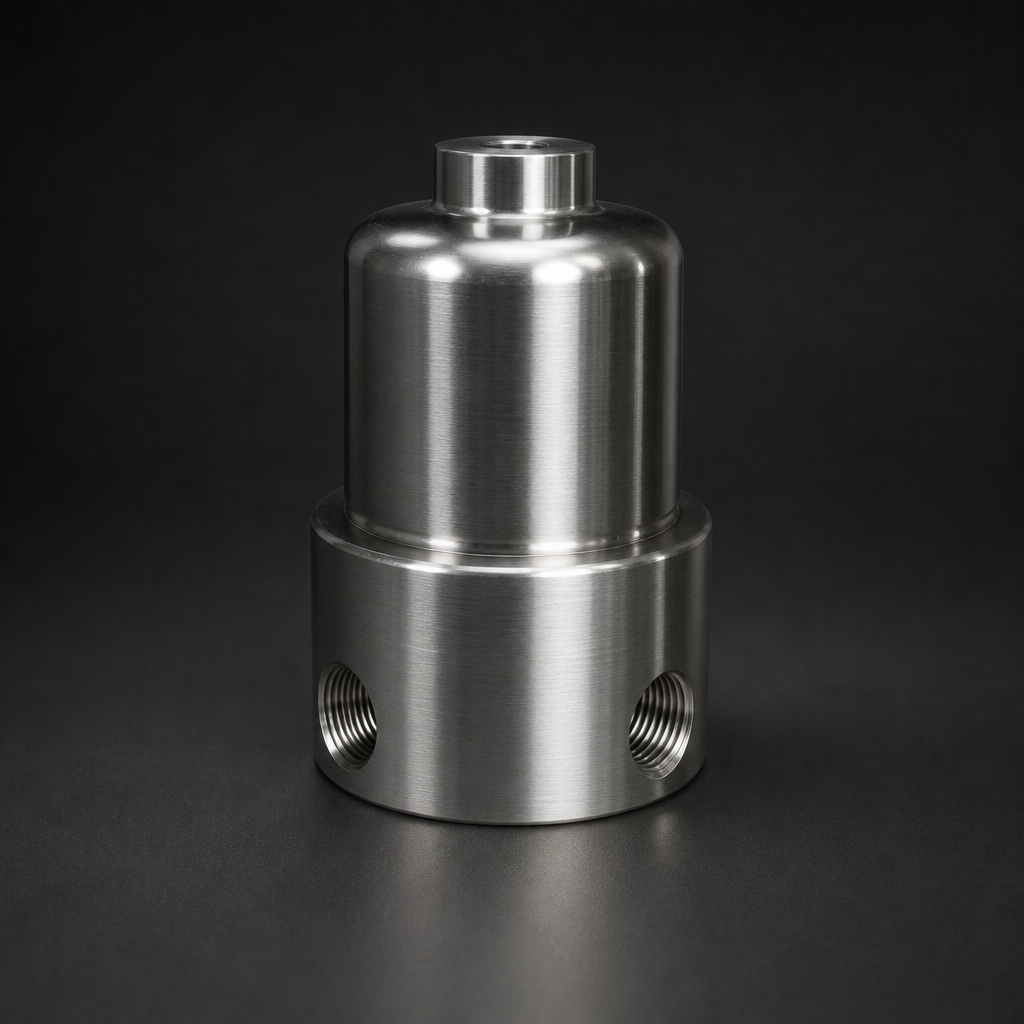
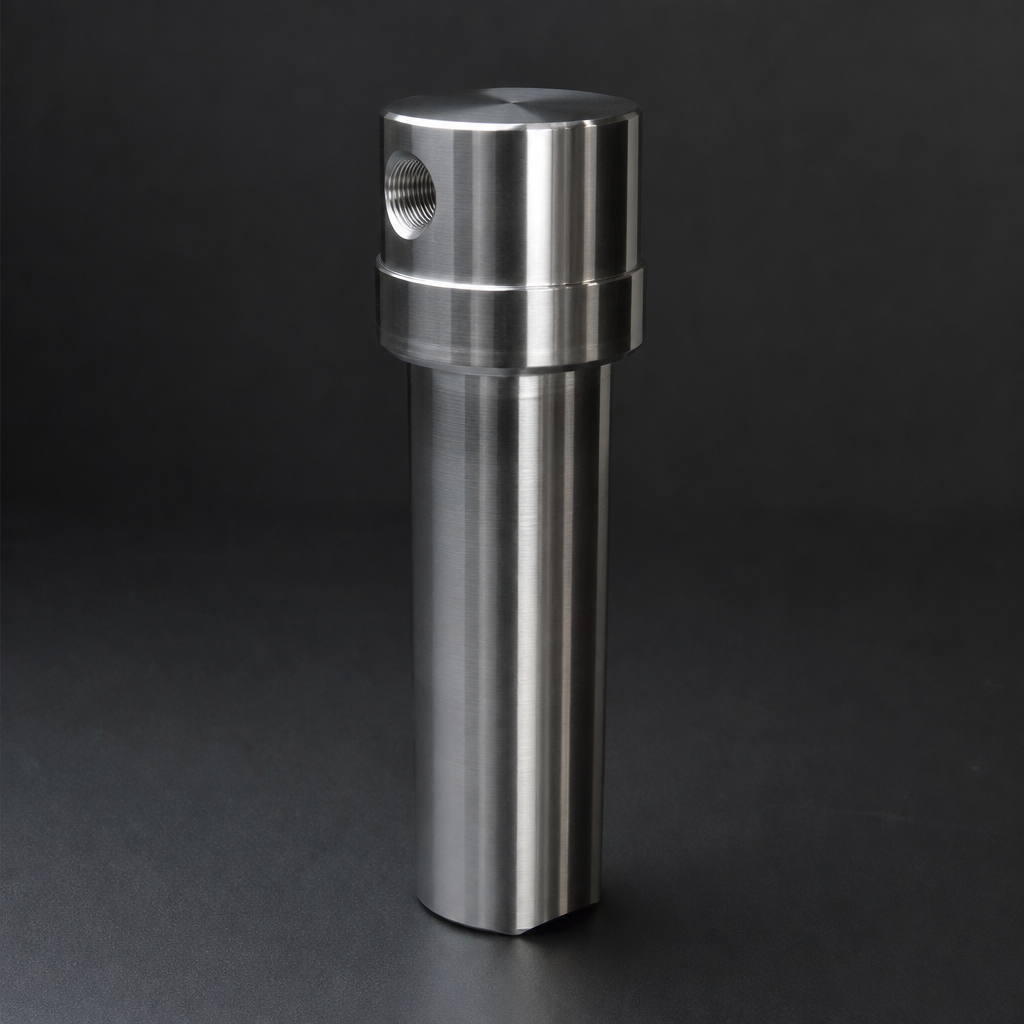
When in doubt, specify 316L stainless steel. It resists most industrial gases, wet environments, and moderate concentrations of H₂S, ammonia, and organic acids. Our RF-H-150 and RF-H-160 series housings are 316L as standard, rated to 100 bar (HP versions 200 bar, VP versions 400 bar).
Seal and O-ring materials
Seals are often the weakest point in material compatibility. A 316L housing with the wrong seals will still fail:
| Seal Material | Temp. Range | Suitable For | Not Suitable For |
|---|---|---|---|
| Nitrile (NBR) | −30 to +100 °C | Clean compressed air, hydraulic oil, natural gas | Strong solvents, ozone, oxygen, high temp |
| Viton (FKM) | −20 to +200 °C | Most chemicals, hydrocarbons, H₂S, oxygen, H₂ | Ketones, esters, ammonia, hot water/steam |
| PTFE | −200 to +260 °C | Almost universal chemical compatibility | Limited elasticity (cold flow under compression) |
| EPDM | −40 to +130 °C | Water, steam, ozone, ammonia, dilute acids | Hydrocarbons, oils, fuels |
| Kalrez (FFKM) | −20 to +300 °C | Virtually all chemicals and temperatures | Cost (10–20× Viton price) |
Ammonia and Viton: a classic mismatch
Viton (FKM) is an excellent general-purpose seal material — but it is attacked by ammonia and amine compounds. For ammonia service, use EPDM or PTFE seals. This is one of the most common specification errors in chemical process filtration.
Filter media considerations
Standard borosilicate glass microfibre is chemically resistant to most industrial gases. For extreme conditions, alternatives are available:
- Borosilicate glass fibre: Standard for most applications. Resists most chemicals except HF and hot concentrated alkalis.
- PTFE membrane: Universal chemical resistance. Used for strong acids, bases, and solvents.
- Sintered 316L stainless steel: Reusable, cleanable, high-temperature capable. For extreme environments where glass fibre degrades.
Common problem gases and recommended materials
| Gas / Contaminant | Housing | Seals | Media |
|---|---|---|---|
| H₂S (sour gas) | 316L stainless steel | Viton or PTFE | Borosilicate glass fibre |
| Ammonia (NH₃) | 316L stainless steel | EPDM or PTFE (not Viton) | Borosilicate or PTFE |
| Chlorine (Cl₂) | 316L or Hastelloy | PTFE or Kalrez | PTFE membrane |
| Hydrogen (H₂) | 316L stainless steel | Viton or PTFE | Borosilicate glass fibre |
| Wet CO₂ | 316L stainless steel | Viton | Borosilicate glass fibre |
| Biogas (CH₄ + CO₂ + H₂S) | 316L stainless steel | Viton | Borosilicate glass fibre |
| Oxygen (≥ 23.5%) | 316L stainless steel | Viton or PTFE | Borosilicate (oil-free) |
Key Takeaway
Material selection is a three-part decision: housing, seals, and media — all three must be compatible with your gas composition, temperature, and pressure. When in doubt, 316L + Viton + borosilicate is the safe default for most aggressive gases. For ammonia, switch to EPDM. For extreme chemistry, escalate to PTFE or Kalrez.
Not sure about material compatibility?
Contact our technical team with your gas composition and conditions — we recommend the right housing, seal, and element combination.