Oil contamination in compressed air is one of the most persistent and costly problems in industrial operations. Whether you are running a food processing line, a pharmaceutical cleanroom, or a precision instrument loop, oil in your compressed air can cause product spoilage, equipment failure, and regulatory non-compliance. Understanding where the oil comes from — and how to remove it systematically — is the first step to protecting your process.
Where Does Oil in Compressed Air Come From?
There are three distinct sources of oil contamination in a compressed air system, and each requires a different approach to control.
1. Compressor Lubricant Carryover
Oil-lubricated rotary screw and reciprocating compressors are the most common source of oil in compressed air. Even a well-maintained compressor will carry over between 2 and 10 mg/m³ of oil aerosol and vapour into the downstream pipework. As the compressor ages or its oil separator degrades, carryover can rise to 25 mg/m³ or higher. This oil arrives as a mixture of sub-micron aerosol droplets (typically 0.01–1 µm) and vapour — both of which pass straight through a standard particulate filter.
2. Atmospheric Oil Vapour
Even oil-free compressors do not produce oil-free air. Ambient air in industrial environments typically contains 0.05–0.5 mg/m³ of hydrocarbon vapour from vehicle exhausts, solvents, and process emissions. Because a compressor concentrates the air by a factor equal to its pressure ratio, a compressor delivering 7 bar(g) will concentrate atmospheric hydrocarbons by a factor of roughly 8 — potentially delivering 0.4–4 mg/m³ of oil vapour even with no internal lubrication whatsoever.
3. Pipe Residue and System Contamination
Older compressed air distribution systems accumulate years of oil deposits, rust, and scale on their internal surfaces. Even after a compressor upgrade, these residues continue to shed into the airstream — particularly during pressure fluctuations or when flow velocity increases. This is why a system that appears clean at the compressor outlet can still deliver contaminated air at the point of use.
How to Detect Oil Contamination
Oil contamination is often invisible to the naked eye. Sub-micron aerosol and vapour leave no visible mist or staining at normal concentrations. Reliable detection requires one of the following methods:
- Oil indicator tubes (Dräger or equivalent): Quick, low-cost spot checks. Suitable for total oil content above ~0.1 mg/m³.
- Gravimetric sampling: Passes a known volume of air through a pre-weighed filter membrane; the mass gain gives total aerosol concentration. Accurate to <0.01 mg/m³.
- Photoionisation detection (PID): Continuous monitoring of hydrocarbon vapour. Useful for trend analysis and alarm triggering.
- ISO 8573-1 class verification: Third-party laboratory testing against the ISO 8573-1 standard provides a documented quality class for audit and compliance purposes.
Systematic Oil Removal: The Two-Stage Approach
Effective oil removal from compressed air requires two complementary filtration mechanisms working in series. Neither stage alone is sufficient for demanding applications.
Stage 1 — Coalescing Filtration (Aerosol Removal)
A coalescing filter captures sub-micron oil aerosol droplets by passing the airstream through a borosilicate glass microfibre matrix. Droplets collide with fibres, coalesce into larger drops, and drain by gravity to a sump where they are discharged via an automatic drain. The RF-C coalescing elements available from R+F FilterElements achieve 99.99% efficiency at ≥ 0.1 µm, reducing aerosol oil content to <0.01 mg/m³ — meeting ISO 8573-1 Class 1 for oil aerosol.
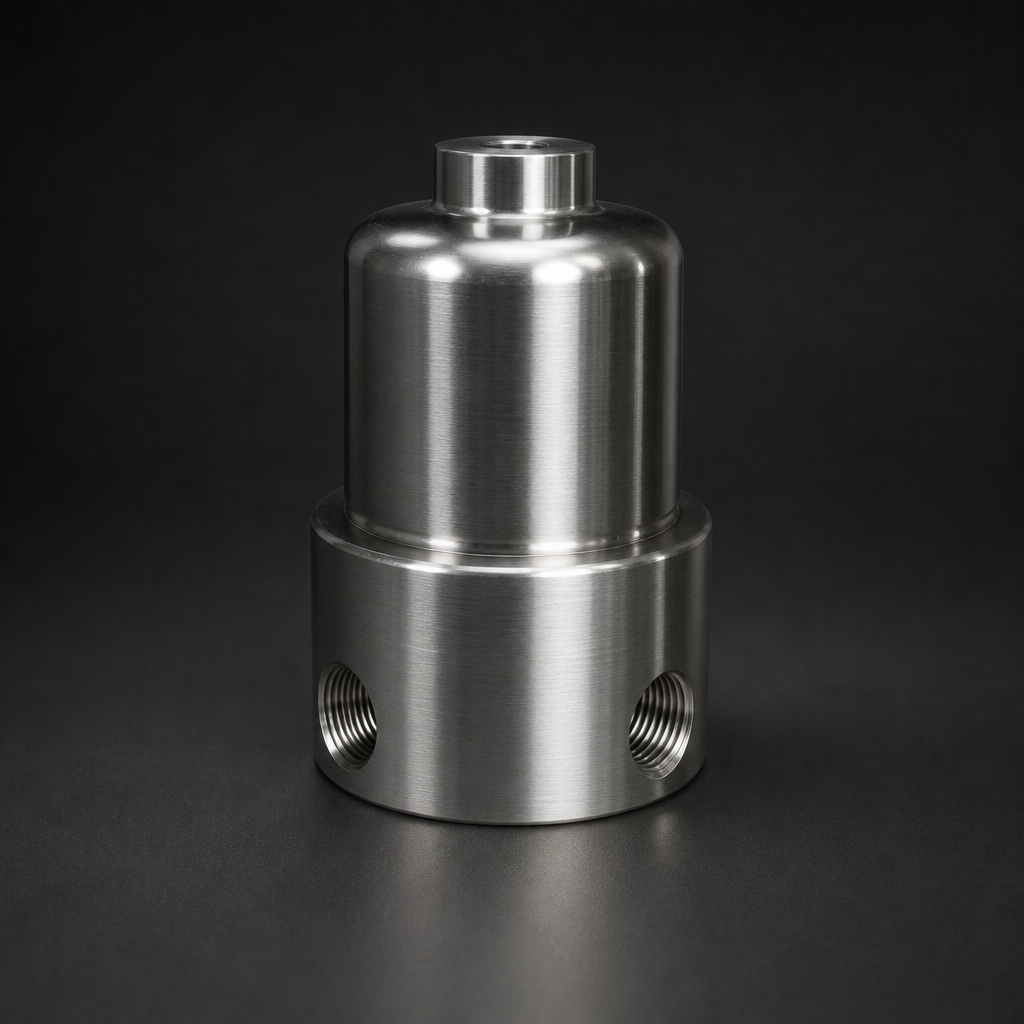
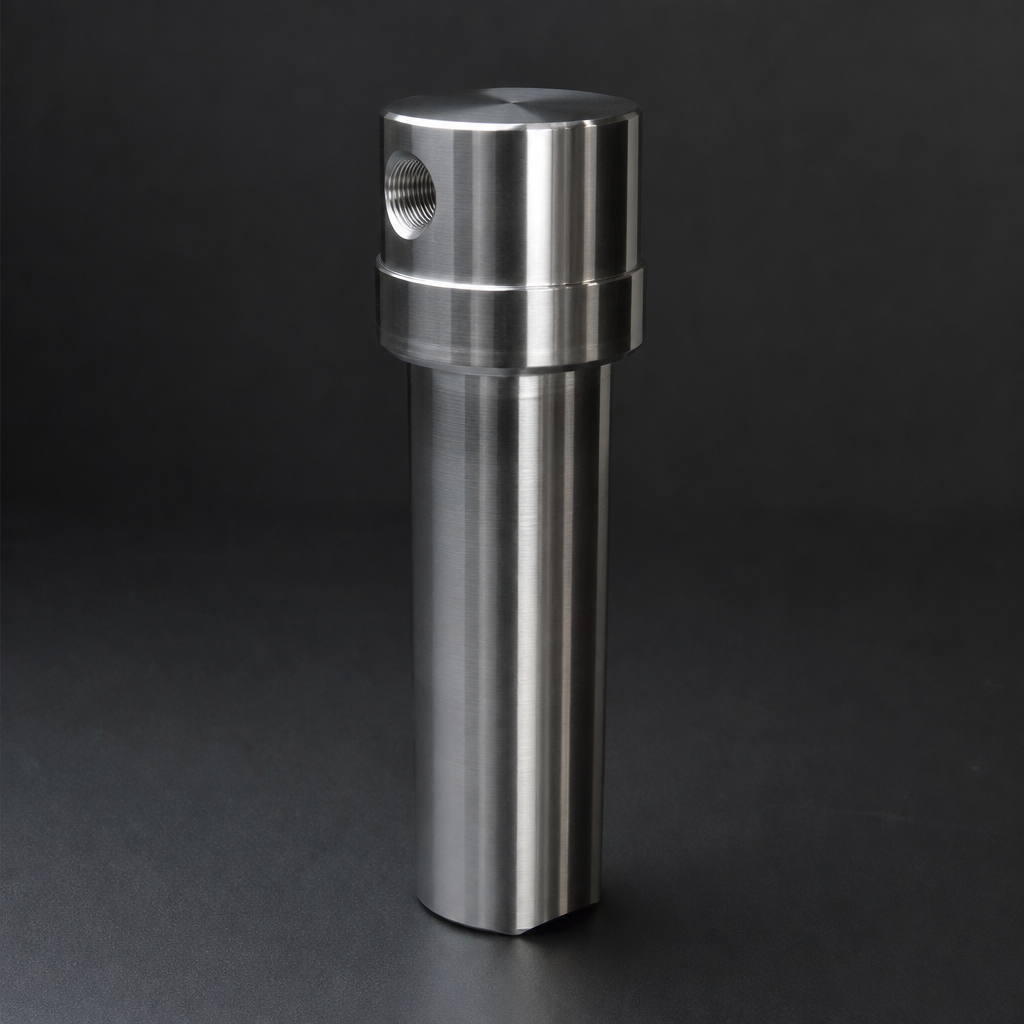
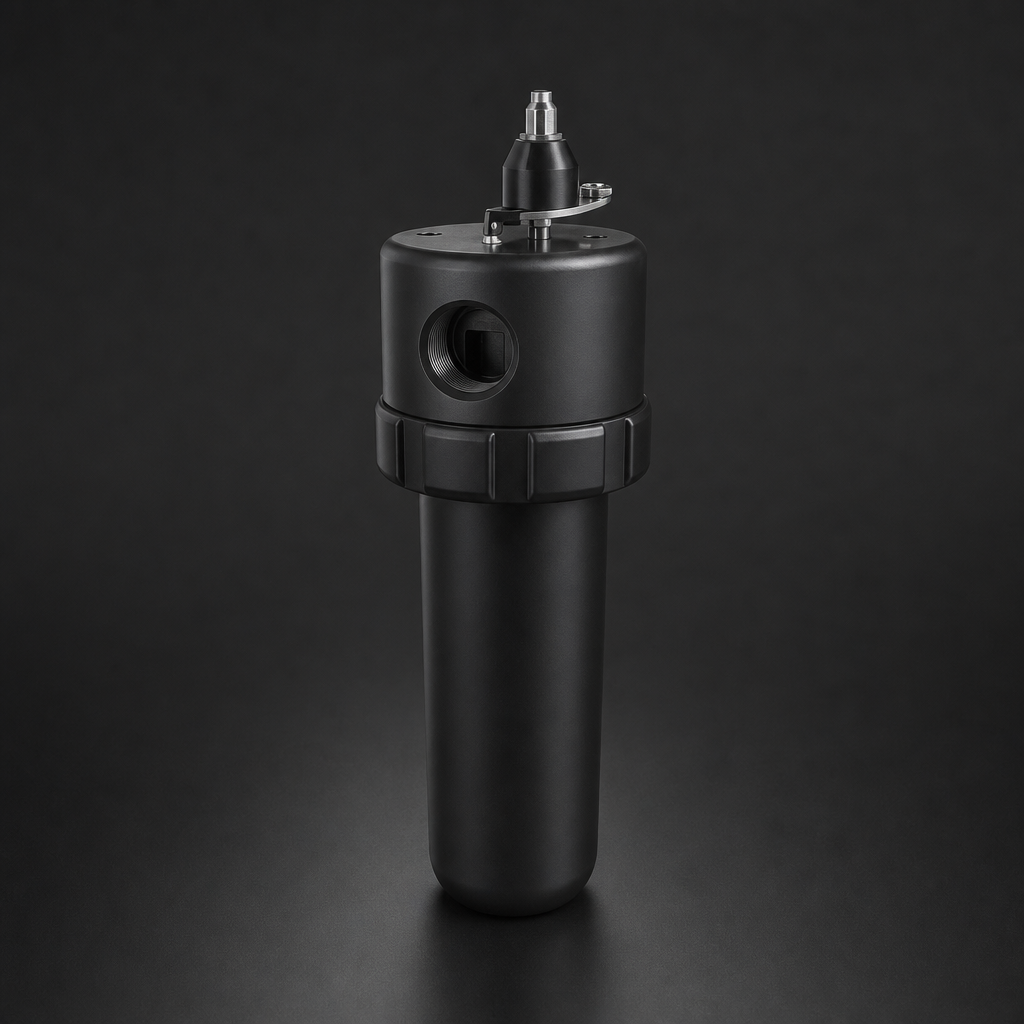
These elements are housed in the RF-H-310 to RF-H-395 series aluminium housings, which cover flow rates from a few Nm³/h up to 12,000 Nm³/h at pressures to 17 bar. For high-pressure or stainless steel requirements, the RF-H-150 and RF-H-160 process gas housings are available.
Stage 2 — Adsorption Filtration (Vapour Removal)
Coalescing filtration cannot remove oil vapour — molecules dissolved in the gas phase pass straight through the microfibre matrix. Vapour removal requires an activated carbon adsorber. The RF-AC activated carbon elements available from R+F FilterElements reduce residual total oil content (aerosol + vapour) to <0.003 mg/m³, meeting ISO 8573-1 Class 1 for total oil. For point-of-use applications, the RF-DIA disposable inline adsorber provides a compact, no-maintenance solution.
| Contamination Type | Removal Method | R+F Element | Residual (mg/m³) | ISO 8573-1 Class |
|---|---|---|---|---|
| Oil aerosol (≥ 0.1 µm) | Coalescing filtration | RF-C | <0.01 | Class 1 |
| Oil vapour (dissolved) | Activated carbon adsorption | RF-AC | <0.003 | Class 1 |
| Particulate (≥ 0.3 µm) | Particulate filtration | RF-P | <0.1 mg/m³ | Class 1 |
| Point-of-use vapour | Disposable inline adsorber | RF-DIA | <0.003 | Class 1 |
If oil content remains elevated even with a new or oil-free compressor
Use our free Engineering Tool to get a filtration recommendation for your specific application in under 2 minutes.
When the Compressor Is the Problem — and When It Is Not
A common mistake is to assume that oil contamination always originates from the compressor. In practice, the compressor is only one of three sources. Before investing in a compressor overhaul or replacement, it is worth establishing which source is dominant:
- If oil content drops significantly when the compressor is bypassed (e.g., during a shutdown with nitrogen purge), the compressor is the primary source. Check the oil separator element and consider upgrading to a high-efficiency coalescing stage immediately downstream of the compressor.
- If oil content remains elevated even with a new or oil-free compressor, the source is either atmospheric vapour concentration or pipe residue. An activated carbon adsorber at the point of use is the most cost-effective solution.
- If oil content varies with flow rate or pressure changes, pipe residue is the likely culprit. A pre-filter (RF-P particulate) upstream of the coalescer will protect the coalescing element from bulk contamination and extend its service life.
For a detailed comparison of coalescing and particulate filtration mechanisms, see our guide on coalescing vs particulate filter elements. If your system includes vacuum pumps, the principles of oil carryover apply equally — see our crankcase ventilation filtration guide for vacuum-specific considerations.
Recommended Filter Train for Oil Removal
For most compressed air applications requiring ISO 8573-1 Class 1 oil content, the recommended filter train is:
- Pre-filter (RF-P particulate): Removes bulk particulate and liquid water slugs, protecting the coalescer from premature loading.
- Coalescing filter (RF-C): Removes oil aerosol to <0.01 mg/m³. Housed in an RF-H series housing sized to your flow rate.
- Activated carbon adsorber (RF-AC or RF-DIA): Removes residual oil vapour to <0.003 mg/m³. Essential for food-grade, pharmaceutical, and instrument air applications.
Use our Engineering Sizing Tool to select the correct housing size and element combination for your flow rate, pressure, and temperature conditions.
- There are three distinct sources of oil contamination in a compressed air system, and each requires a different approach to control.
- Oil indicator tubes (Dräger or equivalent):
- Effective oil removal from compressed air requires two complementary filtration mechanisms working in series.
- If oil content drops significantly when the compressor is bypassed
Related Reading
- Coalescing vs Particulate Filter Elements — Which Do You Need?
- ISO 8573-1 Compressed Air Quality Classes Explained
- Crankcase Ventilation Filtration for Vacuum Pumps
Try our Engineering Sizing Tool → or discuss your requirements with our team.