Rietschle vacuum pumps — now marketed under the Gardner Denver and Elmo Rietschle brands — are workhorses across packaging, plastics, printing, and industrial automation. When an exhaust filter or oil separator reaches the end of its service life, the instinct is often to order a direct OEM replacement. But lead times, minimum order quantities, and inflated list prices make that route increasingly frustrating. This guide explains which Rietschle and Elmo Rietschle models are most commonly encountered, what their filter elements actually do, and how R+F FilterElements replacement parts deliver equivalent performance at a fraction of the cost.
Why Vacuum Pump Filters Fail — and Why It Matters
A rotary vane or claw vacuum pump relies on its exhaust filter to capture oil mist before it reaches the atmosphere. The element — typically a coalescing or oil-separator type — also protects downstream equipment from contamination. When it becomes saturated, back-pressure rises, the pump works harder, temperatures climb, and wear accelerates. Ignoring a blocked filter does not just risk an environmental violation; it shortens pump life dramatically.
Rietschle (now part of the Gardner Denver group, sold as Elmo Rietschle in Europe) produces a wide range of vacuum pumps — from compact single-stage units to large multi-stage systems. The filter elements used across these platforms share common geometries, making cross-referencing straightforward once you know the key parameters: outer diameter, inner diameter, length, and media type.
Common Rietschle and Elmo Rietschle Pump Families
The table below covers the most frequently serviced Rietschle pump series and the filter element types they use. If your pump model is not listed, the R+F Engineering Sizing Tool can help identify the correct replacement by dimensions and flow rate.
| Pump Series | Brand Name | Typical Flow (m³/h) | Filter Type | R+F Replacement |
|---|---|---|---|---|
| VC / VCE | Rietschle / Elmo Rietschle | 5–100 | Oil-separator / exhaust coalescer | RF-CS series |
| VTE / VTEC | Elmo Rietschle | 25–250 | Exhaust coalescing element | RF-CS series |
| V-VTE / V-VTEC | Elmo Rietschle | 100–500 | Multi-element exhaust filter | RF-H-420 to RF-H-456 |
| C-VTE / C-VTEC | Elmo Rietschle | 200–765 | Multi-element exhaust filter | RF-H-456 series |
| T-VTE / T-VTEC | Elmo Rietschle | 300–765 | Multi-element exhaust filter | RF-H-456 series |
Understanding the RF-CS Vacuum Element
The RF-CS vacuum exhaust element is the core replacement product for Rietschle and Elmo Rietschle pumps. Unlike standard compressed-air coalescing elements, the RF-CS uses a silica-bonded borosilicate glass microfibre matrix that withstands continuous operating temperatures up to 200 °C — essential for rotary vane pumps where exhaust gas temperatures regularly exceed 120 °C during sustained operation.
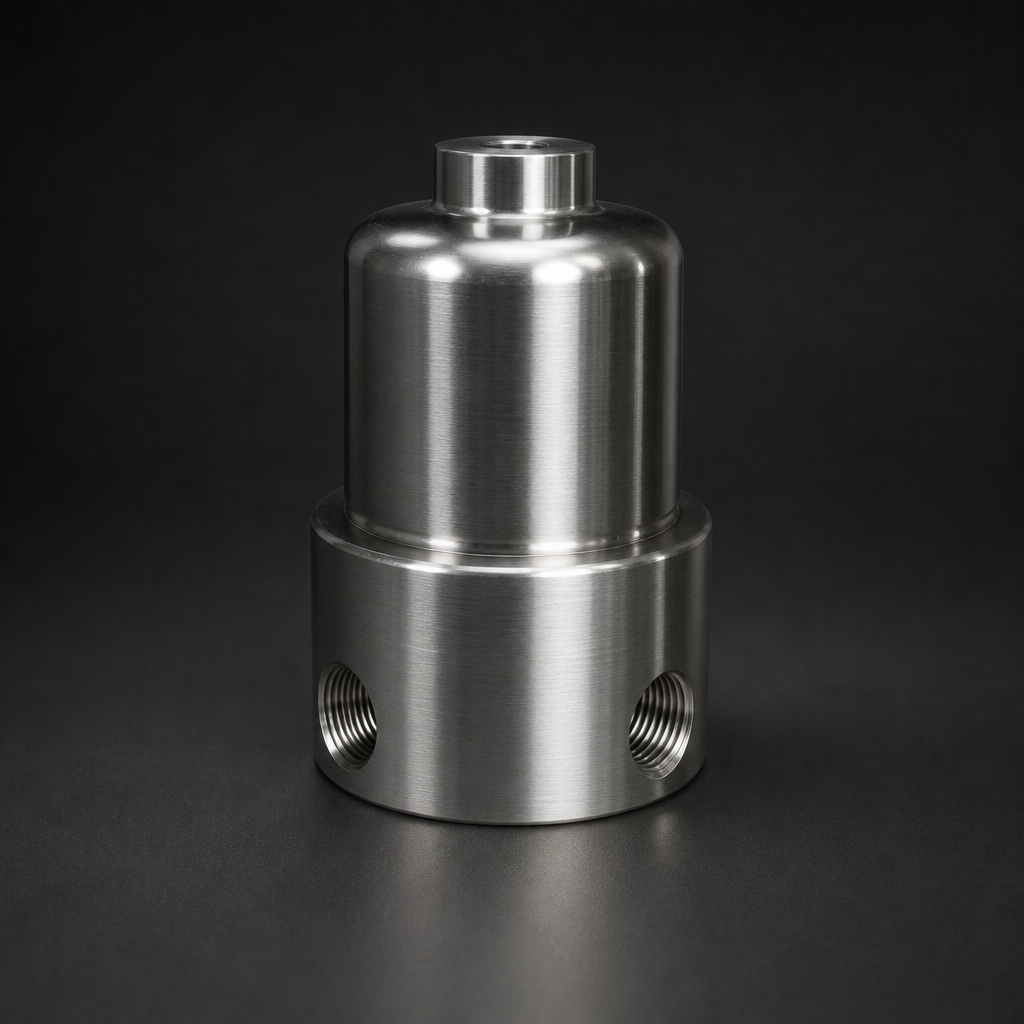
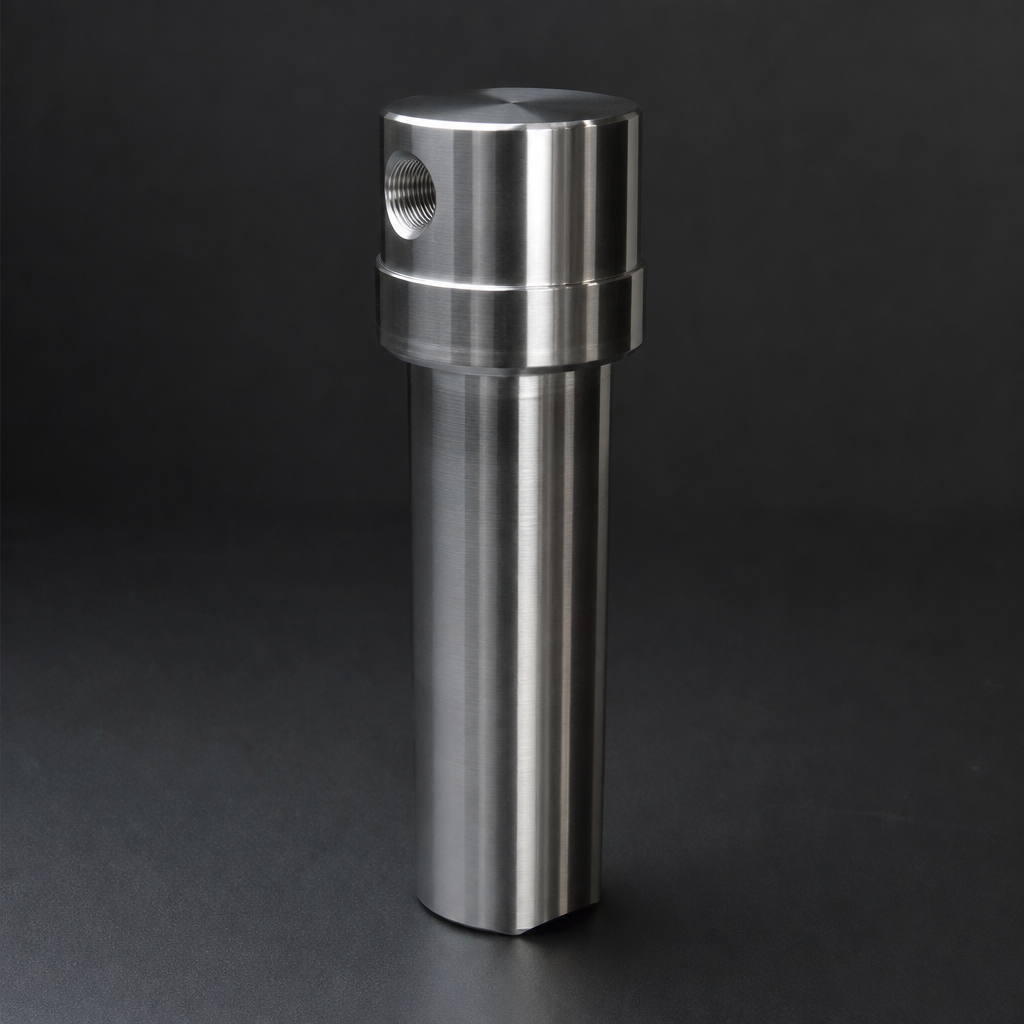
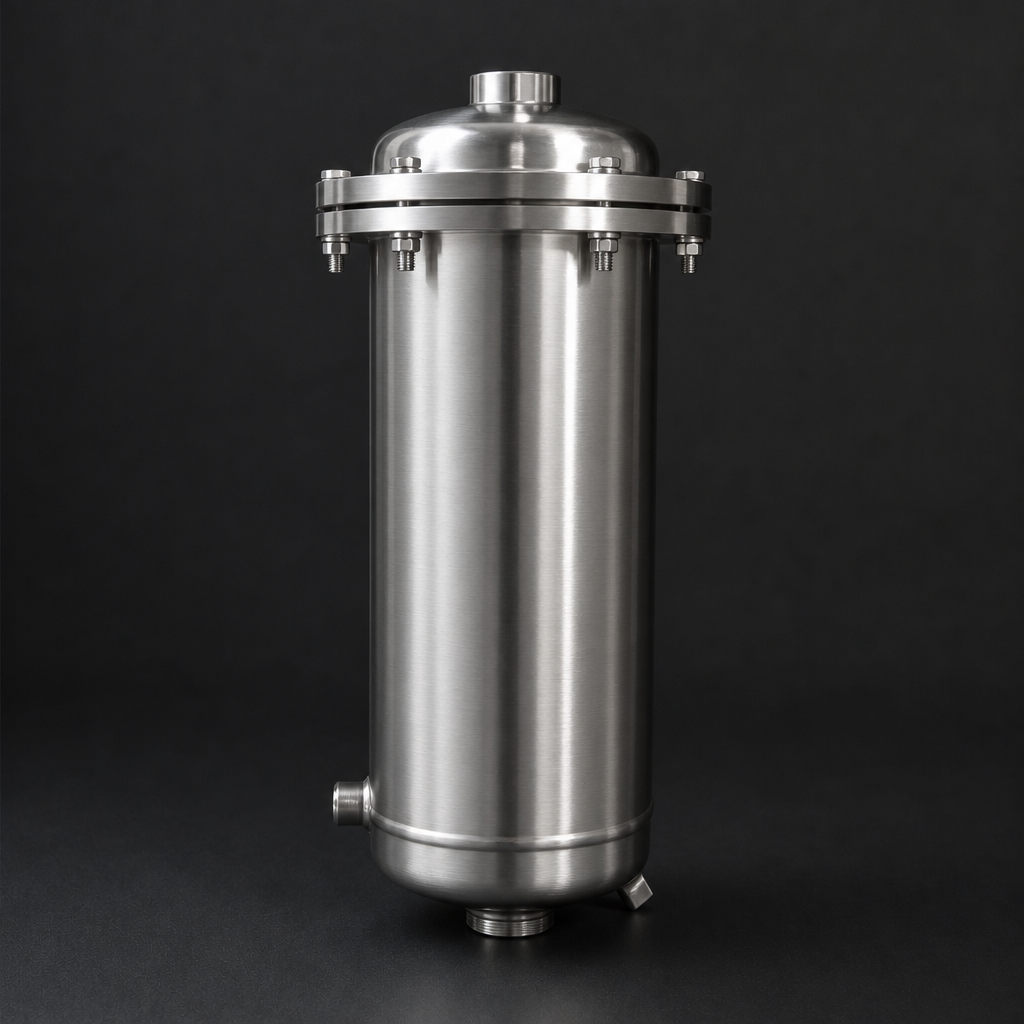
For larger Elmo Rietschle systems — particularly the V-VTE, C-VTE, and T-VTE families — R+F FilterElements supplies complete RF-H-420 to RF-H-456 multi-element housings as well as individual RF-CS replacement elements. The housings are manufactured in aluminium or 316L stainless steel, with element counts from 1 to 16 depending on the required flow capacity.
Need help selecting the right Rietschle or Elmo Rietschle replacement filter?
How to Identify the Correct Replacement Element
When ordering a Rietschle vacuum pump filter replacement, you need three pieces of information:
- Pump model number — found on the nameplate (e.g. VC 25, VTE 6, VTEC 100)
- OEM filter part number — printed on the element end-cap or in the service manual
- Element dimensions — outer diameter (OD), inner diameter (ID), and length in mm
R+F FilterElements maintains a cross-reference database covering Rietschle, Elmo Rietschle, and Gardner Denver part numbers. Submit your OEM reference via the contact form or use the Engineering Sizing Tool to match by dimensions. In most cases, a direct-fit RF-CS element is available from stock.
Use our free Engineering Tool to get a filtration recommendation for your specific application in under 2 minutes.
Gardner Denver Rebranding — What Changed?
In 2017, Gardner Denver acquired the Rietschle brand and consolidated it under the Elmo Rietschle name for the European market. Pump model numbers were largely retained, but some filter part numbers were updated. If you are working from an older service manual with Rietschle part numbers, R+F FilterElements can cross-reference both the legacy Rietschle and current Elmo Rietschle / Gardner Denver numbering systems.
The vacuum pump exhaust filter range from R+F covers the full spectrum of Gardner Denver / Elmo Rietschle applications, from small VC-series single-stage pumps to large multi-stage T-VTE systems used in central vacuum networks.
Service Intervals and Condition Monitoring
OEM service manuals typically recommend exhaust filter replacement every 2,000–4,000 operating hours, or annually — whichever comes first. In practice, the correct interval depends on the application: pumps handling solvent vapours, fine dust, or high-humidity process gas will saturate elements faster than those running on clean dry air.
A simple differential pressure gauge across the exhaust filter housing is the most reliable condition indicator. When pressure drop exceeds the manufacturer's limit (typically 50–80 mbar for a clean element rising to 200–300 mbar at end of life), replacement is due regardless of hours run. R+F FilterElements can supply RF-CS elements in bulk packs to support planned maintenance programmes.
- A rotary vane or claw vacuum pump relies on its exhaust filter to capture oil mist before it reaches the atmosphere.
- The table below covers the most frequently serviced Rietschle pump series and the filter element types they use.
- The RF-CS vacuum exhaust element is the core replacement product for Rietschle and Elmo Rietschle pumps.
- OEM filter part number
Related Reading
- Coalescing vs Particulate Filter Elements — Which Do You Need?
- Crankcase Ventilation Filtration — Protecting Engines and Compressors
- ISO 8573-1 Compressed Air Quality — A Practical Guide
Try our Engineering Sizing Tool → or discuss your requirements with our team.