Filter elements are rated to a maximum operating temperature for good reason — yet in real plant environments, temperature excursions happen. A compressor runs hot during a summer peak. A steam-traced line overshoots. A process upset sends a temperature spike through the filter housing. Engineers often assume that a brief excursion above the rated limit is harmless. The evidence says otherwise.
This guide explains exactly what happens inside a filter element when temperature limits are exceeded, why even short excursions cause lasting damage, and how to select the right element type for high-temperature duties — including S-type and sintered metal elements available from R+F FilterElements.
Why Filter Elements Have Temperature Ratings
A filter element is not a simple mesh. It is a composite structure: a fibrous media layer (typically borosilicate glass microfibre for coalescing, or polyester for particulate), a binder that holds the fibres together, end-caps bonded with adhesive, and an O-ring seal. Each of these components has its own thermal limit — and the element's rated temperature is the lowest of all of them.
Standard R+F coalescing elements (RF-C series) and particulate elements (RF-P series) are rated to 100 °C continuous service. This covers the vast majority of compressed air and process gas applications. But when temperature climbs above this threshold, a cascade of degradation mechanisms begins.
Mechanism 1: Binder Degradation
The binder is the glue that holds glass microfibre or synthetic fibres in their engineered arrangement. In standard elements, this binder is typically a phenolic or acrylic resin cured during manufacture. Above 100 °C, these resins begin to soften. Above 120–130 °C, they can flow, causing fibres to shift from their designed positions.
The result is a change in pore geometry. Fibres that were uniformly distributed now cluster, creating larger voids between them. Filtration efficiency drops — sometimes dramatically. A coalescing element that was achieving 99.99% efficiency at ≥ 0.1 µm may fall to 99.9% or lower after a single significant excursion. In applications where downstream contamination is critical — analyser protection, semiconductor process gas, or food-grade CO₂ — this degradation is unacceptable.
Critically, binder softening is irreversible. When the element cools, the fibres do not return to their original positions. The damage is permanent.
Mechanism 2: Media Migration
When binder integrity is compromised, fibres can detach from the media matrix and migrate downstream. This is particularly dangerous in coalescing elements, where the glass microfibre is extremely fine (sub-micron diameter). Migrated fibres can contaminate downstream equipment, foul instrumentation, or — in the worst case — enter process streams where they are not acceptable.
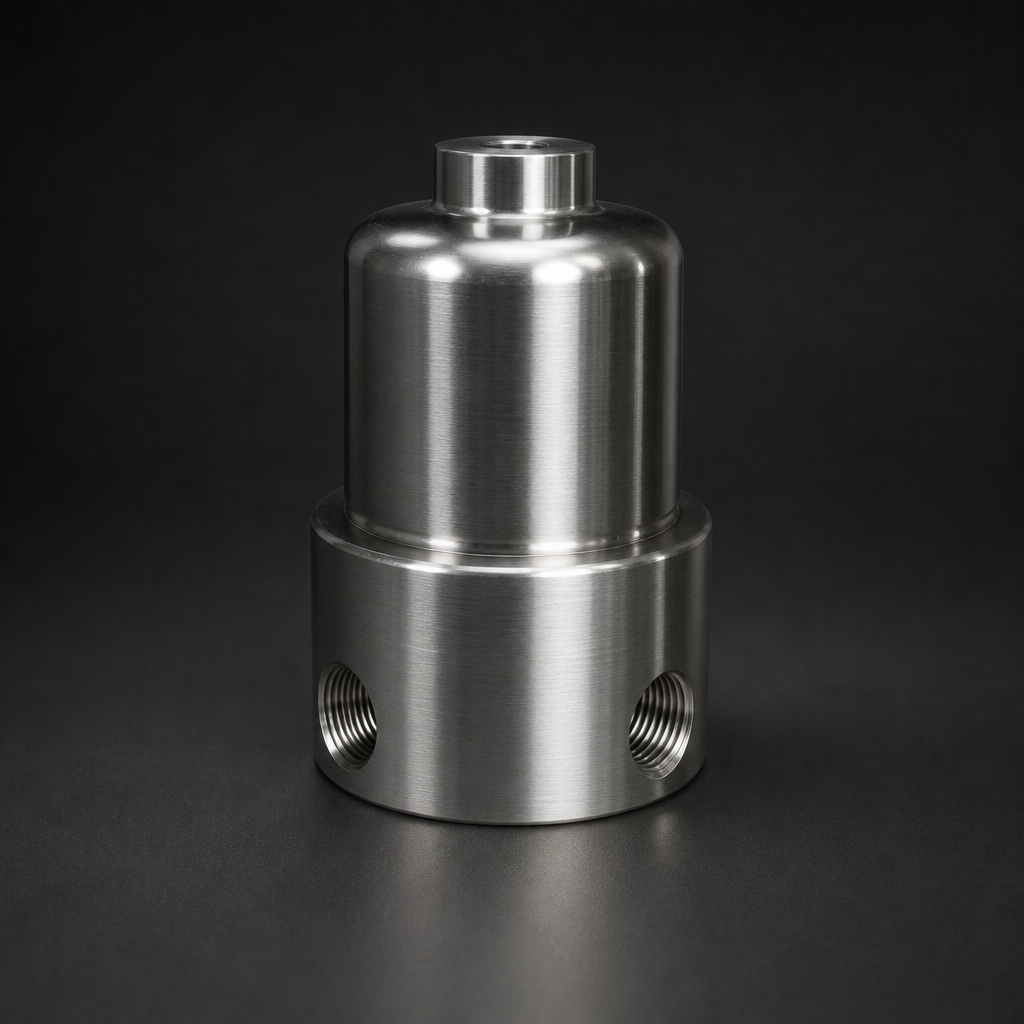
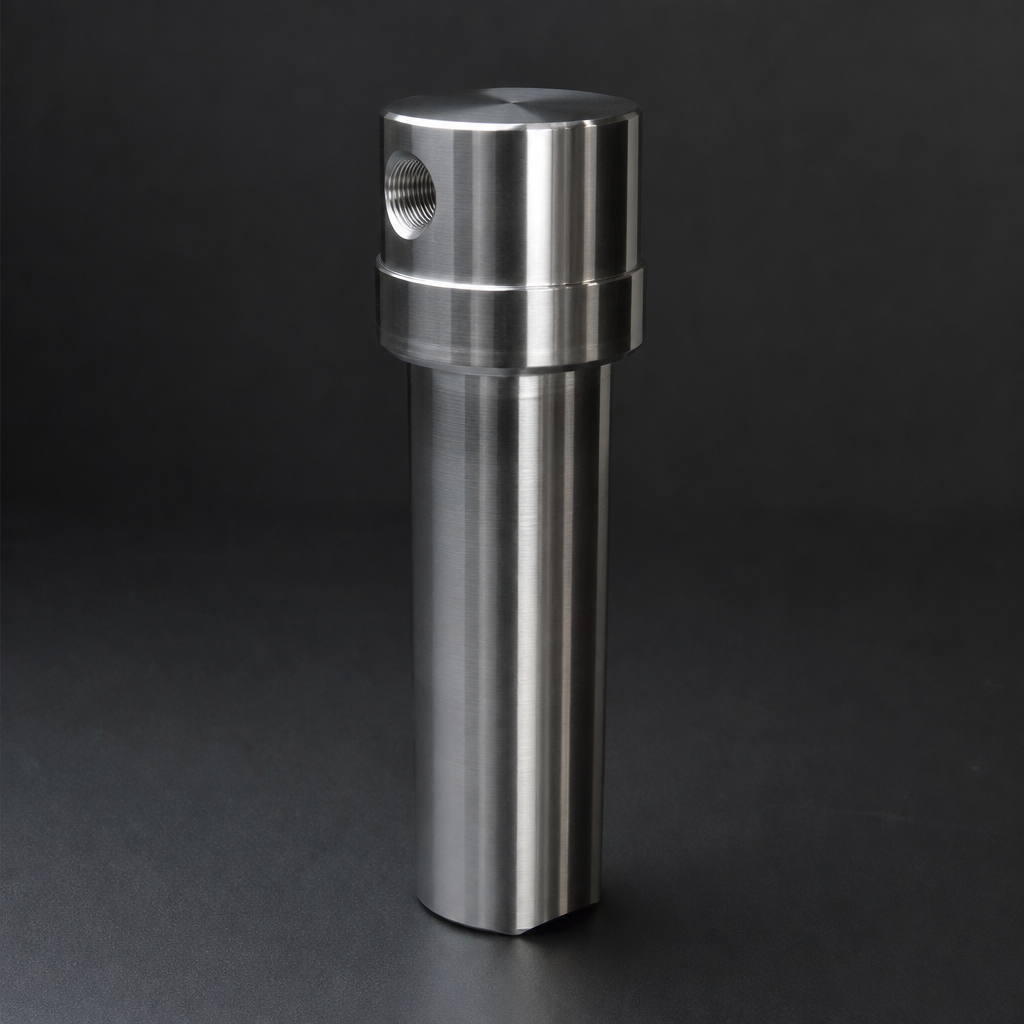
Sintered metal elements — such as those used in the RF-H-150 and RF-H-160 process gas housings — are immune to media migration because the filter medium is a rigid, metallurgically bonded structure. There is no binder to degrade and no fibres to shed.
Need help selecting the right filter for high-temperature duty?
Mechanism 3: Seal Failure
O-ring seals are the third critical component affected by temperature excursions. Standard NBR (nitrile) seals are rated to 100 °C. Above this temperature, NBR begins to harden and lose elasticity. Once an O-ring has been heat-set in a compressed state, it will not recover its original cross-section when the temperature drops. The result is a reduced sealing force and, eventually, bypass leakage.
Bypass leakage is the most dangerous failure mode in filtration. Unfiltered gas passes around the element rather than through it, delivering full contamination to the downstream system while the pressure drop across the filter remains apparently normal. The system appears to be working; it is not.
FKM/Viton seals extend the continuous service limit to 200 °C and are standard on S-type elements. PTFE seals are available for applications up to 260 °C.
The "Occasional Excursion" Fallacy
Plant engineers sometimes reason that a temperature spike lasting only minutes cannot cause significant damage. This reasoning underestimates the thermal mass of a filter element and the kinetics of binder degradation.
A filter element has relatively low thermal mass. In a flowing gas stream, it reaches the gas temperature quickly — typically within seconds to a few minutes, depending on flow velocity and element size. A 10-minute excursion to 130 °C in a standard element is sufficient to cause measurable binder softening. A 30-minute excursion may cause visible media deformation.
Furthermore, thermal cycling — repeated heating and cooling — causes cumulative fatigue in adhesive bonds and O-ring materials. An element that survives a single excursion may fail after the fifth or tenth repetition of the same event.
Use our free Engineering Tool to get a filtration recommendation for your specific application in under 2 minutes.
S-Type Elements: Engineered for High-Temperature Duty
Where operating temperatures regularly exceed 100 °C — or where excursions above this level are foreseeable — S-type elements are the correct specification. The key difference is the binder: S-type elements use a silica-based binder rather than an organic resin. Silica is thermally stable to 200 °C continuous service and does not soften or flow at temperatures that would destroy a standard element.
S-type elements are available in the RF-CS series, designed for vacuum pump exhaust filtration where discharge temperatures can reach 150–180 °C. They use FKM seals as standard and are compatible with the RF-H-420 to RF-H-456 housing range.
Sintered Metal Elements: The High-Temperature Absolute Solution
For applications above 200 °C, or where media migration is categorically unacceptable, sintered metal elements are the only viable choice. These elements are manufactured by compacting and sintering metal powder (typically 316L stainless steel or Hastelloy) into a rigid, self-supporting structure. There is no binder, no adhesive, and no organic component.
Sintered metal elements are rated to 450 °C continuous service and are compatible with aggressive chemicals, steam, and high-pressure applications. They are available for use in the RF-H-150 process gas housing and custom configurations.
Selecting the Right Element: A Temperature-Based Decision Matrix
| Operating Temperature | Recommended Element Type | Seal Material | R+F Product Code |
|---|---|---|---|
| Up to 100 °C | Standard (phenolic/acrylic binder) | NBR | RF-C, RF-P series |
| 100–200 °C | S-type (silica binder) | FKM/Viton | RF-CS series |
| 200–260 °C | S-type with PTFE seals | PTFE | RF-CS + PTFE option |
| Above 260 °C (to 450 °C) | Sintered metal | Metal gasket / PTFE | RF-H-150 sintered config |
Practical Recommendations for High-Temperature Installations
If your process has any of the following characteristics, you should review your current element specification against the temperature decision matrix above:
- Compressor discharge temperature above 80 °C (leaving less than 20 °C margin to the element limit)
- Steam-traced pipework upstream of the filter
- Vacuum pump exhaust filtration (discharge temperatures typically 120–180 °C)
- Process gas applications with exothermic reactions upstream
- Any application where a temperature excursion has occurred and the element was not replaced
For applications where temperature uncertainty exists, the conservative approach is always to specify the next grade up. The cost difference between a standard and an S-type element is modest compared to the cost of a downstream contamination event or an unplanned shutdown. Use the R+F Engineering Sizing Tool to confirm the correct element specification for your operating conditions.
Also consider reviewing your ISO 8573-1 compressed air quality class requirements — temperature excursions that degrade element efficiency may push your system out of compliance with the specified purity class.
- A filter element is not a simple mesh.
- The binder is the glue that holds glass microfibre or synthetic fibres in their engineered arrangement.
- When binder integrity is compromised, fibres can detach from the media matrix and migrate downstream.
- O-ring seals are the third critical component affected by temperature excursions.
Related Reading
- Coalescing vs Particulate Filter Elements — Which Do You Need?
- ISO 8573-1 Compressed Air Quality — A Practical Guide
- Crankcase Ventilation Filtration — Managing Oil Mist at the Source
Try our Engineering Sizing Tool → or discuss your requirements with our team.