
Instrumenten Filter
Das umfassendste Sortiment an Gasanalyse- und Instrumentenfiltern — von kompakten 340-bar-Edelstahlgehäusen bis zu chemisch beständigen Polymereinheiten für jeden Analysatorschutz- und Probenaufbereitungsbedarf.
Kompakte Edelstahl-Instrumentenfilter
Hochdruck-Analysatorschutz in kompakter Bauform
Die kompakten 110/120-Serien bieten maximalen Analysatorschutz bei minimalem Platzbedarf. 316L-Edelstahl-Konstruktion mit Druckfestigkeit bis 340 bar.
Hauptmerkmale
- Maximaler Druck bis 340 bar
- 316L-Edelstahl-Konstruktion
- Kompakte Bauform für enge Einbauräume
- Verschiedene Anschlussoptionen: NPT, BSP, Swagelok
- Für aggressive Gasmedien geeignet
Ultra-High-Pressure Housings
HP and VP variants for high-pressure gas sampling and analysis
The HP (High Pressure) and VP (Vent Port) variants extend the standard instrumentation range to higher pressures. 110HP/120HP are rated to 700 bar for ultra-high-pressure sampling; 130HP/140HP are rated to 200 bar (VP: 400 bar). Designed for upstream oil and gas, well testing, and high-pressure process applications.
Hauptmerkmale
- 110HP/120HP: rated to 700 bar — highest in the range
- VP models: integral vent/bleed port for safe depressurisation
- Available across 110, 120, 130, and 140 element sizes
- Full 316L stainless steel — BS5500 designed pressure vessels
- NACE MR-01-75 compatible for sour gas service
- Same element compatibility as standard series
Standard-Edelstahl-Instrumentenfilter
Vielseitige Analysatorfilter für Standard-Anwendungen
Die 130/140-Serien sind das Arbeitspferd der Instrumentenfiltration. Edelstahl-Gehäuse mit breiter Anschluss- und Elementauswahl.
Hauptmerkmale
- Druckbereich bis 414 bar
- Große Auswahl an Anschlüssen und Elementen
- Optionale Heizmantel-Ausführung
- 316L-Edelstahl-Konstruktion
- Schnellwechsel-Elementdesign
Aluminium-Instrumentenfilter
Leichte, kostengünstige Analysatorfiltration
Aluminium-Gehäuse für Standard-Instrumentenfiltration bei moderaten Drücken. Leicht und kostengünstig.
Hauptmerkmale
- Leichtes Aluminium-Gehäuse
- Kostengünstige Alternative zu Edelstahl
- Geeignet für nicht-korrosive Gase
- Verschiedene Anschlussgrößen verfügbar
Plastic Instrumentation Housings
Chemically resistant polymer housings for aggressive gas environments
For highly corrosive or reactive gas streams, our plastic housing range provides full chemical compatibility without the cost of exotic metal alloys. Available in four polymer materials — PVDF, Nylon, Polypropylene, and PTFE — each optimised for specific chemical environments.
Hauptmerkmale
- PVDF (RF-H-700K series): excellent acid and solvent resistance, 100 °C max
- Nylon (RF-H-700N series): general chemical resistance, lowest cost, 50 °C max
- Polypropylene (RF-H-700P series): broad acid resistance, 50 °C max
- PTFE (RF-H-120P series): universal chemical resistance, 200 °C max
- Dual-stage Nylon models (RF-H-707N / RF-H-770N / RF-H-778N): integrated coalescing + particulate in one housing
- PTFE glass-bowl models (RF-H-120PG–RF-H-132PG) for visual monitoring
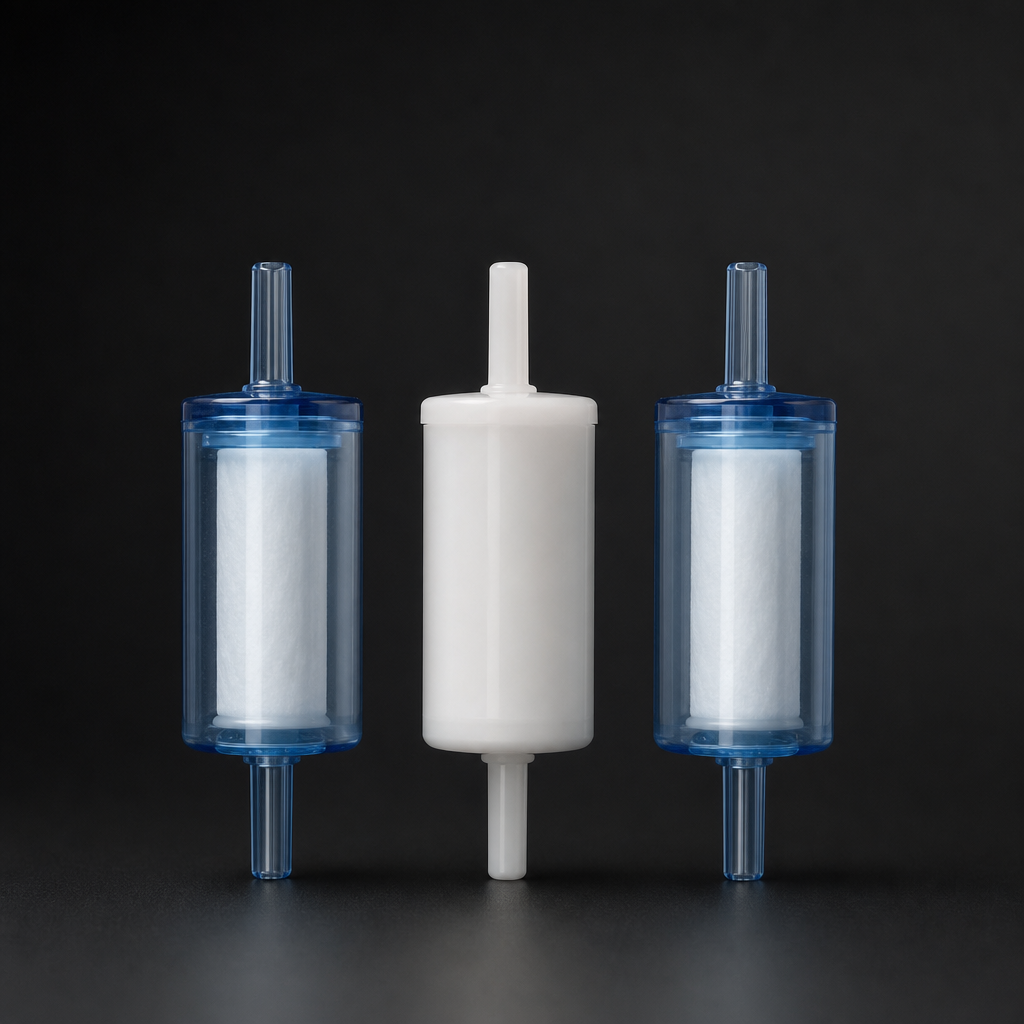
Disposable In-Line Filters
Single-use polycarbonate filters for fast-loop and grab-sample protection
Disposable in-line filters provide cost-effective, zero-maintenance protection for gas analysers and sampling systems. The clear polycarbonate body allows visual inspection of element condition. Pre-loaded with a K-type fluorocarbon-bonded element, these units are designed to be replaced as a complete assembly — no element changes, no gaskets, no tools.
Hauptmerkmale
- Pre-loaded K-type element — replace entire unit, no servicing
- Clear polycarbonate body — visual element condition monitoring
- DIF-IN series: standard inline with hose barb connections
- DIF-M series: compact miniature design for restricted spaces
- Available in coalescing (HEK) and particulate (all K grades) variants
- Ideal for remote or difficult-access analyser locations
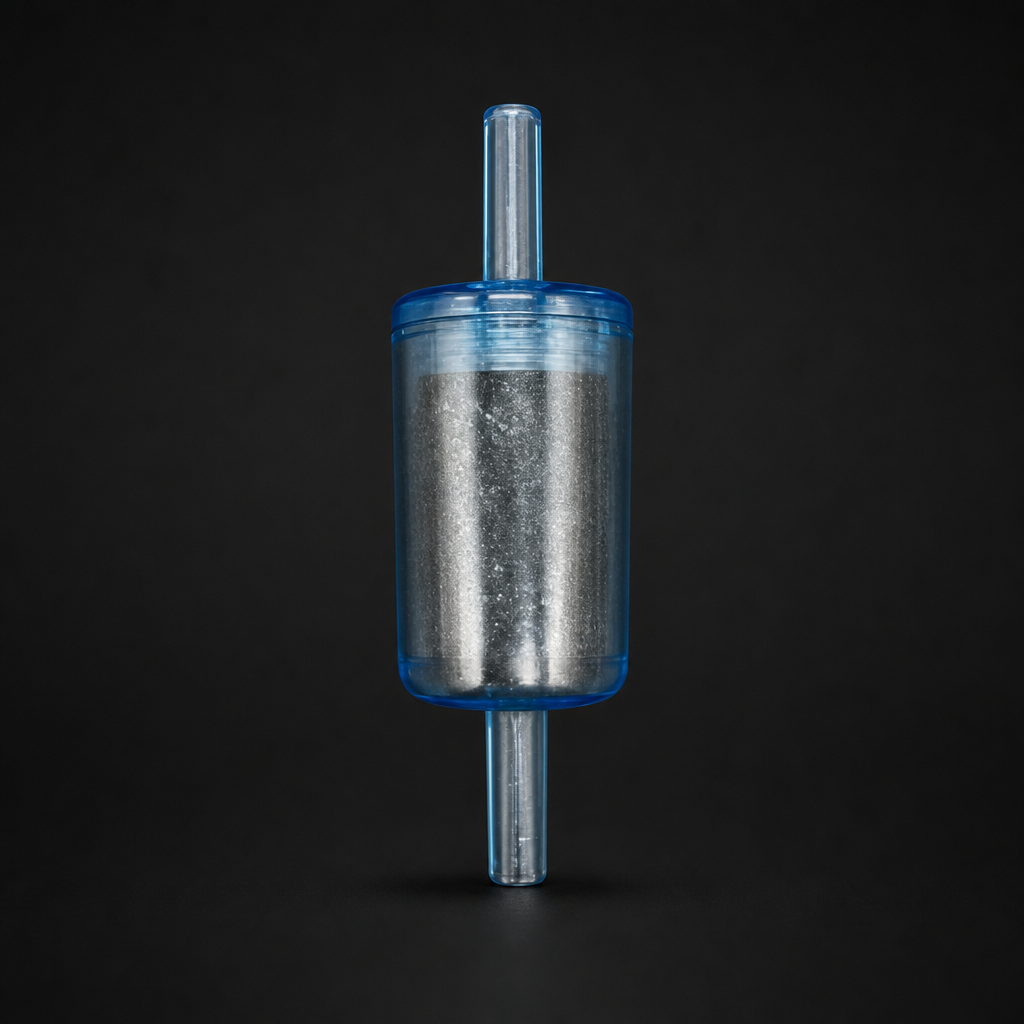
Disposable In-Line Adsorbers
Single-use activated carbon adsorbers for trace vapour removal in sampling systems
Disposable in-line adsorbers use activated carbon fill in a transparent polycarbonate housing to remove trace organic vapours, odours, and reactive compounds from gas sample streams. Designed for use downstream of a coalescing or particulate filter, these units protect sensitive analysers from interference by hydrocarbon vapours and other contaminants.
Hauptmerkmale
- Activated carbon adsorption — removes organic vapours and odours
- Transparent body — visual inspection of carbon condition
- Replace entire unit when exhausted — no servicing
- Use downstream of DIF-IN coalescing filter for best results
- Available in multiple carbon grades for specific contaminants
- Compact design for panel and rack mounting
Probleme, die diese Produkte lösen
Hilfe bei der Filterwahl benötigt?
Unser technisches Team empfiehlt das richtige Gehäuse, den passenden Elementtyp und die optimale Materialkonfiguration für Ihre spezifischen Prozessbedingungen.