When a sterilisation cycle fails validation, the first instinct is to check the autoclave itself — door seals, chamber pressure, cycle programming. Yet one of the most common and overlooked root causes sits upstream: the quality of the steam entering the chamber. Contaminated or out-of-specification steam can compromise sterilisation efficacy, corrode instruments, leave residues on load surfaces, and trigger costly re-processing cycles. Understanding what EN 285 demands — and how filtration protects those demands — is essential for any pharmaceutical or medical device facility.
What EN 285 Actually Requires
EN 285 is the European standard governing large steam sterilisers used in healthcare and pharmaceutical manufacturing. It defines three critical steam quality parameters that must be met at the steriliser inlet:
| Parameter | EN 285 Limit | Risk if Exceeded |
|---|---|---|
| Non-condensable gases (NCG) | < 3.5% by volume | Air pockets insulate load — cold spots, sterilisation failure |
| Superheat | < 25 °C above saturation | Dry steam penetrates poorly — extended D-value, failed Bowie-Dick |
| Dryness fraction (steam quality) | > 0.95 (≥ 95% dry) | Wet steam wets packaging, dilutes condensate, leaves residues |
These limits exist because steam sterilisation relies on latent heat transfer — the energy released when steam condenses on a cooler surface. Any factor that disrupts this condensation mechanism (entrained air, excessive superheat, or liquid water droplets) directly undermines the kill mechanism for bacterial spores.
How Steam Distribution Introduces Contamination
Even a well-maintained steam generator can deliver contaminated steam by the time it reaches the autoclave. The distribution network — typically carbon steel or copper pipework running through plant rooms, ceiling voids, and service corridors — introduces several contamination mechanisms:
Scale and Rust Particulates
Carbon steel pipework corrodes over time. Iron oxide particles (rust) and calcium/magnesium carbonate scale detach from pipe walls under flow turbulence and thermal cycling. These particulates travel with the steam flow and deposit inside the autoclave chamber, on instrument surfaces, and within the steriliser's own control valves and traps. Beyond contaminating the load, particulate ingress accelerates wear on precision valve seats and can block condensate drain orifices — causing wet steam conditions that directly violate the dryness fraction requirement.
Non-Condensable Gases
Air and other non-condensable gases enter steam systems through poorly maintained steam traps, leaking flanges, and dissolved gases released from feedwater. In a gravity-displacement autoclave, NCGs accumulate at the bottom of the chamber and create insulating air pockets around the load. In pre-vacuum autoclaves, residual NCGs after the vacuum stage indicate either a system leak or excessive NCG content in the incoming steam. Either way, the result is cold spots that fail the thermocouple mapping requirements of EN 285 validation.
Superheat from Pressure Reduction
When high-pressure steam is throttled through a pressure-reducing valve (PRV) to the lower operating pressure of the autoclave, the steam becomes superheated. The degree of superheat depends on the pressure ratio and the absence of moisture. Superheated steam behaves more like a gas than a condensing vapour — it penetrates porous loads poorly and transfers heat less efficiently. Facilities that reduce steam from 10 bar to 3 bar without a desuperheater or moisture injection stage frequently encounter superheat violations during EN 285 qualification testing.
The Role of Steam Filtration
Steam filtration addresses the particulate contamination vector directly. A correctly specified process steam filter installed at the autoclave inlet removes rust, scale, and other solid particulates before they enter the steriliser. This protects both the load and the autoclave's internal components.
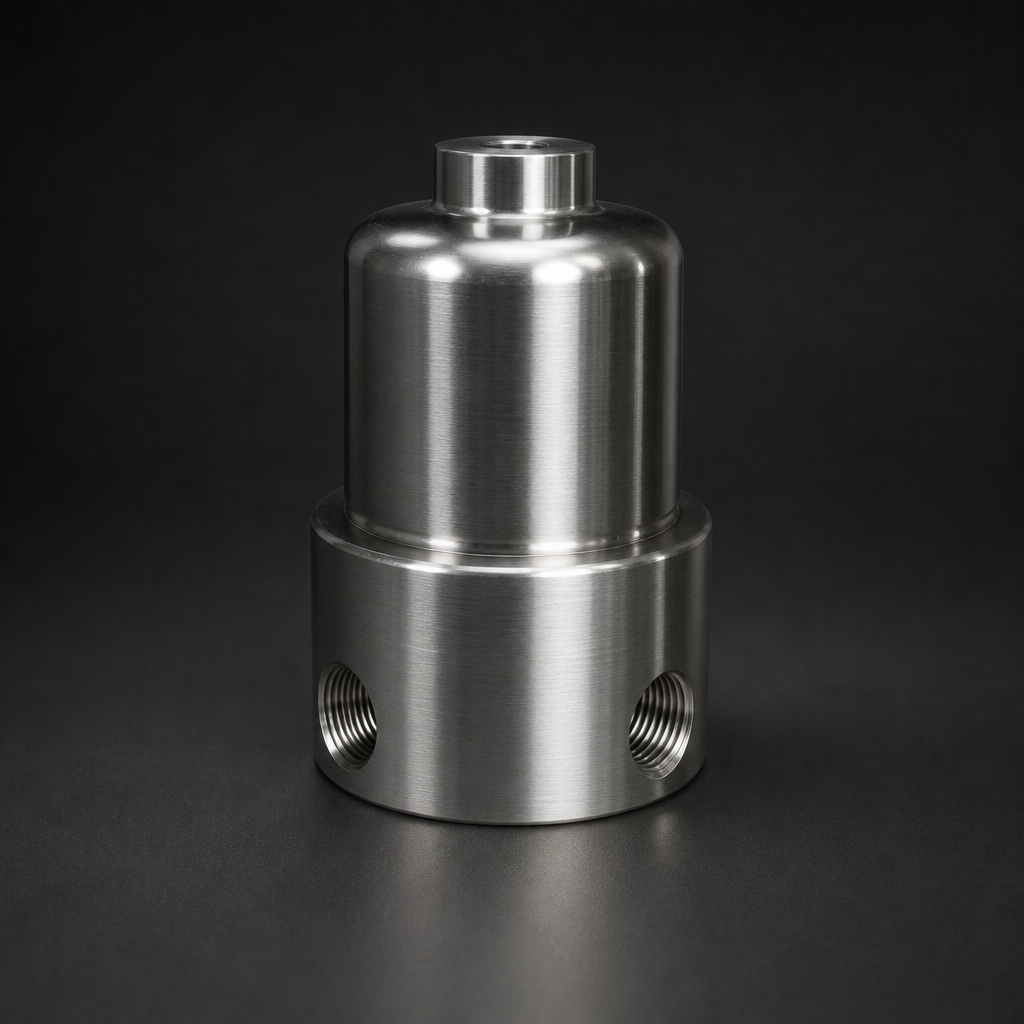
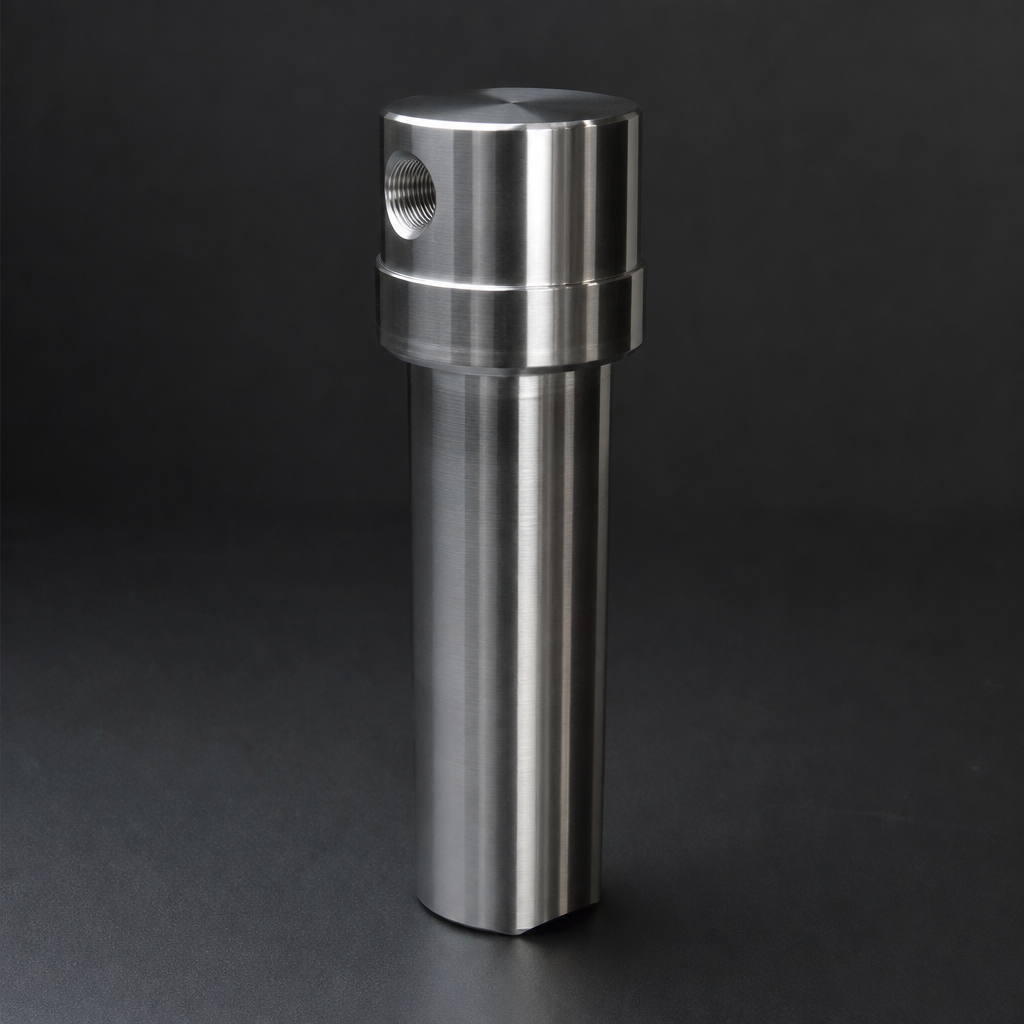
For pharmaceutical and medical device applications, R+F FilterElements offers its own range of stainless steel steam filter housings designed for clean steam and pure steam service. The RF-H-150 compact process gas housing (316L stainless steel, rated to 100 bar) and the RF-H-160 medium-pressure housing are both suitable for steam filtration duty when fitted with appropriate sintered metal or PTFE membrane elements. These housings are available from R+F FilterElements with full material traceability documentation — important for pharmaceutical GMP compliance.
Need help selecting the right autoclave steam filter?
Use our free Engineering Tool to get a filtration recommendation for your specific application in under 2 minutes.
Selecting the Right Autoclave Steam Filter
Not all filters are suitable for steam service. Several critical selection criteria apply:
Housing Material
Carbon steel and aluminium housings are entirely unsuitable for clean steam or pure steam applications — they are themselves a source of the particulate contamination you are trying to remove. Only 316L stainless steel housings with electropolished internal surfaces should be used. The RF-H-150 and RF-H-160 housings from R+F FilterElements meet this requirement, with 316L construction and optional surface finish documentation.
Element Type
For steam filtration, sintered metal elements (rated to 450 °C) or PTFE membrane elements are the appropriate choices. Borosilicate glass microfibre elements — excellent for compressed air and gas filtration — are not rated for saturated steam service at autoclave temperatures. R+F FilterElements' sintered metal elements (part of the RF-C and RF-P sintered range) withstand continuous steam exposure and can be steam-sterilised in-situ, which is essential for maintaining the sterility boundary in pharmaceutical clean rooms.
Seal Materials
At 134 °C saturated steam conditions, NBR seals are marginal (rated to 100 °C). EPDM or PTFE seals are the correct choice for steam service. Specifying FKM/Viton seals — rated to 200 °C — provides additional margin and is appropriate where steam temperatures may spike during system upsets.
Drain and Vent Provisions
A steam filter housing must include a condensate drain point at the lowest position of the filter bowl. Without automatic condensate drainage, liquid water accumulates in the housing and is carried forward as entrained droplets — directly worsening the dryness fraction of the steam entering the autoclave. A thermostatic steam trap or automatic float trap fitted to the filter drain connection is standard practice.
For facilities requiring full compressed air quality documentation alongside their steam systems, R+F FilterElements can supply both compressed air and steam filtration solutions from a single source, simplifying vendor qualification under pharmaceutical quality management systems.
Installation Position and Validation Considerations
The steam filter should be installed as close to the autoclave inlet as practicable — ideally within 1 metre of the steriliser connection point. Installing the filter further upstream, whilst better than no filtration, allows re-contamination of the pipework between the filter and the autoclave. The filter housing should be oriented with the inlet at the top and the drain at the bottom to facilitate condensate removal.
During EN 285 qualification (IQ/OQ/PQ), the steam quality test is performed at the steriliser drain point using a calibrated steam quality test kit. If the filter is correctly specified and installed, the NCG content, superheat, and dryness fraction measurements should all fall comfortably within EN 285 limits. If any parameter is marginal, the filter element rating (pore size) and the condensate drain arrangement should be reviewed before adjusting the steam generator or PRV settings.
Facilities managing multiple autoclaves should consider a central steam filtration skid serving the entire autoclave suite, rather than individual point-of-use filters on each machine. This approach reduces maintenance burden and provides a single validated filtration point for the steam quality boundary. R+F FilterElements can assist with sizing and configuration of multi-autoclave steam filtration systems.
- EN 285 is the European standard governing large steam sterilisers used in healthcare and pharmaceutical manufacturing.
- Even a well-maintained steam generator can deliver contaminated steam by the time it reaches the autoclave.
- Steam filtration addresses the particulate contamination vector directly.
- Not all filters are suitable for steam service.
Practical Checklist for EN 285 Steam Quality Compliance
Before your next EN 285 requalification, verify the following at each autoclave:
- 316L stainless steel steam filter housing installed at autoclave inlet, with condensate drain trap
- Sintered metal or PTFE membrane element fitted — not glass microfibre
- EPDM or PTFE seals specified — not NBR
- Element replacement date within the defined maintenance interval
- Steam trap on filter drain functioning correctly (check for continuous blow-through or blocked trap)
- PRV downstream of filter — not upstream — to minimise superheat at the autoclave inlet
- Steam quality test results (NCG, superheat, dryness fraction) from last qualification on file
For facilities that have not yet characterised their incoming steam quality, a steam quality survey — measuring all three EN 285 parameters at each autoclave inlet — is a worthwhile investment before the next scheduled requalification. It frequently identifies distribution system issues that can be resolved at low cost before they cause a qualification failure.
Explore the full range of process gas and steam filter housings available from R+F FilterElements, or review our guidance on coalescing vs particulate filter elements to understand which element type is appropriate for your specific steam quality challenge.
Related Reading
- ISO 8573-1 Compressed Air Quality — A Practical Guide
- Oxygen Filtration Safety — What Every Plant Engineer Must Know
- Coalescing vs Particulate Filter Elements — Which Do You Need?
Try our Engineering Sizing Tool → or discuss your requirements with our team.