Cell culture experiments fail for many reasons — contamination from the gas supply is one of the most insidious. When CO₂ incubators, anaerobic chambers, or sterile culture vessels receive unfiltered or inadequately filtered gas, the consequences range from subtle pH drift to catastrophic microbial contamination. Biomedical research gas filtration is not an optional extra; it is a fundamental requirement for reproducible, reliable results.
Why Gas Purity Matters in Biomedical Research
Cell cultures are extraordinarily sensitive to their environment. CO₂ is used to maintain physiological pH in bicarbonate-buffered media, typically at 5–10% concentration. N₂ and mixed anaerobic gases (N₂/CO₂/H₂) are used to create oxygen-depleted environments for anaerobic organisms or hypoxic culture models. In both cases, the gas contacts the culture medium directly or indirectly, and any particulate matter, oil aerosols, or microbial contamination carried in the gas stream can compromise the experiment.
Cylinder gas, even when supplied at high purity grades, is not sterile. Regulators, tubing, and manifolds accumulate particulates over time. Compressor-derived gases carry oil aerosols and water vapour. Without appropriate point-of-use inline filtration, these contaminants reach the incubator or culture vessel.
Common Contamination Sources in Laboratory Gas Lines
Understanding where contamination enters the gas supply helps in designing an effective filtration strategy:
- Cylinder particulates: Rust, metal fines, and valve debris shed from high-pressure cylinders during pressure reduction.
- Regulator and manifold debris: Polymer particles from seals, metal fines from valve seats, and accumulated dust in manifold systems.
- Microbial ingress: Retrograde contamination from incubator headspace back into the supply line, particularly in systems without non-return valves.
- Oil aerosols: Present in compressor-derived gases; even oil-free compressors generate sub-micron aerosols from bearing wear.
- Moisture: Water vapour that can support microbial growth within the gas line itself.
Key Performance Requirements for Biomedical Gas Filters
Need help selecting the right filter for your cell culture gas supply?
Recommended Filtration Approach for Cell Culture Gas Supplies
A robust biomedical gas filtration strategy typically involves two stages: a coarse pre-filter to remove bulk particulates and liquid aerosols, followed by a sterile-grade point-of-use filter immediately before the incubator or culture vessel.
For CO₂ incubator supply lines, R+F FilterElements recommends the RF-DIL disposable inline filter series as the final point-of-use stage. These compact, single-use filters are designed for low-flow laboratory applications and provide absolute particulate removal at 0.2 µm — sufficient to achieve sterile filtration of the gas stream. Their disposable design eliminates the risk of contamination from filter servicing and ensures consistent performance throughout the filter's service life.
Where the laboratory gas supply originates from a central compressor or cylinder manifold, a coalescing pre-filter using RF-C coalescing elements should be installed upstream. RF-C elements use borosilicate glass microfibre media to achieve 99.99% efficiency at ≥ 0.1 µm, removing oil aerosols and bulk liquid water before the gas reaches the sterile-grade point-of-use filter.
Filter Selection by Gas Type and Application
| Gas / Application | Recommended Filter | Key Requirement | Notes |
|---|---|---|---|
| CO₂ incubator supply | RF-DIL (0.2 µm) | Sterile filtration, low ΔP | Replace every 6–12 months or after contamination event |
| N₂ anaerobic chamber | RF-DIL + RF-C upstream | O₂-free, particulate-free | EPDM seals for O₂ compatibility if O₂ present |
| Sterile culture vessel sparging | RF-DIL (0.2 µm) | Absolute sterile barrier | Single-use preferred; autoclavable options available |
| Central lab gas manifold | RF-H-150 + RF-C elements | Bulk oil & particulate removal | 316L SS housing, up to 100 bar supply pressure |
Use our free Engineering Tool to get a filtration recommendation for your specific application in under 2 minutes.
The RF-H-150 for Central Laboratory Gas Supply Points
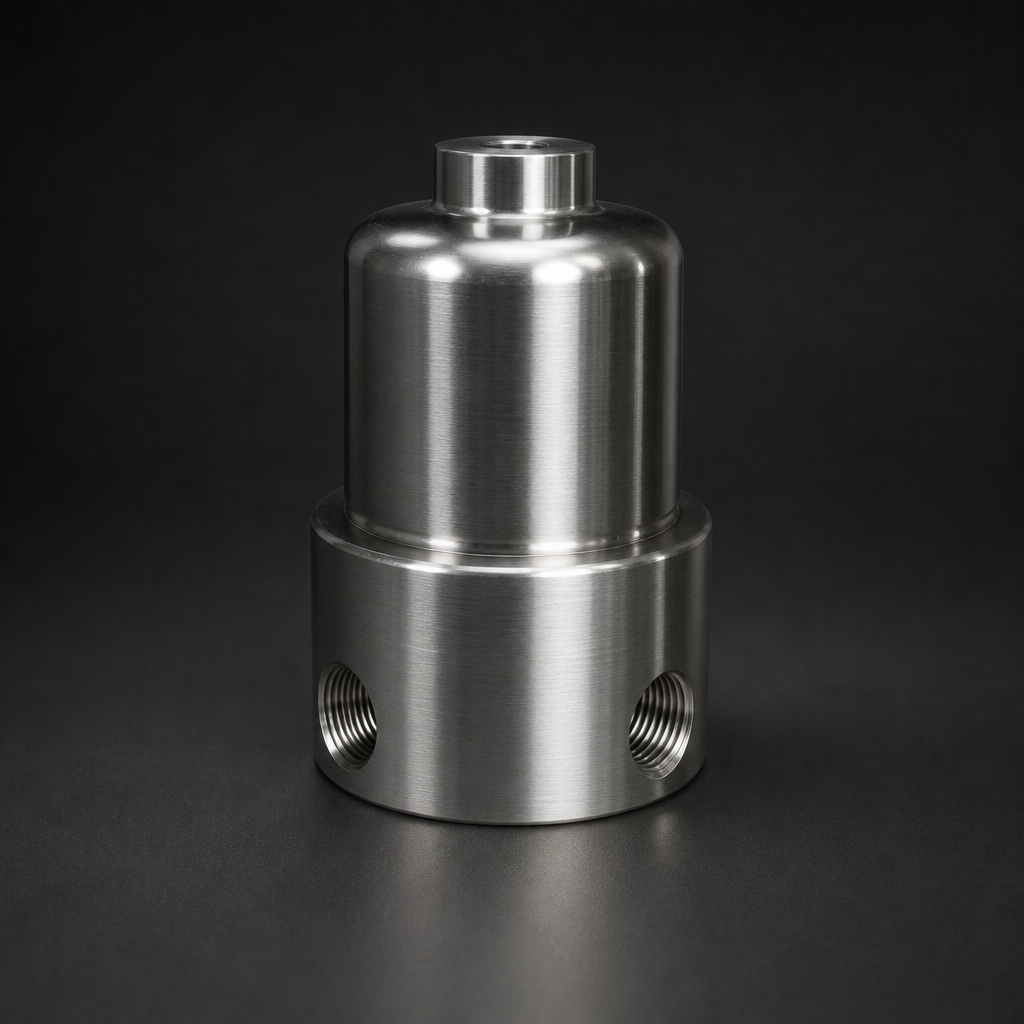
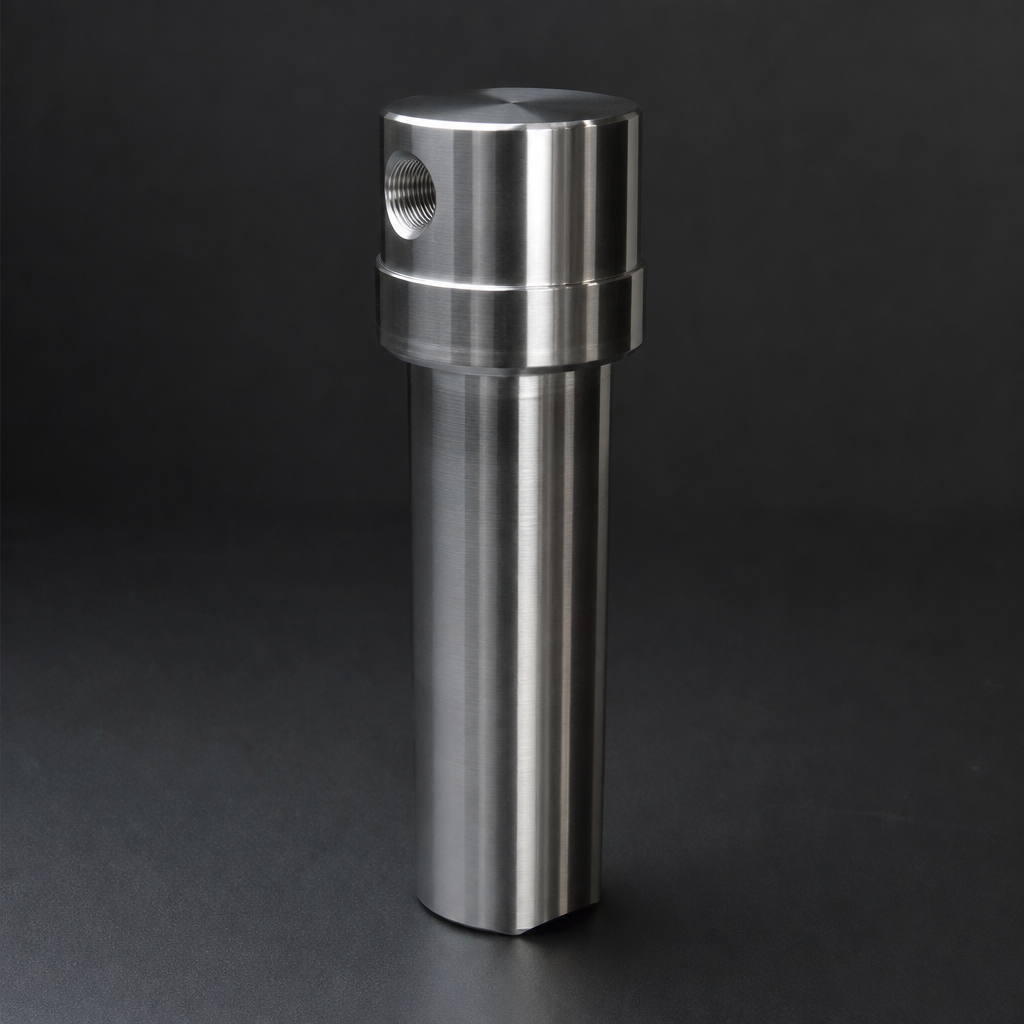
Where a laboratory operates a central gas distribution system — common in larger research facilities with multiple incubator rooms — a permanent housing filter at the supply point is more economical than individual disposable filters on every outlet. The RF-H-150 stainless steel process gas filter housing is rated to 100 bar and constructed from 316L stainless steel, making it compatible with CO₂, N₂, and mixed anaerobic gas supplies. Fitted with RF-C coalescing elements, it provides continuous bulk filtration of the central supply, with RF-DIL disposable filters then used as the final sterile barrier at each incubator.
This two-stage approach — central coalescing filtration followed by point-of-use sterile filtration — is the most cost-effective strategy for facilities with more than four or five incubators sharing a common gas supply.
Seal Material Compatibility for Laboratory Gases
Seal material selection is critical in biomedical applications. Standard NBR seals are suitable for CO₂ and N₂ at temperatures up to 100 °C. For applications involving oxygen (e.g., aerobic culture with O₂ enrichment), EPDM seals specifically rated for oxygen service must be used — standard NBR and FKM seals are not approved for oxygen-enriched atmospheres. R+F FilterElements supplies housings with EPDM-O₂ seals for oxygen-compatible configurations. See our oxygen filtration safety guide for full material compatibility details.
Validation and Regulatory Considerations
Biomedical research laboratories operating under GMP or GLP frameworks may need to validate their gas filtration systems. Key considerations include:
- Filter integrity testing: Bubble-point or diffusion testing to confirm membrane integrity before use.
- Extractables and leachables: Filter materials must not introduce contaminants into the gas stream that could affect cell viability or assay results.
- Traceability: Batch certificates and material declarations for filter elements used in regulated environments.
- Change-out intervals: Documented procedures for filter replacement, including criteria for early replacement after contamination events.
R+F FilterElements can provide material declarations and batch certificates for RF-DIL and RF-C elements on request. For GMP-critical applications, consult our engineering team to discuss validation support.
- Cell cultures are extraordinarily sensitive to their environment.
- Cylinder particulates:
- A robust biomedical gas filtration strategy typically involves two stages: a coarse pre-filter to remove bulk particulates and liquid aerosols, followed by a sterile-grade point-of-use filter immediately before the incubator or culture vessel.
- Where a laboratory operates a central gas distribution system — common in larger research facilities with multiple incubator rooms — a permanent housing filter at the supply point is more economical than individual disposable filters on every outlet.
Related Reading
- Coalescing vs Particulate Filter Elements — Which Do You Need?
- Oxygen Filtration Safety — Materials, Ratings, and Compliance
- ISO 8573-1 Compressed Air Quality — A Practical Guide
Try our Engineering Sizing Tool → or discuss your requirements with our team.