Hospital central vacuum systems are critical infrastructure — used for surgical suction, wound drainage, laboratory aspiration, and the safe removal of waste anaesthetic gases. Yet the exhaust side of these systems is frequently overlooked during specification and maintenance. When a vacuum pump exhausts into a plant room or roof void, it carries with it a complex mixture of oil mist, bacteria, moisture, and — in the case of WAGD circuits — residual anaesthetic agents. Without a properly specified hospital vacuum system exhaust filter, these contaminants are released into occupied or semi-occupied spaces, creating both infection control and occupational health risks.
This article examines the exhaust filtration requirements for medical vacuum and WAGD systems, the relevant guidance under HTM 02-01, and how R+F FilterElements' vacuum pump exhaust filter range addresses these challenges in clinical environments.
Why Hospital Vacuum Exhaust Is Different from Industrial Applications
In a standard industrial vacuum system, the primary concern is protecting the pump from process contamination and preventing oil mist from fouling the surrounding environment. In a hospital, the stakes are considerably higher. The exhaust stream from a medical vacuum pump may contain:
- Oil mist and aerosols — generated by oil-lubricated rotary vane or liquid ring pumps
- Viable micro-organisms — bacteria and viruses aspirated from surgical sites, wound drainage, and laboratory procedures
- Moisture and condensate — particularly in high-throughput theatres
- Residual anaesthetic agents — halogenated volatile agents (isoflurane, sevoflurane, desflurane) and nitrous oxide from WAGD circuits
- Particulate debris — tissue fragments and biological material in high-acuity surgical suites
This combination means that a single filter technology is rarely sufficient. Effective medical vacuum exhaust filtration typically requires a staged approach: coalescing or particulate pre-filtration to capture oil mist and biological aerosols, followed by adsorption media to address volatile anaesthetic agents.
HTM 02-01: The Governing Standard for UK Healthcare Vacuum Systems
In the United Kingdom, the design, installation, and maintenance of medical gas pipeline systems — including vacuum and WAGD — is governed by Health Technical Memorandum HTM 02-01. This document sets out specific requirements for exhaust filtration that go beyond general industrial practice.
Key HTM 02-01 requirements relevant to exhaust filtration include:
- Vacuum pump exhausts must be discharged to a safe external location, or treated to render them safe before discharge within a building
- WAGD exhausts must not be combined with medical vacuum exhausts unless the combined stream is treated for anaesthetic agent removal
- Bacterial filtration is required on vacuum exhausts where discharge to atmosphere is not practicable
- Filter housings must be accessible for element replacement without specialist tools, and replacement intervals must be defined in the maintenance schedule
- All materials in contact with the exhaust stream must be compatible with the anticipated contaminants, including halogenated agents
For facilities undertaking new builds or major refurbishments, HTM 02-01 compliance is a contractual requirement under NHS Standard Contract. For existing estates, it represents the benchmark against which infection control and estates teams are measured during CQC inspections.
Understanding WAGD Filtration Requirements
Waste anaesthetic gas disposal systems present a specific challenge that is distinct from standard medical vacuum. WAGD circuits collect exhaled and leaked anaesthetic gases from theatre pendants and anaesthetic machines, transporting them under slight negative pressure to a dedicated pump and exhaust point.
The exhaust from a WAGD pump contains volatile halogenated agents at concentrations that, while diluted, can still exceed workplace exposure limits (WELs) if discharged into enclosed plant rooms. The UK WEL for isoflurane, for example, is 50 ppm (8-hour TWA), and for nitrous oxide is 100 ppm. In a poorly ventilated plant room with multiple WAGD exhausts, these limits can be approached or exceeded during peak theatre activity.
Effective WAGD filtration therefore requires activated carbon adsorption media capable of capturing halogenated hydrocarbons. Standard oil mist filters — even high-efficiency coalescing types — offer no protection against volatile organic compounds. The adsorption stage must be sized correctly for the anticipated anaesthetic agent load, and replacement intervals must account for carbon saturation rather than simply differential pressure.
Infection control during maintenance:
The Oil Mist and Bacteria Challenge: A Combined Threat
Oil-lubricated rotary vane pumps — still widely used in hospital vacuum plant rooms — generate a fine oil mist in their exhaust. Droplet sizes typically range from sub-micron to several microns, with the sub-micron fraction being the most difficult to capture and the most likely to remain airborne. When this oil mist combines with biological aerosols from the vacuum circuit, the result is a bioaerosol-laden mist that can colonise surfaces and ductwork downstream of the pump.
Coalescing filtration is the primary defence against oil mist. High-efficiency borosilicate glass microfibre elements — such as those used in R+F FilterElements' vacuum exhaust housings — capture droplets by interception and diffusion, coalescing them into larger droplets that drain by gravity. For bacterial filtration, the same element construction provides an effective barrier: the tortuous fibre matrix physically traps micro-organisms, and the hydrophobic drainage layer prevents re-entrainment of captured liquid.
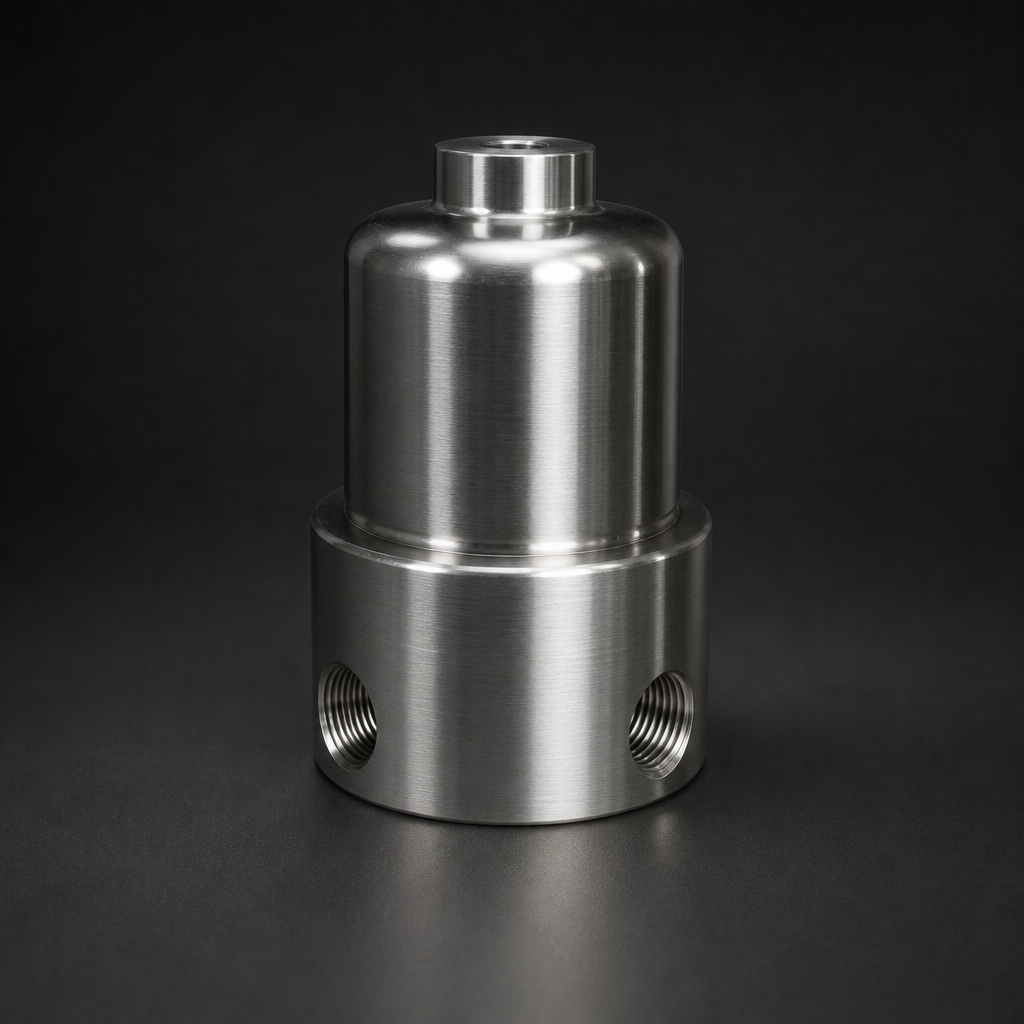
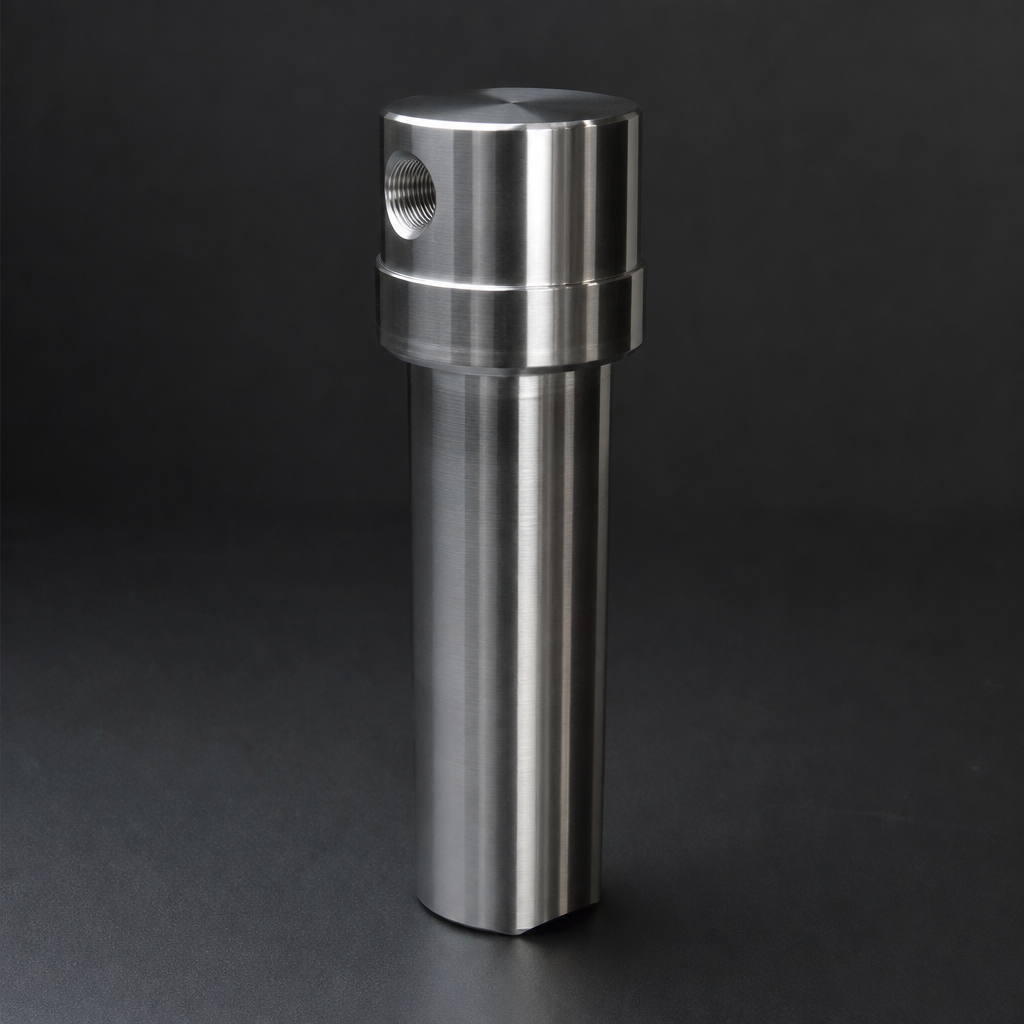
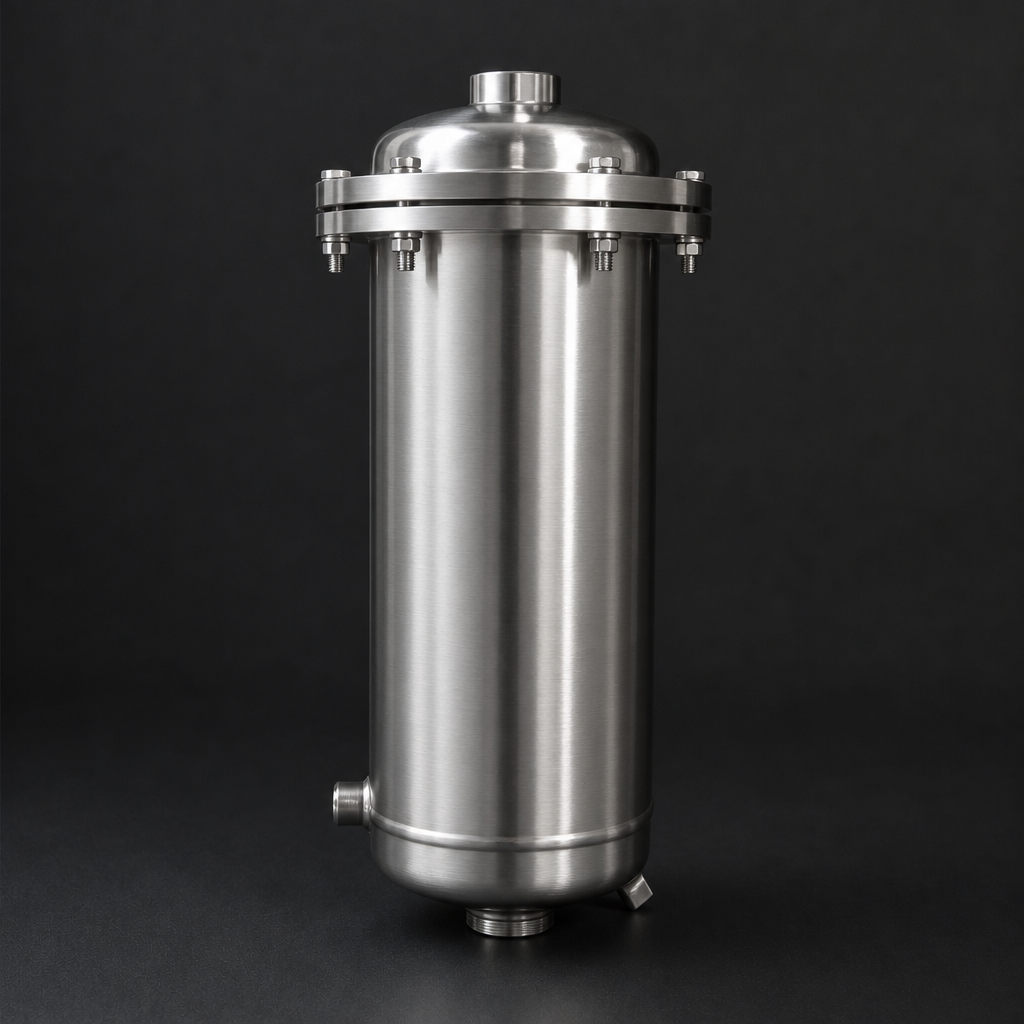
R+F FilterElements offers the RF-H-447S, a 316L stainless steel vacuum pump exhaust filter housing specifically designed for demanding applications including medical and pharmaceutical vacuum systems. The stainless steel construction provides full compatibility with steam sterilisation and aggressive cleaning agents, while the multi-element design accommodates the high flow rates typical of hospital vacuum plant.
R+F FilterElements Vacuum Exhaust Filter Range
The R+F vacuum pump exhaust filter range covers flow rates from 5 m³/h to over 765 m³/h (free air delivery), with housing options in aluminium and 316L stainless steel. For hospital applications, the stainless steel series is strongly recommended due to its resistance to biological cleaning agents and its suitability for validation documentation required under HTM 02-01.
| Model | Material | Max Flow (m³/h FAD) | Element Type | Max Temp (°C) | Typical Application |
|---|---|---|---|---|---|
| RF-H-420 | Aluminium | 45 | RF-CS (silica binder) | 200 | Small vacuum pumps, dental |
| RF-H-435 | Aluminium | 180 | RF-CS (silica binder) | 200 | Medium hospital vacuum plant |
| RF-H-447S | 316L Stainless Steel | 450 | RF-CS S-type (200 °C) | 200 | Hospital vacuum, WAGD, pharma |
| RF-H-456 | 316L Stainless Steel | 765 | RF-CS S-type (200 °C) | 200 | Large hospital / multi-theatre |
All vacuum exhaust filter elements in the R+F range use a silica-bonded borosilicate glass microfibre construction (RF-CS series), which provides the heat resistance required for hot exhaust streams from oil-lubricated pumps. The S-type elements are rated to 200 °C continuous service temperature, making them suitable for use immediately downstream of the pump without a cooling section.
For WAGD applications requiring anaesthetic agent adsorption, R+F FilterElements recommends combining the RF-H-447S housing with downstream activated carbon adsorption using the RF-AC adsorption element series. This staged arrangement — coalescing/particulate first, adsorption second — protects the carbon bed from oil contamination that would otherwise rapidly saturate the adsorption capacity.
Use our free Engineering Tool to get a filtration recommendation for your specific application in under 2 minutes.
Sizing a Hospital Vacuum Exhaust Filter Correctly
Correct sizing of a hospital vacuum system exhaust filter requires knowledge of the pump's free air delivery (FAD) rating, the exhaust temperature, and the anticipated contaminant load. Undersizing leads to excessive differential pressure, reduced pump efficiency, and premature element loading. Oversizing increases capital cost without benefit.
Key sizing parameters for hospital vacuum exhaust filtration:
- Flow rate: Use the pump manufacturer's FAD rating at maximum load, not the nominal system demand. Allow for future expansion if the plant room is designed for additional pumps.
- Exhaust temperature: Oil-lubricated rotary vane pumps typically exhaust at 60–90 °C under normal load. Liquid ring pumps exhaust at lower temperatures but with higher moisture content.
- Oil carry-over: Consult the pump manufacturer's specification for oil mist carry-over (typically expressed in mg/m³). Higher carry-over rates require more frequent element replacement.
- WAGD load: For WAGD circuits, estimate the peak anaesthetic agent load based on the number of theatres and the agents in use. This determines the required activated carbon bed volume and replacement interval.
- Pressure drop budget: Most vacuum pump manufacturers specify a maximum allowable back-pressure on the exhaust. Ensure the filter housing and element combination remains within this limit throughout the service interval.
R+F FilterElements provides a free filter sizing tool that allows estates engineers and medical gas contractors to specify the correct housing and element combination based on pump FAD, temperature, and application type.
Installation and Maintenance Considerations
HTM 02-01 requires that medical gas plant — including vacuum pump exhaust filters — is maintained under a planned preventive maintenance (PPM) programme. For exhaust filters, this typically means:
- Differential pressure monitoring: A gauge or electronic transmitter across the filter housing allows maintenance staff to track element loading and schedule replacement before excessive back-pressure develops.
- Element replacement intervals: In the absence of differential pressure monitoring, R+F FilterElements recommends annual element replacement for hospital vacuum exhaust applications as a minimum, with six-monthly inspection in high-throughput theatres.
- Drain management: Coalescing elements produce a liquid drain stream of oil and condensate. The drain must be routed to an appropriate collection point — not to a floor drain without an oil interceptor.
- Activated carbon saturation: Carbon adsorption elements do not show a differential pressure increase when saturated. Replacement must be based on time-in-service or measured breakthrough, not pressure drop.
- Infection control during maintenance: Element replacement on a medical vacuum exhaust filter should be treated as a clinical waste procedure. Technicians should wear appropriate PPE, and used elements should be double-bagged and disposed of as clinical waste.
The RF-H-447S housing features a top-entry element design that allows element replacement without disconnecting the housing from the pipework, minimising downtime and reducing the risk of contamination during maintenance. The 316L stainless steel bowl can be wiped down with standard hospital-grade disinfectants between element changes.
Compliance Documentation and Validation
For new installations and major refurbishments, HTM 02-01 requires a validation and verification (V&V) process that includes documentation of all installed components. R+F FilterElements can provide the following documentation to support HTM 02-01 compliance:
- Material certificates (EN 10204 3.1) for 316L stainless steel housings
- Element efficiency test certificates to BS EN ISO 12500 or equivalent
- Pressure test certificates for housing assemblies
- Dimensional drawings and installation instructions
- Recommended maintenance schedules and element replacement procedures
This documentation package is available on request from R+F FilterElements and is designed to integrate directly into the HTM 02-01 validation folder maintained by the Authorised Engineer (Medical Gas) responsible for the installation.
For existing installations where documentation is incomplete, contact the R+F technical team via the enquiry form with your pump model and flow rate for a same-day recommendation.
Choosing the Right Filter for Your Hospital Vacuum System
Selecting the correct exhaust filter for a hospital vacuum system involves balancing technical performance, compliance requirements, and whole-life cost. The key decision points are:
- Aluminium vs. stainless steel housing: For medical vacuum and WAGD applications, 316L stainless steel is strongly recommended. The additional cost is modest relative to the whole-life cost of the installation, and the material compatibility with cleaning agents and sterilisation procedures is significantly better.
- Single-stage vs. two-stage filtration: For medical vacuum without WAGD, a single coalescing/particulate stage (RF-H-447S with RF-CS elements) is typically sufficient. For WAGD circuits, a second activated carbon adsorption stage is required.
- Element grade: Standard RF-CS elements provide 99.97% efficiency at 0.3 µm — sufficient for oil mist and bacterial filtration. For applications requiring validated sterile exhaust (e.g., pharmaceutical-grade vacuum), HEPA-grade elements are available on request.
The full R+F vacuum pump exhaust filter range is available at the vacuum exhaust product page, with technical datasheets and dimensional drawings available for download.
- Oil mist and aerosols
- In the United Kingdom, the design, installation, and maintenance of medical gas pipeline systems — including vacuum and WAGD — is governed by Health Technical Memorandum HTM 02-01.
- Waste anaesthetic gas disposal systems present a specific challenge that is distinct from standard medical vacuum.
- Oil-lubricated rotary vane pumps — still widely used in hospital vacuum plant rooms — generate a fine oil mist in their exhaust.
Summary
Hospital central vacuum systems present a unique exhaust filtration challenge: a complex mixture of oil mist, biological aerosols, moisture, and — in WAGD circuits — volatile anaesthetic agents must be captured before the exhaust stream reaches occupied or semi-occupied spaces. HTM 02-01 sets clear requirements for exhaust filtration in UK healthcare facilities, and compliance is increasingly scrutinised during CQC inspections and NHS contract audits.
R+F FilterElements' vacuum pump exhaust filter range — including the RF-H-447S stainless steel housing and RF-CS silica-bonded filter elements — provides a technically robust, HTM 02-01-compatible solution for medical vacuum and WAGD exhaust filtration.