Supplying particle-free gas to an ISO Class 5 cleanroom is one of the most demanding filtration challenges in pharmaceutical and semiconductor manufacturing. A single contamination event — a burst of particles from a corroded valve seat, a trace of compressor oil carried in the nitrogen line — can compromise an entire batch, trigger a regulatory deviation, or force a costly shutdown. Yet the gas supply infrastructure is often treated as an afterthought, specified once during facility commissioning and rarely revisited until something goes wrong.
This article explains what ISO 14644 actually demands of your gas supply, where contamination enters the system, and how point-of-use filtration — particularly the RF-DIL disposable inline filter range — closes the gap between bulk gas quality and the purity your process actually requires.
What ISO 14644 Requires — and What It Doesn't Cover
ISO 14644-1 defines cleanroom classes by the maximum allowable concentration of airborne particles at specific sizes. ISO Class 5 permits no more than 3,520 particles ≥ 0.5 µm per cubic metre of air. For comparison, a typical uncontrolled environment contains millions of particles per cubic metre at the same size threshold.
The standard governs the room environment — the air you breathe and the surfaces your product contacts. It does not directly regulate the purity of process gases such as nitrogen used for blanketing, purging, or pneumatic actuation, nor compressed air used for valve actuation or product contact. Those gases are governed by separate standards: ISO 8573-1 for compressed air quality and pharmacopoeial monographs for medicinal gases.
The practical consequence is that a facility can hold ISO Class 5 certification while simultaneously supplying process gas that introduces particles, moisture, or oil aerosols directly into the product stream. The two standards must be managed together, not in isolation.
Where Contamination Enters the Gas Supply
Understanding contamination sources is the first step towards eliminating them. In a typical pharmaceutical cleanroom gas supply, there are four primary entry points:
- Bulk supply and distribution pipework: Nitrogen delivered from a bulk liquid tank or cylinder manifold passes through kilometres of stainless steel pipework before reaching the point of use. Weld spatter, pipe scale, and particulate from valve seats shed continuously into the gas stream.
- Compressed air generation: Oil-lubricated compressors introduce aerosol oil even after coalescing filtration at the compressor house. Desiccant dryers shed desiccant fines. Downstream pipework corrodes and sheds iron oxide particles.
- Pressure regulation: Pressure regulators contain elastomeric seats and diaphragms that shed particles as they wear. A regulator that has been in service for two years may be generating more particles than the bulk supply line.
- Final connections: Flexible hoses, quick-connect fittings, and instrument tubing introduce particles at every connection point, particularly during maintenance when lines are broken and reconnected.
ISO Class 5 Gas Purity: What the Numbers Mean
To supply gas that is consistent with an ISO Class 5 cleanroom environment, the gas itself must be filtered to remove particles at the same size threshold — 0.5 µm and above — to a concentration equivalent to or better than the room classification. In practice, pharmaceutical manufacturers typically specify gas purity to ISO 8573-1 Class 1 for particles (≤ 0.1 µm, maximum 20,000 particles per m³) and Class 1 for oil (≤ 0.01 mg/m³) for any gas that contacts the product or its primary packaging.
Need help selecting the right filter for your cleanroom gas supply?
Point-of-Use Filtration: The Last Line of Defence
Central filtration at the compressor house or bulk gas panel is necessary but not sufficient. By the time gas travels through distribution pipework to the cleanroom, it has passed through dozens of potential contamination sources. Point-of-use filtration — installed at the final connection to the process — removes particles generated anywhere in the distribution system.
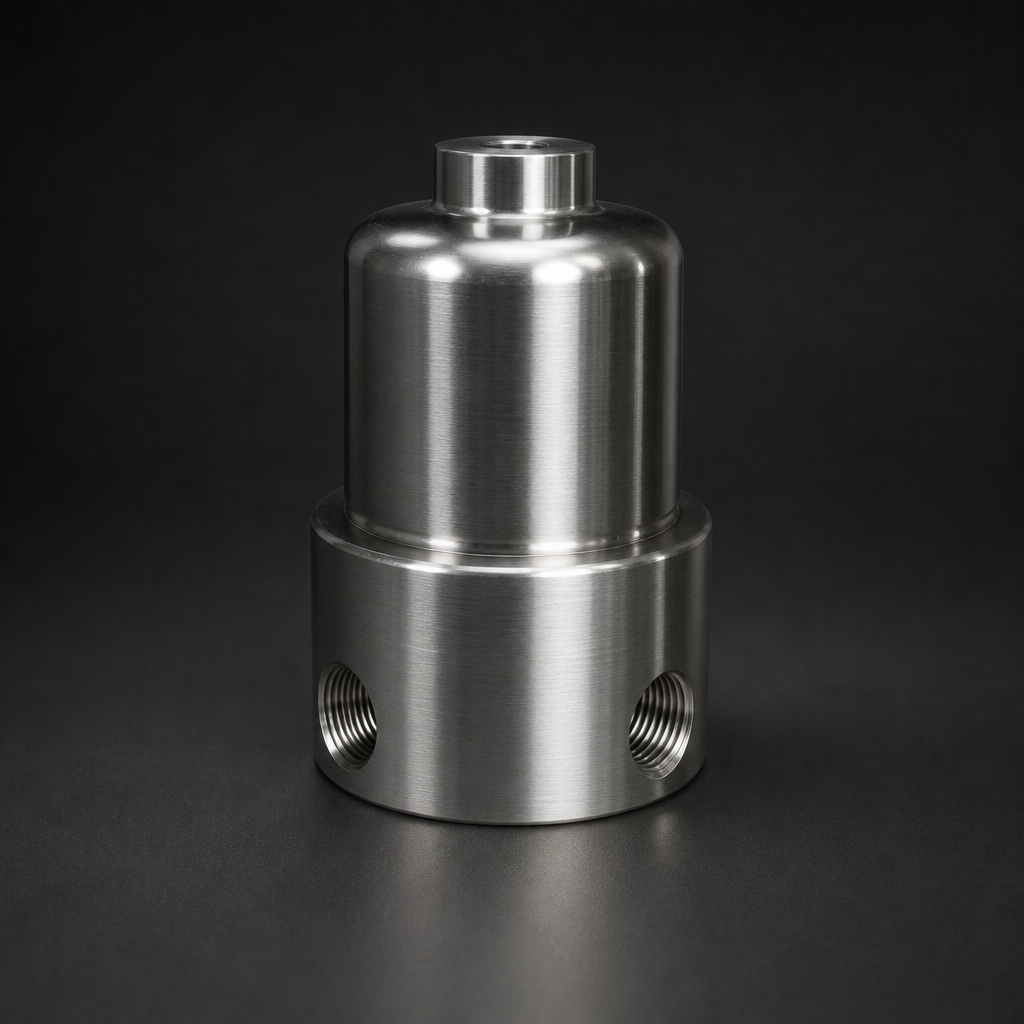
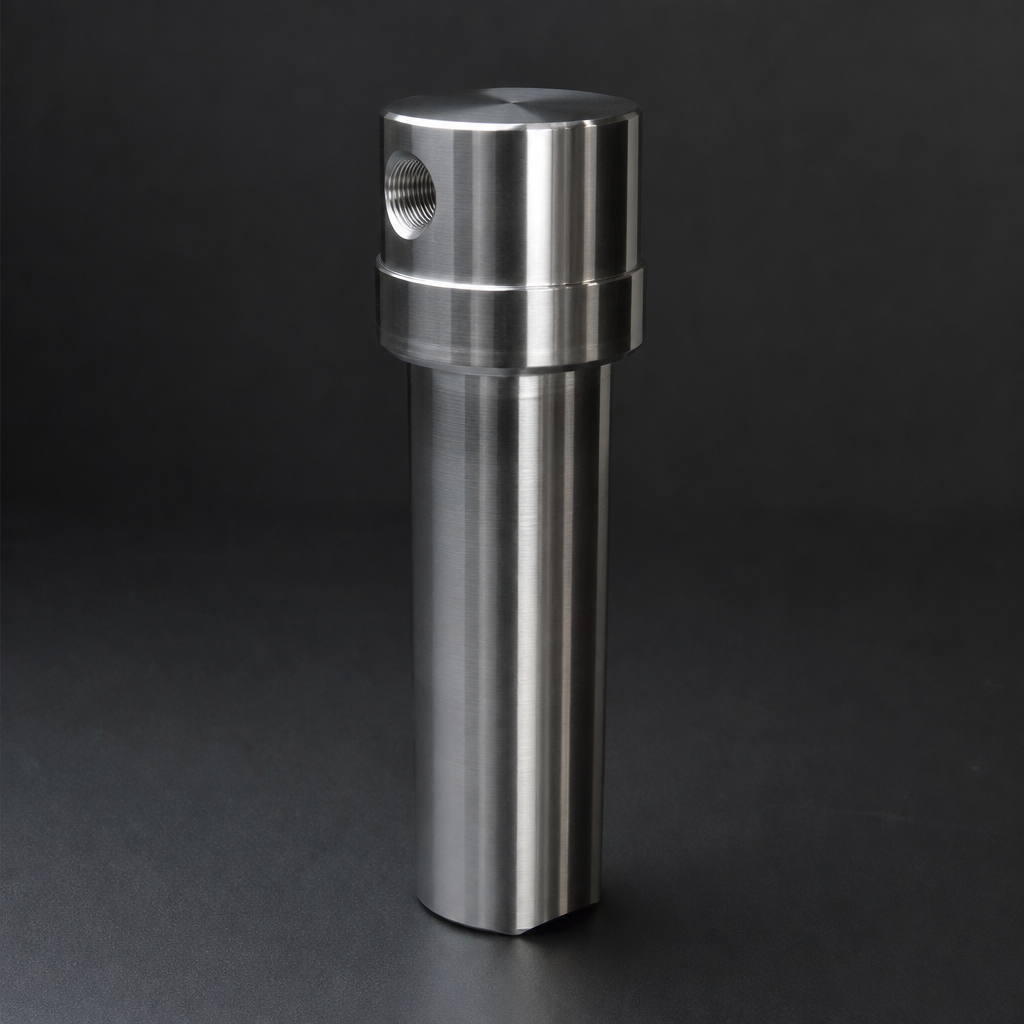
For cleanroom gas supply, R+F FilterElements offers the RF-DIL disposable inline filter range, designed specifically for point-of-use applications where space is limited, maintenance access is restricted, and contamination risk from filter servicing must be minimised. The RF-DIL-025 and RF-DIL-050 variants cover flow rates from 0.5 to 50 Nm³/h at pressures up to 16 bar, making them suitable for individual instrument connections, valve actuators, and product-contact gas lines.
For higher-flow applications — purge gas headers, blanketing manifolds, or compressed air drops serving multiple instruments — the RF-H-310 to RF-H-395 compressed air filter series provides coalescing and particulate filtration in aluminium or stainless steel housings rated to 17 bar and 120 °C. Fitted with RF-C coalescing elements (99.99% efficiency ≥ 0.1 µm) or RF-P particulate elements (99.99% efficiency ≥ 0.3 µm), these housings can be installed at zone entry points to protect all downstream connections.
Use our free Engineering Tool to get a filtration recommendation for your specific application in under 2 minutes.
Selecting the Right Filter for Each Application
Not all gas supply points in a cleanroom carry the same contamination risk or require the same level of filtration. A structured approach to filter selection — based on gas type, flow rate, pressure, and product contact risk — avoids both under-specification (contamination risk) and over-specification (unnecessary cost and pressure drop).
| Application | Gas Type | Recommended Filter | Element Type | ISO 8573-1 Class |
|---|---|---|---|---|
| Product-contact N₂ blanketing | Nitrogen | RF-DIL-025 | Particulate 0.01 µm | Class 1 particles |
| Valve actuator compressed air | Compressed air | RF-H-310 + RF-C element | Coalescing 0.1 µm | Class 1 oil & particles |
| Instrument purge gas header | Nitrogen / dry air | RF-H-340 + RF-P element | Particulate 0.3 µm | Class 2 particles |
| Residual oil removal (post-coalescer) | Compressed air | RF-H-310 + RF-AC element | Activated carbon adsorption | Class 1 oil (< 0.003 mg/m³) |
Validation and Change Control Considerations
In a GMP-regulated cleanroom, the gas supply system is part of the validated facility. Any change to filter type, housing, or element specification requires a change control assessment and, in many cases, requalification of the affected system. This has two practical implications for filter selection:
First, choose filter housings and elements that are already documented in your supplier's qualification package. R+F FilterElements provides material certificates, extractables data, and dimensional drawings for all RF-DIL and RF-H series products, supporting IQ/OQ documentation. Second, consider the maintenance cycle: disposable inline filters such as the RF-DIL range eliminate the need for element change-out procedures, reducing the risk of contamination during servicing and simplifying change control documentation.
For facilities operating under FDA 21 CFR Part 211 or EU GMP Annex 1, the gas supply system should be included in the contamination control strategy (CCS) document, with filter specifications, change frequencies, and integrity test procedures clearly defined. The R+F solutions pages provide application-specific guidance for pharmaceutical gas supply systems.
Nitrogen Purity: Bulk Supply vs. Point-of-Use Reality
Bulk liquid nitrogen delivered to site typically has a purity of 99.999% (5.0 grade) with particle counts well below ISO 8573-1 Class 1. However, this purity is measured at the point of production, not at the point of use. By the time nitrogen has been vaporised, passed through a pressure regulator, travelled through stainless steel distribution pipework, and emerged at a cleanroom connection point, its particle content may have increased by several orders of magnitude.
A study of pharmaceutical nitrogen distribution systems found that particle counts at point-of-use connections were typically 10–100 times higher than at the bulk supply panel, even in well-maintained facilities. Point-of-use filtration with an RF-DIL inline filter reduces these counts to below the ISO Class 5 equivalent threshold, providing a documented, validated barrier between the distribution system and the product.
- ISO 14644-1 defines cleanroom classes by the maximum allowable concentration of airborne particles at specific sizes.
- Bulk supply and distribution pipework:
- To supply gas that is consistent with an ISO Class 5 cleanroom environment, the gas itself must be filtered to remove particles at the same size threshold — 0.
- Central filtration at the compressor house or bulk gas panel is necessary but not sufficient.
Related Reading
- ISO 8573-1 Compressed Air Quality — A Practical Guide
- Coalescing vs Particulate Filter Elements — Which Do You Need?
- Oxygen Filtration Safety — Avoiding Ignition Risks in High-Purity Systems
Try our Engineering Sizing Tool → or discuss your requirements with our team.