Why Your Compressed Air System Deserves a Proper Audit
Most plant engineers know that compressed air is expensive to generate — roughly 7–8 bar of pressure costs around 7–8 kWh per 1,000 Nm³. What is less well understood is that contaminated compressed air is even more expensive: it corrodes pneumatic actuators, contaminates food and pharmaceutical products, clogs instrument lines, and triggers unplanned downtime. Yet the majority of industrial sites have never carried out a structured compressed air quality audit.
An audit does not require specialist laboratory equipment or weeks of disruption. With the right methodology — and the right instruments — a maintenance engineer or energy manager can complete a meaningful assessment in a single working day. This guide walks you through each stage, explains what the readings mean, and maps every finding to the ISO 8573-1 purity classes that govern compressed air quality across Europe.
Stage 1 — Visual Inspection of Filters, Housings, and Pipework
Before reaching for any instrument, spend time looking. A thorough visual inspection takes roughly 30–60 minutes and will immediately flag the most serious problems.
What to Check
- Filter housings: Look for corrosion, cracked polycarbonate bowls, weeping joints, and missing drain plugs. Any housing showing physical damage should be taken out of service immediately — a failed bowl under 7 bar can cause serious injury.
- Element change records: Check the maintenance log. If there is no record of element changes in the past 12 months, assume the elements are saturated and plan for immediate replacement.
- Auto-drain function: Trigger each auto-drain manually and observe whether liquid is expelled. A drain that produces nothing may be blocked; one that runs continuously may indicate a failed float seal.
- Pipework and fittings: Rust staining downstream of a filter is a reliable indicator that liquid water is passing through. Oily residue on fittings points to coalescing element failure or an undersized housing.
- Bypass valves: Confirm that all bypass valves are closed and locked. Open bypasses are surprisingly common and render the entire filtration train useless.
Document every finding with photographs. This baseline record is invaluable when comparing results after corrective action.
Stage 2 — Differential Pressure Monitoring
Differential pressure (DP) across a filter element is the single most informative measurement you can take without breaking into the system. It tells you simultaneously about element condition, flow rate relative to housing capacity, and the presence of liquid flooding.
How to Take the Measurement
Connect a calibrated differential pressure gauge or data logger to the inlet and outlet tapping points on each filter housing. Record readings at representative production load — ideally at peak demand. If the housing has no tapping points, a clamp-on ultrasonic flow meter upstream and downstream can provide an indirect indication, though direct DP measurement is always preferred.
Interpreting the Results
| DP Reading (mbar) | Likely Cause | Recommended Action |
|---|---|---|
| < 100 | Element in good condition, flow within rated range | No action required; schedule next inspection |
| 100–200 | Element approaching end of service life, or flow near upper limit | Plan element replacement within 4–6 weeks |
| 200–350 | Element heavily loaded with particulate or coalesced oil | Replace element promptly; check upstream contamination source |
| > 350 | Element blocked, liquid flooding, or housing undersized | Immediate replacement; review housing sizing against actual flow |
Note that a very low DP on a coalescing element that has been in service for more than 12 months can also be a warning sign — it may indicate that the element media has collapsed and is no longer filtering effectively. Always combine DP data with downstream quality measurements.
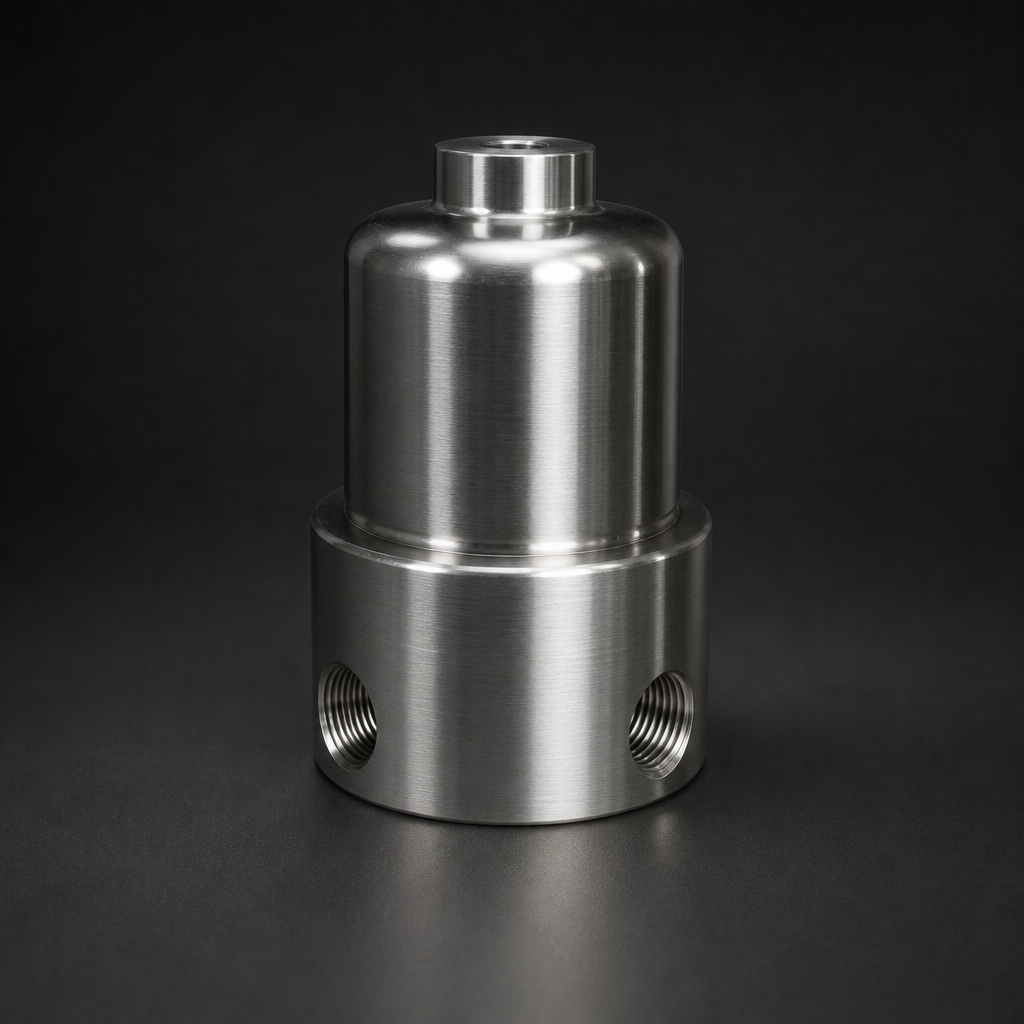
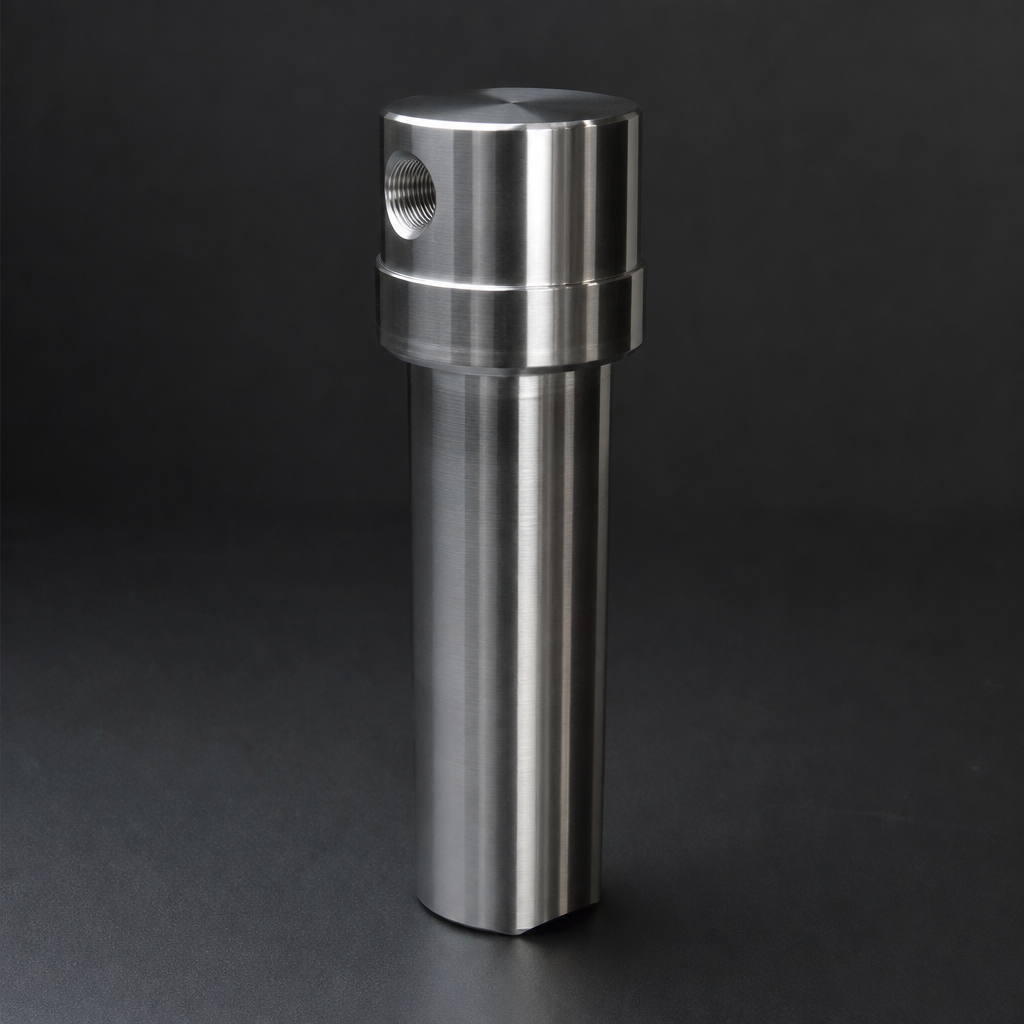
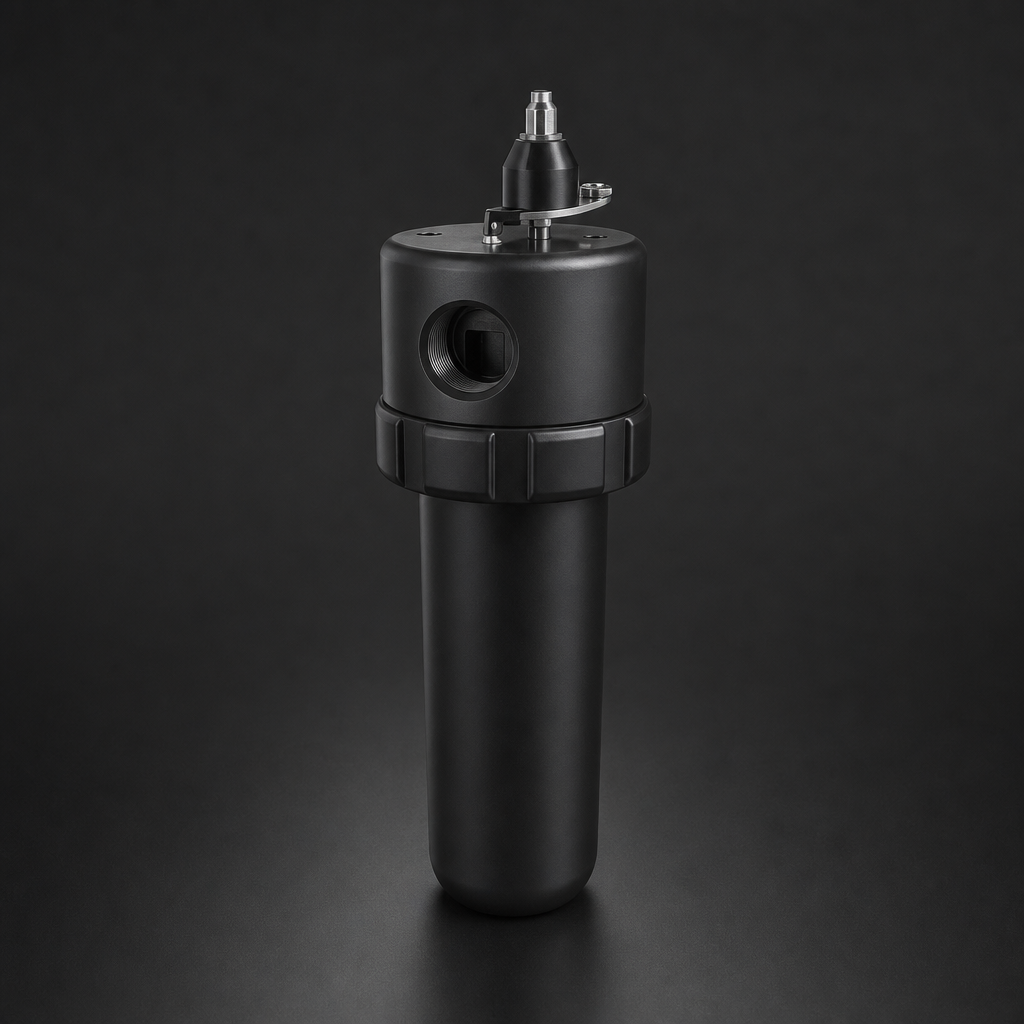
R+F FilterElements compressed air filter housings in the RF-H-310 to RF-H-395 series are supplied with standard ¼ BSP tapping points on both inlet and outlet, making DP monitoring straightforward without any pipework modification. The housings are rated to 17 bar and cover flow rates from a few Nm³/h up to 12,000 Nm³/h, so there is a correctly sized option for virtually every industrial application.
Stage 3 — Oil Vapour Measurement
Oil contamination in compressed air exists in two forms: aerosol (liquid droplets and fine mist) and vapour (gaseous hydrocarbons). Coalescing filters remove aerosol efficiently, but oil vapour passes straight through unless an activated carbon adsorption stage is fitted. Many sites have coalescing filtration but no adsorption stage, leaving them unknowingly non-compliant with ISO 8573-1 Class 1 or Class 2 oil content limits.
Measurement Methods
- Colorimetric tubes (Dräger or equivalent): Quick and inexpensive. Draw a known volume of air through a graduated tube; the colour change indicates total hydrocarbon concentration in mg/m³. Suitable for screening surveys.
- Gravimetric sampling: Pass a measured volume of air through a pre-weighed filter pad and weigh the collected residue. More accurate but requires laboratory analysis and takes several hours.
- Photoionisation detector (PID): Provides continuous real-time readings of total volatile organic compounds (VOCs). Useful for identifying intermittent contamination events linked to compressor load cycles.
ISO 8573-1 Oil Content Classes
| ISO 8573-1 Class | Total Oil Content (aerosol + vapour, mg/m³) | Typical Application |
|---|---|---|
| Class 1 | ≤ 0.01 | Breathing air, semiconductor, sterile pharmaceutical |
| Class 2 | ≤ 0.1 | Food contact, medical devices, spray painting |
| Class 3 | ≤ 1.0 | General manufacturing, pneumatic tools |
| Class 4 | ≤ 5.0 | Non-critical pneumatic actuation |
If your measurement exceeds the class required by your process or product specification, the corrective path is clear: add or replace an activated carbon adsorption stage downstream of the coalescing filter. The RF-AC adsorption element, available from R+F FilterElements, achieves a residual oil content below 0.003 mg/m³ — comfortably within ISO 8573-1 Class 1 — and is available in the same element sizes as the RF-C coalescing range, so it can be retrofitted into existing housings without any pipework changes.
For point-of-use applications where a full housing is impractical, the RF-DIA disposable inline adsorber provides activated carbon or molecular sieve adsorption in a compact, tool-free format.
Photoionisation detector (PID):
Stage 4 — Particle Counting
Particulate contamination — solid particles of rust, pipe scale, compressor wear debris, and atmospheric dust — is the most common cause of pneumatic valve failure and instrument line blockage. ISO 8573-1 classifies particles by both size and concentration, and a particle counter gives you the data needed to assign a purity class to your system.
How to Conduct a Particle Count
Connect a calibrated optical particle counter to a sample point downstream of the final filter stage. Most portable counters measure particles in the 0.1–5 µm range and report counts per cubic metre at each size band. Take readings over at least 10 minutes to capture any intermittent contamination events. Record the ambient temperature and pressure at the sample point so results can be corrected to reference conditions (20 °C, 1 bar absolute, 0% relative humidity) as required by ISO 8573-1.
ISO 8573-1 Particle Classes
| ISO 8573-1 Class | Particles 0.1–0.5 µm (per m³) | Particles 0.5–1 µm (per m³) | Particles 1–5 µm (per m³) |
|---|---|---|---|
| Class 1 | ≤ 20,000 | ≤ 400 | ≤ 10 |
| Class 2 | ≤ 400,000 | ≤ 6,000 | ≤ 100 |
| Class 3 | — | ≤ 90,000 | ≤ 1,000 |
| Class 4 | — | — | ≤ 10,000 |
High particle counts in the sub-micron range (0.1–0.5 µm) that persist even after a coalescing filter stage typically indicate that the coalescing element has reached the end of its service life and the glass microfibre media is shedding fibres. Replace the element immediately and retest. The RF-C coalescing element range from R+F FilterElements uses borosilicate glass microfibre with a 99.99% efficiency rating at ≥ 0.1 µm, ensuring that a correctly sized and maintained installation will consistently achieve ISO 8573-1 Class 1 particulate performance.
For a detailed comparison of coalescing and particulate element types and when to use each, see our guide: Coalescing vs Particulate Filter Elements — Which Do You Need?
Use our free Engineering Tool to get a filtration recommendation for your specific application in under 2 minutes.
Mapping Your Findings to an Action Plan
Once all four stages are complete, you will have a clear picture of your system's current purity class across the three ISO 8573-1 contaminant categories: solid particles, water, and oil. The next step is to compare this against the purity class required by your most demanding downstream application and identify the gap.
A typical action plan following an audit might look like this:
- Immediate (within 1 week): Replace any elements with DP > 350 mbar; repair or replace failed auto-drains; close and lock any open bypass valves.
- Short-term (within 4 weeks): Replace elements with DP in the 200–350 mbar range; install DP indicators on any housings that currently lack them; add oil vapour sampling points if none exist.
- Medium-term (within 3 months): Upgrade filtration train if oil vapour or particle counts show persistent non-compliance; review housing sizing against current flow rates using the R+F sizing wizard; establish a documented inspection and element-change schedule.
- Ongoing: Repeat the full audit annually, or after any significant change to the compressor plant, pipework, or downstream process requirements.
Choosing the Right Filter Housing for Your Audit Findings
If your audit reveals that the existing filtration hardware is undersized, incorrectly specified, or simply worn out, R+F FilterElements offers a comprehensive range of compressed air filter housings to suit every flow rate and installation requirement.
The RF-H-310 to RF-H-395 series covers the full industrial range from small workshop compressors to large central plant rooms. Key specifications are summarised below:
| Housing Model | Max Flow (Nm³/h) | Max Pressure (bar) | Element Size | Housing Material |
|---|---|---|---|---|
| RF-H-310 | Up to 120 | 17 | 12032 / 12057 | Aluminium / polycarbonate bowl |
| RF-H-340 | Up to 600 | 17 | 25064 / 25178 | Aluminium / polycarbonate bowl |
| RF-H-370 | Up to 3,500 | 17 | 51230 / 51476 | Aluminium |
| RF-H-385AI | Up to 12,000 | 17 | 51476 (multi) | Aluminium |
All housings accept both RF-C coalescing and RF-P particulate elements in the corresponding size, as well as RF-AC activated carbon adsorption elements, so a single housing platform can be reconfigured to address whichever contaminant your audit identifies as the primary concern.
For guidance on selecting the correct housing and element combination for your specific flow rate and purity class target, visit the compressed air filter range page or use the online sizing tool.
A Note on ISO 8573 Audit Frequency and Documentation
ISO 8573-1 defines purity classes but does not mandate a specific audit frequency. However, ISO 8573-7 (the testing and measurement standard) recommends that systems supplying air to critical processes — food, pharmaceutical, electronics — are tested at least annually and after any modification to the compressor or distribution system. For less critical applications, a biennial audit combined with monthly DP checks and drain inspections provides a reasonable level of assurance.
Whatever frequency you choose, the most important discipline is documentation. A written record of each audit — with dated photographs, instrument readings, element change dates, and corrective actions taken — provides the evidence base needed for quality management audits, insurance assessments, and regulatory inspections.
For a deeper understanding of the standard and its purity classes, see: ISO 8573-1 Compressed Air Quality — A Practical Guide to Purity Classes.
- Element change records:
- Differential pressure (DP) across a filter element is the single most informative measurement you can take without breaking into the system.
- Colorimetric tubes (Dräger or equivalent):
- Particulate contamination — solid particles of rust, pipe scale, compressor wear debris, and atmospheric dust — is the most common cause of pneumatic valve failure and instrument line blockage.
Summary: What a Good Compressed Air Audit Tells You
A structured compressed air quality audit covering visual inspection, differential pressure monitoring, oil vapour measurement, and particle counting gives you a complete picture of your system's current performance against ISO 8573-1 purity classes. It identifies failing elements before they cause downstream damage, reveals undersized or incorrectly specified housings, and provides the documented evidence base needed for quality and compliance purposes.
The investment in time — typically one working day for a medium-sized plant — is modest compared with the cost of a single contamination incident or unplanned shutdown. If your site has not carried out a formal air quality audit in the past 12 months, now is the right time to start.
R+F FilterElements, a German-based filtration specialist, can support your audit process with correctly sized filter housings, high-efficiency coalescing and particulate elements, and activated carbon adsorption stages for oil vapour removal. Contact the team to discuss your specific requirements or to request a system review.