Compressed air is an invisible utility in pharmaceutical manufacturing — yet it touches nearly every critical process, from tablet coating and capsule filling to lyophilisation and clean-room pressurisation. When that air fails to meet GMP requirements, the consequences range from batch rejection to regulatory action. Understanding what the regulations demand, how to qualify your filtration system, and which monitoring regime keeps you compliant is not optional: it is a fundamental part of pharmaceutical quality management.
Why Pharmaceutical Compressed Air Is a Regulated Utility
Unlike industrial compressed air, pharmaceutical-grade compressed air is classified as a direct product contact utility whenever it contacts the product, primary packaging, or any surface that touches the product. EU GMP Annex 1 (2022) explicitly requires that utilities such as compressed air be included in the contamination control strategy (CCS) and that their quality be demonstrated through qualification and ongoing monitoring.
The three primary contamination risks in compressed air are:
- Particulates — compressor wear debris, pipe scale, and atmospheric dust that can contaminate sterile products or block precision orifices.
- Oil aerosols and vapour — lubricant carry-over from oil-lubricated compressors, which can degrade product quality and leave residues on contact surfaces.
- Moisture — liquid water and water vapour that promote microbial growth, corrode equipment, and cause caking in powder-handling operations.
ISO 8573-1:2010 provides the purity class framework. For most pharmaceutical applications, the target is Class 1.2.1 or better: ≤ 0.1 mg/m³ total oil, a pressure dew point of −40 °C or lower, and particulate counts at or below Class 1 limits (≤ 20,000 particles ≥ 0.1 µm per m³). For product-contact air in sterile manufacturing, many sites target Class 1.1.1 with additional microbiological limits.
Designing the Filtration Train for GMP Compliance
A compliant pharmaceutical compressed air system typically employs a multi-stage filtration train immediately downstream of the dryer. The sequence matters: coalescing filtration removes bulk liquid and aerosol oil before the adsorption stage, which in turn protects the final particulate filter from oil fouling.
A validated filtration train for sterile manufacturing commonly follows this sequence:
- Pre-filter (coalescing, 1 µm) — removes bulk liquid water and coarse oil aerosols, protecting downstream stages.
- High-efficiency coalescing filter (0.01 µm) — achieves ISO 8573-1 Class 1 oil aerosol removal. The RF-H-310 to RF-H-395 series housings fitted with RF-C-25064 or RF-C-51230 coalescing elements are well-suited to this duty, offering 99.99% efficiency at ≥ 0.1 µm.
- Activated carbon adsorber — removes oil vapour to < 0.003 mg/m³ using RF-AC adsorption elements, meeting ISO 8573-1 Class 1 oil vapour limits.
- Final particulate filter (0.01 µm or sterilising-grade 0.2 µm) — the last line of defence before product contact. RF-P series particulate elements deliver 99.99% efficiency at ≥ 0.3 µm; for sterile applications, a validated 0.2 µm sterilising-grade filter is added at the point of use.
For guidance on selecting between coalescing and particulate elements at each stage, see our detailed comparison: Coalescing vs Particulate Filter Elements — Which Do You Need?
IQ, OQ, and PQ: Qualifying Your Filtration System
GMP requires that any system affecting product quality be qualified before use and requalified after significant changes. For compressed air filtration, this means completing Installation Qualification (IQ), Operational Qualification (OQ), and Performance Qualification (PQ) — collectively known as IQ/OQ/PQ.
Installation Qualification (IQ)
IQ verifies that the filtration system has been installed correctly and in accordance with approved design specifications. Key IQ activities include:
- Confirming filter housing model numbers, materials of construction, and pressure ratings against the approved design.
- Verifying that element part numbers (e.g. RF-C-25064, RF-P-25064) match the validated specification.
- Checking that installation orientation, drain connections, and differential pressure (ΔP) gauges are correctly fitted.
- Reviewing calibration certificates for all instrumentation.
Operational Qualification (OQ)
OQ demonstrates that the system operates within defined parameters across its intended operating range. For compressed air filtration, OQ typically includes:
- Pressure drop testing at minimum, nominal, and maximum flow rates to confirm ΔP remains within specification.
- Verification that automatic drain valves (where fitted) function correctly.
- Confirmation that alarm set-points for high ΔP are correctly configured.
Performance Qualification (PQ)
PQ proves that the system consistently delivers compressed air meeting the defined purity specification under real operating conditions. PQ for pharmaceutical compressed air typically involves:
- Sampling at defined points of use (not just at the filter outlet) for particulates, total oil content, and pressure dew point.
- Microbiological sampling where product-contact air is involved.
- Testing at worst-case conditions (maximum flow, highest ambient temperature).
- Generating a PQ report with acceptance criteria referenced to ISO 8573-1 and the site's contamination control strategy.
The ISO 8573-1 compressed air quality guide on our blog provides a detailed breakdown of purity classes and how to specify them correctly in your qualification documentation.
Differential pressure monitoring
ISO 8573-1 Purity Classes for Pharmaceutical Applications
| Application | Particulate Class | Moisture Class | Oil Class | Typical Filter Train |
|---|---|---|---|---|
| Non-product-contact (pneumatic actuators) | Class 2 | Class 4 | Class 2 | Coalescing + dryer |
| Indirect product contact (packaging) | Class 1 | Class 2 | Class 1 | Coalescing + adsorber + particulate |
| Direct product contact (sterile fill) | Class 1 | Class 1 | Class 1 | Full train + 0.2 µm point-of-use |
| Lyophilisation (freeze-drying) | Class 1 | Class 1 | Class 1 | Full train + validated 0.2 µm filter |
Use our free Engineering Tool to get a filtration recommendation for your specific application in under 2 minutes.
Ongoing Monitoring and Documentation
Qualification is a one-time event; monitoring is continuous. A robust monitoring programme for pharmaceutical compressed air should include:
- Differential pressure monitoring — continuous or periodic ΔP readings across each filter stage. A rising ΔP indicates element loading and triggers planned element replacement before bypass risk arises. R+F filter elements are supplied with documented change-out intervals based on validated service life data.
- Oil content testing — periodic sampling (typically quarterly or after any compressor maintenance) using a calibrated oil vapour analyser or test kit referenced to ISO 8573-2.
- Dew point measurement — inline dew point transmitters at the dryer outlet and at critical points of use, with data logged to the site's building management system (BMS) or SCADA.
- Microbiological sampling — for product-contact air, periodic viable particle counts at points of use, with results trended against alert and action limits.
- Annual requalification — a compressed air requalification (often called a periodic review or annual PQ) to confirm the system continues to meet its validated specification.
All monitoring data, element change-out records, and calibration certificates must be retained as GMP records and be available for regulatory inspection. This documentation burden is one reason many pharmaceutical manufacturers choose to work with a specialist supplier: R+F FilterElements can provide element traceability documentation, material certificates, and change-out logs formatted for GMP record-keeping.
For sites operating oxygen-enriched environments or handling flammable gases alongside compressed air systems, our oxygen filtration safety guide covers the additional precautions required.
Choosing the Right R+F Branded Products for Pharma Duty
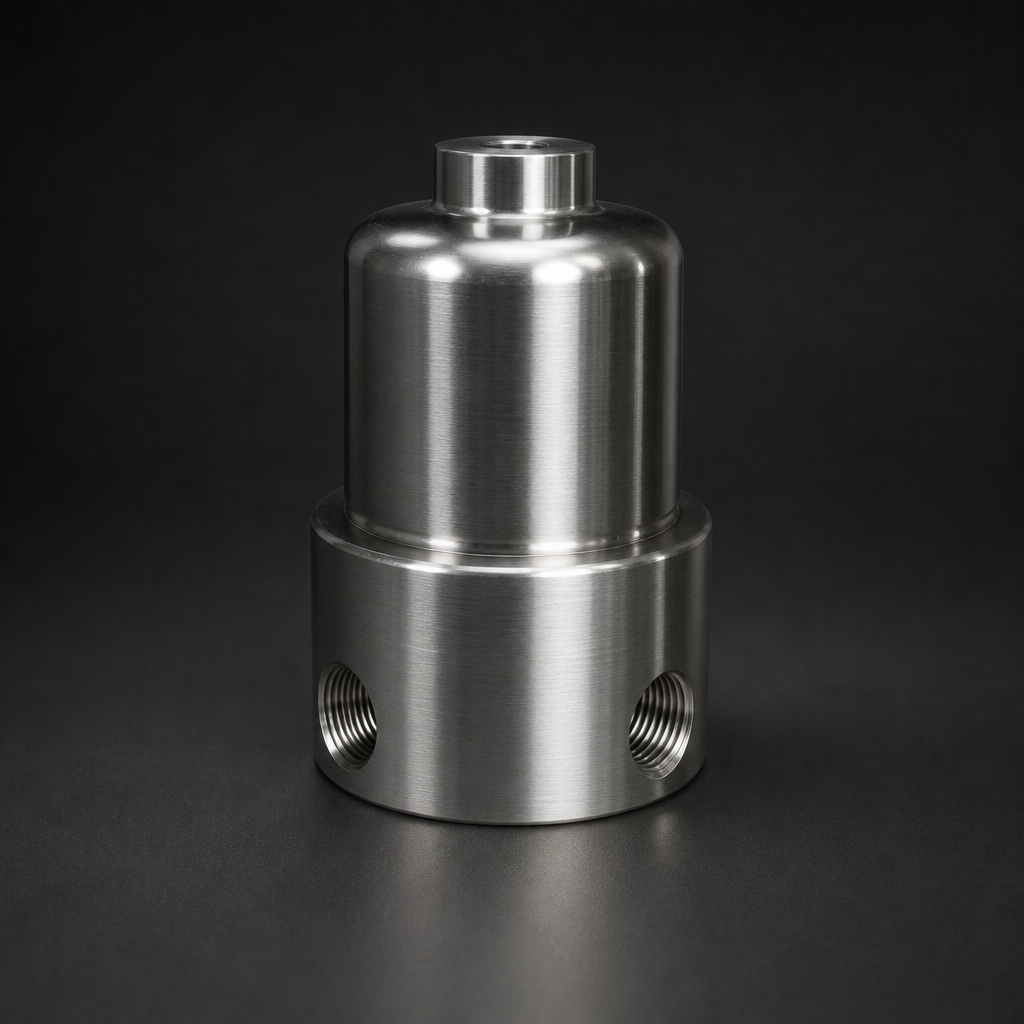
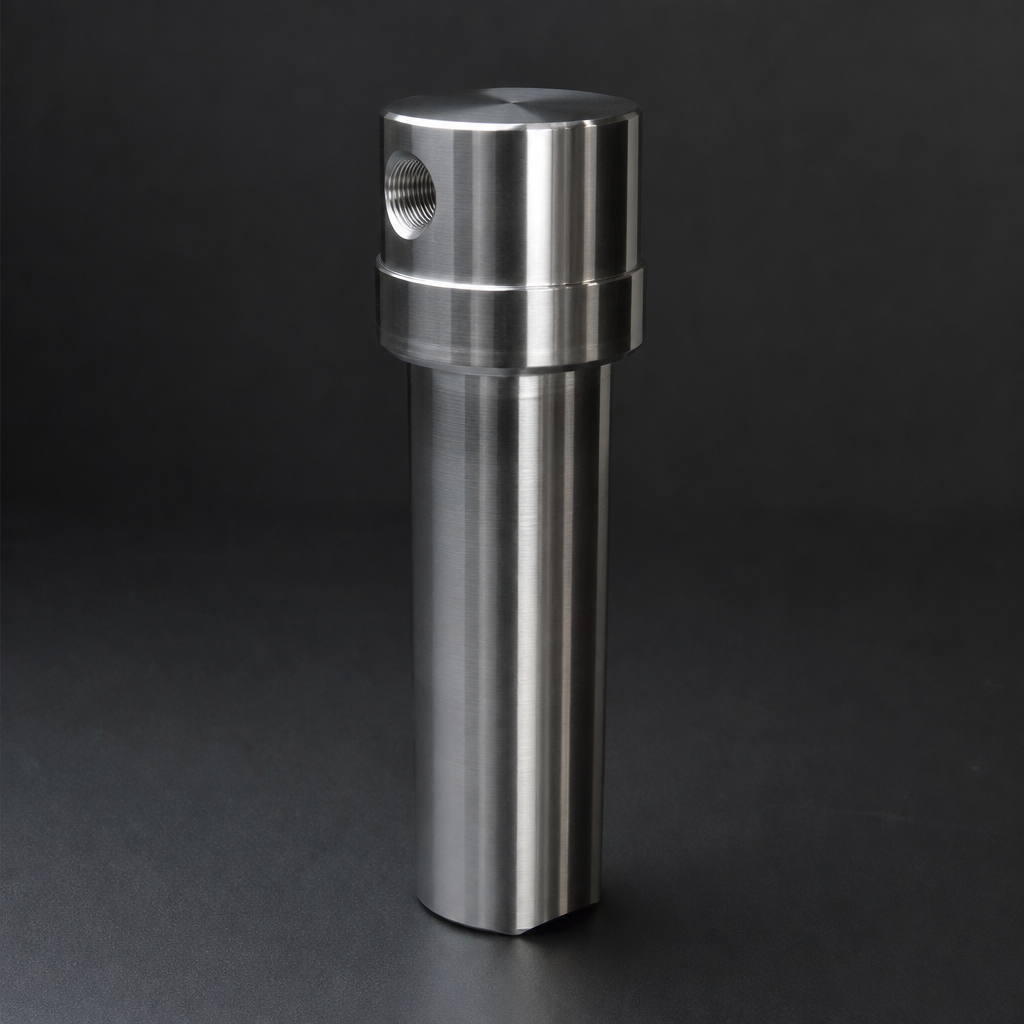
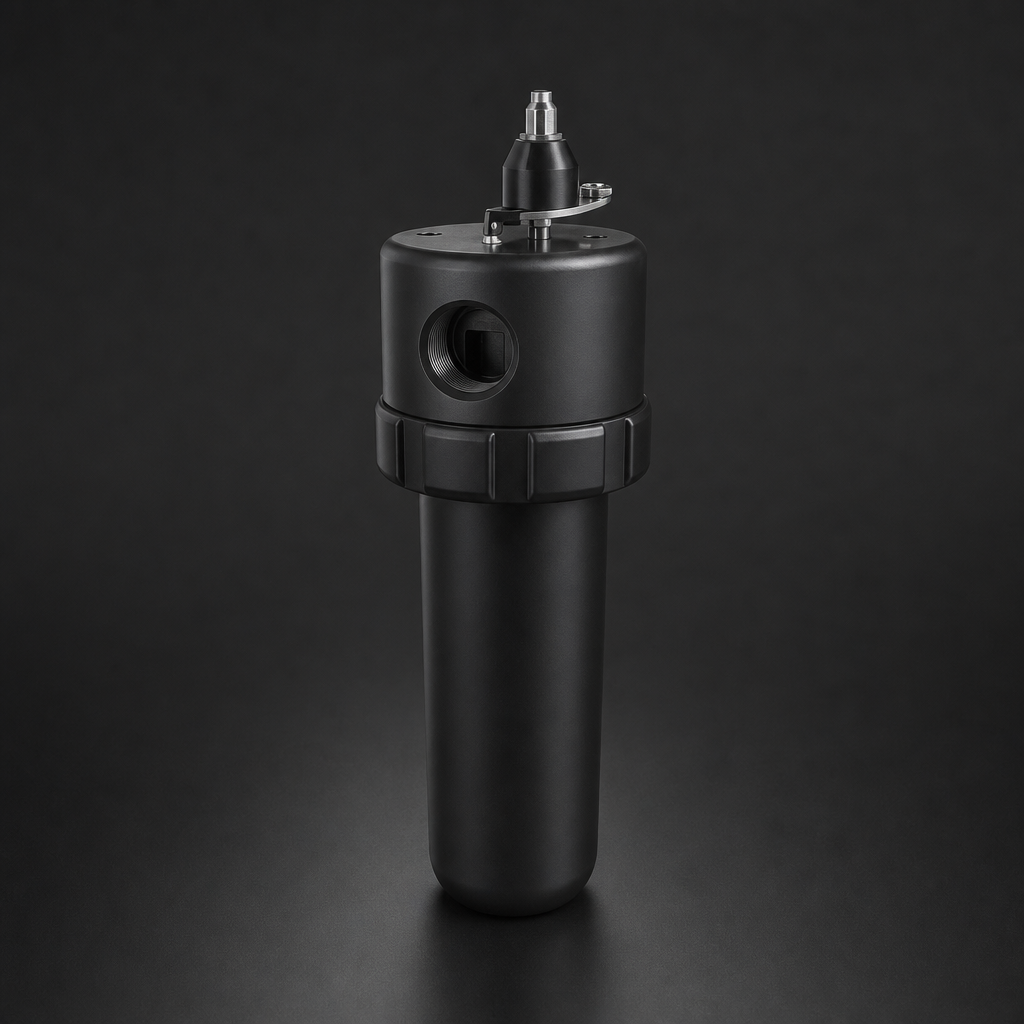
R+F FilterElements offers its own range of compressed air filter housings and elements specifically suited to pharmaceutical GMP environments. The RF-H-310 to RF-H-395 series aluminium housings cover flow rates from a few Nm³/h at point-of-use up to 12,000 Nm³/h for central plant installations. All housings are available with FKM/Viton seals for elevated temperature service and with electropolished internals on request for cleanability.
For the coalescing stage, RF-C series borosilicate glass microfibre elements deliver 99.99% efficiency at ≥ 0.1 µm — meeting ISO 8573-1 Class 1 oil aerosol limits. The RF-AC activated carbon adsorption elements reduce residual oil vapour to < 0.003 mg/m³, and RF-P series particulate elements provide the final barrier against solid contamination. All elements are available with batch-specific test certificates suitable for inclusion in IQ documentation.
Use our Engineering Sizing Tool to select the correct housing and element combination for your flow rate, operating pressure, and target purity class.
- Oil aerosols and vapour
- Pre-filter (coalescing, 1 µm)
- GMP requires that any system affecting product quality be qualified before use and requalified after significant changes.
- Differential pressure monitoring
Related Reading
- ISO 8573-1 Compressed Air Quality — A Practical Guide to Purity Classes
- Coalescing vs Particulate Filter Elements — Which Do You Need?
- Oxygen Filtration Safety — What Every Plant Engineer Must Know
Try our Engineering Sizing Tool → or discuss your GMP requirements with our team.