Ethylene oxide (EtO) remains one of the most widely used sterilisation methods for heat-sensitive medical devices — from catheters and surgical instruments to complex electronic implants. Yet EtO is also highly toxic, flammable, and classified as a human carcinogen. Every stage of the sterilisation cycle, from sterilant delivery to post-process aeration, demands robust gas filtration to protect product quality, equipment reliability, and the safety of operators.
If your filtration strategy has gaps — even small ones — the consequences range from failed sterility assurance level (SAL) validation to regulatory non-compliance and, in the worst case, personnel exposure to a hazardous substance. This article walks through the critical filtration points in an EtO sterilisation system and explains how to specify the right filter for each duty.
Why Gas Filtration Is Critical in EtO Sterilisation
EtO sterilisation cycles operate at relatively low temperatures (typically 37–63 °C) and elevated humidity. The sterilant gas — pure EtO or a blend with CO₂ or nitrogen — is introduced into a sealed chamber at controlled concentrations (typically 400–1,200 mg/L). Any particulate contamination in the gas stream can deposit on device surfaces, interfering with sterilant penetration and potentially compromising the sterility assurance level required by ISO 11135.
Beyond product quality, the process generates significant quantities of residual EtO that must be removed from the chamber atmosphere, from aeration rooms, and from exhaust streams before discharge. Regulatory limits for workplace EtO exposure are extremely low — the EU OEL is 1 ppm (8-hour TWA) — making effective abatement filtration a legal as well as a safety requirement.
For a broader understanding of how process gas filtration principles apply across industries, see our guide on coalescing vs particulate filter elements.
The Four Critical Filtration Points
1. Sterilant Supply Line — Particulate Filtration
EtO is supplied as a liquefied gas in cylinders or bulk tanks. As it vaporises and passes through regulators and pipework, it can carry particulate contamination — rust, scale, valve debris, and polymer particles from seals. A high-efficiency particulate filter on the supply line prevents these contaminants from entering the sterilisation chamber and depositing on device surfaces.
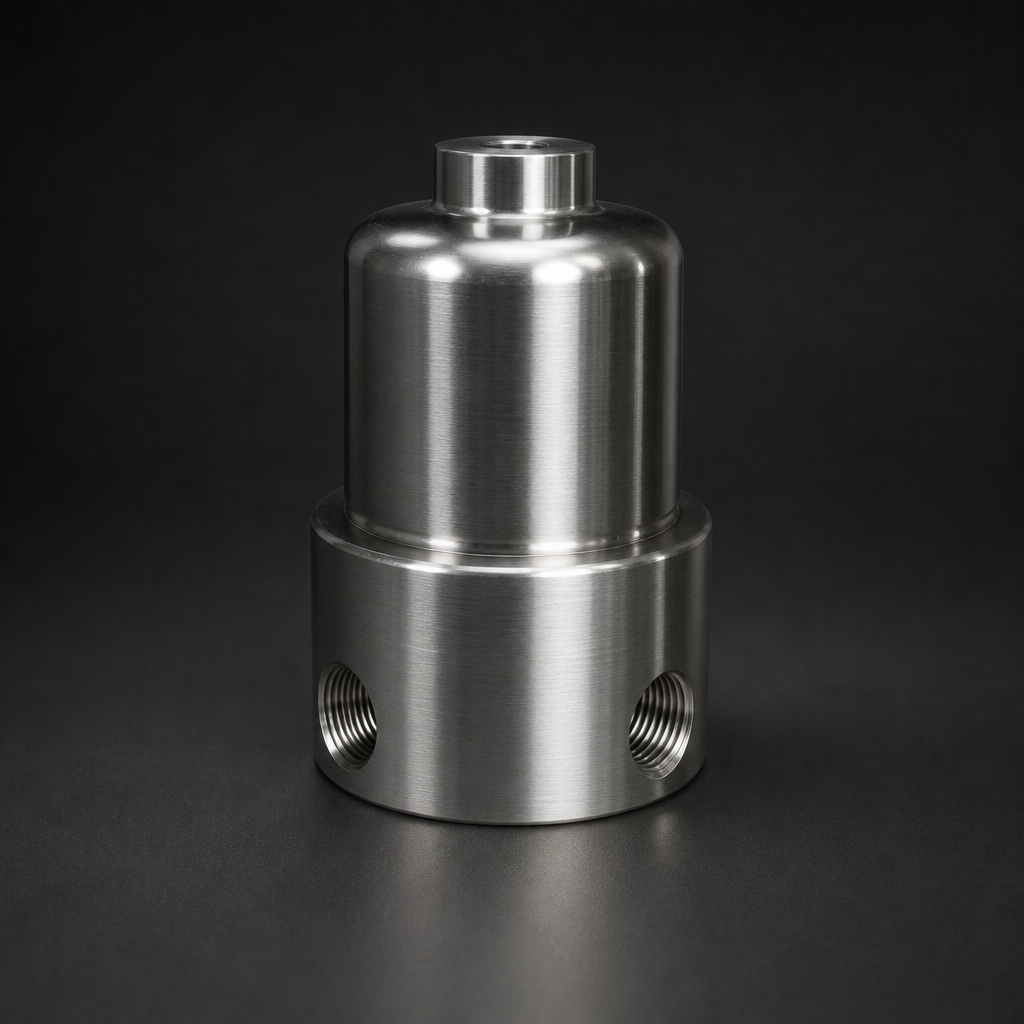
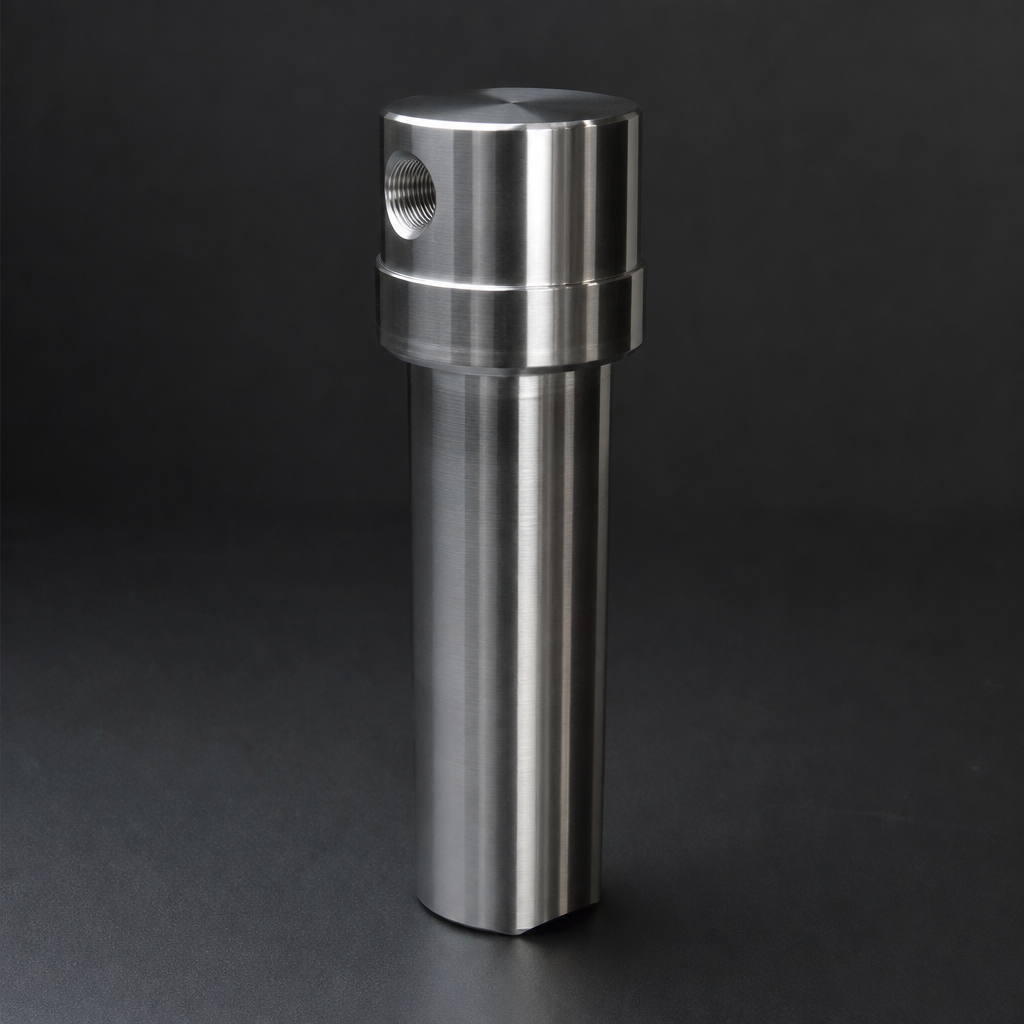
The R+F process gas filter range includes the RF-H-150 housing (316L stainless steel, rated to 100 bar), which accepts RF-P particulate elements with 99.99% efficiency at ≥ 0.3 µm. For EtO service, FKM (Viton) seals are recommended for chemical compatibility — EPDM and NBR are not suitable for prolonged EtO contact.
2. Diluent Gas Supply — Coalescing Filtration
Where EtO is blended with CO₂ or nitrogen as a diluent, the diluent supply line requires coalescing filtration to remove entrained moisture and compressor oil aerosols. Liquid water in the sterilisation chamber can cause localised dilution of the EtO concentration, creating zones of reduced sterilant efficacy. Oil contamination can coat device surfaces and interfere with subsequent biocompatibility testing.
The RF-H-150 housing fitted with RF-C coalescing elements (borosilicate glass microfibre, 99.99% efficiency ≥ 0.1 µm) provides the required liquid aerosol removal. The coalesced liquid drains to an automatic float drain, preventing liquid carry-over into the process. See our full filter elements range for compatible element sizes.
3. Chamber Exhaust — Residual EtO Abatement
After the sterilisation cycle, the chamber must be evacuated and purged. The exhaust stream contains high concentrations of EtO that must be treated before discharge to atmosphere or recirculation. Activated carbon adsorption is the most widely used abatement technology for EtO at this stage.
R+F FilterElements offers RF-AC activated carbon adsorber elements and RF-DIA disposable inline adsorbers for point-of-use EtO abatement. The RF-DIA units are particularly suited to lower-flow exhaust streams and aeration room ventilation, where a compact, maintenance-free solution is preferred. For larger exhaust flows, the RF-DIA inline adsorber range can be manifolded in parallel.
4. Aeration Room Ventilation — Final Polishing
Medical devices must undergo a controlled aeration period after EtO sterilisation to allow residual EtO to outgas from packaging and device materials. The aeration room ventilation system must handle this outgassing load without allowing EtO to accumulate above the OEL. A final activated carbon polishing stage on the ventilation exhaust provides the last line of defence before discharge.
For guidance on selecting the right adsorber for your aeration room flow rate and EtO loading, use the R+F Engineering Sizing Tool.
Key Performance Data
Need help selecting the right filter for your EtO sterilisation system?
Filter Selection Guide for EtO Service
| Filtration Point | Duty | Recommended Housing | Element Type | Seal Material |
|---|---|---|---|---|
| EtO supply line | Particulate removal | RF-H-150 | RF-P (0.3 µm) | FKM / PTFE |
| Diluent gas supply | Coalescing (oil + moisture) | RF-H-150 | RF-C (0.1 µm) | FKM |
| Chamber exhaust | EtO abatement | RF-DIA inline | RF-AC (activated carbon) | FKM / PTFE |
| Aeration room vent | Final EtO polishing | RF-DIA inline | RF-AC (activated carbon) | FKM |
Use our free Engineering Tool to get a filtration recommendation for your specific application in under 2 minutes.
Material Compatibility and Regulatory Considerations
EtO is an aggressive chemical that attacks many common elastomers and some metals. When specifying filters for EtO service, the following material choices are critical:
- Housing material: 316L stainless steel is the standard choice. Carbon steel is not suitable due to corrosion risk in the presence of moisture and EtO.
- Seal material: FKM (Viton) or PTFE only. NBR and EPDM swell and degrade rapidly in EtO service.
- Element media: Borosilicate glass microfibre (RF-C, RF-P elements) is chemically inert to EtO. Avoid cellulose-based media.
- Surface finish: Electropolished internal surfaces (Ra ≤ 0.8 µm) minimise EtO adsorption and facilitate decontamination.
From a regulatory standpoint, EtO sterilisation processes for medical devices must comply with ISO 11135 (sterilisation of health-care products) and ISO 10993-7 (biological evaluation — EtO residuals). Filtration validation should be documented as part of the process qualification (PQ) package. For guidance on gas purity standards more broadly, see our article on ISO 8573-1 compressed air quality.
Sizing Your EtO Filtration System
Correct sizing of EtO filters requires knowledge of the sterilant flow rate (typically expressed in kg/h or Nm³/h), operating pressure, temperature, and the expected particulate and liquid aerosol loading. For the activated carbon abatement stages, the EtO concentration in the exhaust stream and the required outlet concentration (to meet the OEL or discharge limit) determine the carbon bed volume and change-out frequency.
The R+F process gas filter housings are available in a range of body sizes to suit flows from a few Nm³/h (single-cylinder laboratory sterilisers) up to several hundred Nm³/h (large industrial batch sterilisers). The RF-H-150 accepts standard element sizes from 12032 up to 51476, allowing the same housing to be used across a wide flow range by changing the element size.
For oxygen-enriched atmospheres or applications where EtO is blended with oxygen-compatible diluents, consult our oxygen filtration safety guide before specifying seals and lubricants.
- EtO sterilisation cycles operate at relatively low temperatures (typically 37–63 °C) and elevated humidity.
- EtO is supplied as a liquefied gas in cylinders or bulk tanks.
- EtO is an aggressive chemical that attacks many common elastomers and some metals.
- Correct sizing of EtO filters requires knowledge of the sterilant flow rate (typically expressed in kg/h or Nm³/h), operating pressure, temperature, and the expected particulate and liquid aerosol loading.
Related Reading
- Coalescing vs Particulate Filter Elements — Which Do You Need?
- ISO 8573-1 Compressed Air Quality — A Practical Guide
- Oxygen Filtration Safety — Avoiding Ignition Risks in O₂ Systems
Try our Engineering Sizing Tool → or discuss your requirements with our team.