Replacing filter elements on a fixed calendar — every twelve months, regardless of actual condition — is the default approach in most compressed gas and process gas systems. It is simple, auditable, and easy to schedule. But it is also frequently wasteful, and occasionally dangerous. Understanding when calendar-based replacement makes sense, and when condition-based monitoring is the smarter choice, can meaningfully reduce operating costs whilst protecting downstream equipment and product quality.
Why Replacement Intervals Matter
A filter element that is changed too early wastes money on consumables and generates unnecessary maintenance downtime. One that is left in service too long risks breakthrough — where contaminants pass through a saturated or damaged element and reach sensitive downstream equipment such as analysers, pneumatic valves, or process reactors. In high-purity applications — hydrogen production, food-grade CO₂, or semiconductor process gas — a single contamination event can mean product loss, equipment damage, or a safety incident.
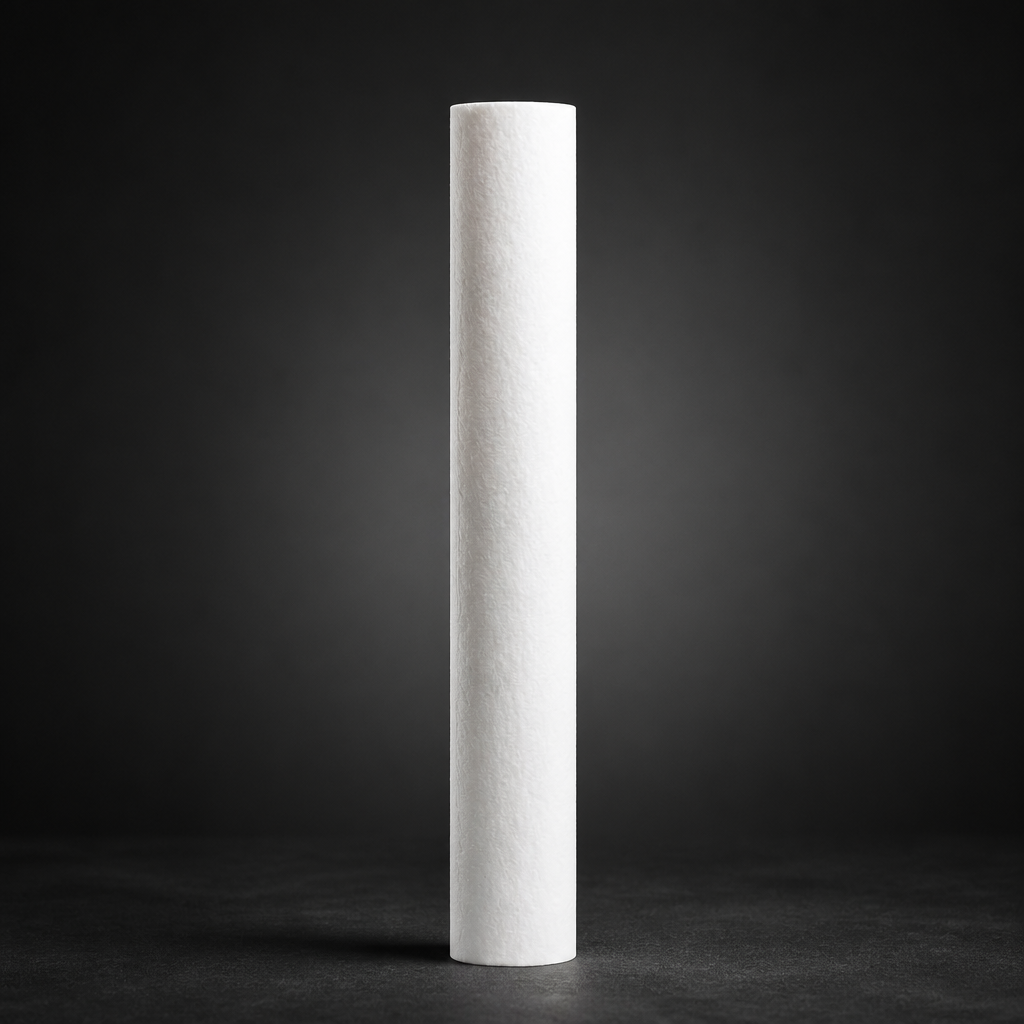
The R+F FilterElements range covers coalescing (RF-C), particulate (RF-P), adsorption (RF-AC), and vacuum (RF-CS) elements across a wide range of sizes and temperature ratings. Each element type has different loading characteristics, which directly affects how you should approach replacement scheduling.
Calendar-Based Replacement: Pros and Cons
Calendar-based replacement — typically every 12 months — is the most widely used approach in industry. It aligns with annual maintenance shutdowns, is straightforward to document for ISO 8573-1 compliance audits, and requires no additional instrumentation. For many applications, it is entirely appropriate.
| Factor | Calendar-Based | Condition-Based (DP) |
|---|---|---|
| Planning effort | Low — fixed schedule | Medium — requires monitoring |
| Element utilisation | Often under-utilised | Maximised to safe limit |
| Risk of breakthrough | Low if schedule is kept | Low if alarm is set correctly |
| Instrumentation cost | None | DP gauge or transmitter |
| Audit / compliance | Simple — date-stamped records | Requires logged DP data |
| Best suited for | High-contamination, safety-critical | Lightly loaded, cost-sensitive |
Calendar-based replacement is most appropriate when the inlet contamination load is high and variable (e.g., oil-flooded compressors with ageing separators), when the downstream process is safety-critical and the cost of a contamination event far outweighs element cost, or when the maintenance team lacks the instrumentation or bandwidth to monitor DP continuously.
Condition-Based Replacement: Using Differential Pressure
As a filter element loads with particulate or coalesced liquid, the pressure drop across it increases. This differential pressure (DP) is a direct, real-time indicator of element condition. When DP reaches a defined threshold — typically 350–500 mbar for coalescing elements and 200–350 mbar for particulate elements — the element should be replaced.
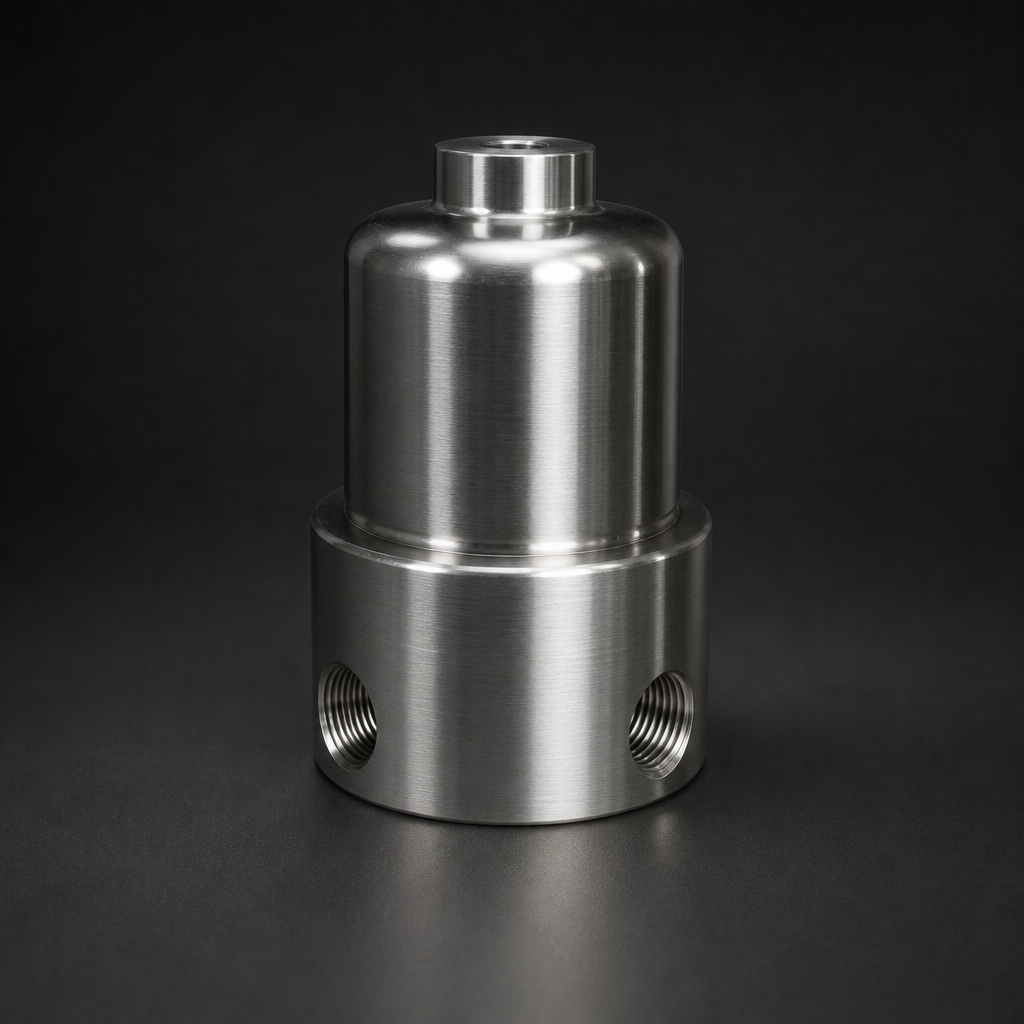
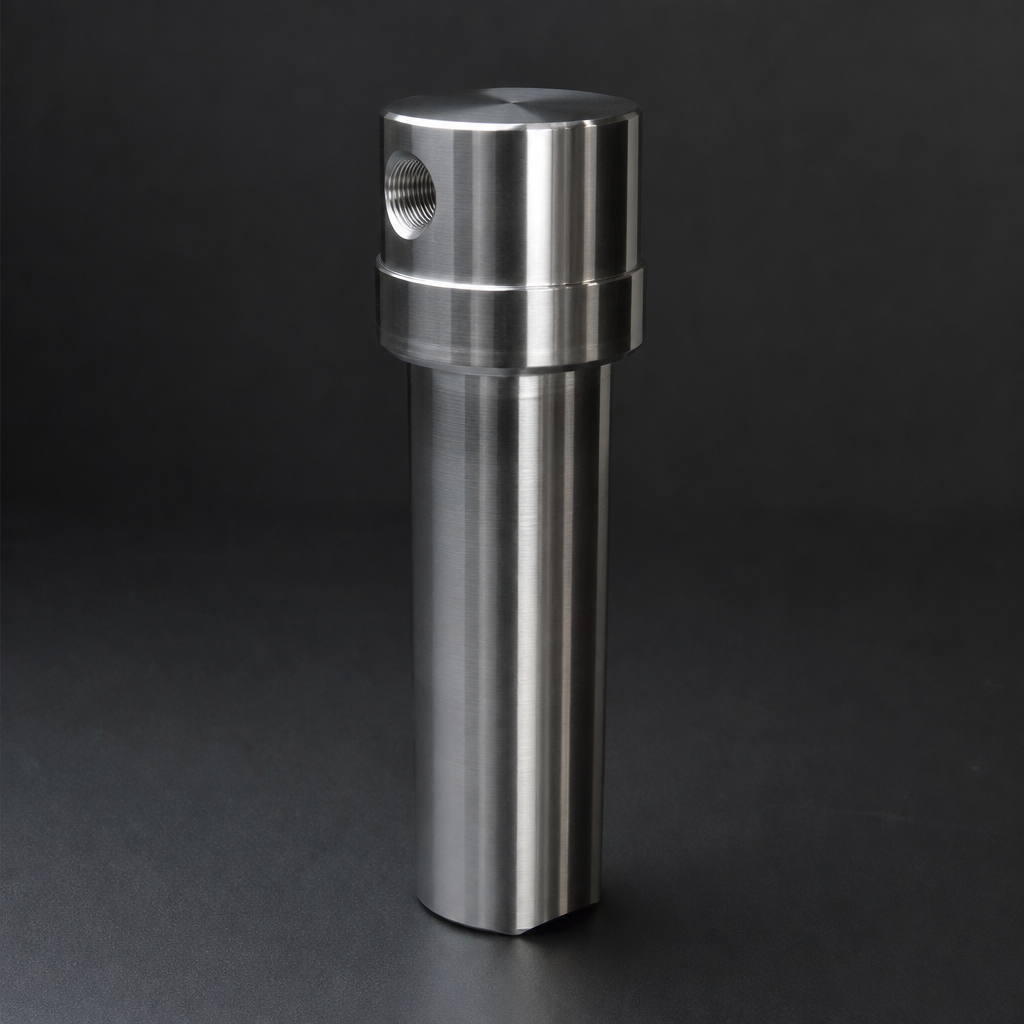
Condition-based monitoring requires a DP gauge or transmitter fitted across the filter housing. The RF-H-150 process gas housing and the RF-H-110 to RF-H-170 instrumentation filter range are all available with DP gauge ports as standard, making retrofit straightforward. For compressed air systems, the RF-H-310 to RF-H-395 series housings accept standard ¼" NPT or G¼ gauge connections.
analyser protection and sample conditioning
Key Statistics: The Cost Case for Condition Monitoring
Use our free Engineering Tool to get a filtration recommendation for your specific application in under 2 minutes.
Setting Up a Condition Monitoring Programme
Implementing DP-based condition monitoring does not require a complex SCADA system. A simple mechanical DP gauge with a visual indicator is sufficient for most installations. For critical applications or remote monitoring, a 4–20 mA DP transmitter feeding a PLC or building management system provides automated alarming and data logging.
Recommended Steps
- Record baseline DP — note the clean-element DP at your normal operating flow rate immediately after fitting a new element. This is your reference point.
- Set a change-out alarm — for RF-C coalescing elements, set the alarm at 500 mbar DP. For RF-P particulate elements, use 350 mbar. For RF-AC adsorption elements, DP is less meaningful; use a 12-month maximum regardless.
- Log readings monthly — even a simple paper log of monthly DP readings allows you to trend element loading rate and predict when change-out will be needed.
- Apply a 12-month hard cap — even if DP has not reached the alarm threshold, replace the element at 12 months. Biological growth, seal degradation, and media ageing are not reflected in DP readings.
- Investigate rapid DP rise — if DP increases by more than 50 mbar per month, investigate the upstream contamination source. A failing compressor separator or upstream process upset may be loading the filter far faster than normal.
For point-of-use applications where housing access is difficult, RF-DIL disposable inline filters offer a practical alternative — replace the entire unit rather than servicing a housing. These are particularly useful in analyser sample lines and instrument air supplies where contamination risk is high but flow rates are low.
Adsorption Elements: A Special Case
RF-AC activated carbon adsorption elements present a different challenge. Unlike coalescing or particulate elements, adsorption capacity is consumed chemically rather than mechanically. DP across a fresh and a saturated RF-AC element may be nearly identical, giving no warning of breakthrough. For adsorption elements, a calendar-based 12-month replacement interval is mandatory, supplemented by downstream oil vapour monitoring where product quality is critical.
For applications requiring both particulate removal and adsorption — such as food-grade CO₂ or high-purity nitrogen — a two-stage arrangement using an RF-C coalescing element upstream of an RF-AC adsorber is the standard configuration. See our guide on coalescing vs particulate filter elements for a detailed comparison of element types.
- A filter element that is changed too early wastes money on consumables and generates unnecessary maintenance downtime.
- Calendar-based replacement — typically every 12 months — is the most widely used approach in industry.
- As a filter element loads with particulate or coalesced liquid, the pressure drop across it increases.
- Set a change-out alarm
Practical Recommendations by Application
For oil-flooded rotary screw compressors feeding general industrial compressed air: use calendar-based 12-month replacement for the coalescing stage, and consider DP monitoring if the system runs continuously at high load. For hydrogen electrolysis and fuel cell applications, condition-based monitoring is strongly recommended — see our hydrogen electrolysis filtration guide for specific recommendations. For analyser protection and sample conditioning using the RF-H-150 or RF-H-170 housings, a 6-month calendar interval is advisable given the high cost of analyser contamination, regardless of DP readings.
The R+F Engineering Sizing Tool can help you select the correct element size and housing for your flow rate and contamination class, and provides guidance on expected element life based on inlet conditions.
Related Reading
- Coalescing vs Particulate Filter Elements — Which Do You Need?
- ISO 8573-1 Compressed Air Quality Classes Explained
- Filtration Requirements for Hydrogen Electrolysis Systems
Try our Engineering Sizing Tool → or discuss your requirements with our team.