Flat panel display manufacturing — whether for OLED televisions, LCD monitors, or the latest generation of flexible displays — demands gas purity standards that rival those of the semiconductor industry. Nitrogen blanketing during OLED deposition, ultra-clean dry air for photolithography, and contamination-free process gases across every stage of substrate handling are not optional extras. They are the difference between a panel that passes quality inspection and one that is scrapped at enormous cost.
This guide examines the specific gas filtration challenges in flat panel display (FPD) fabs, the purity classes required at each process step, and how R+F FilterElements process gas housings and high-performance filter elements deliver the reliability these environments demand.
Why Gas Purity Is Critical in FPD Manufacturing
Modern flat panel displays are built on glass substrates that can exceed 2.5 m × 2.2 m (Generation 10.5). At these dimensions, a single particle of contamination — even sub-micron in size — can cause a visible defect across multiple display units. The economics are unforgiving: one contaminated substrate can represent thousands of euros in lost product.
The gases used in FPD manufacturing span a wide range: nitrogen (N₂) for inerting and blanketing, clean dry air (CDA) for photolithography and clean-room pressurisation, argon for sputtering, and various specialty gases for chemical vapour deposition (CVD) and etching. Each has its own purity specification, and each requires a filtration strategy matched to the process conditions.
Key Process Steps and Their Gas Filtration Requirements
1. OLED Organic Layer Deposition
Organic light-emitting diode layers are deposited by thermal evaporation or inkjet printing inside vacuum chambers. The surrounding nitrogen atmosphere must be essentially free of particulates, moisture, and hydrocarbons. Filtration at the point of use — immediately before the gas enters the deposition zone — is essential. RF-DIL disposable inline filters are well suited here, providing absolute particulate removal at the final connection point without introducing dead volume or contamination risk from reusable housings.
2. Photolithography and Exposure
LCD and OLED backplane patterning relies on photolithography steps where clean dry air is used to purge optical paths and maintain controlled humidity around the photoresist. Airborne molecular contamination (AMC) — including organic vapours and acid gases — can poison the photoresist chemistry. A two-stage approach combining coalescing filtration with activated carbon adsorption is standard practice.
3. Sputtering and CVD Processes
Thin-film transistor (TFT) backplanes for LCD panels are built using sputtering (for metal layers) and plasma-enhanced CVD (for silicon nitride and oxide dielectrics). These processes use argon, nitrogen, and silane-based gas mixtures. Particulate filtration upstream of the process tool protects both the substrate and the expensive process chamber from contamination.
4. Substrate Handling and Transport
Between process steps, large glass substrates are transported in nitrogen-purged cassettes or under clean dry air curtains. The gas supply to these handling systems must be reliably clean — a particle burst during transport can contaminate an entire cassette of substrates simultaneously.
Recommended Filtration Architecture for FPD Fabs
A well-designed gas filtration system for a flat panel display facility typically follows a three-tier approach: bulk supply filtration at the gas manifold, zone filtration at the process bay level, and point-of-use filtration immediately before the tool or chamber inlet.
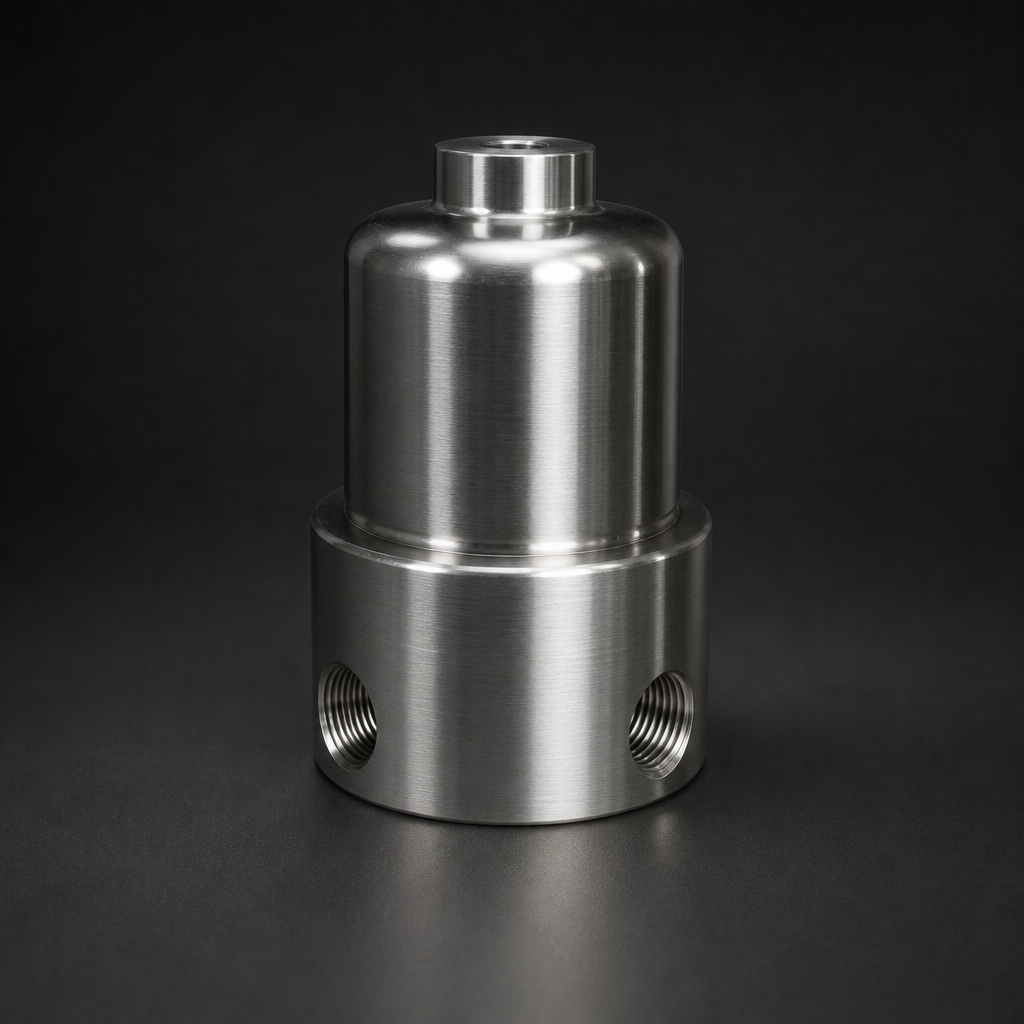
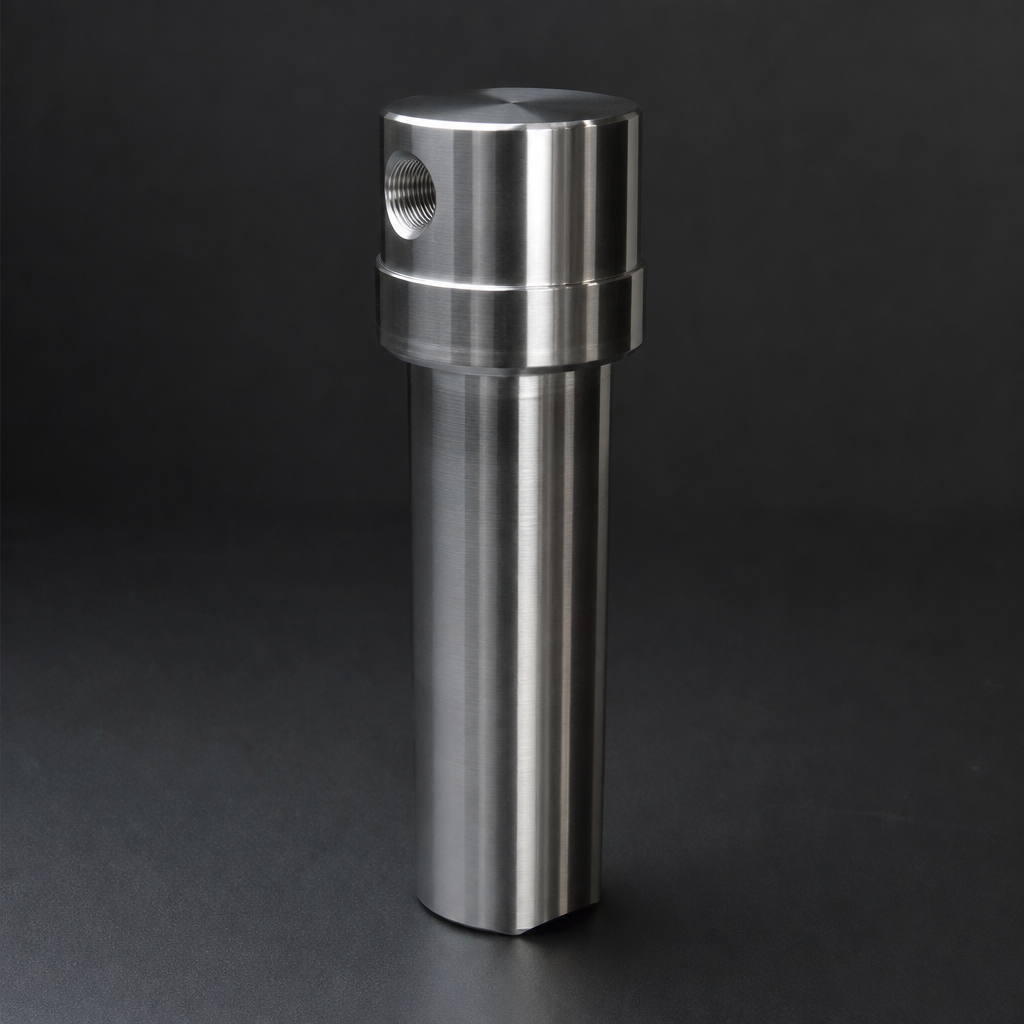
For nitrogen supply systems, the RF-H-150 stainless steel process gas housing — rated to 100 bar and constructed from 316L stainless steel — provides the robust, contamination-free housing required at the manifold level. Fitted with RF-C coalescing elements (borosilicate glass microfibre, 99.99% efficiency at ≥ 0.1 µm), it removes both particulates and any residual aerosol contamination from the bulk supply.
At the point of use, RF-DIL disposable inline filters provide a final barrier without the risk of contamination from element change-out procedures. Their single-use design eliminates the possibility of cross-contamination between maintenance cycles — a significant advantage in cleanroom environments where any maintenance activity carries contamination risk.
Where airborne molecular contamination is a concern — particularly for photolithography air supply — RF-AC activated carbon adsorption elements can be incorporated into the filtration train to reduce hydrocarbon and organic vapour levels below the detection threshold of most AMC monitoring systems.
Need help selecting the right filter for your FPD process gas system?
Comparing Filtration Options for FPD Gas Supply
| Application | Recommended Housing | Element Type | Target Purity |
|---|---|---|---|
| N₂ blanketing (OLED deposition) | RF-H-150 | RF-C coalescing | ISO 8573-1 Class 1 |
| Clean dry air (photolithography) | RF-H-310 series | RF-C + RF-AC | ISO 8573-1 Class 1 + AMC control |
| Point-of-use (tool inlet) | RF-DIL inline | Disposable particulate | ≥ 0.1 µm absolute |
| Argon / specialty gas supply | RF-H-150 / RF-H-160 | RF-C coalescing | ISO 8573-1 Class 1 |
Use our free Engineering Tool to get a filtration recommendation for your specific application in under 2 minutes.
Material Compatibility and Cleanroom Compliance
All wetted components in FPD gas filtration systems must be compatible with the process gases and cleaning agents used in the facility. The 316L stainless steel construction of the RF-H-150 and RF-H-160 housings provides excellent resistance to the nitrogen, argon, and clean dry air streams typical of FPD fabs. FKM/Viton seals are standard for most applications, with PTFE seals available for applications requiring the highest chemical inertness.
For facilities requiring SilcoNert-coated internal surfaces — to prevent adsorption of trace-level contaminants onto the filter housing walls — R+F FilterElements offers coated variants of the instrumentation-grade housings. These are particularly relevant for analyser protection and sample conditioning applications within the fab's process monitoring infrastructure.
Cleanroom compatibility extends to packaging and handling. Filter elements and housings supplied for FPD applications should be double-bagged, nitrogen-purged, and certified clean to the relevant cleanroom standard before installation. This prevents the introduction of contamination during the installation process itself — a frequently overlooked source of initial yield loss after maintenance.
Maintenance Strategy: Minimising Contamination Risk
In a flat panel display fab, every maintenance event is a potential contamination event. The filtration maintenance strategy should therefore minimise the frequency and complexity of interventions. Key principles include:
- Use disposable inline filters (RF-DIL) at the point of use to eliminate element change-out in the cleanroom environment
- Size bulk supply filters generously to extend element service intervals — a larger element surface area reduces differential pressure build-up and extends service life
- Monitor differential pressure continuously rather than relying on fixed time-based change-out schedules
- Maintain a stock of pre-certified replacement elements to minimise downtime when change-out is required
R+F FilterElements supports FPD customers with element sizing calculations and service interval recommendations based on actual operating conditions. The R+F Engineering Sizing Tool allows engineers to input their flow rates, pressures, and contamination levels to receive a recommended filtration configuration.
- Modern flat panel displays are built on glass substrates that can exceed 2.
- Organic light-emitting diode layers are deposited by thermal evaporation or inkjet printing inside vacuum chambers.
- A well-designed gas filtration system for a flat panel display facility typically follows a three-tier approach: bulk supply filtration at the gas manifold, zone filtration at the process bay level, and point-of-use filtration immediately before the tool or chamber inlet.
- All wetted components in FPD gas filtration systems must be compatible with the process gases and cleaning agents used in the facility.
Related Reading
- Coalescing vs Particulate Filter Elements — Which Do You Need?
- ISO 8573-1 Compressed Air Quality Classes Explained
- Oxygen Filtration Safety — What Every Engineer Should Know
Try our Engineering Sizing Tool → or discuss your requirements with our team.