Food and beverage manufacturers face some of the most demanding compressed air quality requirements in any industry. When a BRC Global Standard or IFS Food audit is approaching, the filtration train protecting your production lines must be documented, validated, and demonstrably fit for purpose. Inadequate compressed air quality is one of the most common non-conformances raised during food safety audits — and one of the most straightforward to address with the right filtration strategy.
Direct vs Indirect Air Contact: Why the Distinction Matters
The first step in designing a compliant compressed air system is classifying how your air is used. BRC and IFS both distinguish between direct contact (air that touches the product, packaging, or food-contact surfaces) and indirect contact (air used for conveying, actuating, or cleaning in areas where contamination risk is lower).
For direct-contact applications — such as blow-moulding PET bottles, purging filling heads, or drying washed produce — the air quality requirements are equivalent to those for food-grade gases. The BCAS Food and Beverage Guidance Document (aligned with ISO 8573-1) recommends a minimum of Class 1 for oil aerosols, Class 2 for water, and Class 1 for particles at the point of use. For indirect contact, Class 2 oil and Class 3 particles are typically acceptable, but auditors increasingly expect the same standard throughout the facility.
The Recommended Filtration Train for Food and Beverage Plants
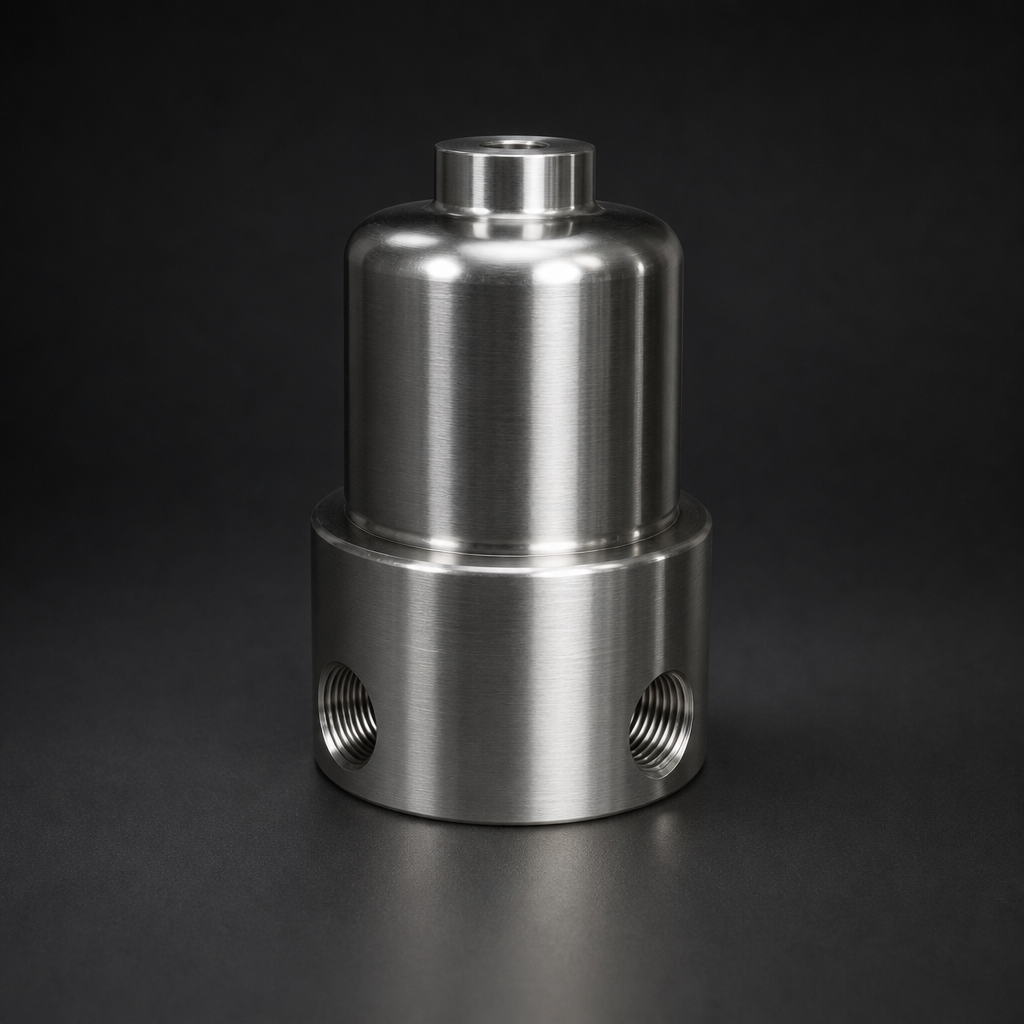
A robust, audit-ready compressed air system for food production typically comprises three stages, each targeting a specific class of contaminant. The R+F compressed air filter range covers all three stages with validated, traceable filter elements.
Stage 1 — Bulk Particulate Removal
A coarse particulate filter immediately downstream of the compressor aftercooler removes pipe scale, rust, and compressor wear particles before they reach downstream equipment. The RF-P particulate element, available in the R+F filter element range, achieves 99.99% efficiency at ≥ 0.3 µm and is rated for continuous duty at up to 100 °C. For higher-temperature applications, the S-type variant extends service to 200 °C.
Stage 2 — Oil Aerosol Coalescing
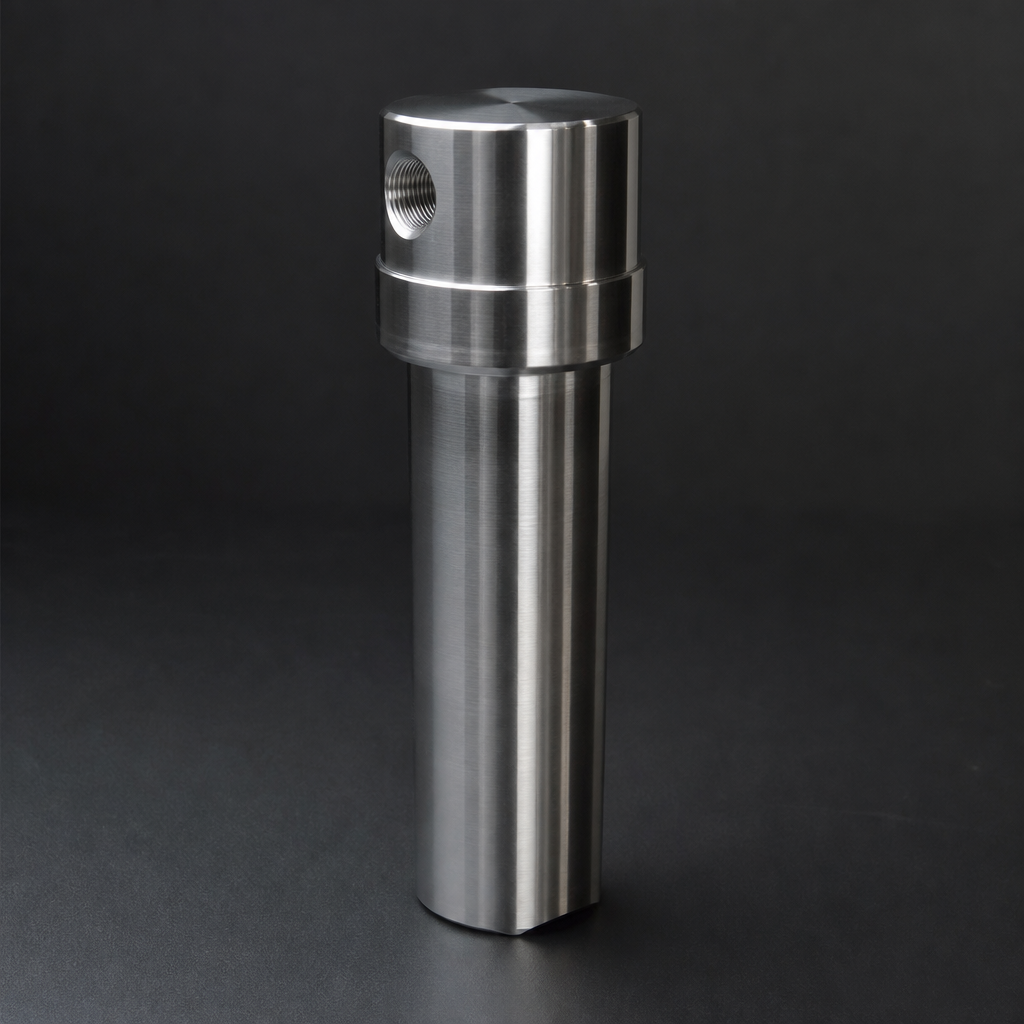
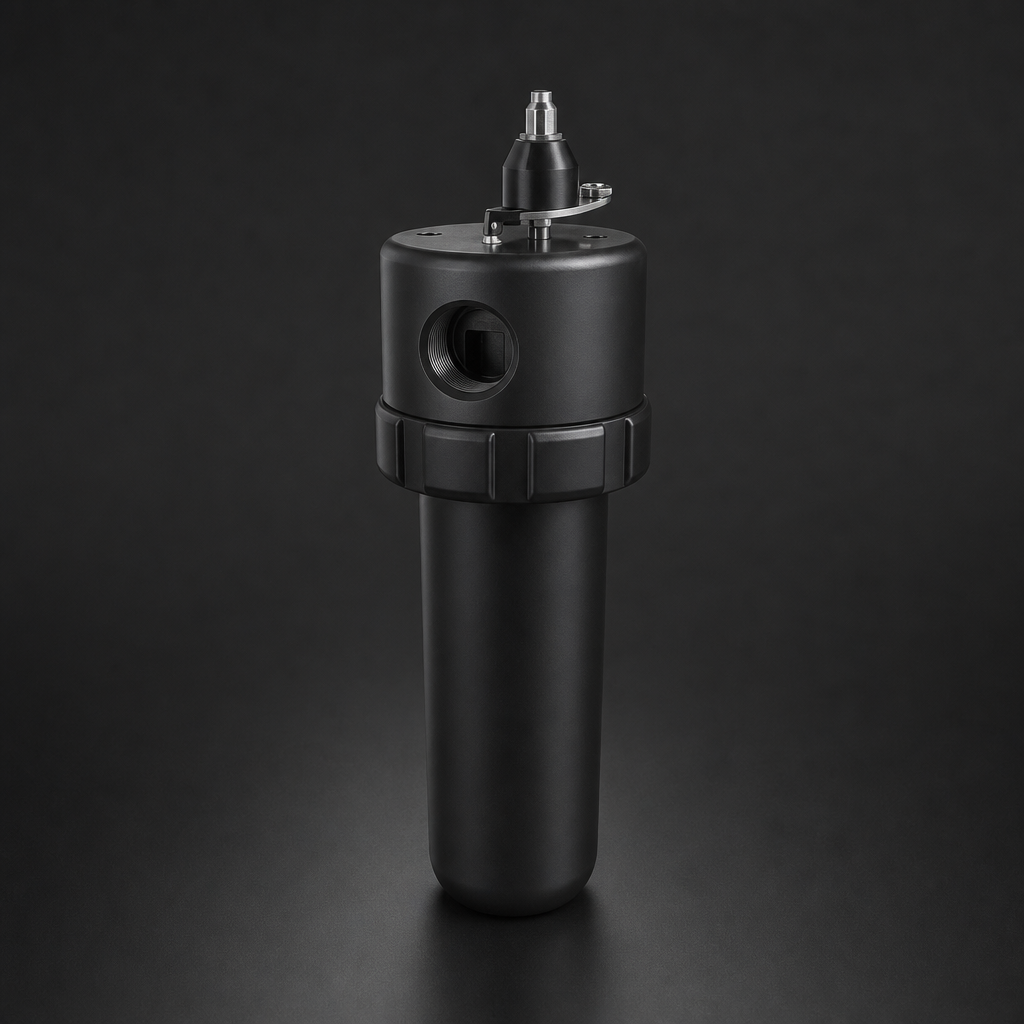
The coalescing stage is the heart of any food-grade compressed air system. The RF-C borosilicate glass microfibre coalescing element achieves 99.99% efficiency at ≥ 0.1 µm, reducing oil aerosol content to well below the ISO 8573-1 Class 1 limit of 0.01 mg/m³. Housings from the RF-H-310 to RF-H-395 series accommodate flow rates from a few Nm³/h up to 12,000 Nm³/h, making them suitable for everything from a single filling line to a central compressor room.
Stage 3 — Point-of-Use Sterile Filtration
For direct food contact, a sterile-grade filter at the point of use is the final barrier against microbiological contamination. The RF-DIL disposable inline filter provides absolute particulate retention at 0.01 µm and can be replaced without tools between production runs, simplifying validation and reducing downtime. These units are particularly well suited to filling heads, blow-moulding stations, and CIP air purge points.
Filtration Performance Comparison: BRC/IFS Requirements vs R+F Solutions
| Contaminant | ISO 8573-1 Class 1 Limit | R+F Solution | Achieved Performance |
|---|---|---|---|
| Oil aerosol | ≤ 0.01 mg/m³ | RF-C coalescing element | < 0.01 mg/m³ (99.99% @ ≥ 0.1 µm) |
| Solid particles | ≤ 0.1 mg/m³ (≥ 0.5 µm) | RF-P particulate element | 99.99% @ ≥ 0.3 µm |
| Microbiological | Class A (sterile) | RF-DIL point-of-use filter | Absolute retention ≥ 0.01 µm |
| Oil vapour | ≤ 0.003 mg/m³ | RF-AC activated carbon adsorber | < 0.003 mg/m³ residual oil |
Need help selecting the right filter for your BRC or IFS audit?
Validation and Documentation for BRC/IFS Audits
Selecting the correct filtration equipment is only half the battle. BRC Issue 9 Clause 4.6 and IFS Food Version 8 Section 4.9 both require documented evidence that your compressed air system is maintained and monitored. Auditors will typically ask for:
- Filter element change records with dates, element batch numbers, and technician sign-off
- Differential pressure monitoring logs (or confirmation that differential pressure indicators are fitted and checked)
- Microbiological air sampling results for direct-contact points (typically quarterly)
- Oil content test results (photometric or gravimetric, at least annually)
- Supplier data sheets confirming element efficiency and material compliance (food-contact materials, REACH, RoHS)
R+F FilterElements provides full traceability documentation with every element order, including material declarations and efficiency test certificates. This documentation package is designed to satisfy the evidence requirements of both BRC and IFS audits without additional testing burden on your quality team.
Use our free Engineering Tool to get a filtration recommendation for your specific application in under 2 minutes.
Point-of-Use Filtration: The Last Line of Defence
Even a well-maintained central filtration system can be compromised by contamination introduced downstream — from corroded pipework, flexible hoses, or poorly maintained quick-connect fittings. Point-of-use filtration with RF-DIL disposable inline filters provides a final barrier at each critical control point, independent of the condition of the distribution network.
For facilities producing allergen-containing products alongside allergen-free lines, dedicated point-of-use filters on each line prevent cross-contamination via shared compressed air headers — an increasingly common audit requirement under both BRC and IFS allergen management clauses.
Choosing the Right Housing for Your Flow Rate
The RF-H-310 to RF-H-395 aluminium housing series covers the full range of food and beverage plant flow rates. For a single filling line drawing 50–200 Nm³/h, the RF-H-310 or RF-H-340 is typically appropriate. Central compressor room installations serving an entire facility at 2,000–12,000 Nm³/h are best served by the RF-H-385 or RF-H-395 multi-element housings. All housings in this series are rated to 17 bar and 120 °C, and accept both RF-C and RF-P elements in the same body — simplifying spares management and reducing the number of housing types on site.
For guidance on sizing your filtration train to your specific flow rate and pressure, use the R+F Engineering Sizing Tool or contact our technical team directly.
- The first step in designing a compliant compressed air system is classifying how your air is used.
- A robust, audit-ready compressed air system for food production typically comprises three stages, each targeting a specific class of contaminant.
- Selecting the correct filtration equipment is only half the battle.
- Even a well-maintained central filtration system can be compromised by contamination introduced downstream — from corroded pipework, flexible hoses, or poorly maintained quick-connect fittings.
Related Reading
- Coalescing vs Particulate Filter Elements — Which Do You Need?
- ISO 8573-1 Compressed Air Quality Classes Explained
- Oxygen Filtration Safety — Key Considerations for Food and Pharma
Try our Engineering Sizing Tool → or discuss your requirements with our team.