Borosilicate glass microfibre is the material that makes modern HEPA and ULPA filtration possible. Without it, the particle capture efficiencies demanded by cleanroom standards, pharmaceutical manufacturing, and semiconductor fabrication would be unachievable at practical pressure drops. Understanding why this material dominates — and how the same fibre science underpins R+F process gas filter elements — is essential for any engineer specifying high-integrity gas filtration.
What Makes Borosilicate Glass Microfibre So Effective?
Borosilicate glass microfibres are drawn to diameters between 0.1 µm and 3 µm — far finer than conventional textile fibres. At these scales, three distinct capture mechanisms operate simultaneously: inertial impaction (large particles unable to follow streamlines), interception (particles following streamlines but touching a fibre), and diffusion (sub-0.3 µm particles undergoing Brownian motion that increases their probability of fibre contact). The combination produces a characteristic efficiency curve with a minimum — the Most Penetrating Particle Size (MPPS) — typically around 0.1–0.3 µm.
The glass composition itself matters. Borosilicate glass is chemically inert, thermally stable to over 500 °C, and resistant to most process gases including hydrogen, nitrogen, oxygen, and hydrocarbons. It does not shed fibres under vibration, does not absorb moisture in the way cellulose media does, and maintains its structural integrity across wide temperature cycles. These properties make it the default choice for both HEPA panel filters and cylindrical process gas filter elements.
EN 1822 and ISO 29463: The Classification Standards
Two standards govern the classification and testing of HEPA and ULPA filters. EN 1822 (European) and ISO 29463 (international equivalent) both require testing at the MPPS — the hardest particle size to capture — rather than at a convenient larger size. This makes the classification genuinely conservative.
| Filter Class | Standard | Integral Efficiency (min) | Local Efficiency (min) | Typical Application |
|---|---|---|---|---|
| H13 | EN 1822 / ISO 29463 | 99.95% | 99.75% | Pharma, hospital HVAC, battery manufacturing |
| H14 | EN 1822 / ISO 29463 | 99.995% | 99.975% | Semiconductor fab, nuclear, critical cleanrooms |
| U15 | EN 1822 / ISO 29463 | 99.9995% | 99.9975% | Advanced semiconductor, EUV lithography |
| U16 | EN 1822 / ISO 29463 | 99.99995% | 99.99975% | Nuclear, ultra-critical containment |
The distinction between integral efficiency (whole filter) and local efficiency (any single point) is important: a filter can pass the integral test but fail locally if the media has pinholes or the frame seal leaks. EN 1822 requires both to be met, which is why scan testing of the entire filter face is mandatory for H14 and above.
Where HEPA and ULPA Filtration Is Critical
The applications demanding H13/H14 or ULPA performance share a common characteristic: a single particle contamination event can destroy product, compromise patient safety, or trigger a regulatory shutdown.
Pharmaceutical and biotech manufacturing — ISO 5 and ISO 6 cleanrooms for aseptic filling require H14 supply air. Any viable particle reaching an open vial or syringe risks batch rejection and patient harm. Hydrogen and inert gas supply lines feeding these facilities must be equally clean.
Semiconductor fabrication — Sub-10 nm node lithography is sensitive to particles as small as 2 nm. Cleanroom HVAC runs H14 or U15 filters, and the process gases (nitrogen, argon, hydrogen) supplying the tools must meet equivalent purity. See our guide on ISO 8573-1 compressed air quality for the gas-phase equivalent.
Battery manufacturing — Lithium-ion and solid-state cell production is moisture- and particle-sensitive. Dry rooms and electrode coating lines use H13/H14 HVAC, and the inert gas blankets protecting electrode materials must be particle-free.
Nuclear facilities — Containment ventilation for radioactive particulate uses U15/U16 filters. The consequences of filter failure are severe enough that redundant filter banks and continuous monitoring are standard.
Hospitals and operating theatres — Laminar flow units over operating tables use H14 to prevent surgical site infections. The same borosilicate microfibre media that protects a semiconductor wafer protects a patient.
Hospitals and operating theatres
Use our free Engineering Tool to get a filtration recommendation for your specific application in under 2 minutes.
The Same Material Science in Process Gas Elements
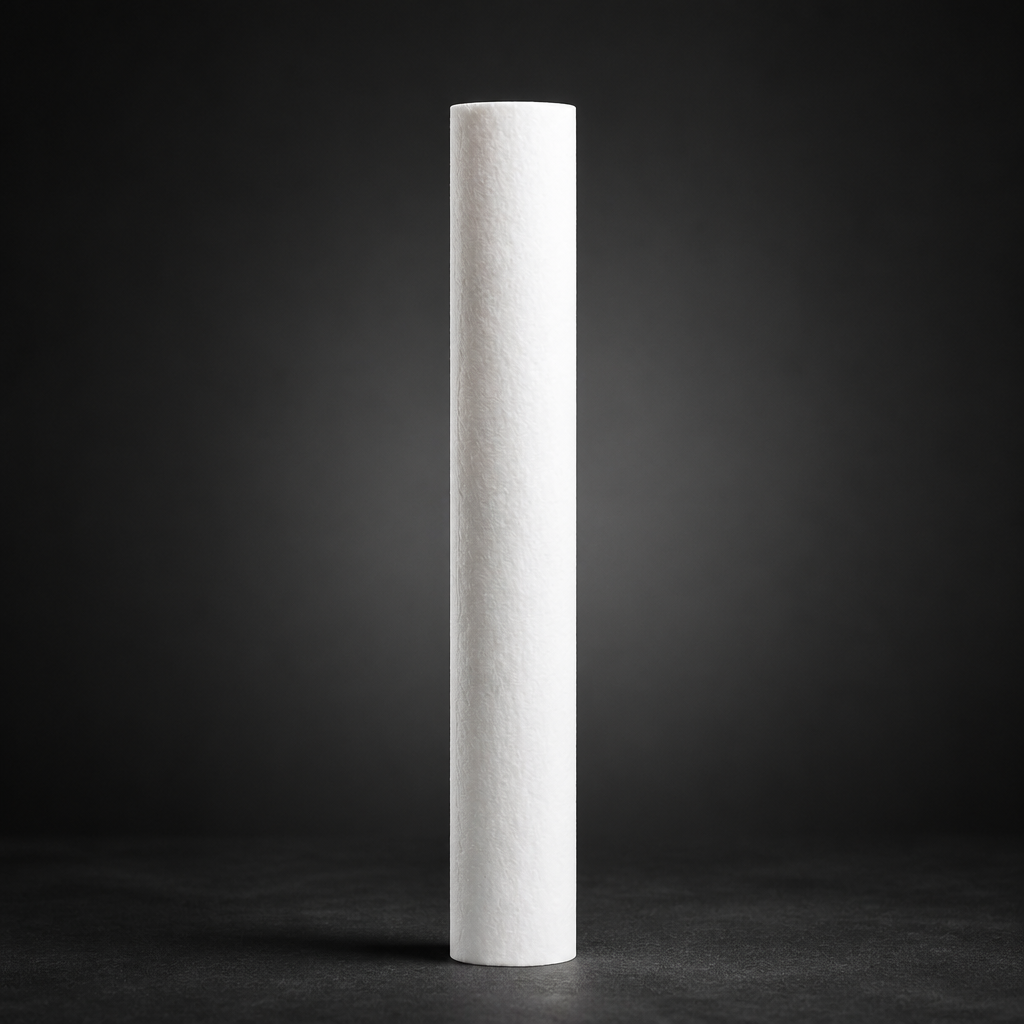
The borosilicate glass microfibre used in HEPA panel filters is chemically identical to the media in R+F coalescing and particulate filter elements. The form factor differs — cylindrical rather than pleated flat — but the fibre diameter, binder chemistry, and capture physics are the same. This matters because process gas applications often demand equivalent or higher cleanliness than cleanroom HVAC.
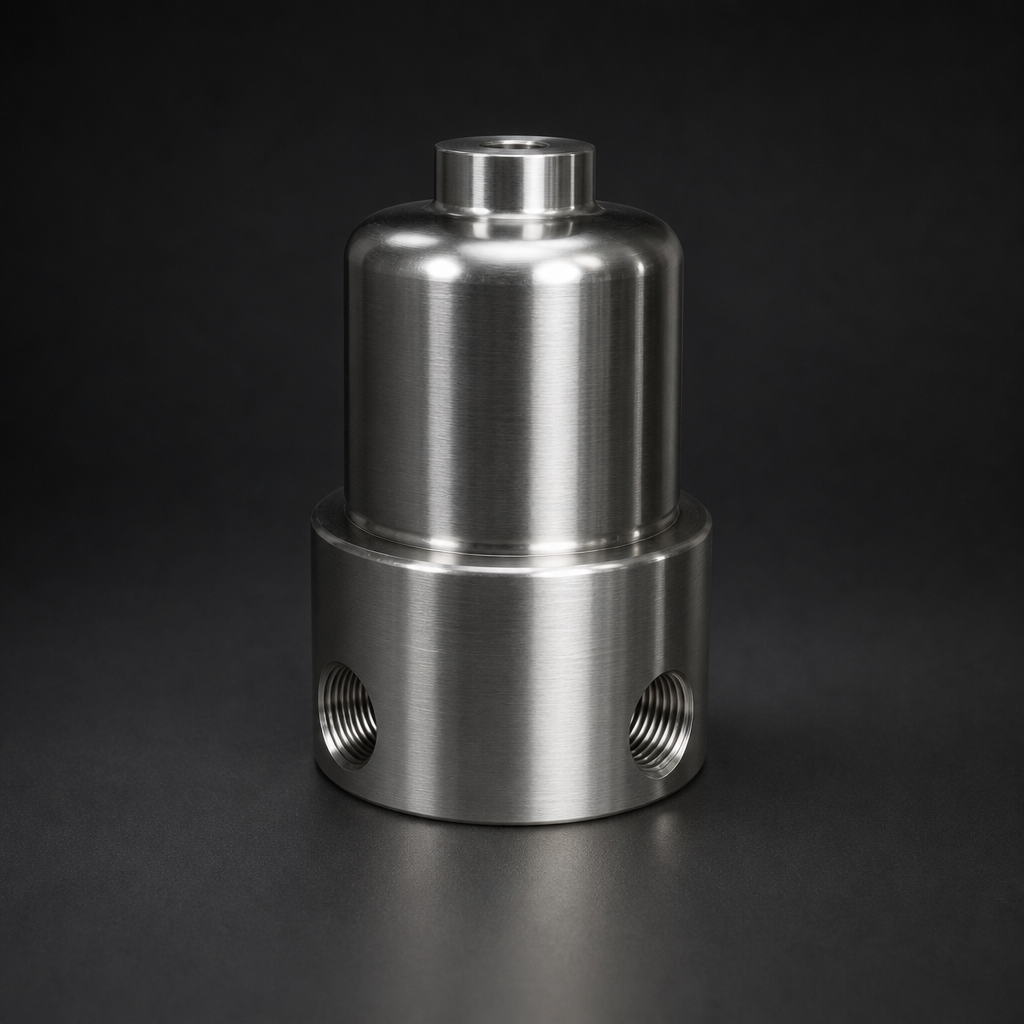
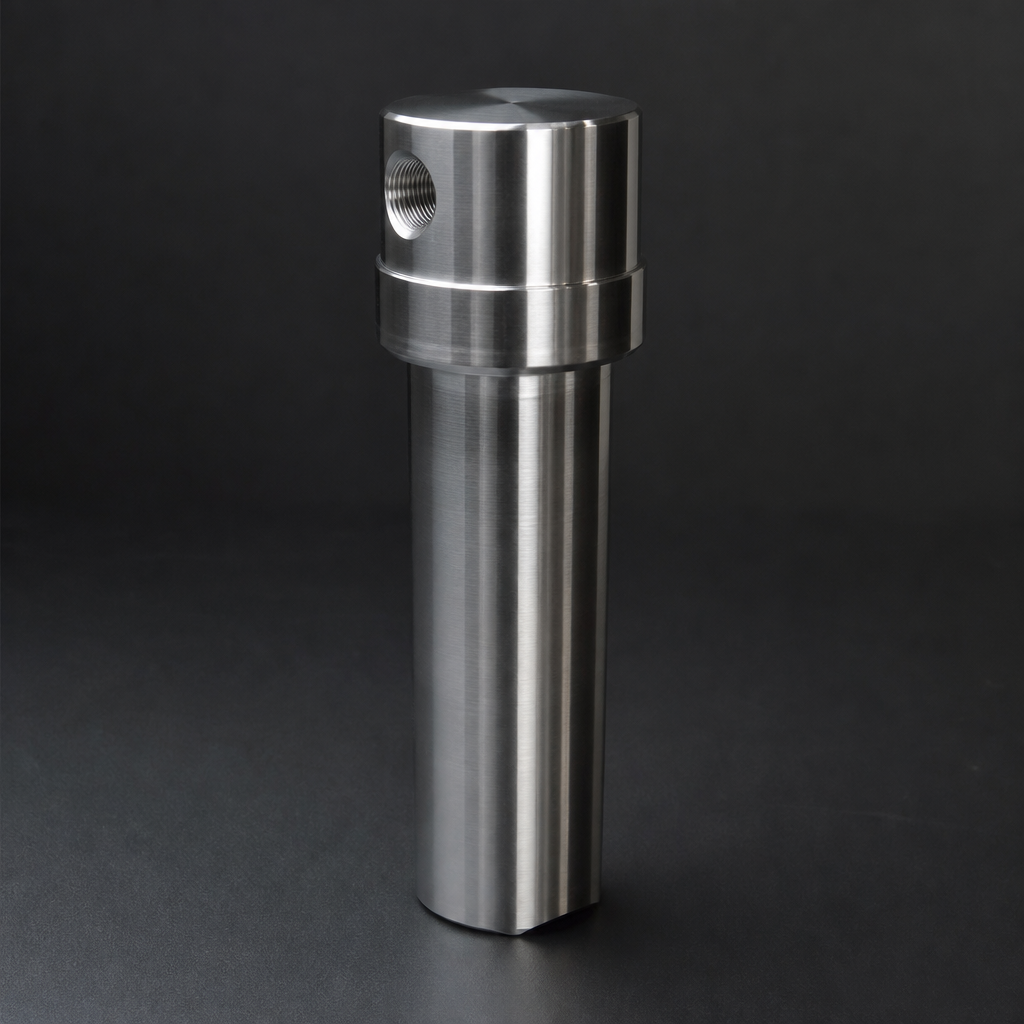
R+F branded coalescing elements (RF-C series) achieve 99.99% efficiency at ≥ 0.1 µm — performance that sits between H13 and H14 on the EN 1822 scale. The RF-C elements are available in six standard sizes (12032, 12057, 25064, 25178, 51230, 51476) and fit the full range of R+F process gas housings including the RF-H-150 (100 bar), RF-H-160 (250 bar), and RF-H-170 (400 bar).
For applications where liquid aerosol removal is not required — dry particulate filtration of nitrogen, argon, or hydrogen — the RF-P particulate elements use the same borosilicate microfibre in a configuration optimised for lower pressure drop at equivalent particle efficiency.
Selecting the Right Element for Your Process Gas Application
When specifying borosilicate microfibre elements for process gas duty, the key parameters are operating pressure, temperature, gas composition, and whether liquid aerosol is present. The RF-C coalescing element is the correct choice when compressor oil carryover, water aerosol, or any liquid contamination is possible — the depth-loading microfibre matrix captures and coalesces droplets that drain by gravity. The RF-P particulate element suits dry gas streams where only solid particles need removal.
For high-temperature applications above 100 °C — such as hot nitrogen blanketing or steam-traced sample lines — the S-type variant of both RF-C and RF-P elements uses a silica binder rather than the standard organic binder, maintaining structural integrity to 200 °C. For sour gas service containing H₂S, the K-type elements use a chemically resistant binder formulation. Consult the R+F Engineering Sizing Tool to match element type to your operating conditions.
Disposable inline options are also available: the RF-DIL point-of-use particulate filter provides a compact, no-housing solution for instrument protection and sample conditioning where flow rates are low and element replacement must be fast.
- Borosilicate glass microfibres are drawn to diameters between 0.
- Two standards govern the classification and testing of HEPA and ULPA filters.
- Pharmaceutical and biotech manufacturing
- The borosilicate glass microfibre used in HEPA panel filters is chemically identical to the media in R+F coalescing and particulate filter elements.
Related Reading
- Coalescing vs Particulate Filter Elements — Which Do You Need?
- ISO 8573-1 Compressed Air Quality Classes Explained
- Filtration Requirements for Hydrogen Electrolysis Systems
Try our Engineering Sizing Tool → or discuss your requirements with our team.