Choosing the wrong filter media for a process gas application can mean the difference between reliable, long-term operation and repeated element failures, excessive pressure drop, or contaminated downstream equipment. Two media types dominate the conversation: borosilicate glass microfibre — the backbone of most coalescing and particulate elements — and metal fibre fleece, including sintered stainless steel mesh and woven metal fibre constructions. Understanding where each excels, and where it falls short, is essential before specifying your next filter element.
What Is Borosilicate Glass Microfibre?
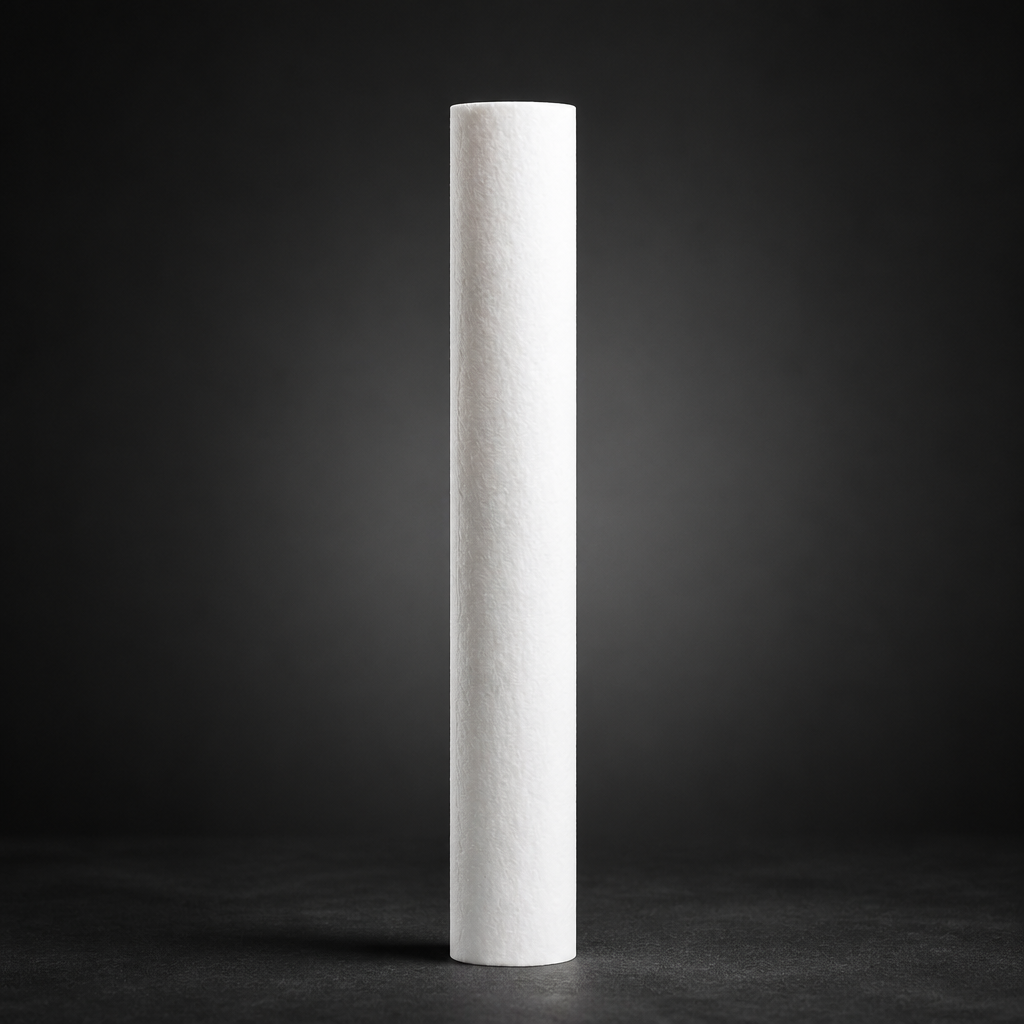
Borosilicate glass microfibre is the standard media used in high-efficiency coalescing and particulate filter elements. Fibres are drawn to sub-micron diameters and bonded into a depth-loading matrix. The result is a tortuous flow path that captures aerosols and particles through inertial impaction, diffusion, and interception — achieving efficiencies of 99.99% at ≥ 0.1 µm for coalescing grades.
R+F FilterElements offers its own range of borosilicate glass microfibre elements across multiple grades. The RF-C coalescing elements and RF-P particulate elements are available in Standard type (rated to 100 °C), S-type (rated to 200 °C), and K-type (sour gas / H₂S service). These are detailed on the filter elements product page.
What Is Metal Fibre Filter Media?
Metal fibre media encompasses several distinct constructions: sintered stainless steel mesh, woven wire cloth, and non-woven metal fibre fleece (such as the Chemicron-type construction used by HYDAC and others). All share the defining characteristic of being made from metallic filaments — typically 316L stainless steel, though Hastelloy, Inconel, and titanium variants exist for aggressive chemistries.
Metal fibre fleece is produced by compressing and sintering randomly oriented metal fibres into a porous mat. Pore sizes typically range from 1 µm to 100 µm, with most process gas grades falling in the 3–40 µm range. Sintered mesh offers tighter, more uniform pore geometry but is generally limited to coarser ratings (≥ 5 µm absolute).
Head-to-Head: Key Performance Parameters
The table below compares the two media types across the parameters that matter most in process gas filtration. For a broader discussion of element types, see our guide on coalescing vs particulate filter elements.
| Parameter | Borosilicate Glass Microfibre | Metal Fibre / Sintered SS |
|---|---|---|
| Filtration efficiency | 99.99% ≥ 0.1 µm (coalescing) | Typically 95–99% ≥ 1–3 µm |
| Initial pressure drop | Low (depth-loading matrix) | Low to moderate (surface filtration) |
| Max temperature | 100 °C (Standard), 200 °C (S-type) | Up to 450 °C (sintered SS) |
| Chemical resistance | Good; limited by binder/seal | Excellent (alloy-dependent) |
| Regenerability | Not regenerable — single use | Back-flush or ultrasonic clean |
| Sub-micron aerosol removal | Excellent (diffusion + impaction) | Poor below 1 µm |
| Cost per element | Low to moderate | High (3–10× glass fibre) |
| Typical service life | 6–12 months (replace at ΔP limit) | Multi-year (with cleaning cycles) |
Need help selecting the right filter media for your process gas application?
Filtration Efficiency: Where Glass Fibre Wins
For sub-micron aerosol removal — oil mist, water droplets, and fine particulate below 1 µm — borosilicate glass microfibre has no peer in passive filtration. The depth-loading structure allows fibres to capture particles across the full media thickness, not just at the surface. This is why ISO 8573-1 Class 1 oil content (≤ 0.01 mg/m³) is routinely achieved with glass microfibre coalescing elements but is essentially unattainable with metal fibre media at comparable flow rates.
Metal fibre media operates primarily as a surface filter. Particles larger than the nominal pore size are captured at the upstream face; finer particles pass through. This makes metal fibre suitable for bulk particulate removal (protecting downstream equipment from pipe scale, weld spatter, or catalyst fines) but unsuitable as a final-stage coalescing or high-efficiency particulate filter.
Temperature and Chemical Resistance: Where Metal Fibre Wins
At elevated temperatures — above 200 °C and up to 450 °C — sintered stainless steel is the only viable passive filter medium. Glass microfibre binders and organic seals degrade above 200 °C, even in S-type elements. For hot gas filtration (pyrolysis off-gas, high-temperature steam, or catalytic reactor effluent), sintered metal is the correct choice.
Chemical resistance follows a similar pattern. Borosilicate glass itself is chemically inert to most process gases, but the organic binders used to consolidate the fibre matrix can be attacked by strong solvents, concentrated acids, or highly alkaline streams. Sintered 316L stainless steel or Hastelloy C-276 metal fibre offers broad chemical compatibility across pH extremes and aggressive solvents — provided the contaminant does not cause stress corrosion cracking of the alloy.
For sour gas service (H₂S-containing streams), R+F FilterElements offers K-type glass microfibre elements with FKM seals, rated for H₂S partial pressures up to NACE MR0175 limits. These are available for use in process gas housings such as the RF-H-150 (100 bar) and RF-H-160 (250 bar).
Use our free Engineering Tool to get a filtration recommendation for your specific application in under 2 minutes.
Regenerability and Total Cost of Ownership
The regenerability argument for metal fibre media is compelling on paper but requires careful scrutiny in practice. Back-flushing with clean gas or solvent, or ultrasonic cleaning in a suitable bath, can restore a significant portion of the original flow capacity — but only when the contaminant is a dry, non-adhesive solid. In most process gas applications, the contaminant stream includes liquid aerosols, compressor oil, or sticky organic residues that permanently blind metal fibre media after one or two cleaning cycles.
Total cost of ownership (TCO) analysis typically favours glass microfibre elements in applications with moderate contamination loads and standard operating temperatures. The lower element cost, combined with predictable replacement intervals (triggered by differential pressure), makes budgeting straightforward. Metal fibre elements carry a 3–10× higher initial cost; if cleaning cycles are effective and the element achieves 3–5 years of service life, TCO can be comparable — but this requires a disciplined maintenance programme and clean-room-grade cleaning facilities.
R+F Element Grades: Matching Media to Application
R+F FilterElements offers borosilicate glass microfibre elements in three performance grades, each suited to a different operating envelope:
- Standard grade (RF-C / RF-P): Rated to 100 °C with NBR seals. Suitable for compressed air, nitrogen, CO₂, and most inert process gases at ambient to moderate temperatures. See the full range on the filter elements page.
- S-type (high-temperature): Rated to 200 °C with FKM seals. For steam-traced lines, hot nitrogen blanketing, or elevated-temperature instrument gas supply.
- K-type (sour gas): Formulated for H₂S-containing streams with NACE-compliant materials. Used in natural gas processing, biogas upgrading, and refinery applications. Explore natural gas filtration solutions.
For applications requiring sub-micron aerosol removal at temperatures above 200 °C, the correct approach is a two-stage system: a sintered metal pre-filter to remove bulk particulate and protect the downstream element, followed by a glass microfibre coalescing element operating at a cooled, lower-temperature point in the process. This is a common configuration in hydrogen compression trains — see our article on hydrogen electrolysis filtration for a worked example.
Selecting the Right Housing
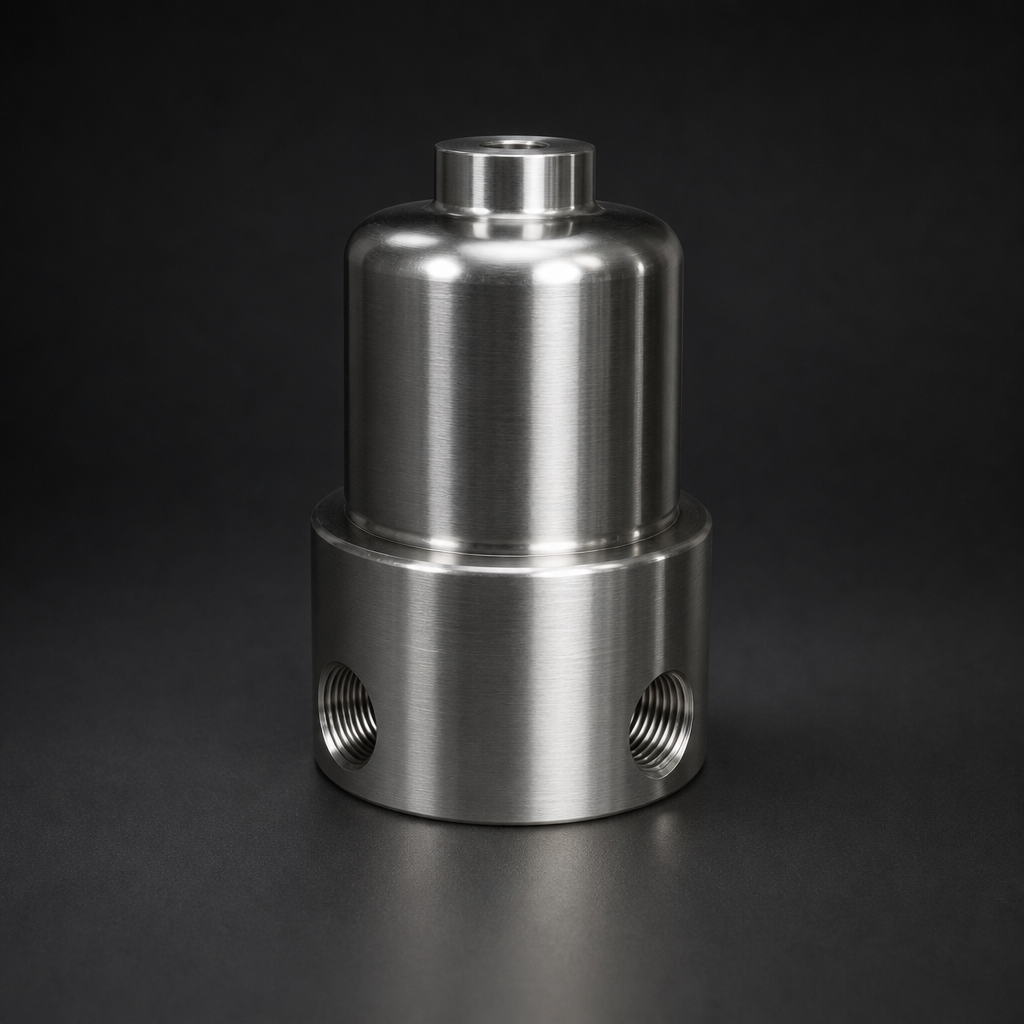
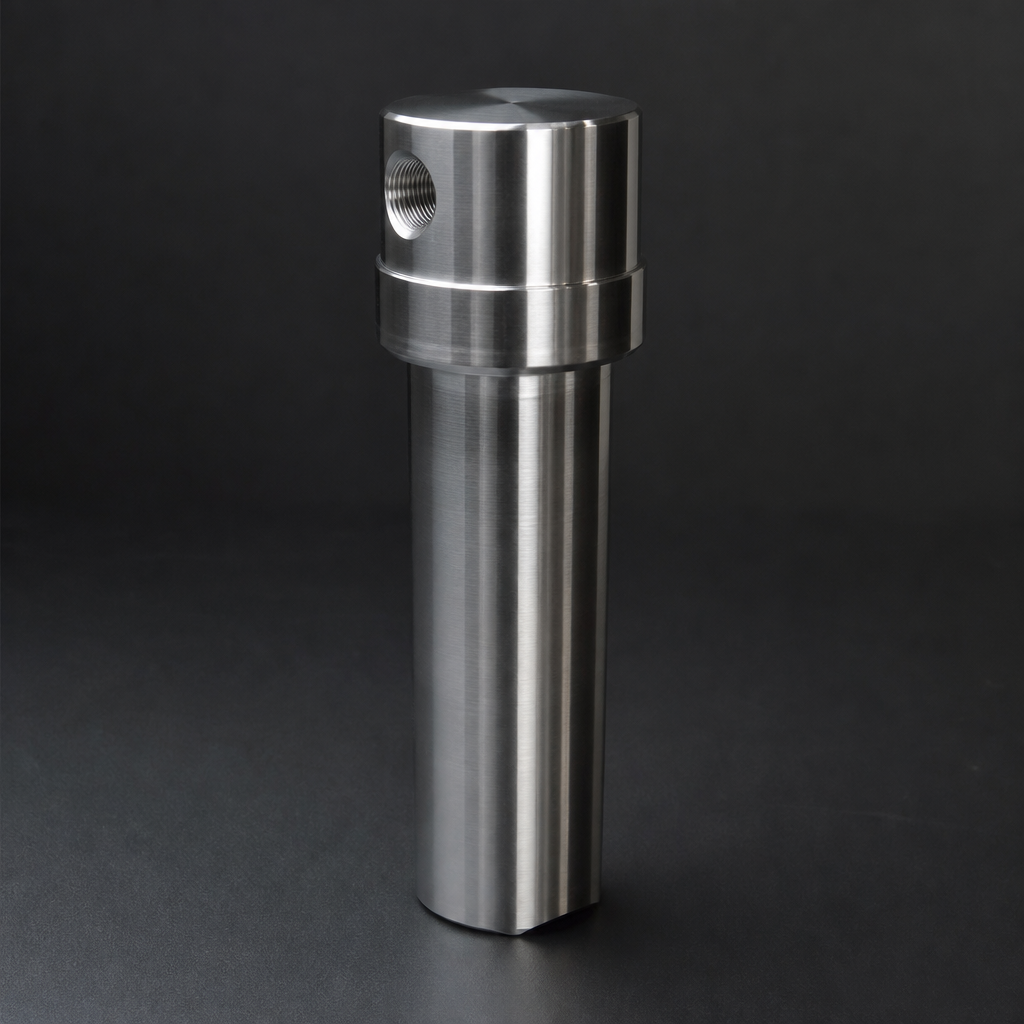
Media selection cannot be separated from housing selection. Glass microfibre elements in the RF-C and RF-P range are designed for use in R+F aluminium and stainless steel housings across the compressed air (RF-H-310 to RF-H-395) and process gas (RF-H-150, RF-H-160) series. The process gas housing range covers operating pressures from 100 bar (RF-H-150) to 400 bar (RF-H-170), with 316L stainless steel construction throughout.
Metal fibre elements, being custom-fabricated to specific pore ratings and dimensions, are typically sourced as OEM replacements for existing housings. If you are evaluating a retrofit from metal fibre to glass microfibre — or vice versa — our team can assess dimensional compatibility and advise on any housing modifications required.
- Borosilicate glass microfibre is the standard media used in high-efficiency coalescing and particulate filter elements.
- Metal fibre media encompasses several distinct constructions: sintered stainless steel mesh, woven wire cloth, and non-woven metal fibre fleece (such as the Chemicron-type construction used by HYDAC and others).
- The table below compares the two media types across the parameters that matter most in process gas filtration.
- For sub-micron aerosol removal — oil mist, water droplets, and fine particulate below 1 µm — borosilicate glass microfibre has no peer in passive filtration.
Related Reading
- Coalescing vs Particulate Filter Elements: Which Do You Need?
- Borosilicate Glass Microfibre Filter Elements Explained
- ISO 8573-1 Compressed Air Quality Classes: A Practical Guide
Try our Engineering Sizing Tool → or discuss your requirements with our team.