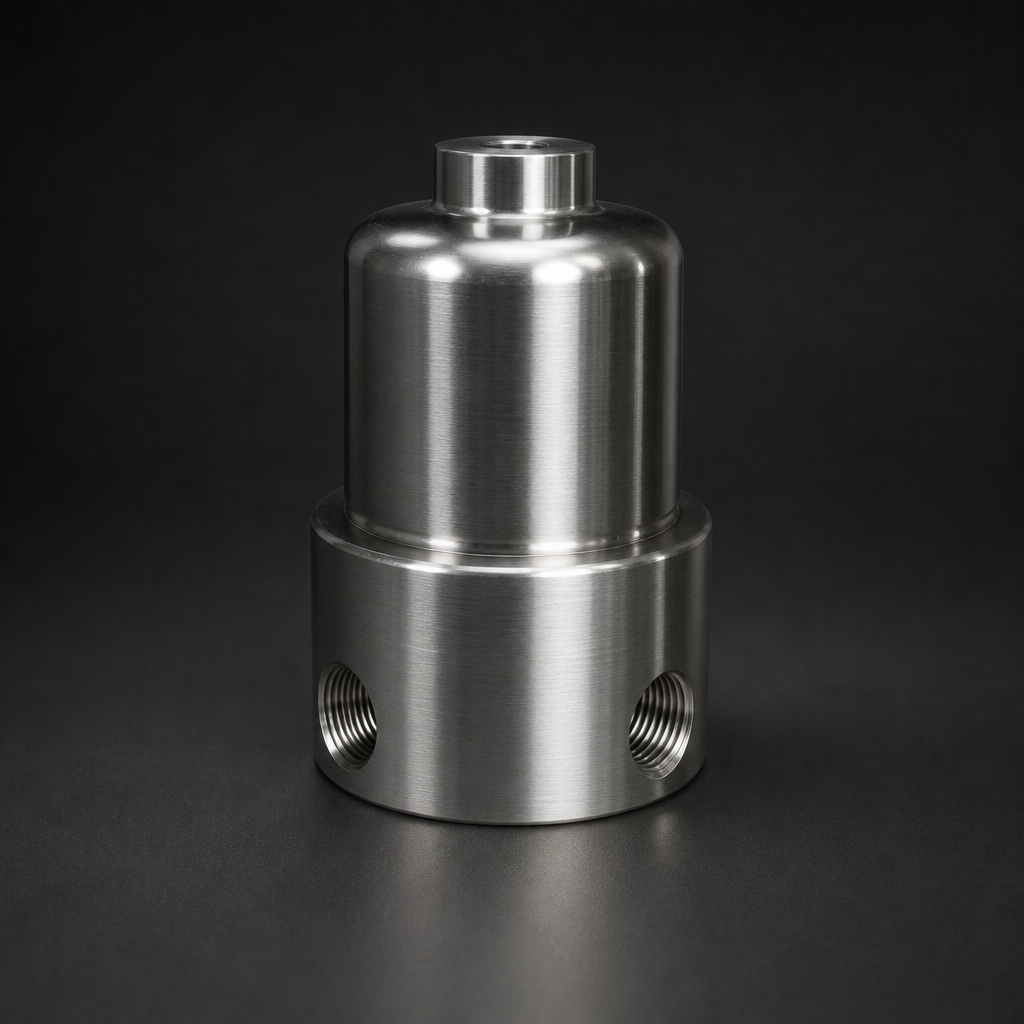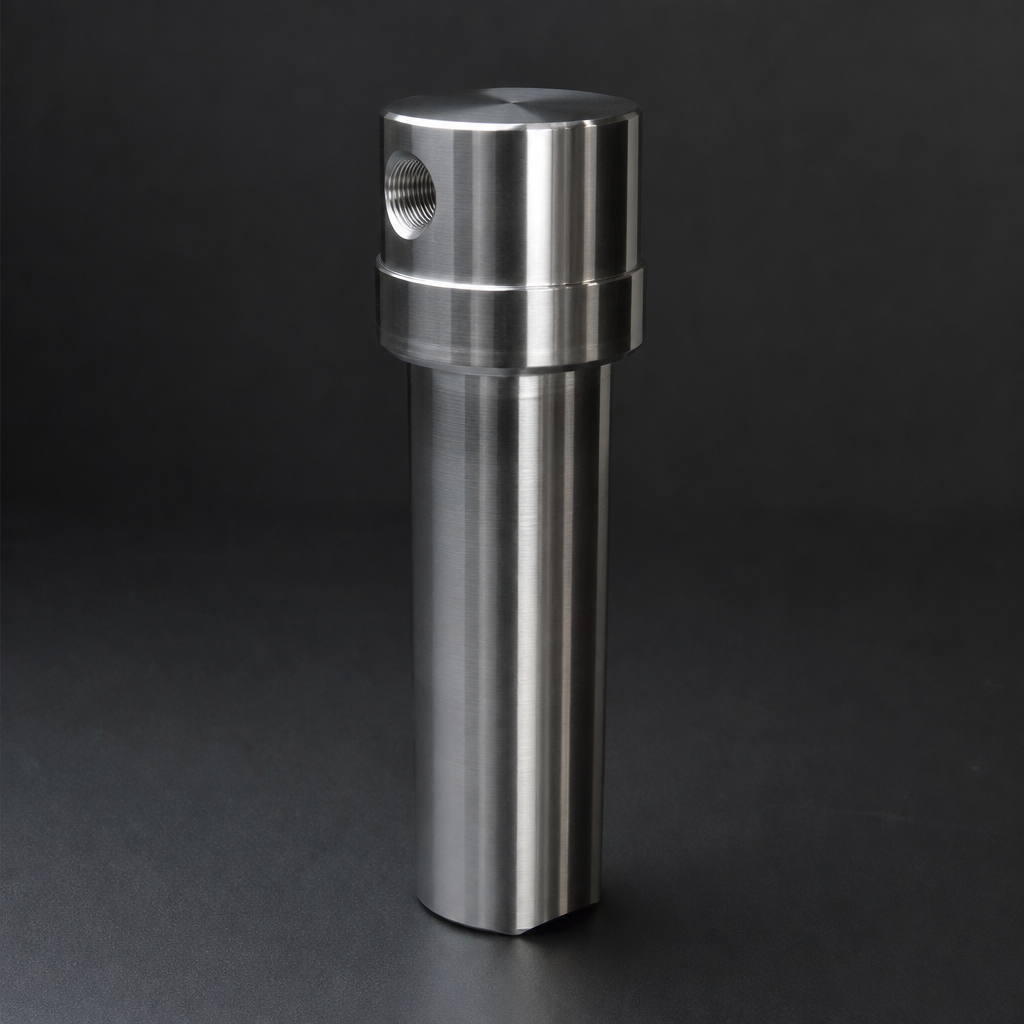
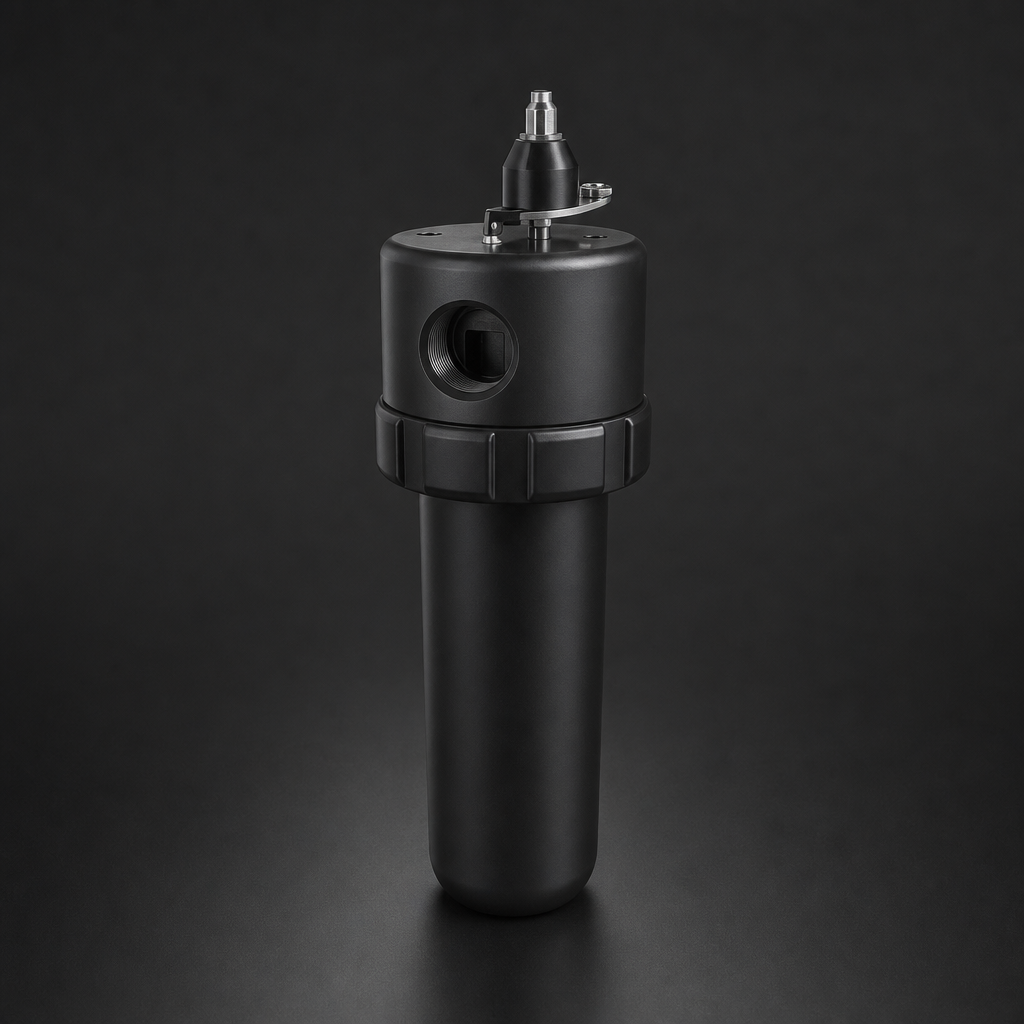
Modern machining centres — CNC lathes, milling machines, grinding stations — rely on cutting fluids and coolants to manage heat and extend tool life. But every time a cutting tool meets metal at high speed, a fine aerosol of oil droplets and coolant mist is thrown into the workshop air. Left uncontrolled, this mist is not merely a nuisance: it is a documented occupational health hazard and a source of costly equipment degradation.
Why Machining Mist Is Harder to Capture Than It Looks
The challenge with machine tool oil mist is the wide particle size distribution it produces. Coarse droplets (above 10 µm) settle quickly and are relatively easy to capture. Fine mist (1–10 µm) stays airborne for minutes and travels across the workshop. Sub-micron aerosol (below 1 µm) can remain suspended for hours and passes straight through low-grade filters. A CNC oil mist filter must therefore address all three fractions simultaneously.
Coolant chemistry adds another layer of complexity. Water-miscible coolants generate a lighter, more persistent mist than straight cutting oils. Synthetic coolants may contain biocides and surfactants that degrade certain filter media. Selecting the wrong filter element material leads to premature failure, channelling, and — critically — unfiltered aerosol reaching the workshop atmosphere.
Three Collection Technologies — and Where Each Falls Short
Metalworking mist collectors broadly fall into three categories. Understanding their operating principles helps you choose the right solution for your machining environment.
Centrifugal (Cyclonic) Separators
Centrifugal collectors spin the contaminated airstream, using inertia to fling larger droplets to the collector wall. They are robust, low-maintenance, and handle high liquid loads well. However, they offer poor efficiency below 5 µm — meaning the finest, most hazardous aerosol fraction passes straight through. They are best used as a pre-separator upstream of a coalescing stage, not as a standalone solution.
Electrostatic Precipitators (ESP)
ESPs charge airborne particles and collect them on oppositely charged plates. They can achieve high efficiency across a wide particle size range and have low pressure drop. The drawbacks are significant: high capital cost, complex electronics, regular plate cleaning, and sensitivity to coolant chemistry. Certain water-miscible coolants can cause arcing or reduce collection efficiency substantially. ESPs also require careful fire-risk assessment when used with straight cutting oils.
Coalescing Filtration
Coalescing filters use borosilicate glass microfibre media to capture sub-micron aerosol by interception, impaction, and diffusion. Fine droplets coalesce on the fibres, grow into larger droplets, and drain by gravity into a sump for disposal. This is the same proven technology used in compressed air filtration and vacuum pump exhaust filtration — adapted here for the higher liquid loads and variable chemistry of metalworking fluids.
Coalescing filtration offers predictable, validated efficiency (99.99% at ≥ 0.1 µm), straightforward maintenance (element replacement), and compatibility with a wide range of coolant chemistries when the correct element material is selected. It is the preferred technology for achieving consistent compliance with workplace exposure limits.
Selecting the Right Coalescing Element for Machine Tool Applications
R+F FilterElements offers its own range of coalescing and particulate filter elements engineered for demanding industrial environments. For machine tool oil mist collection, two element series are particularly relevant:
- RF-C coalescing elements — Borosilicate glass microfibre construction, 99.99% efficiency at ≥ 0.1 µm. Available in standard grade (100 °C) and S-type (200 °C) for high-temperature machining environments such as grinding with neat oil. Sizes from 12032 through to 51476 cover flow rates from small single-spindle machines to large transfer lines.
- RF-P particulate elements — Used as a downstream polishing stage to capture any residual solid particulate (metal fines, carbon particles) that passes the coalescing stage. 99.99% efficiency at ≥ 0.3 µm.
For applications where the collected coolant mist contains a significant water fraction, the RF-GMS-170 PTFE membrane separator can be installed upstream to provide an absolute liquid barrier before the coalescing stage, protecting element life and reducing change-out frequency.
Learn more about how coalescing principles work in our detailed guide: Coalescing vs Particulate Filter Elements — Which Do You Need?
Need help selecting the right mist collector filter?
Use our free Engineering Tool to get a filtration recommendation for your specific application in under 2 minutes.
Technology Comparison: Choosing Your Mist Collector
| Parameter | Centrifugal | Electrostatic (ESP) | Coalescing Filter |
|---|---|---|---|
| Sub-micron efficiency | Poor | Good | Excellent (99.99% ≥ 0.1 µm) |
| Capital cost | Low | High | Medium |
| Maintenance complexity | Low | High (plate cleaning, electronics) | Low (element swap) |
| Coolant chemistry sensitivity | Low | High | Low–Medium (grade-dependent) |
| Fire risk (neat oil) | Low | Elevated (arcing risk) | Low |
| Best suited for | Pre-separation only | Dry machining, low liquid load | All coolant types, compliance-critical |
Filter Maintenance: The Factor Most Often Overlooked
Even the best coalescing filter element will fail to protect workers if maintenance is neglected. Saturated elements increase pressure drop, reduce airflow through the collector, and — in extreme cases — can re-entrain collected liquid back into the airstream. Establishing a maintenance schedule based on actual differential pressure readings (rather than calendar intervals alone) is the most reliable approach.
R+F FilterElements recommends replacing RF-C and RF-P elements when differential pressure across the element reaches 350 mbar, or at least annually — whichever comes first. For high-production environments running multiple shifts, quarterly checks are advisable. The full range of R+F branded replacement elements is available with short lead times from our Hildesheim facility.
Crankcase ventilation systems face similar coalescing challenges — see our related article on crankcase ventilation filtration for a deeper look at high-liquid-load coalescing design.
For facilities that also operate compressed air systems, ensuring the instrument air supply to CNC machine controls meets ISO 8573-1 quality classes is equally important — contaminated instrument air causes valve failures and unplanned downtime. The R+F instrumentation filter range covers this requirement.
- The challenge with machine tool oil mist is the wide particle size distribution it produces.
- Metalworking mist collectors broadly fall into three categories.
- R+F FilterElements offers its own range of coalescing and particulate filter elements engineered for demanding industrial environments.
- Even the best coalescing filter element will fail to protect workers if maintenance is neglected.
Related Reading
- Coalescing vs Particulate Filter Elements — Which Do You Need?
- Crankcase Ventilation Filtration — Managing High Liquid Loads
- ISO 8573-1 Compressed Air Quality — A Practical Guide
Try our Engineering Sizing Tool → or discuss your requirements with our team.