When engineers specify a gas filter, the instinct is often to reach for the finest grade available — after all, cleaner must be better. In practice, this logic leads to two equally costly mistakes: under-filtration that allows damaging particles through, and over-filtration that wastes energy and money on unnecessary pressure drop. The key to avoiding both is understanding the particle size distribution (PSD) of your specific gas stream and matching the filter grade to it precisely.
What Is Particle Size Distribution?
Particle size distribution describes how contamination in a gas stream is spread across different size ranges — from sub-micron aerosols to coarse dust particles. It is not enough to know that particles are present; the shape of the distribution determines which filter grade will intercept the bulk of the contamination mass while maintaining acceptable pressure drop.
In compressed air and process gas systems, contamination typically arrives from three sources: atmospheric ingestion (dust, pollen, micro-organisms), compressor or pump carry-over (oil aerosols, wear debris), and pipeline corrosion products (rust flakes, scale). Each source produces a characteristic PSD, and a single filter grade rarely addresses all three optimally.
Why Contamination Source Shapes the PSD
Atmospheric dust ingested through a compressor inlet is dominated by particles in the 1–10 µm range, with a long tail extending to 50 µm and beyond. A coarse particulate filter — such as the RF-P series particulate elements rated at 1 µm or 3 µm — is usually sufficient to protect downstream equipment from this fraction.
Oil aerosols from reciprocating or screw compressors are a different matter. Freshly generated oil mist has a mass median diameter of roughly 0.3–0.8 µm, placing it squarely in the MPPS zone. This is precisely why coalescing filtration — using borosilicate glass microfibre media — is specified for oil removal rather than simple particulate filtration. The RF-C coalescing elements achieve 99.99% efficiency at ≥ 0.1 µm, capturing the full aerosol distribution including the most penetrating fraction.
Pipeline corrosion products, by contrast, tend to be coarser — iron oxide flakes and scale particles typically exceed 5 µm — but they arrive in bursts during pressure transients or after maintenance. A particulate pre-filter upstream of any coalescing stage protects the finer media from premature loading.
Matching Filter Grade to PSD: The Practical Framework
The ISO 8573-1 standard classifies compressed air and gas purity into quality classes based on particle concentration and size. Class 1 (≤ 0.1 µm, ≤ 20,000 particles/m³) demands coalescing filtration followed by adsorption; Class 3 (≤ 1 µm) can often be achieved with a single particulate stage. Knowing your required quality class and your inlet PSD together defines the minimum filter grade needed — and prevents over-specification.
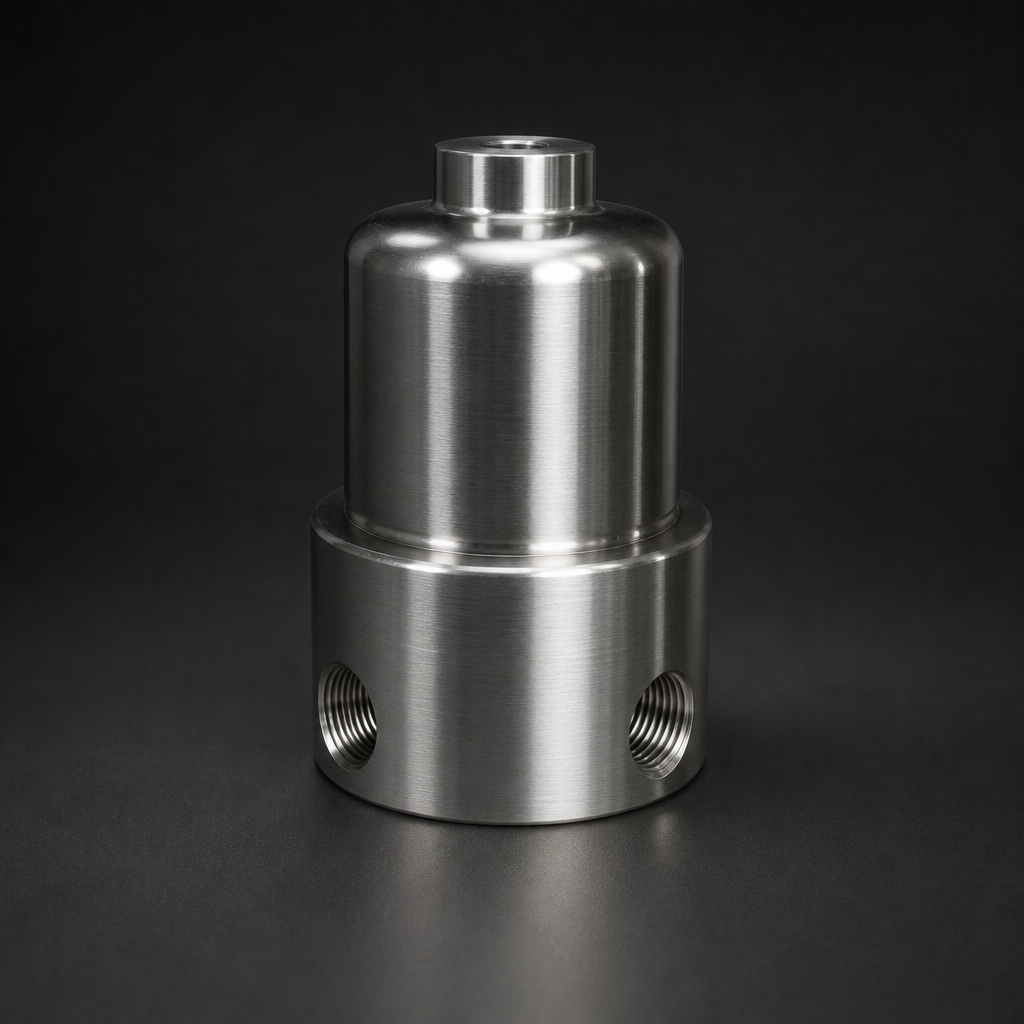
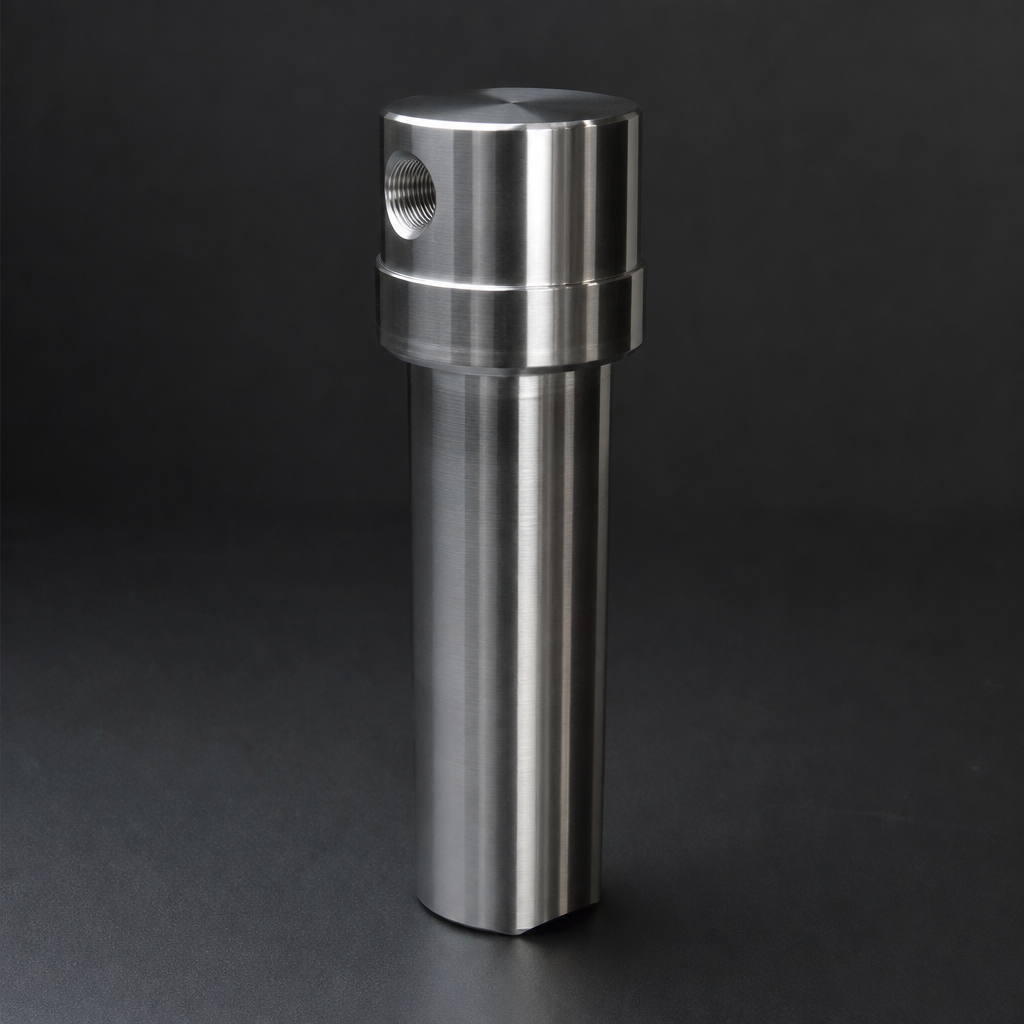
For process gas applications — natural gas, hydrogen, nitrogen, CO₂ — the PSD analysis is equally important but often overlooked. Pipeline gas carries liquid hydrocarbon aerosols, compressor oil, and fine iron oxide from transmission pipelines. The RF-H-150 process gas housing paired with RF-C coalescing elements addresses the sub-micron aerosol fraction, while an upstream RF-P particulate stage handles coarser pipeline debris. For high-pressure applications up to 250 bar, the RF-H-160 housing provides the same staged filtration capability in a compact 316L stainless steel body.
| Contamination Source | Typical PSD Peak | Recommended Filter Grade | R+F Element |
|---|---|---|---|
| Atmospheric dust | 1–10 µm | Particulate, 1 µm or 3 µm | RF-P series |
| Compressor oil aerosol | 0.3–0.8 µm | Coalescing, 0.01 µm | RF-C series |
| Pipeline corrosion | 5–50 µm | Particulate pre-filter, 5 µm | RF-P series |
| Liquid hydrocarbon mist | 0.1–1 µm | Coalescing + adsorption | RF-C + RF-AC |
| Point-of-use protection | Variable | Inline particulate, 0.3 µm | RF-DIL |
Need help selecting the right filter grade for your PSD?
Use our free Engineering Tool to get a filtration recommendation for your specific application in under 2 minutes.
The Cost of Getting It Wrong
Under-filtration is the more obvious failure mode: particles that pass through the filter contaminate instruments, damage control valves, and cause analyser drift. In hydrogen electrolysis systems, sub-micron particulates can foul membrane electrode assemblies and reduce stack lifetime significantly. In food and beverage CO₂ applications, any oil aerosol breakthrough creates a product safety issue.
Over-filtration is subtler but equally damaging to operating economics. Specifying a 0.01 µm coalescing element where a 1 µm particulate filter would suffice imposes three to five times the clean pressure drop, increases element replacement frequency, and adds capital cost. For a 1,000 Nm³/h compressed air system operating at 7 bar, an unnecessary 0.2 bar pressure drop across an over-specified filter stage costs roughly 3–4 kW of additional compressor power — continuously.
Practical Steps for PSD-Based Filter Selection
A structured approach to filter selection based on PSD analysis follows four steps. First, identify all contamination sources in the system — compressor type, pipeline material, process gas composition, and any upstream treatment. Second, obtain or estimate the PSD for each source; optical particle counters or cascade impactors provide measured data, while published data for common compressor types can serve as a starting point. Third, map the combined PSD against the available filter grades and select the minimum grade that achieves the required outlet quality class. Fourth, verify the selection against pressure drop limits using the manufacturer's flow curves at actual operating conditions.
For point-of-use protection where a full housing is impractical, RF-DIL disposable inline filters provide a compact solution rated to 0.3 µm particulate removal. These are particularly useful for protecting individual instruments or sample conditioning systems where the upstream bulk filtration may not be sufficient for the final application.
Where residual oil vapour is a concern after coalescing filtration — for example in food-grade CO₂ or semiconductor nitrogen — an RF-AC activated carbon adsorption stage reduces total oil content below 0.003 mg/m³, addressing the vapour-phase contamination that particle-based filtration cannot capture.
- Particle size distribution describes how contamination in a gas stream is spread across different size ranges — from sub-micron aerosols to coarse dust particles.
- Atmospheric dust ingested through a compressor inlet is dominated by particles in the 1–10 µm range, with a long tail extending to 50 µm and beyond.
- The ISO 8573-1 standard classifies compressed air and gas purity into quality classes based on particle concentration and size.
- Under-filtration is the more obvious failure mode: particles that pass through the filter contaminate instruments, damage control valves, and cause analyser drift.
Staged Filtration: The Right Answer for Complex PSDs
When the inlet PSD spans a wide range — as is typical in process gas pipelines — staged filtration is almost always more cost-effective than a single fine-grade filter. A coarse particulate pre-filter (5 µm or 10 µm) removes the bulk of the coarse fraction and protects the downstream coalescing stage from premature loading. The coalescing stage then operates on a narrower, sub-micron aerosol distribution, achieving its rated efficiency without the pressure drop penalty of handling coarse particles simultaneously.
The RF-H-150 and RF-H-160 process gas housings are designed for exactly this staged approach, with matched element sizes across the RF-P and RF-C ranges. For applications requiring adsorption as a final polishing stage, the RF-AC element fits the same housing body, eliminating the need for a separate vessel.
Understanding particle size distribution is not an academic exercise — it is the foundation of a filter specification that performs reliably, minimises operating cost, and meets the quality requirements of the downstream process. Use our Engineering Sizing Tool to model your specific PSD scenario and identify the optimal filter configuration.
Related Reading
- Coalescing vs Particulate Filter Elements — Which Do You Need?
- ISO 8573-1 Compressed Air Quality Classes Explained
- Filtration Requirements for Hydrogen Electrolysis Systems
Try our Engineering Sizing Tool → or discuss your requirements with our team.