Steam is one of the most demanding process fluids in industrial filtration. Whether you are producing pharmaceutical-grade clean steam, culinary steam for food contact applications, or high-temperature process steam for industrial heating, the filtration challenge is the same: remove particulate contamination, rust, and scale without compromising steam quality or introducing new contaminants from the filter itself.
This guide covers the key engineering decisions for steam filter element selection — from material compatibility at 150 °C and beyond, to gasket choices, particle size targets, and the standards that define acceptable steam quality in regulated industries.
Why Steam Filtration Is Different
Steam generated from boiler feedwater carries a range of contaminants: rust and iron oxide particles from pipework, scale from mineral deposits, and occasionally oil carryover from steam traps or condensate return lines. In pharmaceutical and food processing environments, these contaminants are unacceptable — they can compromise product sterility, contaminate process equipment, or violate regulatory requirements.
The challenge is compounded by temperature. Saturated steam at 3 bar is already at 134 °C. Superheated steam for industrial processes can reach 300 °C or higher. At these temperatures, the polymer-bonded glass microfibre elements used in standard compressed air filtration are simply not viable. The binder softens, the element loses structural integrity, and contamination from the element itself becomes a risk.
Sintered Stainless Steel: The Engineering Solution
Sintered stainless steel filter elements are manufactured by compacting and sintering 316L stainless steel powder into a rigid, self-supporting matrix. The result is a filter medium with no binders, no adhesives, and no organic components — just metal. This construction gives sintered elements several critical advantages for steam service:
- Temperature resistance: Continuous service to 450 °C, with no degradation of the filter medium
- Chemical inertness: 316L stainless steel resists steam condensate, chlorides at moderate concentrations, and most process chemicals
- Cleanability: Sintered elements can be back-flushed, ultrasonically cleaned, or steam-sterilised in place (SIP) without damage
- Particle retention: Available in absolute ratings from 0.5 µm to 100 µm, with consistent pore geometry throughout the element depth
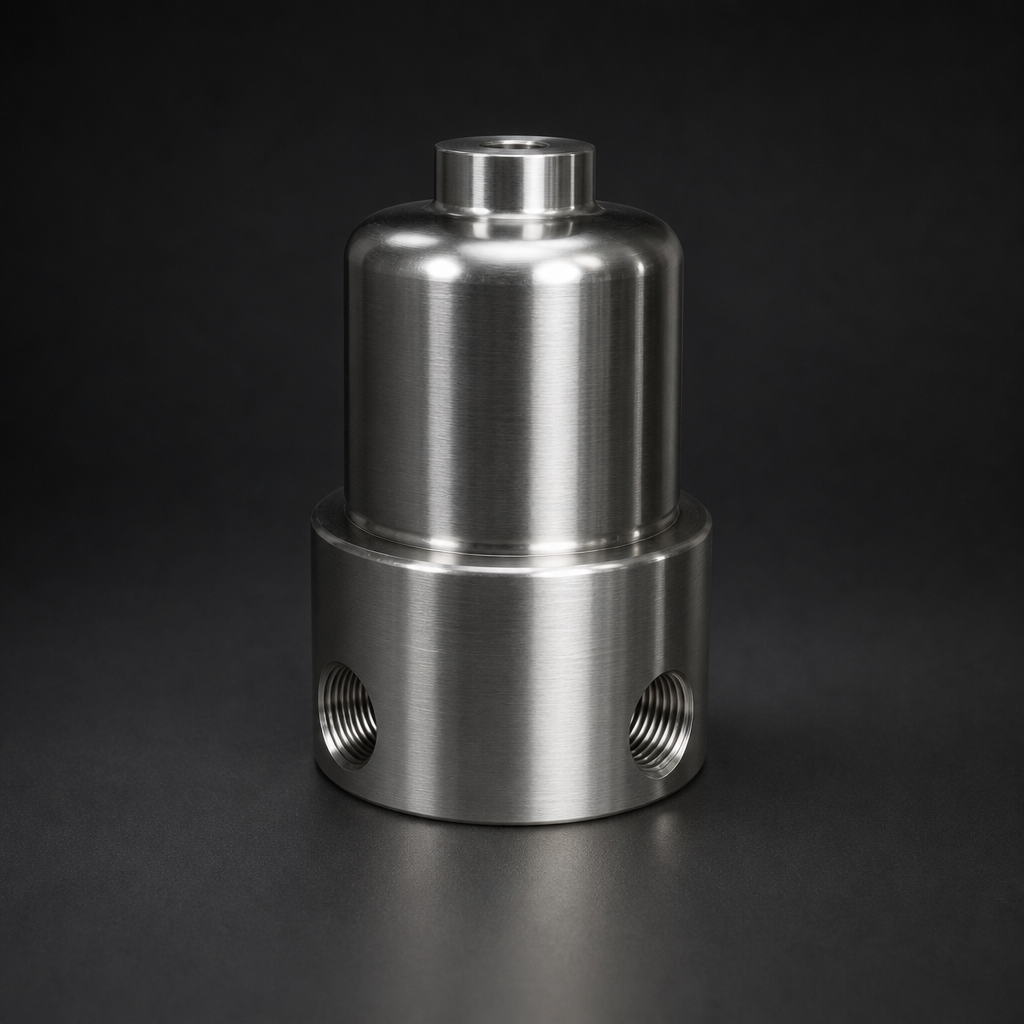
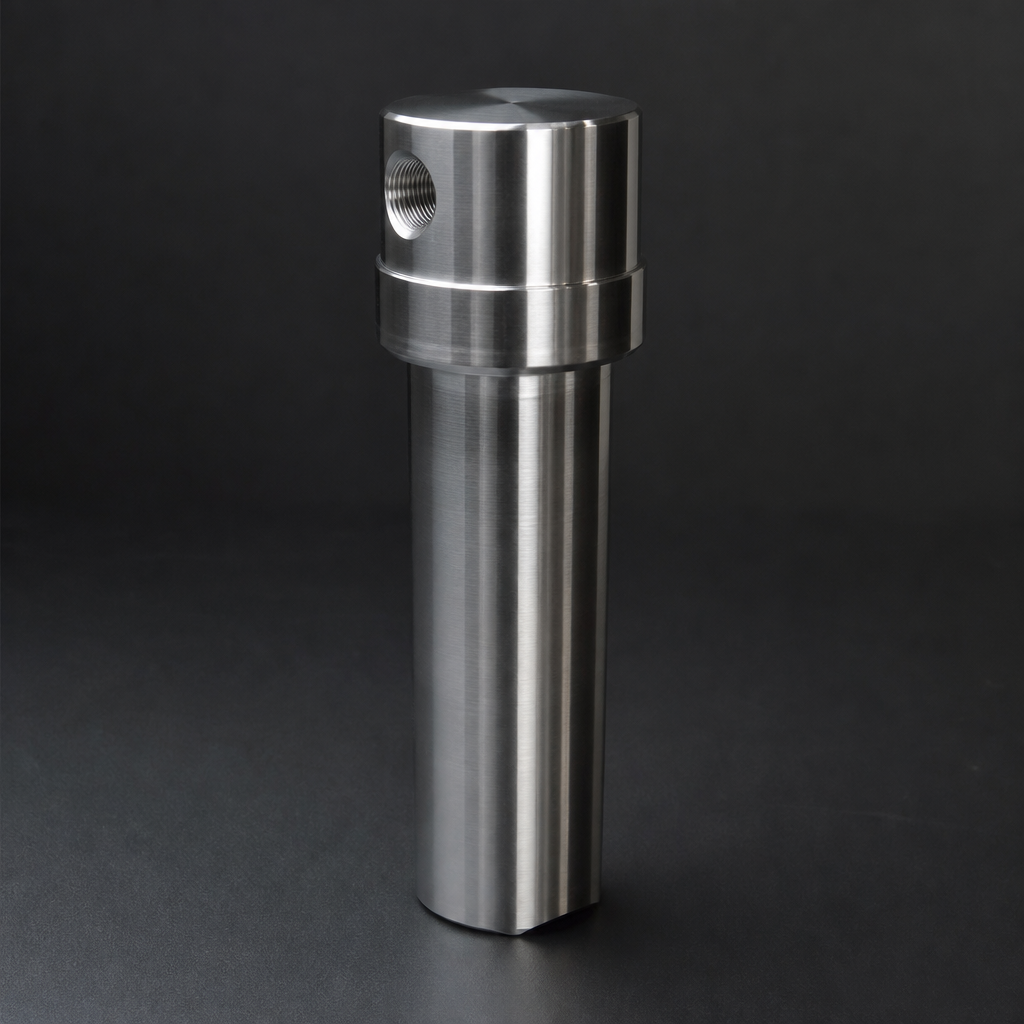
R+F FilterElements offers sintered stainless steel elements compatible with the RF-H-150 process gas housing (rated to 100 bar and 200 °C) and the RF-H-160 series for higher-pressure steam applications. These housings are constructed from 316L stainless steel throughout, with no aluminium or zinc components that could corrode in steam service.
Clean Steam and Culinary Steam Standards
In pharmaceutical manufacturing, clean steam is defined by HTM 2010 (Health Technical Memorandum) and the European Pharmacopoeia. These standards specify limits for non-condensable gases, superheat, dryness fraction, and — critically — particulate contamination. Clean steam used for sterilisation of equipment, containers, and closures must be free of particles that could compromise sterility assurance.
Culinary steam, used in food processing for direct product contact (cooking, blanching, humidification), is governed by food safety regulations that prohibit the use of boiler additives and require steam to be free of rust, scale, and other particulate matter. The ISO 8573-1 standard for compressed air quality provides a useful reference framework, though steam-specific standards apply in regulated food and pharmaceutical environments.
Need help selecting the right steam filter element?
Particle Size Targets for Steam Applications
The appropriate filter rating depends on the downstream application. For general industrial steam — heating coils, heat exchangers, steam tracing — a 10–25 µm sintered element removes rust and scale particles that cause erosion and fouling. For clean steam in pharmaceutical applications, ratings of 0.5–2 µm are typical, ensuring that even fine particulate from pipework corrosion is captured before it reaches sterilisation equipment.
Rust removal is a particularly important consideration in older steam systems. Iron oxide particles from carbon steel pipework are abrasive, can block steam traps, and in pharmaceutical environments represent a direct contamination risk. A sintered stainless steel element rated at 5 µm absolute will capture the vast majority of rust particles while maintaining acceptable pressure drop across the filter.
Use our free Engineering Tool to get a filtration recommendation for your specific application in under 2 minutes.
Element Selection: Comparing Options for Steam Service
| Element Type | Max. Temp. | Ratings Available | SIP Compatible | Typical Application |
|---|---|---|---|---|
| Sintered 316L SS (RF-H-150 compatible) | 450 °C | 0.5–100 µm | Yes | Clean steam, culinary steam, superheated steam |
| Sintered PTFE | 260 °C | 1–50 µm | Yes | Corrosive steam, ultra-pure applications |
| Glass microfibre (RF-C / RF-P standard) | 100 °C | 0.1–3 µm | No | Compressed air only — NOT suitable for steam |
| Vacuum CS-type (RF-CS silica binder) | 200 °C | 0.3–5 µm | Limited | Vacuum exhaust, low-pressure steam |
Housing Selection for Steam Service
The filter housing must be rated for both the operating pressure and temperature of the steam system. For saturated steam at typical pharmaceutical sterilisation pressures (2–3 bar, 121–134 °C), the RF-H-150 compact process gas housing provides a robust, all-stainless solution. Its 316L stainless steel body, EPDM or PTFE seal options, and 100 bar pressure rating give substantial safety margin for steam service.
For higher-pressure steam applications — superheated steam at 10–30 bar for industrial processes — the RF-H-160 series (rated to 250 bar) provides the necessary pressure containment. Both housings are available with tri-clamp connections for hygienic installations in pharmaceutical and food processing environments, where clean-in-place (CIP) and steam-in-place (SIP) procedures are standard.
When specifying a steam filter, always confirm the following with your supplier: maximum allowable working pressure (MAWP), design temperature, seal material, connection type (threaded, flanged, or tri-clamp), and whether the housing has been pressure-tested and certified to the applicable pressure equipment directive (PED 2014/68/EU for European installations).
For guidance on selecting the right filter elements for your steam system, or to compare housing options for your operating conditions, our Engineering Sizing Tool can help you identify the correct configuration based on flow rate, pressure, and temperature. You can also review our guide to coalescing vs particulate filter elements for background on element selection principles.
- Steam generated from boiler feedwater carries a range of contaminants: rust and iron oxide particles from pipework, scale from mineral deposits, and occasionally oil carryover from steam traps or condensate return lines.
- Temperature resistance:
- In pharmaceutical manufacturing, clean steam is defined by HTM 2010 (Health Technical Memorandum) and the European Pharmacopoeia.
- The appropriate filter rating depends on the downstream application.
Related Reading
- Coalescing vs Particulate Filter Elements — Which Do You Need?
- ISO 8573-1 Compressed Air Quality Classes Explained
- Oxygen Filtration Safety — Material Compatibility and Ignition Risks
Try our Engineering Sizing Tool → or discuss your requirements with our team.