Filter elements are precision components — yet they are routinely stored in damp warehouses, handled with bare hands, or left unwrapped on a workbench for days before installation. By the time the element reaches the housing, contamination may already have compromised its performance. Understanding how to store and handle filter elements correctly is not a minor housekeeping matter; it directly determines whether your filtration system meets its rated specification from day one.
Why Storage Conditions Matter More Than You Think
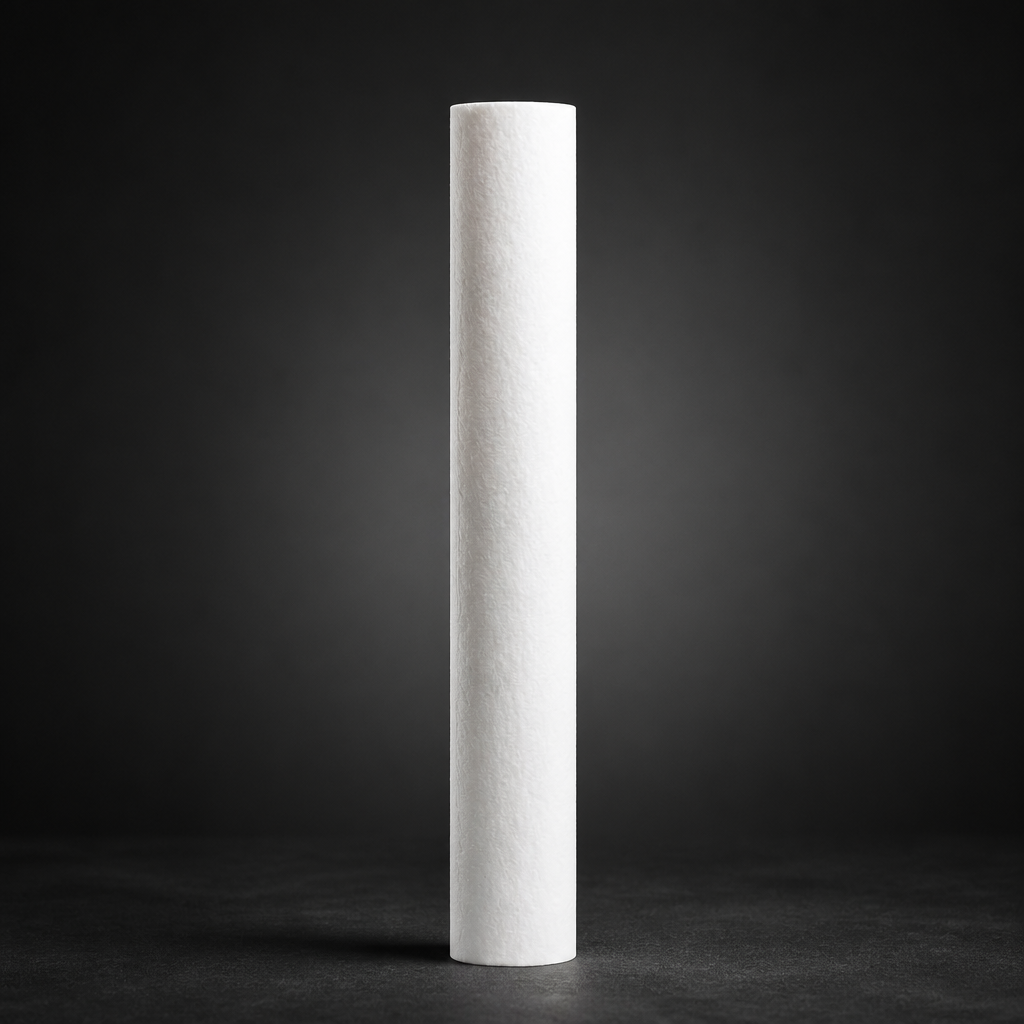
A new filter element leaves the factory sealed in protective packaging for good reason. The filtration media — whether borosilicate glass microfibre, activated carbon, or sintered metal — is highly susceptible to environmental contamination before it ever sees process gas or compressed air. Moisture, airborne dust, and hydrocarbon vapours can all pre-load the element, reducing its effective service life and, in the worst case, introducing contaminants directly into the downstream process.
Coalescing elements such as the RF-C series rely on a precisely engineered borosilicate glass microfibre matrix. Exposure to airborne particulate during storage can partially blind the media surface, increasing initial differential pressure and shortening the element's service interval. Particulate elements (RF-P series) face the same risk. For process gas applications — hydrogen, natural gas, biogas — where cleanliness is critical, pre-contaminated elements can introduce moisture or hydrocarbons into sensitive downstream equipment.
Shelf Life: What the Manufacturers Don't Always Tell You
Filter elements do not have an indefinite shelf life, even when stored correctly. The key variables are element type, seal material, and storage environment.
Activated carbon elements (RF-AC) are the most shelf-life-sensitive. Activated carbon is an adsorbent by nature — it will adsorb ambient vapours from the surrounding air if the packaging seal is broken or degraded. For applications requiring residual oil below 0.003 mg/m³, using an RF-AC element that has been stored beyond its recommended shelf life is a significant risk. Always check the manufacture date printed on the element label and apply a first-in, first-out (FIFO) rotation policy in your stores.
Seal materials also age. NBR O-rings have a recommended storage life of around 5 years; FKM/Viton seals can last up to 10 years when stored away from UV light, ozone, and heat. Elements stored beyond these periods should be inspected — and ideally replaced — before installation, even if the media itself appears undamaged.
Correct Handling During Installation
Even elements stored perfectly can be compromised in the final minutes before installation. The most common handling errors are:
- Bare-hand contact with the media surface. Skin oils and salts transfer directly to the filter media. For critical applications — hydrogen systems, oxygen service, or analytical instrument protection — always use clean nitrile gloves.
- Removing packaging too early. Do not unwrap the element until you are ready to install it. Even a few minutes on an open workbench in a dusty environment can deposit particulate on the media face.
- Dropping or compressing the element. Borosilicate glass microfibre media is fragile. A dropped element may have internal media fractures that are invisible to the naked eye but create bypass channels, reducing filtration efficiency below the rated 99.99% at ≥ 0.1 µm.
- Reusing O-rings from the old element. Always fit the new O-rings supplied with the replacement element. Reused seals may have compression set or surface damage that causes bypass leakage.
Reusing O-rings from the old element.
Use our free Engineering Tool to get a filtration recommendation for your specific application in under 2 minutes.
Element Type Comparison: Storage Sensitivity
| Element Type | R+F Code | Max Shelf Life (sealed) | Primary Storage Risk | Handling Priority |
|---|---|---|---|---|
| Coalescing | RF-C | 5 years | Particulate blinding of media face | Medium |
| Particulate | RF-P | 5 years | Dust loading, media damage | Medium |
| Activated Carbon | RF-AC | 2 years | Vapour adsorption, capacity loss | High |
| Vacuum / High-Temp | RF-CS | 5 years | Moisture absorption in silica binder | Medium |
| Disposable Inline | RF-DIL | 3 years | Seal degradation, media contamination | Low–Medium |
Practical Storage Checklist for Maintenance Teams
Implementing a simple storage protocol in your maintenance department costs nothing but can significantly extend element service life and protect downstream equipment. The full R+F FilterElements range is supplied in sealed packaging designed to maintain element integrity — but only if that packaging is respected throughout the supply chain and in your own stores.
- Store elements in their original sealed packaging until the moment of installation.
- Keep the storeroom temperature between 15 and 25 °C and relative humidity below 60%.
- Store away from direct sunlight, UV sources, ozone-generating equipment (motors, welding), and chemical vapours.
- Apply FIFO rotation — oldest stock installed first. Label shelves with receipt dates.
- Inspect packaging integrity on receipt. Reject any elements with damaged or open packaging.
- For activated carbon (RF-AC) elements, record the manufacture date and set a calendar reminder at the 18-month mark to review remaining stock.
For natural gas and biogas applications where downstream contamination can damage compressors, analysers, or fuel cells, these precautions are not optional — they are part of the filtration system's performance guarantee. The RF-DIL disposable inline filters used as point-of-use protection are particularly sensitive to pre-installation contamination given their small media volume.
- A new filter element leaves the factory sealed in protective packaging for good reason.
- Filter elements do not have an indefinite shelf life, even when stored correctly.
- Bare-hand contact with the media surface.
- Implementing a simple storage protocol in your maintenance department costs nothing but can significantly extend element service life and protect downstream equipment.
Related Reading
- Coalescing vs Particulate Filter Elements — Which Do You Need?
- ISO 8573-1 Compressed Air Quality Classes Explained
- Filtration Requirements for Hydrogen Electrolysis Systems
Try our Engineering Sizing Tool → or discuss your requirements with our team.