Why Vacuum Furnace Processes Are Particularly Hard on Pump Systems
Vacuum furnaces are workhorses of advanced manufacturing. Sintering of metal injection moulded (MIM) parts, vacuum brazing of heat exchangers, and heat treatment of tool steels all rely on a clean, controlled low-pressure environment to achieve the metallurgical results that atmospheric processes simply cannot deliver. Yet the very conditions that make vacuum furnaces so effective — high temperatures, reactive atmospheres, and the volatilisation of binders and surface contaminants — create a severe contamination challenge for the vacuum pump systems that maintain the process environment.
Unlike a standard industrial vacuum application, a vacuum furnace cycle actively drives contaminants into the pumping system. As the furnace chamber heats up, organic binders used in MIM or powder metallurgy parts decompose and volatilise. Metal surfaces outgas oxides and adsorbed moisture. At higher temperatures, zinc, cadmium, manganese, and other low-vapour-pressure metals begin to evaporate, travelling with the gas stream directly towards the vacuum pump. On cooling surfaces within the pump and its pipework, these vapours condense into fine metallic particles and sticky deposits that are extremely difficult to remove.
Soot from incomplete binder combustion adds a further layer of complexity. Carbon particles are abrasive, they contaminate pump oil, and they can block oil mist separators and exhaust filters in a fraction of the time that a clean process would allow. The result, without proper filtration, is a cycle of accelerated pump wear, frequent oil changes, and ultimately premature pump failure — all of which translate directly into unplanned downtime and high maintenance costs.
Understanding the Contamination Mechanisms
Metal Vapour Condensation
Many engineering alloys contain elements with relatively high vapour pressures at furnace temperatures. Zinc begins to evaporate significantly above 420 °C; manganese above 900 °C. During vacuum brazing of copper-zinc alloys or sintering of manganese-containing steels, measurable quantities of these metals enter the gas phase. As the gas stream passes through cooler sections of the vacuum line and into the pump, the vapour condenses on internal surfaces. Over time, these deposits build up into solid plugs that restrict flow, cause valve sticking, and contaminate pump oil with metallic particles that act as abrasives.
Binder Burnout Residue
Metal injection moulding and powder metallurgy components contain organic binders — typically wax, polyethylene, or polyoxymethylene — that must be removed before sintering. In a vacuum furnace, this debinding stage releases large quantities of organic vapour and, if conditions are not perfectly controlled, soot. These organic compounds condense in the vacuum line and pump, forming waxy or tarry deposits that are highly viscous and difficult to flush out with standard pump oil. They also raise the vapour pressure within the pump, reducing its ultimate vacuum capability and potentially causing process failures.
Particulate Carry-Over
Fine metal powder, ceramic particles from furnace furniture, and carbon soot are all small enough to be entrained in the gas stream at the flow velocities present in vacuum systems. These particles are abrasive and, once inside a rotary vane or screw vacuum pump, cause accelerated wear of precision-machined surfaces. Even a small quantity of hard particulate contamination can reduce pump efficiency and shorten service life dramatically.
The Filtration Strategy for Vacuum Furnace Applications
Effective protection of vacuum pump systems in furnace applications requires a layered approach. A single filter is rarely sufficient; the contamination load is too varied and the consequences of filter bypass too severe. R+F FilterElements recommends considering filtration at two points in the system: on the inlet side of the pump (to protect the pump from particulate and condensable vapours) and on the exhaust side (to capture oil mist and any residual contaminants before they enter the workplace atmosphere).
Inlet Filtration — Protecting the Pump
An inlet filter placed between the furnace chamber and the vacuum pump is the primary line of defence against particulate carry-over and condensable contaminants. For vacuum furnace duty, the filter housing must be constructed from materials that can withstand both the process temperatures and the corrosive nature of metal vapour condensates. Aluminium housings, which are adequate for many standard vacuum applications, are not suitable where zinc or other reactive metal vapours are present — stainless steel construction is essential.
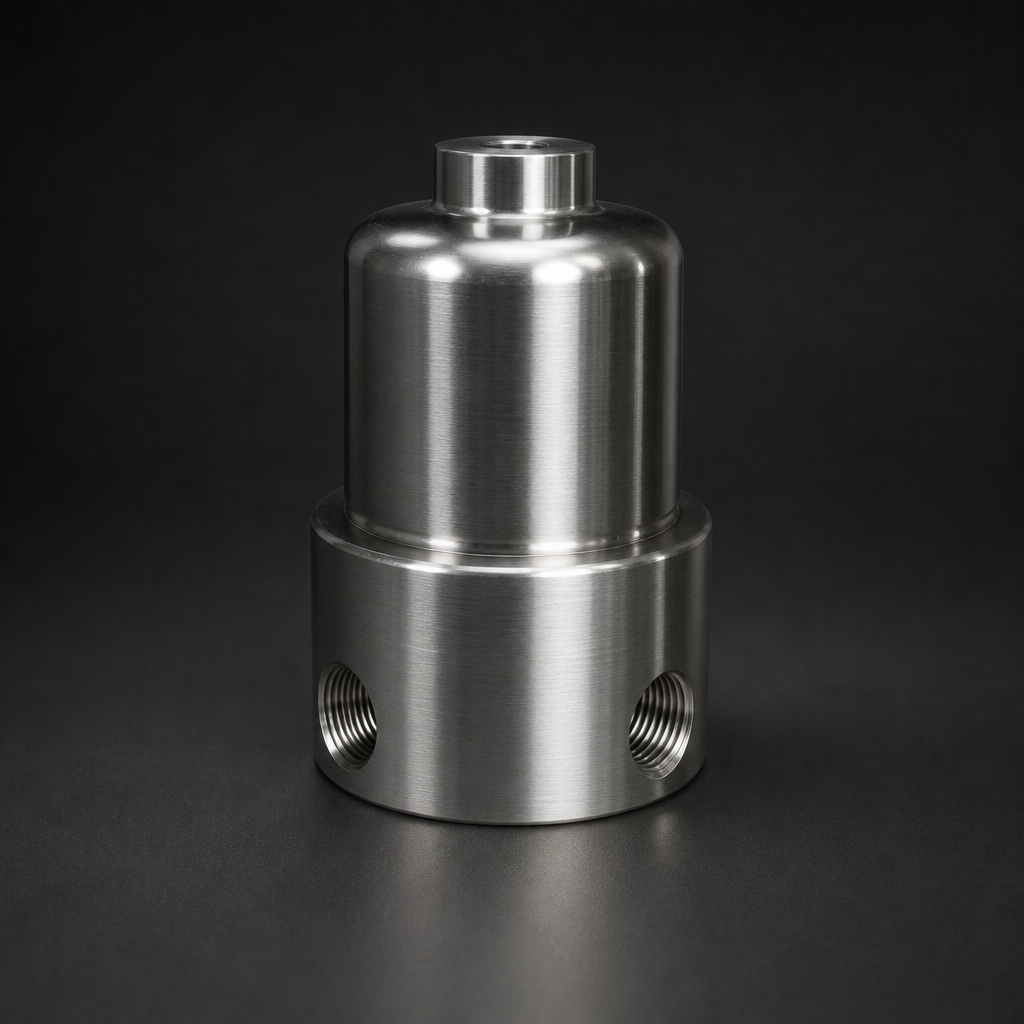
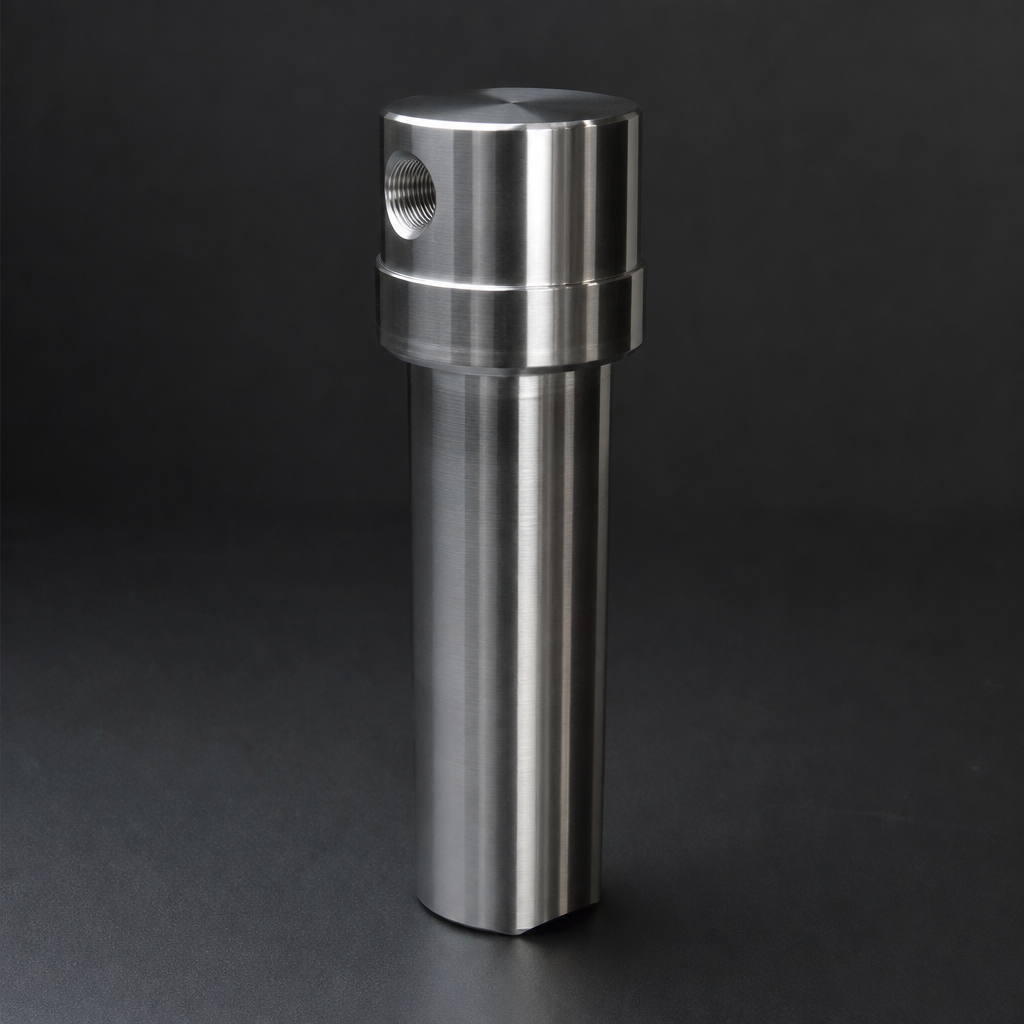
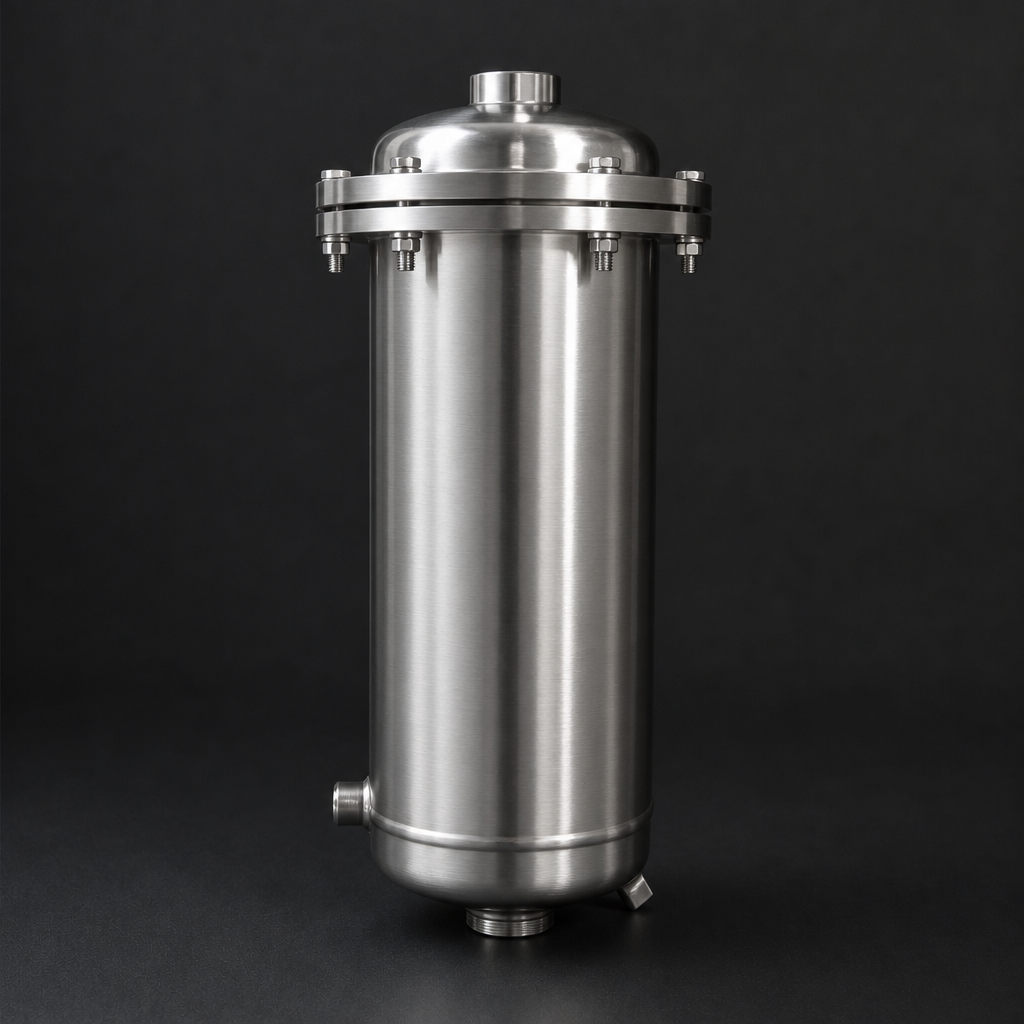
The R+F vacuum pump filter range includes the RF-H-447S, a 316L stainless steel housing designed specifically for demanding vacuum furnace and process vacuum applications. The RF-H-447S accepts RF-CS series filter elements — silica-bonded, heat-resistant elements rated to 200 °C continuous service temperature. This combination provides robust particulate removal while withstanding the thermal and chemical stresses of furnace duty.
For applications where metal vapour condensation is the primary concern, a cold trap upstream of the filter housing can be used to condense and collect the bulk of the vapour load before it reaches the filter element. This extends element service life significantly and reduces the frequency of maintenance interventions.
Exhaust Filtration — Protecting the Environment
Vacuum pump exhaust streams from furnace applications contain oil mist, residual organic vapours, and fine particulate. Discharging this stream directly to atmosphere is unacceptable from both an environmental and occupational health perspective. An exhaust filter — again, in a stainless steel housing for furnace duty — captures oil mist and particulate before the exhaust is vented. The RF-H-447S is equally well suited to exhaust duty, and its multi-element design allows high flow capacity to be achieved in a compact footprint.
Selecting the Right Filter for Your Vacuum Furnace Process
Filter selection for vacuum furnace applications depends on several process-specific parameters. The table below summarises the key selection criteria and the R+F FilterElements products that address each scenario.
| Process Type | Primary Contaminant | Max Process Temp. | Recommended Housing | Recommended Element |
|---|---|---|---|---|
| MIM / PM Sintering | Binder vapour, soot, metal particulate | 1,400 °C (furnace) / 200 °C (filter) | RF-H-447S (316L SS) | RF-CS (silica-bonded, 200 °C) |
| Vacuum Brazing | Metal vapour (Zn, Cd), flux residue | 1,100 °C (furnace) / 200 °C (filter) | RF-H-447S (316L SS) | RF-CS (silica-bonded, 200 °C) |
| Tool Steel Heat Treatment | Metal oxide particulate, oil mist | 1,200 °C (furnace) / 120 °C (filter) | RF-H-447S (316L SS) | RF-CS or sintered metal (450 °C) |
| Annealing / Normalising | Scale particulate, moisture | 900 °C (furnace) / 80 °C (filter) | RF-H-420 to RF-H-456 (Al or SS) | RF-CS standard |
Flow Rate and Element Sizing
Vacuum pump exhaust filters must be sized to handle the full free-air delivery (FAD) of the pump without creating excessive back-pressure. Elevated back-pressure on the exhaust side of a vacuum pump reduces its ultimate vacuum capability and can cause overheating. The R+F vacuum pump exhaust filter range covers flow rates from 5 m³/h up to 765 m³/h FAD, with multi-element housings available for larger pump sets. Use the R+F sizing wizard to confirm the correct housing and element combination for your specific pump capacity.
Element Change Intervals
In vacuum furnace applications, filter element service life is highly variable and depends on the contamination load of the specific process. A sintering furnace running multiple binder-heavy MIM cycles per day will load a filter element far more rapidly than a heat treatment furnace running clean steel parts. R+F FilterElements recommends establishing a baseline by monitoring differential pressure across the filter housing using a simple mechanical gauge or electronic transmitter. When differential pressure reaches the element change threshold (typically 0.5–1.0 bar for exhaust applications), the element should be replaced regardless of elapsed time.
Attempting to extend element life beyond the differential pressure limit in a vacuum furnace application is a false economy. A blocked or bypassing filter element allows contaminants to reach the pump, causing damage that far exceeds the cost of a replacement element. For high-contamination processes, it is advisable to keep a stock of spare RF-CS elements on site to minimise downtime during scheduled maintenance.
Installation Considerations for Vacuum Furnace Filtration
Positioning and Orientation
Inlet filters should be positioned as close to the vacuum pump as practical, downstream of any cold traps or condensate separators. This ensures that the bulk of the condensable vapour load has already been removed before the gas stream reaches the filter element, maximising element service life. The filter housing should be oriented to allow condensate to drain away from the element — vertical mounting with the element below the inlet port is preferred for applications where liquid condensate is expected.
Material Compatibility
For vacuum furnace applications involving zinc, cadmium, or other reactive metal vapours, all wetted parts of the filter housing must be constructed from 316L stainless steel. Aluminium housings are susceptible to attack by zinc vapour condensate and should not be used in these applications. The RF-H-447S housing is manufactured from 316L stainless steel throughout, with FKM/Viton seals rated to 200 °C, making it compatible with the full range of vacuum furnace contaminants.
Bypass and Isolation Valves
For continuous-production vacuum furnace installations, it is good practice to install isolation valves on either side of the filter housing, together with a bypass line. This allows the filter element to be changed without shutting down the vacuum pump, reducing maintenance downtime. R+F FilterElements can advise on appropriate valve specifications for vacuum service — contact the team at process-gas-filter.com/contact for application-specific guidance.
Use our free Engineering Tool to get a filtration recommendation for your specific application in under 2 minutes.
The Cost of Getting Filtration Wrong
The consequences of inadequate vacuum furnace filtration are well documented in the industry. Rotary vane vacuum pumps — the most common type used in furnace applications — are precision instruments with tight clearances between the vanes and the pump body. Metallic particulate contamination causes scoring of these surfaces, reducing pump efficiency and ultimately requiring a full rebuild or replacement. Pump rebuilds for large industrial vacuum pumps can cost several thousand euros and take the furnace out of service for days or weeks.
Oil contamination from binder residue and metal vapour condensate is equally damaging. Contaminated pump oil loses its lubricating and sealing properties, causing further wear and reducing the pump's ability to achieve the deep vacuum levels required for high-quality sintering and brazing. Frequent oil changes are costly in both materials and labour, and contaminated oil must be disposed of as hazardous waste.
By contrast, a correctly specified and maintained vacuum furnace pump filter — such as the RF-H-447S with RF-CS elements — represents a modest investment that protects a much more valuable asset. The filter element is a consumable; the vacuum pump is not.
Why Choose R+F FilterElements for Vacuum Furnace Filtration?
R+F FilterElements is a German-based filtration specialist offering a comprehensive range of vacuum pump filters engineered to European standards. The RF-H-447S stainless steel housing and RF-CS element range have been developed specifically for demanding vacuum applications, including vacuum furnace duty, where standard aluminium-bodied filters are simply not adequate.
The R+F team can assist with filter selection, sizing, and installation guidance for new vacuum furnace installations and for retrofitting filtration to existing systems. With a full range of housings covering flow rates from 5 to 765 m³/h and element options including standard, high-temperature, and sintered metal types, R+F FilterElements can provide a solution for virtually any vacuum furnace filtration requirement. Explore the full vacuum pump exhaust filter range or use the online sizing tool to identify the right configuration for your application.
For bespoke requirements — including multi-element housings for large pump sets, special seal materials, or SIL-rated installations — contact R+F FilterElements directly at process-gas-filter.com/contact or by email at [email protected].
- Many engineering alloys contain elements with relatively high vapour pressures at furnace temperatures.
- Effective protection of vacuum pump systems in furnace applications requires a layered approach.
- Filter selection for vacuum furnace applications depends on several process-specific parameters.
- Inlet filters should be positioned as close to the vacuum pump as practical, downstream of any cold traps or condensate separators.