You've invested in a quality compressed air dryer. The display reads −40 °C pressure dew point. Yet downstream — at the point of use — you're still finding liquid water in your lines, corroded fittings, and moisture-damaged instruments. What's going wrong?
This is one of the most common and most misunderstood problems in industrial gas systems. Understanding the difference between condensation, dew point, and the distinct roles of dryers versus filters is the first step to solving it permanently.
What Is Pressure Dew Point — and Why Does It Shift?
Dew point is the temperature at which water vapour in a gas begins to condense into liquid. In compressed air and process gas systems, we always refer to pressure dew point (PDP) — the dew point measured at the actual system pressure, not at atmospheric conditions.
Here's the critical physics: when you compress air, you raise its pressure and dramatically increase the concentration of water vapour per unit volume. A dryer operating at 7 bar(g) might achieve a PDP of −40 °C at that pressure. But if the gas is later expanded — at a pressure regulator, a valve, or a point-of-use connection — the dew point shifts. Expanding gas to a lower pressure means the same mass of water vapour now occupies more volume, and the dew point rises accordingly.
In practical terms: gas dried to −40 °C PDP at 7 bar(g) may have an atmospheric dew point of only −20 °C. If your pipework runs through a cold area — an unheated plant room, an outdoor section, or even a cold floor — ambient temperatures can easily fall below that atmospheric dew point, causing condensation to form inside the pipe.
Why Condensation Appears Even After Drying
There are several common reasons why liquid water appears at the point of use despite a functioning dryer:
1. Temperature Drops Along the Distribution System
Long pipe runs, outdoor sections, or poorly insulated areas can cool the gas below its dew point. Even a well-dried gas stream will shed liquid water if the pipe wall temperature falls low enough. This is especially common in seasonal climates where winter temperatures drop significantly.
2. Dryer Bypass or Malfunction
Refrigerant dryers cycle on and off. During high-demand periods or after maintenance, a dryer may temporarily pass undried air. Desiccant dryers can become saturated if regeneration cycles are too short or if inlet humidity is unusually high. In either case, the downstream system receives gas with a much higher moisture content than expected.
3. Pressure Fluctuations
Rapid pressure drops — caused by sudden demand surges or valve actuation — can cause adiabatic cooling of the gas, temporarily dropping its temperature below the dew point and causing a brief but significant condensation event. This is often the cause of intermittent moisture problems that are difficult to reproduce during inspection.
The Filter's Role: Removing What Has Already Condensed
Once liquid water has formed — whether as bulk liquid pooling in low points or as fine aerosol droplets carried in the gas stream — a dryer cannot remove it. Dryers work on vapour-phase moisture only. This is where coalescing filter elements become essential.
A coalescing filter works by passing the gas through a depth-loading borosilicate glass microfibre matrix. Fine liquid droplets — even sub-micron aerosols — are captured by the fibres, coalesce into larger droplets, and drain by gravity into a sump where they are discharged via an automatic drain. The result is a gas stream with a residual liquid aerosol content of ≤ 0.01 mg/m³ — meeting ISO 8573-1 Class 1 for liquid water.
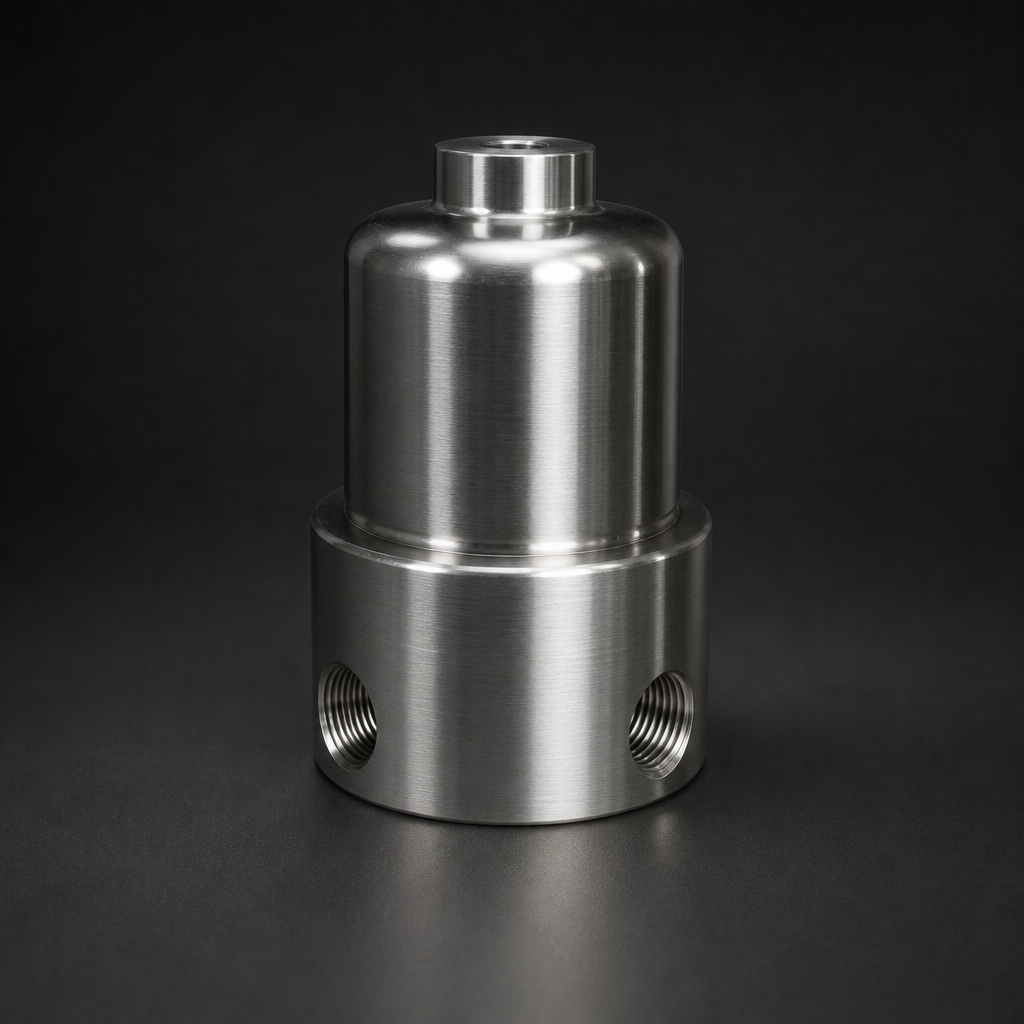
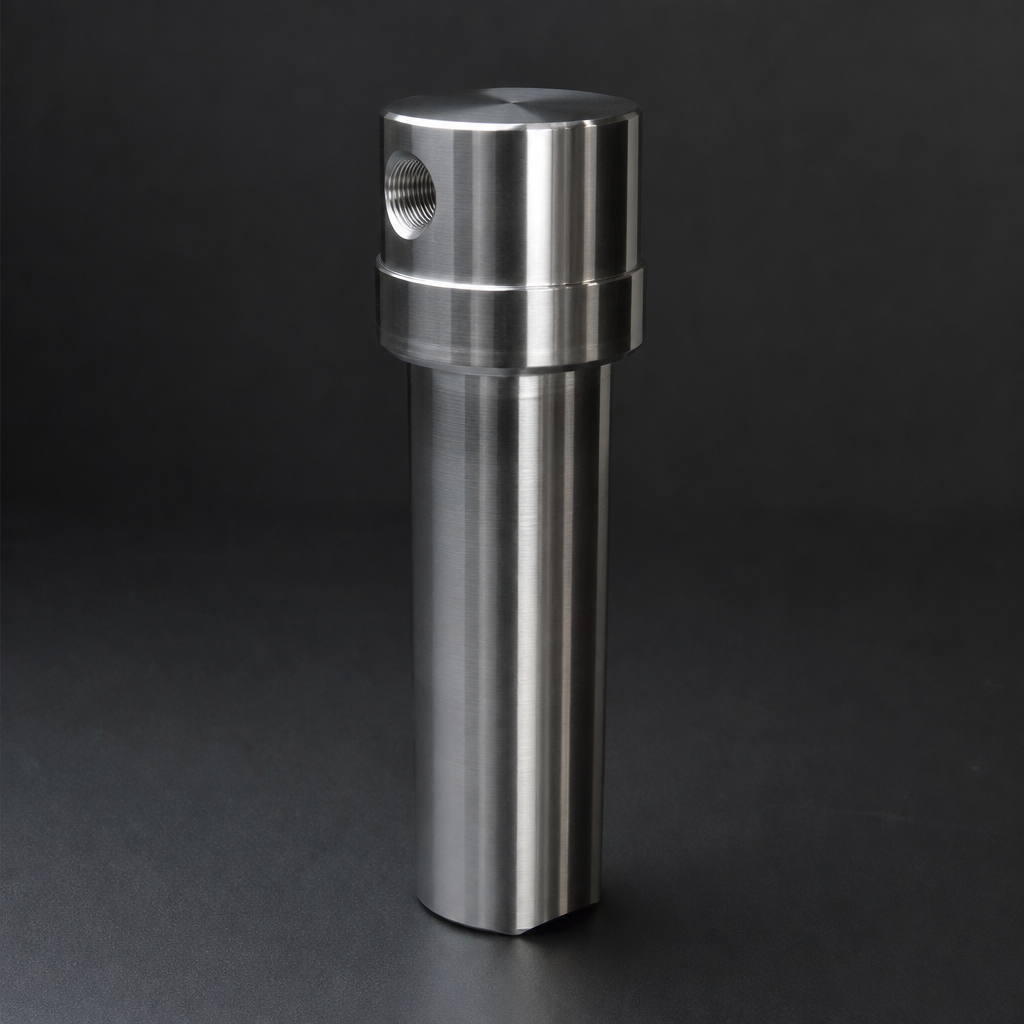
R+F FilterElements offers its own range of coalescing elements — the RF-C series — manufactured from borosilicate glass microfibre with a 99.99% efficiency rating at ≥ 0.1 µm. These are available in a full range of sizes to suit housings from the RF-H-310 to RF-H-395 compressed air series as well as the RF-H-150 process gas housing for higher-pressure applications up to 100 bar.
Post-dryer coalescing filter (RF-C grade)
Dryer vs. Filter: Understanding the Division of Labour
| Characteristic | Refrigerant / Desiccant Dryer | Coalescing Filter (RF-C) |
|---|---|---|
| Removes water vapour | ✓ Yes | ✗ No |
| Removes liquid water / aerosols | ✗ No | ✓ Yes — 99.99% @ ≥ 0.1 µm |
| Removes oil aerosols | ✗ No | ✓ Yes (coalescing grade) |
| Removes solid particulate | ✗ No | ✓ Yes (RF-P particulate grade) |
| Effective after pressure drop | ✗ No — PDP shifts | ✓ Yes — removes condensed liquid |
| Point-of-use protection | ✗ Centralised only | ✓ Can be installed locally |
Use our free Engineering Tool to get a filtration recommendation for your specific application in under 2 minutes.
Recommended Filtration Strategy for Moisture Control
The most robust approach combines both technologies in a layered defence:
- Pre-filter (RF-P particulate grade) — installed upstream of the dryer to protect the desiccant bed or heat exchanger from bulk liquid and particulate contamination.
- Dryer — refrigerant or desiccant type, sized for peak flow and worst-case inlet humidity.
- Post-dryer coalescing filter (RF-C grade) — removes any residual liquid aerosol and protects downstream equipment from dryer carryover.
- Point-of-use filter — a compact RF-DIL disposable inline filter or a small coalescing housing installed directly at sensitive instruments, analysers, or process connections. This is the last line of defence against condensation that forms in the distribution pipework itself.
For process gas applications — natural gas, hydrogen, or instrument air at elevated pressures — the RF-H-150 stainless steel housing (rated to 100 bar) fitted with RF-C coalescing elements provides reliable liquid removal even in demanding conditions. See our guide to coalescing vs. particulate filter elements for help selecting the right grade.
Diagnosing a Moisture Problem in Your System
If you're experiencing unexplained moisture at the point of use, work through this checklist:
- Check the dryer PDP reading — is it within specification? Has the desiccant been recently regenerated or replaced?
- Map the pipe routing — are there sections exposed to low ambient temperatures? Low points where liquid can pool?
- Check automatic drains — are they functioning? A blocked drain on a coalescing filter sump will cause liquid carryover.
- Review pressure profiles — are there large, rapid pressure drops that could cause adiabatic cooling?
- Consider seasonal variation — a system that works in summer may develop moisture problems in winter as ambient temperatures fall.
For a systematic approach to gas quality, refer to our ISO 8573-1 compressed air quality guide, which covers the full classification system for moisture, oil, and particulate contamination.
- pressure dew point (PDP)
- There are several common reasons why liquid water appears at the point of use despite a functioning dryer:
- Once liquid water has formed — whether as bulk liquid pooling in low points or as fine aerosol droplets carried in the gas stream — a dryer cannot remove it.
- Pre-filter (RF-P particulate grade)
Related Reading
- Coalescing vs. Particulate Filter Elements — Which Do You Need?
- ISO 8573-1 Compressed Air Quality — A Practical Guide
- Oxygen Filtration Safety — Why Standard Filters Are Not Enough
Try our Engineering Sizing Tool → or discuss your requirements with our team.