When a filter datasheet states "99.99% efficiency", most engineers accept the figure at face value. Yet two filters can both carry that claim and perform very differently in service — because the number is meaningless without knowing what particle size it was measured at, which test aerosol was used, and under what flow conditions. Understanding these distinctions is not academic: it directly determines whether your downstream instrument, process, or product is adequately protected.
The Most-Penetrating Particle Size (MPPS)
Filter media do not capture all particle sizes equally. Very large particles are caught by inertial impaction and interception; very small particles (below ~0.01 µm) are captured by Brownian diffusion. In between lies the most-penetrating particle size (MPPS) — typically 0.1–0.3 µm for borosilicate glass microfibre media — where neither mechanism dominates and penetration is at its maximum.
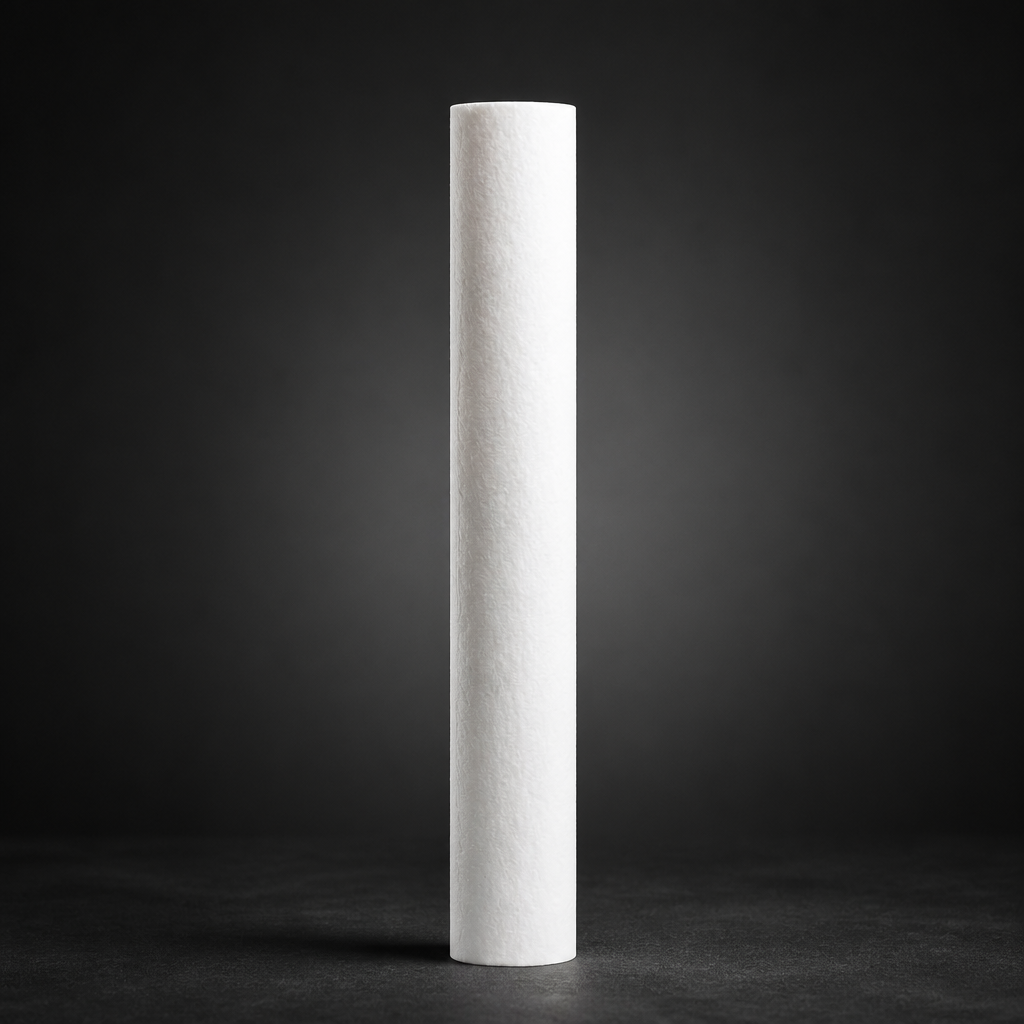
This is why the particle size in the efficiency claim matters so much. A coalescing element rated 99.99% at 0.1 µm (the MPPS for that media) is a far more demanding specification than one rated 99.99% at 0.3 µm, because 0.3 µm sits on the easier side of the penetration curve. The R+F RF-C coalescing elements are rated 99.99% efficiency at ≥ 0.1 µm — the MPPS — which is the most conservative and meaningful basis for the claim.
DOP and PAO Aerosol Tests Explained
The two most common challenge aerosols used in filter efficiency testing are DOP (dioctyl phthalate) and PAO (poly-alpha-olefin). Both generate a polydisperse liquid aerosol with a median droplet size near the MPPS of the filter media being tested.
DOP was the historical standard, but PAO has largely replaced it in modern laboratory practice because it is non-toxic and chemically stable. The test principle is identical: a known concentration of aerosol is introduced upstream of the filter element; a photometer or particle counter measures the downstream concentration; efficiency is calculated as:
Efficiency (%) = (1 − Cdownstream / Cupstream) × 100
A result of 99.99% means only 0.01% of the challenge aerosol penetrates — a penetration factor of 1 in 10,000. This is the basis on which R+F branded filter elements are characterised, and it aligns with the requirements of ISO 8573-1 Class 1 for oil aerosol.
Why 99.99% at 0.1 µm ≠ 99.99% at 0.3 µm
Consider two competing elements. Element A is tested at 0.1 µm (the MPPS) and achieves 99.99% efficiency. Element B is tested at 0.3 µm — a size where the media performs better — and also achieves 99.99%. At the actual MPPS of 0.1 µm, Element B might only achieve 99.9% or even 99%. That difference sounds small, but it represents a tenfold or hundredfold increase in downstream contamination.
For applications such as hydrogen purity protection, analyser sample conditioning, or food-grade compressed air, that residual contamination gap is operationally significant. Always ask the supplier: at which particle size was the efficiency measured?
Need help selecting the right filter?
Comparing Filter Efficiency Claims: A Practical Guide
| Claim | Test particle size | Penetration at MPPS | Practical meaning |
|---|---|---|---|
| 99.99% @ 0.1 µm | 0.1 µm (MPPS) | 0.01% | Most stringent; ISO 8573-1 Class 1 capable |
| 99.99% @ 0.3 µm | 0.3 µm (easier side) | Potentially 0.1–1% | Weaker claim; may not meet Class 1 |
| 99.9% @ 0.1 µm | 0.1 µm (MPPS) | 0.1% | 10× more penetration than 99.99% |
| No test size stated | Unknown | Unknown | Unverifiable; do not use for critical applications |
Use our free Engineering Tool to get a filtration recommendation for your specific application in under 2 minutes.
Residual Contamination Levels in Practice
Efficiency percentages are abstract; residual contamination concentrations are what matter in the field. For compressed air and process gas applications, the relevant metric is typically residual oil aerosol in mg/m³ at reference conditions (20 °C, 1 bar absolute).
A single-stage RF-C coalescing element reduces oil aerosol to below 0.01 mg/m³ — meeting ISO 8573-1 Class 1. For applications requiring even lower residual contamination, an RF-AC activated carbon adsorption stage downstream reduces residual oil vapour to below 0.003 mg/m³, achieving Class 1 for both aerosol and vapour simultaneously.
For point-of-use protection — for example, at an analyser inlet or a critical instrument — the RF-DIL disposable inline filter provides a final particulate barrier rated to the same 99.99% at ≥ 0.1 µm standard, without requiring a full housing installation.
How Flow Rate Affects Efficiency
Filter efficiency is not a fixed property of the media — it varies with face velocity (flow per unit area). At higher face velocities, the residence time of particles in the media decreases, diffusion capture of sub-MPPS particles is reduced, and the MPPS itself shifts to larger sizes. The net effect is that an element tested at its rated flow may perform noticeably worse if oversized for the application or if system demand spikes.
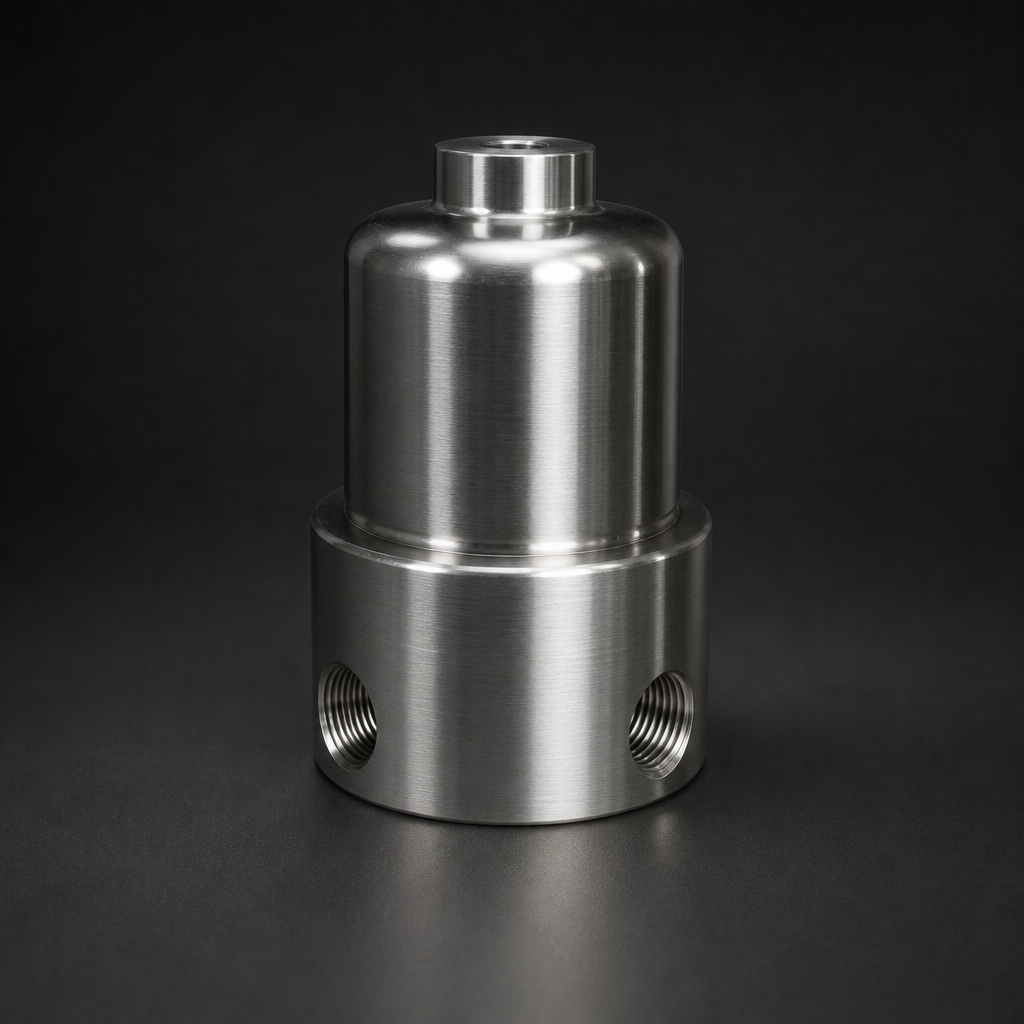
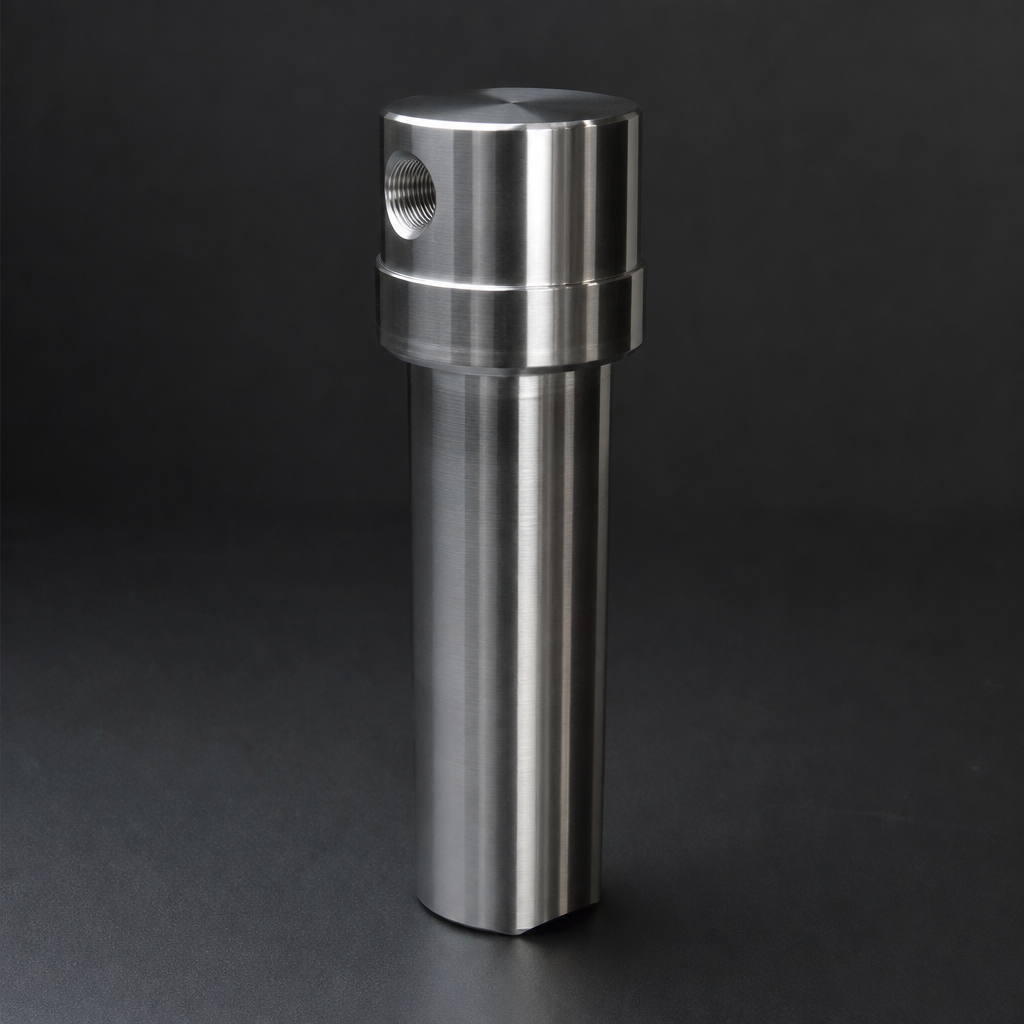
This is why R+F FilterElements provides flow-rated housings — from the compact RF-H-150 process gas housing (up to 100 bar) through to large-body compressed air housings — so that elements always operate within the validated efficiency envelope. Correct housing selection is as important as element grade selection.
- most-penetrating particle size (MPPS)
- DOP (dioctyl phthalate)
- Consider two competing elements.
- Efficiency percentages are abstract; residual contamination concentrations are what matter in the field.
Applying This to Your Specification
When evaluating filter efficiency claims for your next project, apply this checklist:
- Is the test particle size stated? If not, request the full test report.
- Is the test aerosol identified (DOP or PAO)? Both are acceptable; the key is transparency.
- Is the efficiency measured at the MPPS for that media type?
- Does the rated flow match your actual operating flow?
- Does the claimed efficiency translate to a residual contamination level that meets your process or ISO 8573-1 class requirement?
For a structured approach to filter selection — including element grade, housing size, and downstream adsorption — the R+F Engineering Sizing Tool walks through each parameter and recommends the appropriate configuration for your operating conditions.
Related Reading
- Coalescing vs Particulate Filter Elements — Which Do You Need?
- ISO 8573-1 Compressed Air Quality Classes Explained
- Filtration Requirements for Hydrogen Electrolysis Systems
Try our Engineering Sizing Tool → or discuss your requirements with our team.