The Hidden Price of Cheap Filter Elements
When procurement teams review filtration budgets, the unit price of a replacement filter element is often the deciding factor. A cheaper element means lower spend — or so it appears. In practice, selecting low-quality filter elements for compressed air, process gas, or vacuum systems routinely costs far more than the initial saving. Understanding the total cost of ownership (TCO) of a filter element is the only reliable way to make a sound purchasing decision.
What Makes a Filter Element "Cheap"?
Low-cost filter elements are generally characterised by one or more of the following compromises:
- Lower-grade filter media — synthetic fibres instead of borosilicate glass microfibre, resulting in reduced efficiency and shorter service life
- Higher initial differential pressure (ΔP) — poorly engineered media packs that restrict flow from day one
- Faster ΔP rise — media that loads quickly, requiring more frequent replacement
- Inconsistent sealing — bypass leakage that allows contamination to pass downstream undetected
- Dimensional non-conformance — elements that do not seat correctly in the housing, creating bypass paths
Each of these factors has a direct financial consequence that compounds over the service life of the element and the system.
The TCO Calculation: A Worked Example
Consider a compressed air system running at 7 bar with a flow rate of 500 Nm³/h. The coalescing filter element is changed annually. Compare a budget element at €12 per unit against an R+F branded RF-C coalescing element at €28 per unit.
Differential Pressure and Energy Cost
A budget coalescing element may start at 80 mbar ΔP versus 40 mbar for a quality element. At 500 Nm³/h, that additional 40 mbar represents roughly 0.55 kW of extra compressor power. Running 8,000 hours per year at €0.18/kWh, the energy penalty alone is approximately €79 per year per filter stage. As the budget element loads faster, average ΔP over its service life is higher still — pushing the annual energy cost well above €100 per stage.
For a system with three filter stages (particulate pre-filter, coalescing, and activated carbon), the energy penalty from cheap elements can easily exceed €300–€400 per year — many times the price difference between budget and quality elements.
Replacement Frequency
Quality filter media, such as the borosilicate glass microfibre used in RF-C and RF-P elements, maintains lower ΔP for longer and reaches end-of-life at a higher, more predictable ΔP. Budget elements often require replacement every 4–6 months rather than annually, doubling or tripling element spend and maintenance labour costs.
| Cost Factor | Budget Element | R+F Quality Element |
|---|---|---|
| Unit price (coalescing, 25064) | €12 | €28 |
| Changes per year | 2–3 | 1 |
| Annual element spend | €24–€36 | €28 |
| Annual energy penalty | €150–€300+ | Baseline |
| Maintenance labour (extra changes) | €80–€160 | Baseline |
| Contamination risk | High (bypass possible) | Low (99.99% efficiency) |
| Estimated annual TCO | €254–€496+ | €28 + energy baseline |
The Contamination Risk: The Cost You Cannot Predict
Energy and maintenance costs are quantifiable. Downstream contamination is not — until it happens. A filter element that bypasses oil aerosol or particulate into a process stream can cause:
- Fouled instrumentation requiring recalibration or replacement
- Contaminated product batches in food, pharmaceutical, or electronics manufacturing
- Damaged pneumatic actuators and valves
- Catalyst poisoning in chemical or hydrogen processes
For applications covered by ISO 8573-1 compressed air quality classes, using a non-conforming element may also invalidate quality certifications. The cost of a single contamination event — product recall, equipment repair, or process downtime — can dwarf years of element spend.
Need help selecting the right filter element?
Use our free Engineering Tool to get a filtration recommendation for your specific application in under 2 minutes.
Quality Indicators to Check Before Buying
When evaluating filter elements, look for the following:
- Documented efficiency data — test results to ISO 12500-1 or equivalent, not just stated grades
- Media specification — borosilicate glass microfibre for coalescing duty; sintered or melt-blown for particulate
- Initial ΔP at rated flow — lower is better; compare at the same flow and pressure conditions
- Dimensional conformance — elements must match the housing manufacturer's sealing geometry exactly
- Temperature rating — standard elements to 100 °C; S-type to 200 °C for high-temperature applications
- Seal material — NBR for standard duty; FKM/Viton for aggressive media or high temperatures
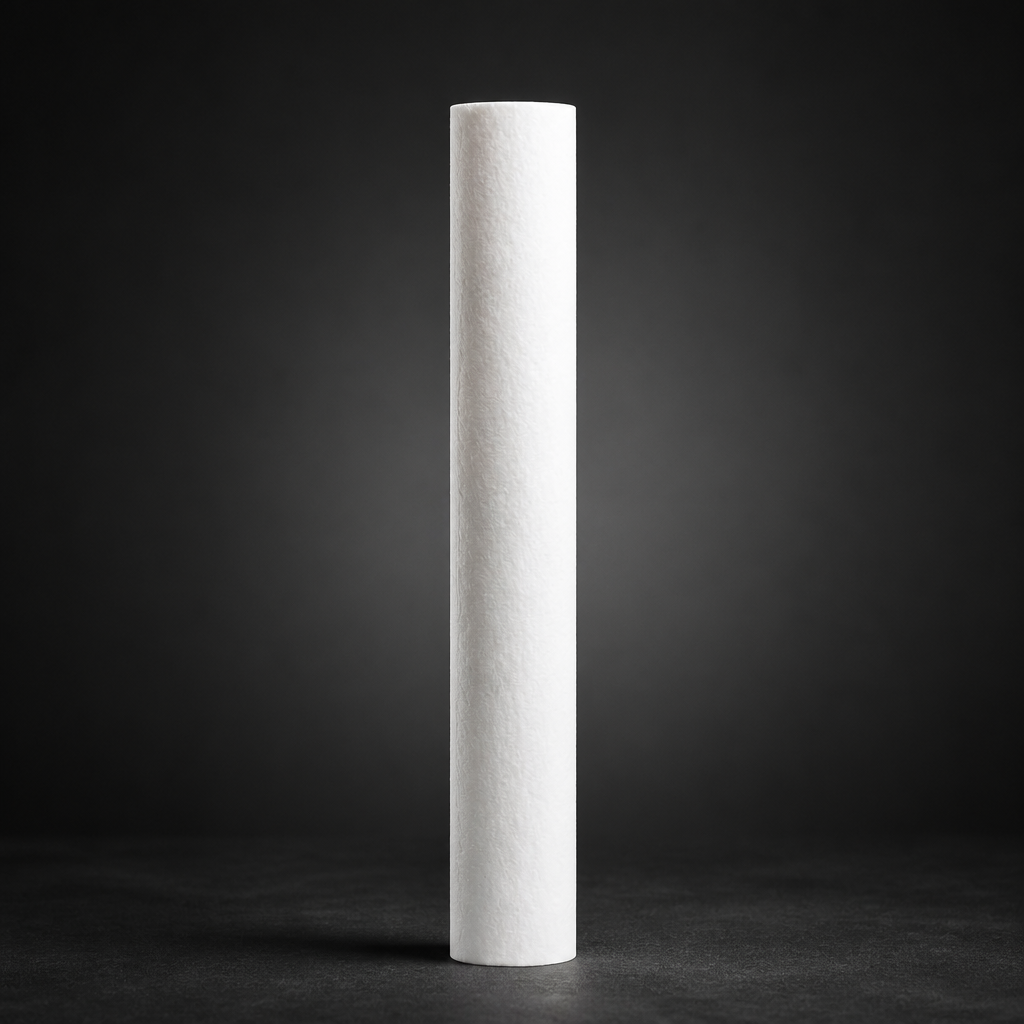
R+F FilterElements offers RF-C coalescing and RF-P particulate elements with full test documentation, available in sizes 12032 through 51476 to fit a wide range of housings. For activated carbon duty, the RF-AC adsorption element delivers residual oil below 0.003 mg/m³ — meeting ISO 8573-1 Class 1 for oil vapour.
Replacement Elements for Third-Party Housings
Many facilities run housings from other manufacturers and source replacement elements on price alone. R+F FilterElements supplies dimensionally compatible elements for a wide range of housing types. If you are unsure whether an element is a true fit for your housing, the R+F Engineering Sizing Tool can help identify the correct specification — or contact the team directly for a cross-reference check.
For point-of-use protection where a full housing is not practical, RF-DIL disposable inline filters provide a cost-effective particulate barrier without compromising on filtration integrity.
- Lower-grade filter media
- €79 per year per filter stage
- Energy and maintenance costs are quantifiable.
- Documented efficiency data
Making the TCO Case Internally
Procurement decisions based on unit price alone are difficult to challenge without data. The most effective approach is to build a simple TCO model using your own system parameters: flow rate, operating pressure, hours per year, energy cost, and labour rate. Even conservative assumptions typically show that quality elements pay back their price premium within the first few months of operation.
For process gas and high-purity applications — where contamination consequences are most severe — the case for quality elements is even stronger. Explore the R+F process gas filter range or review our guide to coalescing vs particulate filter elements to understand which element type is right for your application.
Related Reading
- Coalescing vs Particulate Filter Elements — Which Do You Need?
- ISO 8573-1 Compressed Air Quality Classes Explained
- Filtration Requirements for Hydrogen Electrolysis Systems
Try our Engineering Sizing Tool → or discuss your requirements with our team.