Selecting the wrong filter for a hazardous area is not merely a compliance failure — it can be the initiating event for a catastrophic explosion. The ATEX directive (2014/34/EU) and its companion standard EN 13463 impose strict requirements on every piece of equipment installed in a zone classified as potentially explosive, and gas filtration equipment is no exception. This guide explains what ATEX means for filter selection, which material and design choices are mandatory, and how R+F FilterElements housings are configured to meet these demands.
What Is an Explosive Atmosphere?
An explosive atmosphere exists wherever a flammable gas, vapour, mist, or dust is present in a concentration that could ignite. In process plants, this includes areas around compressor seals, gas metering stations, biogas upgrading skids, hydrogen electrolysers, and solvent handling systems. The ATEX directive requires that every such location be classified into a zone based on the likelihood and duration of the explosive atmosphere:
| Zone | Description | Typical Location | Equipment Category Required |
|---|---|---|---|
| Zone 0 | Explosive atmosphere present continuously or for long periods | Inside gas vessels, pipework | Category 1G |
| Zone 1 | Explosive atmosphere likely to occur in normal operation | Around compressor seals, valve glands | Category 1G or 2G |
| Zone 2 | Explosive atmosphere not likely in normal operation, but possible | General process areas, gas metering stations | Category 1G, 2G, or 3G |
Why Standard Filters Are Not Suitable for Hazardous Areas
Many compressed air and process gas filters available on the market use polycarbonate or nylon bowl materials. These are entirely unsuitable for Zone 1 or Zone 2 installations for two reasons. First, plastic bowls can accumulate electrostatic charge, creating a potential ignition source. Second, they are not rated for the mechanical robustness required in areas where a sudden pressure surge or impact could cause a failure that releases flammable gas.
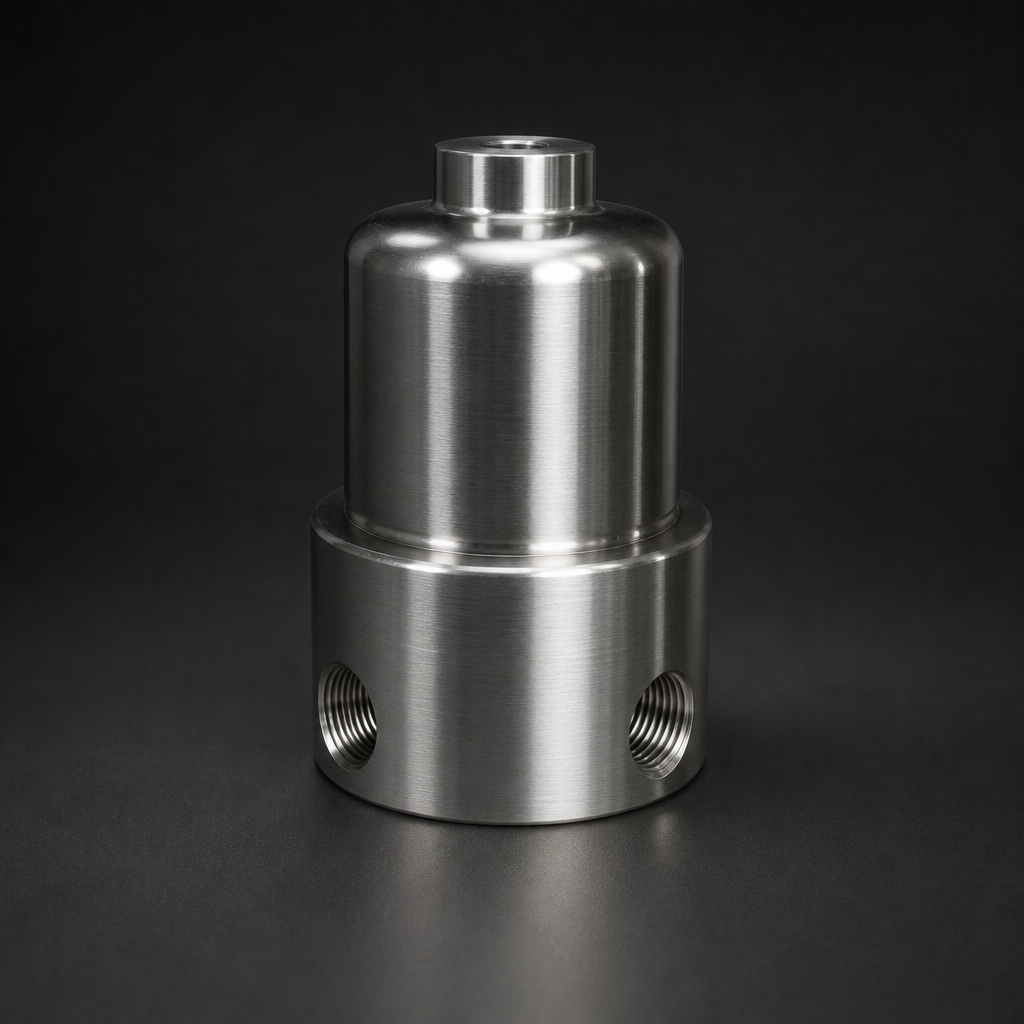
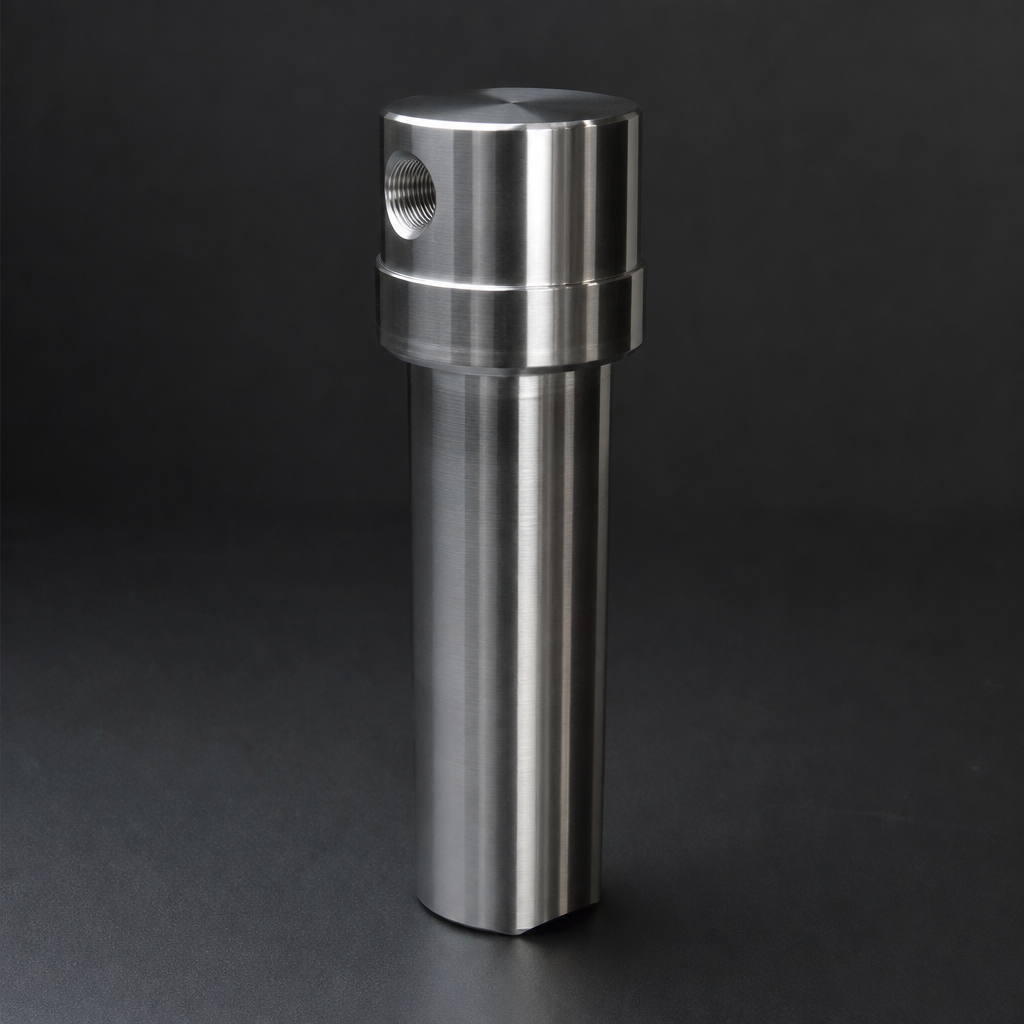
For hazardous area installations, the filter housing must be constructed entirely from metal — typically 316L stainless steel or aluminium alloy — with no plastic components in the pressure-bearing parts. The R+F process gas filter range uses 316L stainless steel throughout, making it inherently suitable for ATEX-classified environments when correctly earthed and bonded.
Static Discharge and Earthing Requirements
Even with an all-metal housing, static charge can accumulate on the filter element itself during gas flow. Borosilicate glass microfibre elements — such as the RF-C coalescing elements used in R+F housings — are inherently low-charge materials, but the housing must still be bonded to earth to prevent any charge build-up on the metallic shell from reaching ignition energy levels.
The earthing and bonding requirements for ATEX installations are defined in EN 60079-14. Key requirements include:
- The filter housing must be connected to the plant earth via a dedicated earth bonding point, with a resistance to earth of less than 1 MΩ
- All pipe connections must be made with conductive fittings — PTFE tape alone is not sufficient for earthing continuity
- Where flexible hoses are used, they must incorporate a conductive wire or braid
- Earth bonding connections must be inspected and tested at regular intervals as part of the site's ATEX maintenance programme
R+F FilterElements housings in the RF-H-110 to RF-H-170 instrumentation series are supplied with dedicated earth bonding lugs as standard, simplifying compliance with EN 60079-14.
Need help selecting the right filter for your hazardous area?
Key Performance Data for ATEX-Rated Filtration
Use our free Engineering Tool to get a filtration recommendation for your specific application in under 2 minutes.
Selecting the Right Housing for Your Zone
For Zone 1 and Zone 2 gas filter applications, R+F FilterElements offers several housing configurations depending on operating pressure and flow rate:
The RF-H-150 is a compact 316L stainless steel housing rated to 100 bar, suitable for process gas streams at moderate pressures. Its all-metal construction and available FKM seals (rated to 200 °C) make it a practical choice for Zone 2 natural gas metering and biogas applications. See the full process gas housing range for dimensional data.
For higher-pressure duties — such as hydrogen compression trains or high-pressure natural gas — the RF-H-160 (rated to 250 bar) and RF-H-170 (rated to 400 bar, with HP variants to 700 bar) provide the mechanical integrity required for Zone 1 installations. These housings accept RF-C coalescing elements and RF-P particulate elements, both of which are constructed from borosilicate glass microfibre with no plastic structural components.
Where point-of-use filtration is needed — for example, protecting instrument transmitters or analyser sample lines within a hazardous area — the RF-DIL disposable inline filter range provides a compact, all-316L-SS solution that can be installed directly in the instrument impulse line.
Seal Material Selection for Flammable Gases
Seal compatibility is critical in ATEX applications. The wrong seal material can swell, crack, or permeate in the presence of hydrocarbons, creating a leak path that is itself an ignition risk. R+F FilterElements housings are available with the following seal options:
- FKM/Viton: Recommended for hydrocarbon gases (natural gas, LPG, propane), rated to 200 °C. Standard choice for Zone 1/2 gas applications.
- EPDM: For oxygen-enriched streams — EPDM-O₂ grade only. Never use NBR or FKM in oxygen service.
- PTFE: For aggressive chemicals, sour gas (H₂S), or where hydrocarbon swelling is a concern. Rated to 260 °C.
- NBR: Suitable for compressed air and inert gases only — not recommended for flammable hydrocarbon service.
For sour gas applications (streams containing H₂S), R+F also offers K-type filter elements with NACE-compliant materials, compatible with the natural gas filtration solutions range.
Documentation and Compliance
ATEX compliance requires more than just selecting the right hardware. The installation must be documented in an Explosion Protection Document (EPD) as required by the ATEX workplace directive (1999/92/EC). This document must identify the zones, list the equipment installed in each zone with its ATEX category and marking, and describe the earthing and bonding arrangements.
R+F FilterElements can supply material certificates (EN 10204 3.1), pressure test certificates, and ATEX conformity declarations for housings supplied for hazardous area use. Contact our team via the enquiry form to request documentation for a specific housing configuration.
For a broader understanding of how filtration standards interact with gas quality requirements, see our guide to ISO 8573-1 compressed air quality classes and our article on oxygen filtration safety.
- An explosive atmosphere exists wherever a flammable gas, vapour, mist, or dust is present in a concentration that could ignite.
- Many compressed air and process gas filters available on the market use polycarbonate or nylon bowl materials.
- Even with an all-metal housing, static charge can accumulate on the filter element itself during gas flow.
- For Zone 1 and Zone 2 gas filter applications, R+F FilterElements offers several housing configurations depending on operating pressure and flow rate:
Related Reading
- Hydrogen Electrolysis Filtration — Protecting Electrolyser Stacks
- Coalescing vs Particulate Filter Elements — Which Do You Need?
- ISO 8573-1 Compressed Air Quality — A Practical Guide
Try our Engineering Sizing Tool → or discuss your ATEX requirements with our team.