Flour mills, bakeries, and cereal processing plants operate in some of the most hazardous compressed air environments in the food industry. Flour dust is not merely a nuisance — it is a classified explosive substance, and the compressed air systems that drive packaging lines, pneumatic conveyors, and dough-processing equipment must meet strict ATEX requirements alongside the highest food-grade air quality standards. Getting this wrong carries consequences that range from product contamination to catastrophic dust explosions.
Why Flour Dust Makes Compressed Air Filtration Critical
Flour dust has a minimum ignition energy (MIE) of as little as 50 mJ and a lower explosive limit (LEL) of approximately 60 g/m³. In a bakery environment, compressed air leaks, blow-off pulses, and pneumatic conveying operations can all generate localised dust clouds. Any oil aerosol or hydrocarbon contamination in the compressed air stream becomes an ignition risk in these zones — not just a quality concern.
Beyond the explosion risk, oil contamination in product-contact compressed air is a direct food safety violation. Regulatory frameworks including EU Regulation 1935/2004 and FSSC 22000 require that any gas in contact with food or food packaging materials must be demonstrably free of harmful contaminants. A single oil-contaminated air pulse into a flour bag-filling station can trigger a full production recall.
ATEX Compliance: What It Means for Your Filter Selection
ATEX Directive 2014/34/EU classifies equipment for use in explosive atmospheres. For compressed air filtration in bakery environments, the relevant zone classifications are typically Zone 21 (dust cloud present frequently) or Zone 22 (dust cloud present occasionally). Equipment installed in these zones must carry the appropriate ATEX marking and be constructed to prevent electrostatic discharge and surface temperatures that could ignite a dust cloud.
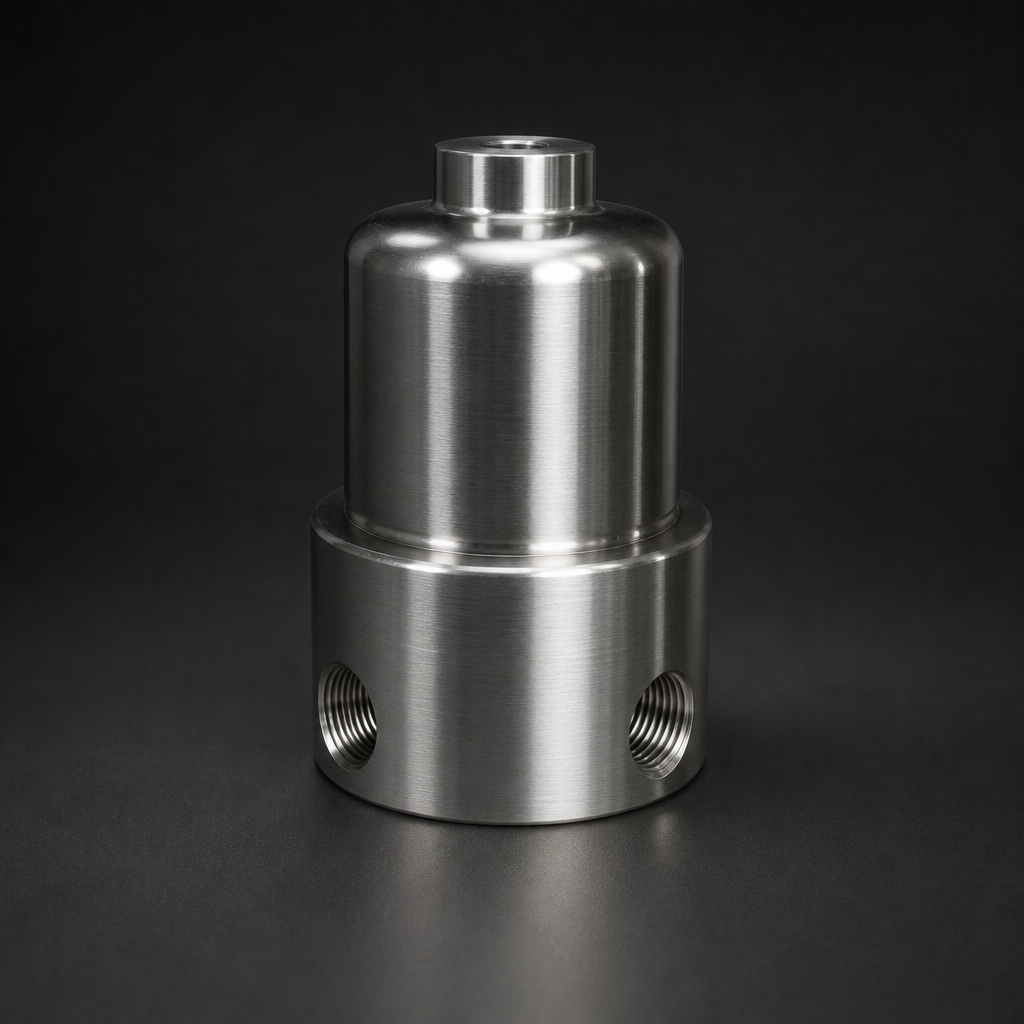
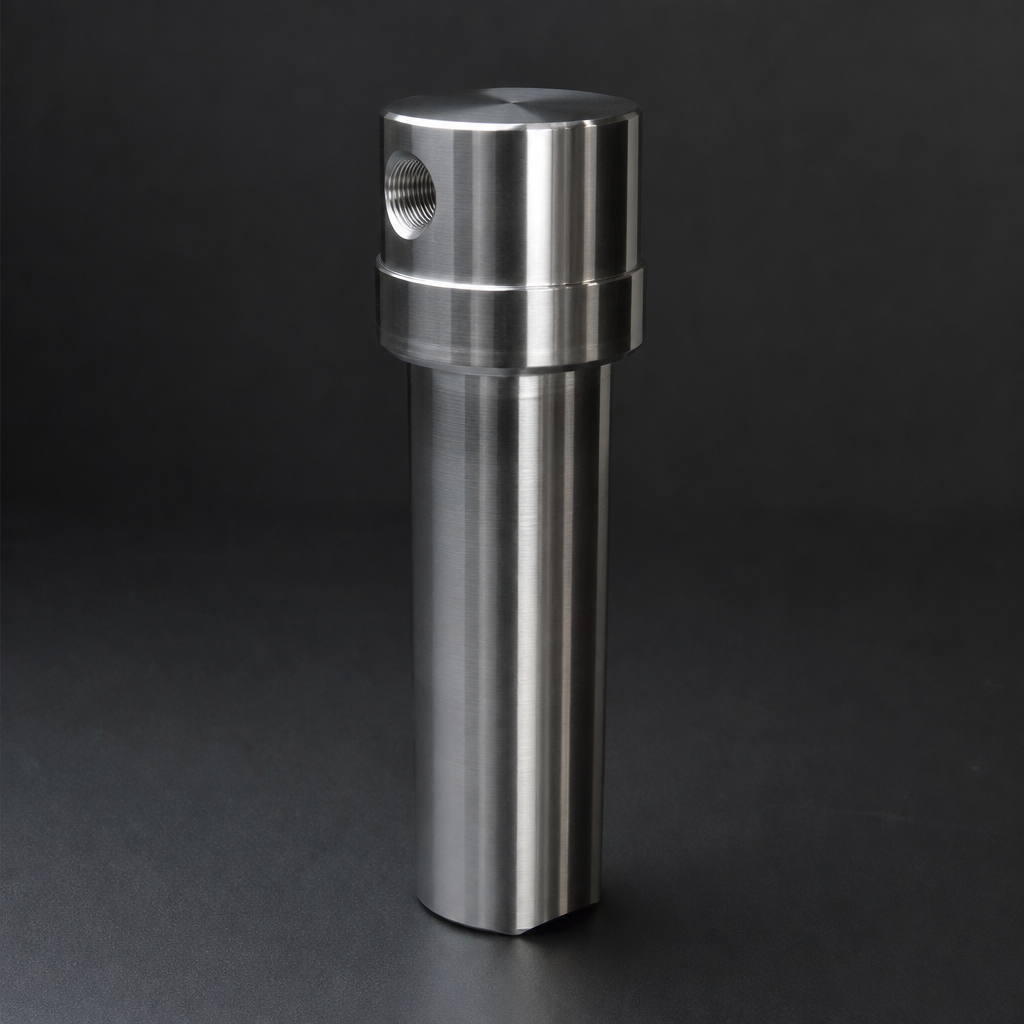
The R+F compressed air filter range covers flow rates from small point-of-use installations up to 12,000 Nm³/h, making it suitable for both small artisan bakeries and large industrial flour mills. The aluminium housings in the RF-H-310 to RF-H-395 series operate at up to 17 bar and 120 °C, providing the mechanical robustness required in demanding food processing environments.
The Three-Stage Filtration Approach for Bakery Compressed Air
A robust compressed air filtration train for bakery and flour processing applications typically comprises three stages, each targeting a specific contaminant class:
Stage 1 — Bulk Liquid and Coarse Particulate Removal
Immediately downstream of the compressor aftercooler and receiver, a coalescing pre-filter removes bulk water and oil aerosols down to 1 µm. This protects the downstream high-efficiency elements from premature loading. The RF-C coalescing elements use borosilicate glass microfibre media and achieve 99.99% efficiency at ≥ 0.1 µm — well within the requirements for food-grade air.
Stage 2 — High-Efficiency Coalescing (Oil Aerosol Removal)
The second stage uses a high-efficiency coalescing element to reduce oil aerosol content to ≤ 0.01 mg/m³, meeting ISO 8573-1 Class 1 for oil. The RF-C series elements, available in sizes 12032 through 51476, are housed in RF-H-310 to RF-H-395 aluminium housings. For a typical 200 Nm³/h bakery line, an RF-H-340 housing with RF-C-25064 elements provides the correct balance of flow capacity and filtration efficiency.
Stage 3 — Activated Carbon Adsorption (Oil Vapour Removal)
Oil vapour — the gaseous phase of hydrocarbon contamination — passes straight through coalescing elements. An activated carbon adsorption stage using RF-AC adsorption elements or RF-DIA disposable inline adsorbers reduces residual oil vapour to below 0.003 mg/m³, achieving ISO 8573-1 Class 1 total oil content. This stage is non-negotiable for product-contact air in flour processing.
Need help selecting the right filter for your bakery or flour processing line?
Comparing Filter Configurations for Bakery Applications
Not all bakery compressed air applications carry the same risk profile. A pneumatic conveying line for raw flour operates in a fundamentally different environment from a nitrogen-purged packaging station. The table below summarises recommended filter configurations for the most common bakery compressed air use cases:
| Application | ATEX Zone | ISO 8573-1 Target | Recommended R+F Configuration |
|---|---|---|---|
| Pneumatic flour conveying | Zone 21/22 | Class 1.2.1 | RF-H-340 + RF-C-25064 (coalescing) + RF-AC adsorption |
| Dough mixer pneumatics | Zone 22 | Class 1.2.1 | RF-H-320 + RF-C-12057 (coalescing) + RF-DIA inline adsorber |
| Bag-filling / packaging | Zone 22 | Class 1.1.1 | RF-H-340 + RF-C-25064 + RF-P-25064 (particulate) + RF-AC |
| Instrument air (sensors) | Non-hazardous | Class 1.2.2 | RF-H-310 + RF-C-12032 (coalescing) |
Use our free Engineering Tool to get a filtration recommendation for your specific application in under 2 minutes.
Oil Contamination in Product-Contact Air: The Hidden Recall Risk
Many bakery operators focus on ATEX compliance as the primary driver for compressed air filtration investment, but the food safety dimension is equally pressing. Mineral oil contamination in food products — including via compressed air — is subject to EU Regulation 2023/2419 on mineral oil hydrocarbons (MOH) in food contact materials. Demonstrating that your compressed air system delivers oil-free air to product-contact points requires documented filter specifications, element change records, and periodic air quality testing to ISO 8573-7.
The ISO 8573-1 compressed air quality guide on this site provides a detailed breakdown of the purity classes and how to specify them correctly for food applications. For bakery lines, the minimum requirement for product-contact air is typically ISO 8573-1 Class 1 for oil (≤ 0.01 mg/m³ total oil) and Class 2 for particles (≤ 1 µm at ≤ 0.1 mg/m³).
R+F FilterElements provides full documentation packages for its filter housings and elements, including material declarations, FDA-compliant seal material options (FKM/Viton for high-temperature applications up to 200 °C, EPDM for oxygen-compatible service), and element change interval recommendations based on inlet air quality. This documentation supports FSSC 22000 and BRC Food audits. Learn more about the full R+F filter element range and available seal material options.
Practical Installation Considerations for Flour Mills
Installing compressed air filtration in a flour mill or large-scale bakery involves more than selecting the correct filter grade. Several practical factors influence system performance and maintenance burden:
Pressure drop management: Each filter stage adds pressure drop. A correctly sized three-stage train (coalescing pre-filter + high-efficiency coalescing + activated carbon) should add no more than 0.15–0.25 bar at design flow when elements are new. Oversizing the housing by one step (e.g., using an RF-H-360 where an RF-H-340 would technically suffice) reduces pressure drop and extends element service life — a worthwhile investment in high-utilisation bakery environments.
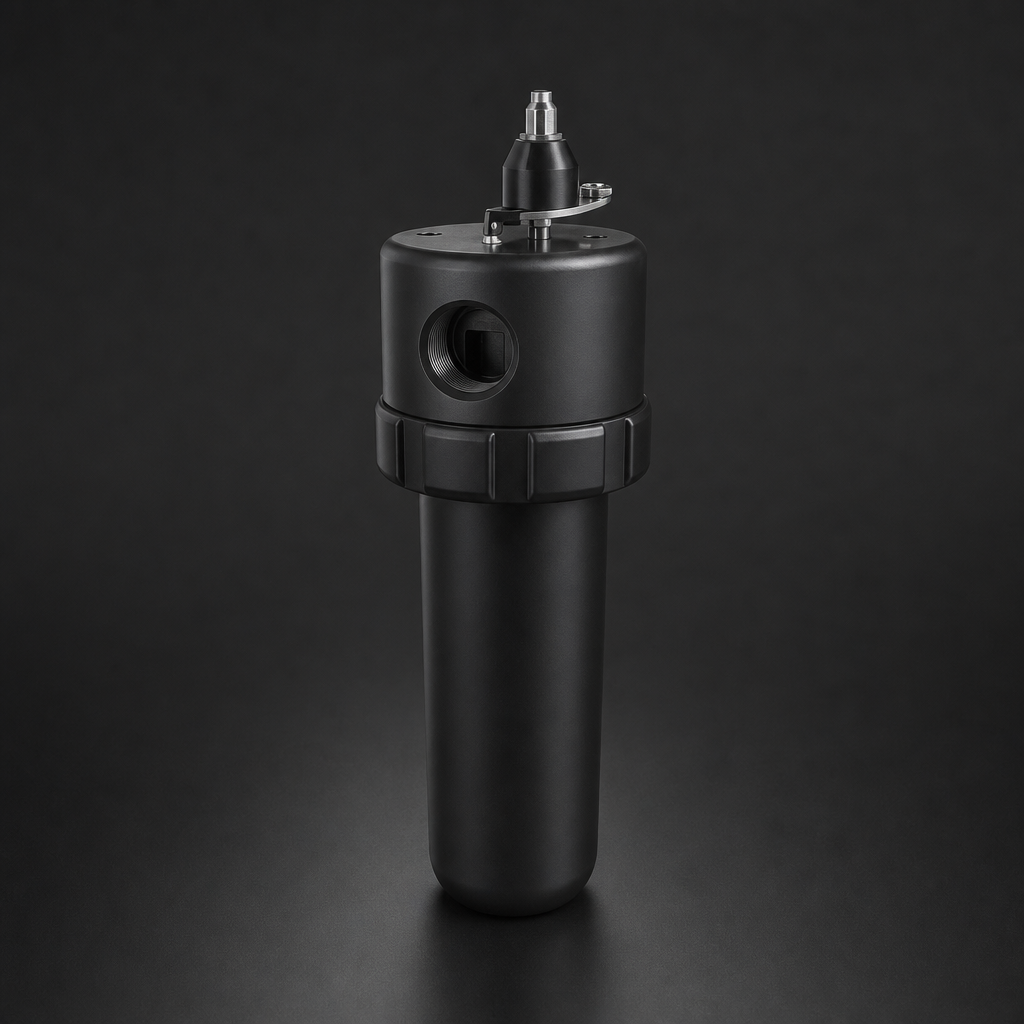
Differential pressure indicators: All RF-H-310 to RF-H-395 housings accept differential pressure indicators or electronic transmitters. In a flour mill, where element change intervals may be shortened by high ambient dust loads, a DP indicator provides a direct, reliable signal for maintenance scheduling — far more reliable than time-based change intervals alone.
Drain management: Coalescing filters accumulate liquid condensate. In a bakery environment, this condensate contains oil and must be disposed of as controlled waste — it cannot be discharged to drain without treatment. Automatic float drains on the RF-H-3xx series housings prevent condensate re-entrainment and simplify compliance with local wastewater regulations.
For guidance on sizing your compressed air filtration system, the R+F Engineering Sizing Tool allows you to input your flow rate, inlet pressure, and application type to receive a recommended filter configuration. For complex multi-stage installations or ATEX-specific queries, the R+F solutions team can provide application engineering support.
- Flour dust has a minimum ignition energy (MIE) of as little as 50 mJ and a lower explosive limit (LEL) of approximately 60 g/m³.
- ATEX Directive 2014/34/EU classifies equipment for use in explosive atmospheres.
- A robust compressed air filtration train for bakery and flour processing applications typically comprises three stages, each targeting a specific contaminant class:
- Not all bakery compressed air applications carry the same risk profile.
Related Reading
- Coalescing vs Particulate Filter Elements — Which Do You Need?
- ISO 8573-1 Compressed Air Quality Classes Explained
- Oxygen Filtration Safety — Avoiding Contamination in Sensitive Processes
Try our Engineering Sizing Tool → or discuss your ATEX and food-grade requirements with our team.