Lithium-ion battery manufacturing is one of the most demanding production environments in modern industry. Gigafactories operate dry rooms with dew points as low as −60 °C, electrode coating lines that handle toxic NMP solvent vapour, and electrolyte filling stations where a single moisture ingress event can ruin an entire batch. Filtration is not a peripheral concern — it is a core process variable. Yet many plant engineers underestimate how quickly the wrong filter media can compromise yield, safety, and equipment life.
This guide explains the filtration requirements at each stage of lithium-ion cell production, why borosilicate glass microfibre is the preferred media, and how R+F process gas filter elements address the specific challenges of battery plant environments.
Why Battery Manufacturing Demands Exceptional Filtration
Three factors make battery production uniquely challenging for filtration engineers:
- Extreme dryness: Lithium reacts violently with moisture. Dry rooms must maintain dew points of −40 °C to −60 °C continuously. Any moisture ingress — including from filter media — degrades cell chemistry.
- Particle sensitivity: Metallic particles as small as 10 µm can cause internal short circuits in finished cells, leading to thermal runaway. Electrode coating and cell assembly require HEPA-grade particulate control.
- Chemical compatibility: NMP (N-methyl-2-pyrrolidone) solvent used in electrode slurry is aggressive. Electrolyte solvents (EC, DMC, EMC) are flammable and reactive. Filter housings and seals must be chemically resistant.
Process Stage Filtration Requirements
1. Electrode Coating — NMP Vapour and Particulate Control
Electrode slurry (active material, binder, NMP solvent) is coated onto copper or aluminium foil in continuous roll-to-roll processes. The coating zone operates at elevated temperatures (80–150 °C) to drive off NMP. Exhaust air from drying ovens carries NMP vapour at concentrations that require both particulate filtration and activated carbon adsorption before discharge.
For the process gas lines supplying inert gas to coating zones, RF-C coalescing elements in borosilicate glass microfibre remove sub-micron aerosols and particulates from nitrogen supply lines. The RF-AC activated carbon elements handle residual hydrocarbon contamination, ensuring the inert blanket gas meets the purity required for consistent electrode quality.
2. Cell Assembly — Particle-Free Dry Room Environment
Winding, stacking, and tab welding operations take place in dry rooms classified to ISO 14644-1 Class 5 or better. Supply air must pass through HEPA filtration (H14 grade, ≥ 99.995% efficiency at MPPS) before entering the controlled zone. The dry room HVAC system typically uses multiple filtration stages: pre-filters, fine filters, and terminal HEPA units.
For process gas lines within the dry room — nitrogen purging of glove boxes, vacuum systems for electrolyte filling — inline process gas filters using RF-DIL point-of-use elements provide the final particulate barrier. These compact disposable filters install directly at the point of use, eliminating recontamination risk from long pipe runs.
3. Electrolyte Filling — Moisture-Free Gas Blanketing
Electrolyte filling is the most moisture-sensitive step in cell production. Lithium hexafluorophosphate (LiPF₆) electrolyte reacts with water to form hydrofluoric acid — a safety hazard and a source of cell degradation. Filling stations operate under nitrogen blanket at slight positive pressure, with the supply nitrogen filtered to remove both particulates and any residual moisture aerosols.
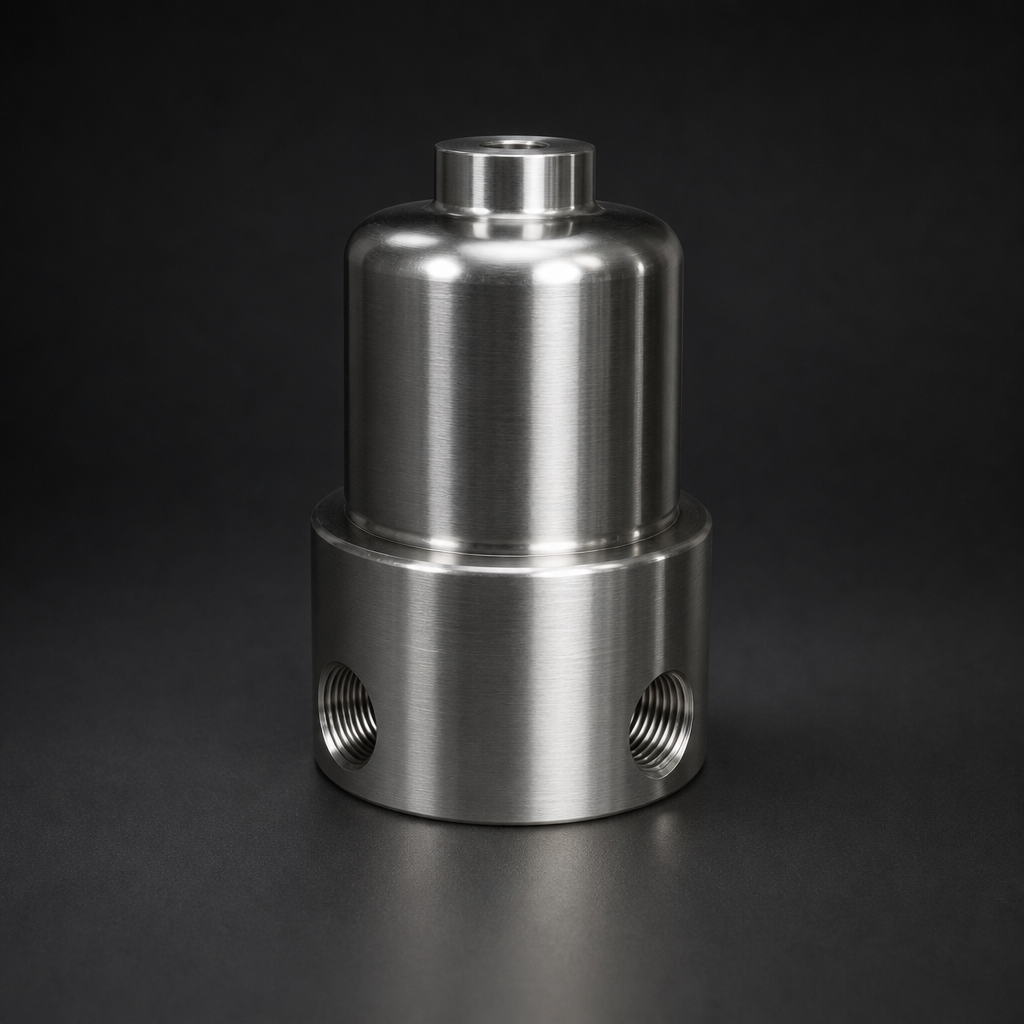
The RF-H-150 compact process gas housing (100 bar rated, 316L stainless steel) with RF-C borosilicate coalescing elements is well suited to nitrogen supply filtration at electrolyte filling stations. Its compact footprint fits within the constrained space of filling machine enclosures, and the all-stainless construction is compatible with the aggressive electrolyte environment.
Why Borosilicate Glass Microfibre is the Right Media
Borosilicate glass microfibre offers three properties that make it uniquely suited to battery manufacturing environments:
- Low hygroscopicity: Glass fibres do not absorb moisture from the gas stream, unlike cellulose or polyester media. This is critical in dry room supply air systems where media moisture release would raise the dew point.
- Thermal stability: Borosilicate media retains its structure and efficiency at temperatures up to 200 °C (S-type elements), making it suitable for heated nitrogen supply lines and oven exhaust filtration.
- HEPA-grade efficiency: The sub-micron fibre structure achieves 99.99% efficiency at 0.1 µm — the same efficiency class required for dry room terminal HEPA units — ensuring particle-free gas supply to sensitive process steps.
Need help selecting the right filter for your battery plant?
Filter Selection by Battery Production Zone
| Production Zone | Key Hazard | Recommended Element | Housing |
|---|---|---|---|
| Electrode coating (N₂ supply) | Aerosols, NMP vapour | RF-C + RF-AC | RF-H-150 (316L SS) |
| Dry room supply air | Particles ≥ 0.1 µm, moisture | RF-C borosilicate | RF-H-310 series (Al) |
| Glove box N₂ purge | Particles, moisture ingress | RF-DIL point-of-use | Inline (no housing) |
| Electrolyte filling (N₂ blanket) | Moisture, aerosols | RF-C borosilicate | RF-H-150 (316L SS) |
| Vacuum pump exhaust | Oil mist, solvent vapour | RF-CS vacuum element | RF-H-420 series (SS) |
Use our free Engineering Tool to get a filtration recommendation for your specific application in under 2 minutes.
Vacuum Systems in Battery Plants
Vacuum is used extensively in battery manufacturing: for electrolyte impregnation, pouch cell sealing, and degassing after formation cycling. Vacuum pump exhaust streams carry oil mist, solvent vapour, and fine particulates that must be captured before discharge. Standard oil-mist eliminators are often inadequate for the solvent-laden exhausts found in battery plants.
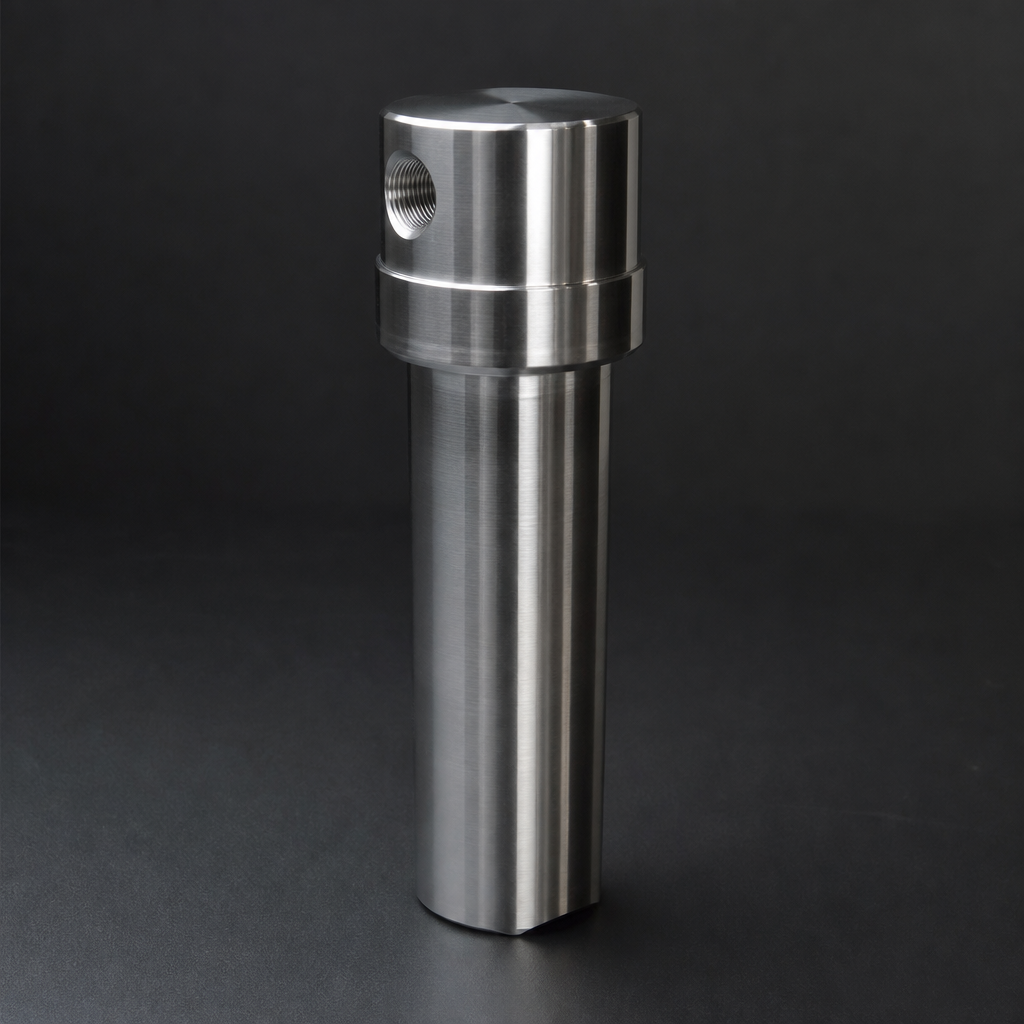
R+F vacuum pump exhaust filters in the RF-H-420 to RF-H-456 series use silica-bonded borosilicate elements (RF-CS type) rated to 200 °C — sufficient for the elevated exhaust temperatures from oil-flooded rotary vane pumps running on solvent-laden gas. The stainless steel housing construction resists the corrosive condensates that form when NMP or electrolyte solvents cool in the exhaust line.
For a broader overview of how coalescing and particulate elements differ in their operating principles, see our guide on coalescing vs. particulate filter elements.
Sizing Considerations for Battery Plant Gas Systems
Battery plant process gas systems present some unusual sizing challenges. Nitrogen consumption varies dramatically between production phases — steady-state blanketing flows are low, but purge cycles during glove box entry or equipment maintenance can demand peak flows ten times higher. Filter housings must be sized for peak flow without excessive pressure drop at normal operating conditions.
The RF-H-150 housing accepts elements in multiple sizes (25064 to 51230), allowing flow capacity to be matched to the specific application without changing the housing. For high-flow dry room supply air systems, the RF-H-310 to RF-H-395 series handles flows up to 12,000 Nm³/h with multi-element configurations.
Engineers specifying filtration for new gigafactory projects should also consider the ISO 8573-1 purity classes required at each point of use. Our ISO 8573-1 guide explains how to map process requirements to filter grades.
- Particle sensitivity:
- Electrode slurry (active material, binder, NMP solvent) is coated onto copper or aluminium foil in continuous roll-to-roll processes.
- HEPA-grade efficiency:
- Vacuum is used extensively in battery manufacturing: for electrolyte impregnation, pouch cell sealing, and degassing after formation cycling.
Related Reading
- Coalescing vs. Particulate Filter Elements — Which Do You Need?
- Hydrogen Electrolysis Filtration — Protecting Electrolysers and Downstream Equipment
- ISO 8573-1 Compressed Air Quality — A Practical Guide for Engineers
Try our Engineering Sizing Tool → or discuss your requirements with our team.