When compressed air is used for breathing — whether by workers in confined spaces, patients in hospital wards, or divers underwater — the consequences of contamination are immediate and potentially fatal. Unlike process gas applications where a filter failure might damage equipment or spoil a batch, a failure in a breathing air system can kill. This is why breathing air filtration is governed by some of the most stringent standards in the industry, and why the choice of filter technology is not merely a procurement decision but a safety-critical engineering one.
What the Standards Actually Require
Three major standards define breathing air quality across different sectors:
| Standard | Application | Oil Limit (mg/m³) | CO Limit (ppm) |
|---|---|---|---|
| EN 12021 | Industrial & diving breathing air | 0.5 | 5 |
| HTM 02-01 | Medical compressed air (UK NHS) | 0.1 | 5 |
| OSHA Grade D | US industrial breathing air | 5.0 | 10 |
| EN 12021 (Diving) | SCUBA / surface-supplied diving | 0.5 | 5 |
The oil limit under EN 12021 — 0.5 mg/m³ total oil (aerosol + vapour) — sounds generous until you consider that a typical lubricated compressor can discharge oil aerosols at concentrations of 5–50 mg/m³ before filtration. Even oil-free compressors introduce hydrocarbon vapours from ambient air ingestion. Meeting the standard is not automatic; it requires deliberate, validated filtration design.
Why Borosilicate Coalescing Is the Right Technology
Not all coalescing filter media are equal. Synthetic polymer fibres, while cheaper, have lower surface energy and coalesce oil droplets less efficiently at sub-micron sizes. Borosilicate glass microfibre — the medium used in R+F coalescing elements (RF-C series) — offers several critical advantages for breathing air duty:
- Sub-micron capture: Borosilicate fibres intercept aerosol droplets down to 0.01 µm via diffusion and interception mechanisms, well below the 0.1–0.3 µm range where oil mist is most hazardous to lung tissue.
- High surface energy: Glass fibres promote rapid coalescence, allowing captured droplets to drain by gravity rather than re-entraining into the airstream.
- Chemical inertness: No extractables or off-gassing that could introduce secondary contamination into the breathing air stream.
- Validated efficiency: 99.99% efficiency at ≥ 0.1 µm, independently tested to ISO 12500-1.
The Multi-Stage Filtration Approach
No single filter stage can address all contaminants present in compressed breathing air. A compliant system requires at least four stages, each targeting a specific contamination class. This is the architecture recommended for compressed air breathing systems and validated against EN 12021 and HTM 02-01:
Stage 1 — Pre-Filter (Particulate + Bulk Liquid)
A coarse particulate filter (typically 1–5 µm) removes bulk water, rust particles, and compressor wear debris before they reach the coalescing stage. Protecting the coalescing element from bulk liquid loading extends its service life significantly. The RF-P particulate element range is rated at 99.99% efficiency ≥ 0.3 µm and handles bulk liquid ingress without structural failure.
Stage 2 — Borosilicate Coalescing (Oil Aerosol Removal)
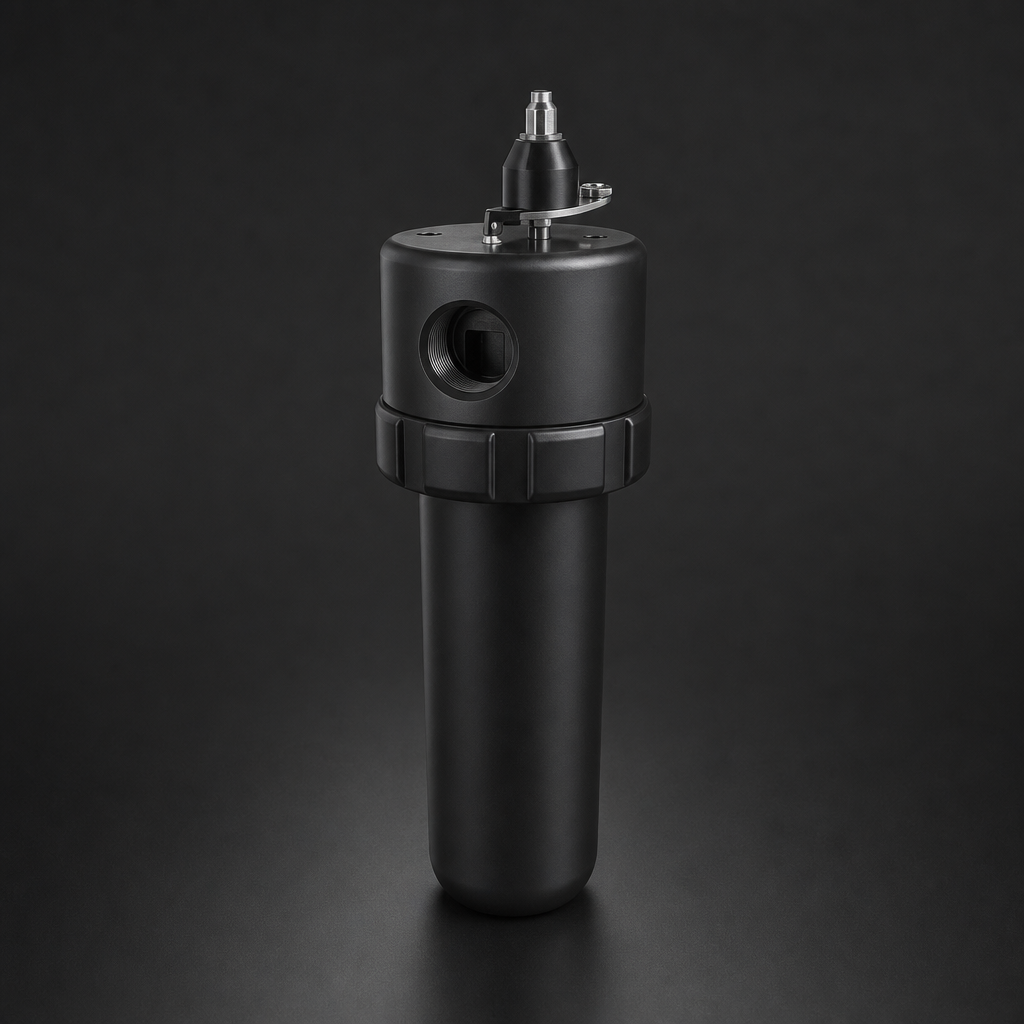
This is the critical stage for breathing air compliance. The RF-C coalescing element captures sub-micron oil aerosols and coalesces them into droplets that drain to the housing sump. At this stage, oil aerosol concentration drops from potentially 50 mg/m³ to below 0.01 mg/m³ — a reduction factor of over 5,000. The housing must include an automatic drain to prevent re-entrainment of collected liquid.
Stage 3 — Activated Carbon Adsorption (Oil Vapour + Odour)
Oil vapour — the gaseous phase of hydrocarbons — passes straight through a coalescing element. Activated carbon adsorption is the only reliable method for vapour removal. The RF-AC activated carbon element and the RF-DIA disposable inline adsorber both reduce residual oil vapour to below 0.003 mg/m³, well within EN 12021 limits. Carbon also removes odours and taste compounds that would make breathing air unacceptable even if technically compliant.
Stage 4 — Final Particulate Filter (Carbon Fines Barrier)
Activated carbon beds shed fine particles over time. A final 0.01 µm particulate filter downstream of the carbon stage prevents carbon fines from reaching the breathing apparatus. This stage also provides a final check on particulate quality before the air reaches the user.
Need help selecting the right breathing air filter system?
Medical Compressed Air: HTM 02-01 Requirements
Hospital medical air systems face additional regulatory scrutiny under HTM 02-01 (UK) and ISO 7396-1 (international). Medical air is used for patient ventilation, anaesthesia delivery, and surgical tool operation — applications where contamination can directly harm patients. The oil limit of 0.1 mg/m³ under HTM 02-01 is five times stricter than EN 12021, and the standard also mandates continuous monitoring of carbon monoxide, oxygen content, and dew point.
For medical air systems, the four-stage filtration train described above is the minimum. Many hospital installations add a fifth stage — a membrane dryer or desiccant dryer — to achieve the pressure dew point of −40 °C or lower required for medical grade air. The ISO 8573-1 compressed air quality classes provide a useful cross-reference: medical air typically requires Class 1 for particles, Class 2 for water, and Class 1 for oil.
Use our free Engineering Tool to get a filtration recommendation for your specific application in under 2 minutes.
Diving Air: High-Pressure Considerations
Diving air presents a unique challenge: the air is compressed to 200–300 bar for storage in cylinders, then delivered to the diver at ambient pressure via a regulator. At these pressures, even trace quantities of oil can form explosive peroxides, and carbon monoxide — potentially introduced by a poorly positioned compressor intake — becomes acutely toxic at depth due to the partial pressure effect.
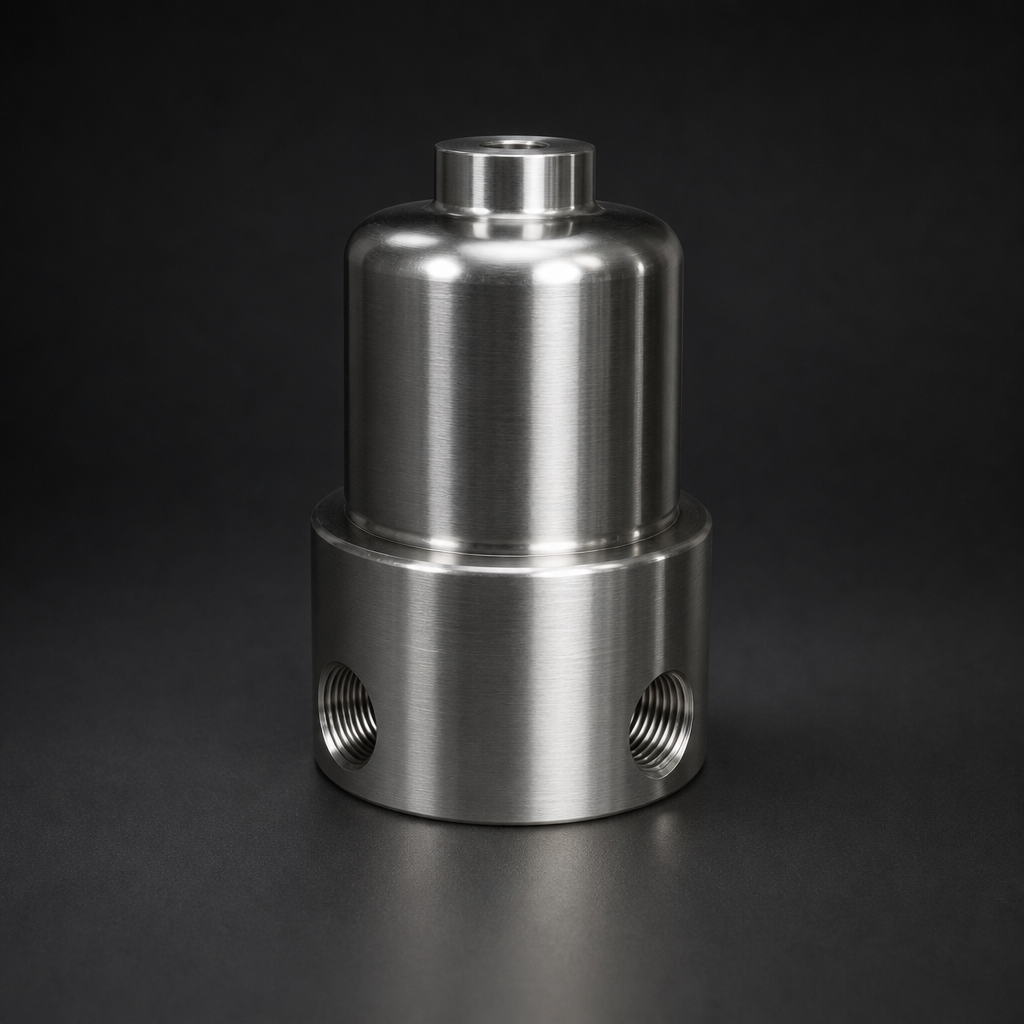
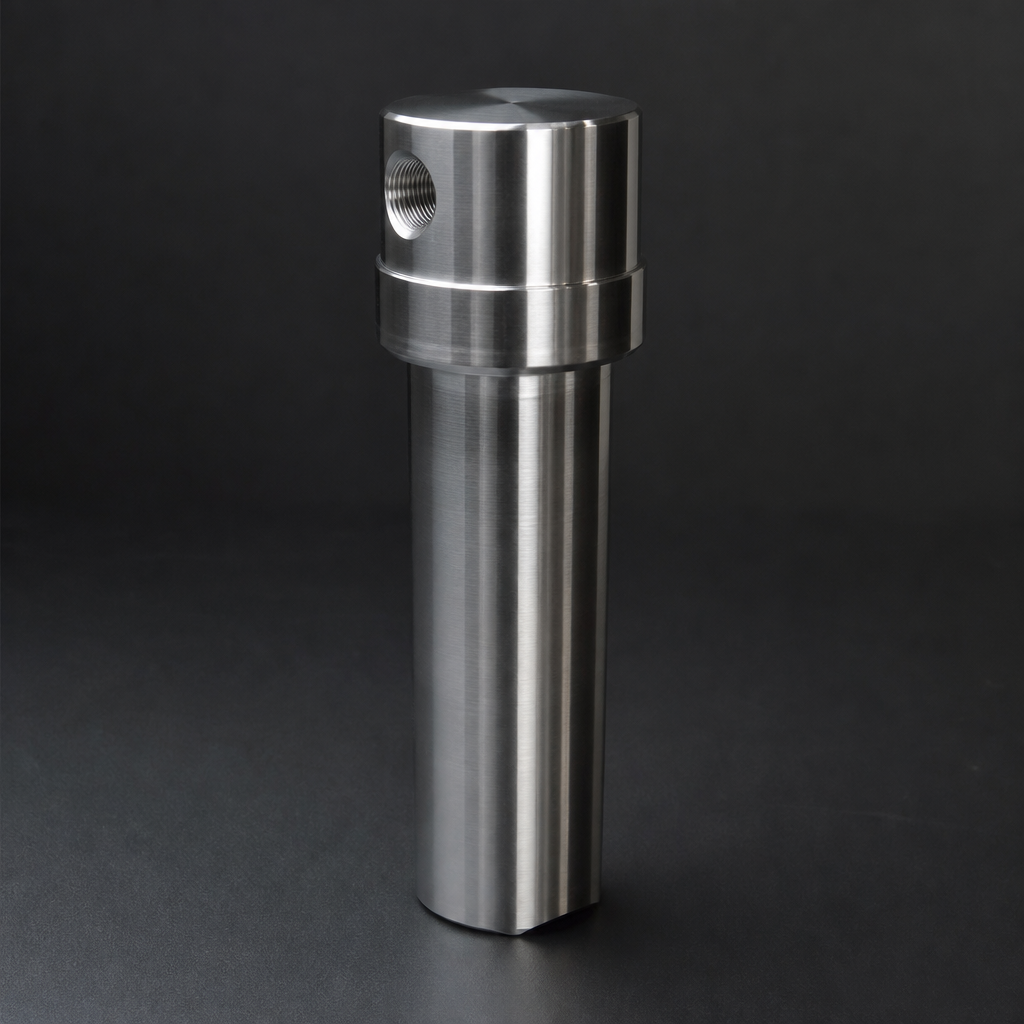
For diving compressor installations, the filtration train must be rated for the full working pressure of the system. The RF-H-150 process gas housing (rated to 100 bar) and RF-H-160 (250 bar) are suitable for high-pressure breathing air filtration duty, constructed from 316L stainless steel with FKM seals for compatibility with high-pressure air service. Regular air quality testing — at least quarterly for commercial diving operations — is mandatory under EN 12021 and most national diving regulations.
Monitoring and Maintenance
A correctly specified filtration system is only as good as its maintenance programme. For breathing air systems, the following monitoring regime is recommended:
- Differential pressure: Monitor across each filter stage. Rising ΔP indicates element loading; replace at manufacturer-specified limits, not at failure.
- Oil content testing: Quarterly minimum for EN 12021 compliance; monthly for medical air. Use accredited laboratory analysis or validated inline oil monitors.
- Carbon monoxide: Continuous monitoring recommended for all breathing air systems; mandatory for medical air under HTM 02-01.
- Dew point: Monitor downstream of any drying stage to confirm moisture removal performance.
- Element replacement: Follow a time-based schedule (typically 12 months for coalescing elements, 6 months for carbon) regardless of differential pressure readings.
For help sizing a compliant breathing air filtration system for your application, use the R+F Engineering Sizing Tool or contact our technical team directly.
- Three major standards define breathing air quality across different sectors:
- Validated efficiency:
- No single filter stage can address all contaminants present in compressed breathing air.
- Hospital medical air systems face additional regulatory scrutiny under HTM 02-01 (UK) and ISO 7396-1 (international).
Related Reading
- Coalescing vs Particulate Filter Elements — Which Do You Need?
- ISO 8573-1 Compressed Air Quality Classes Explained
- Oxygen Filtration Safety — Why Standard Filters Are Not Enough
Try our Engineering Sizing Tool → or discuss your requirements with our team.