Chlorine (Cl₂) and hydrogen chloride (HCl) are among the most aggressive gases encountered in industrial processing. Standard carbon steel housings, rubber seals, and glass-fibre elements that perform reliably in compressed air or natural gas applications will fail rapidly — sometimes catastrophically — when exposed to these halogen-rich streams. Selecting the wrong filter material in a chlor-alkali plant, PVC production line, or water treatment facility is not merely a maintenance problem; it is a safety and process-integrity risk.
This guide explains how to approach material selection for chlorine and HCl gas filtration, which housing alloys and seal compounds survive long-term exposure, and how R+F FilterElements' process gas range addresses these extreme corrosion challenges.
Why Standard Materials Fail in Chlorine and HCl Service
Chlorine gas is a powerful oxidiser. Even at low concentrations and ambient temperatures, Cl₂ attacks iron, carbon steel, and many aluminium alloys through a combination of oxidation and chloride-induced stress corrosion cracking. Moisture makes matters significantly worse: wet chlorine forms hydrochloric acid in situ, accelerating corrosion rates by orders of magnitude.
HCl gas, while less oxidising than Cl₂, is highly hygroscopic. Any trace of moisture in the gas stream — or absorbed from the atmosphere during maintenance — converts it to concentrated hydrochloric acid at the filter element surface. Standard borosilicate glass-fibre elements, aluminium housings, and NBR or EPDM seals are all vulnerable.
Common failure modes include: pitting corrosion of 316L stainless steel (which lacks sufficient molybdenum and nickel for concentrated Cl₂), swelling and degradation of NBR and EPDM elastomers, and dissolution of standard glass-fibre binders in acidic condensate. The result is premature element failure, housing perforation, and unplanned shutdowns.
Alloy Selection: Hastelloy and Beyond
For sustained chlorine and HCl service, nickel-based superalloys — particularly Hastelloy C-276 and Hastelloy C-22 — are the materials of choice. Their high nickel, chromium, and molybdenum content provides outstanding resistance to both oxidising and reducing corrosive environments.
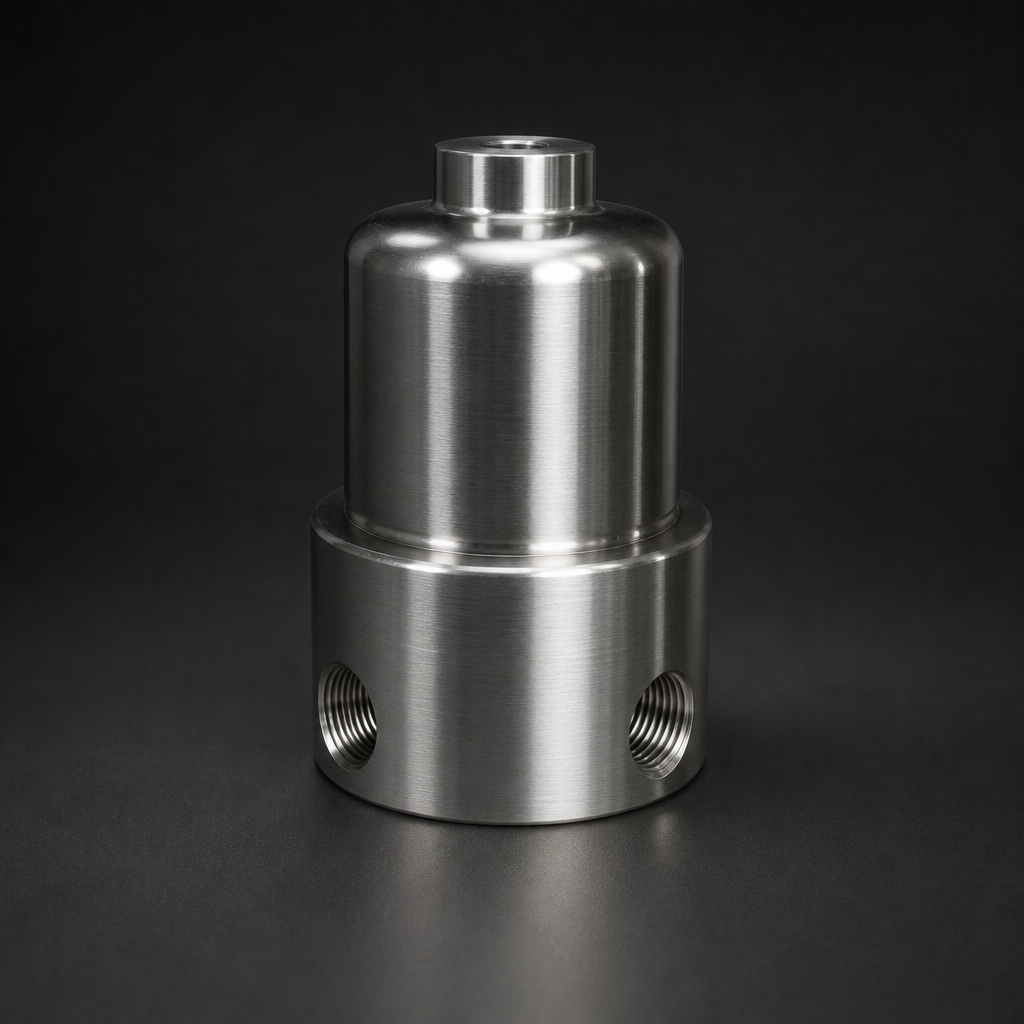
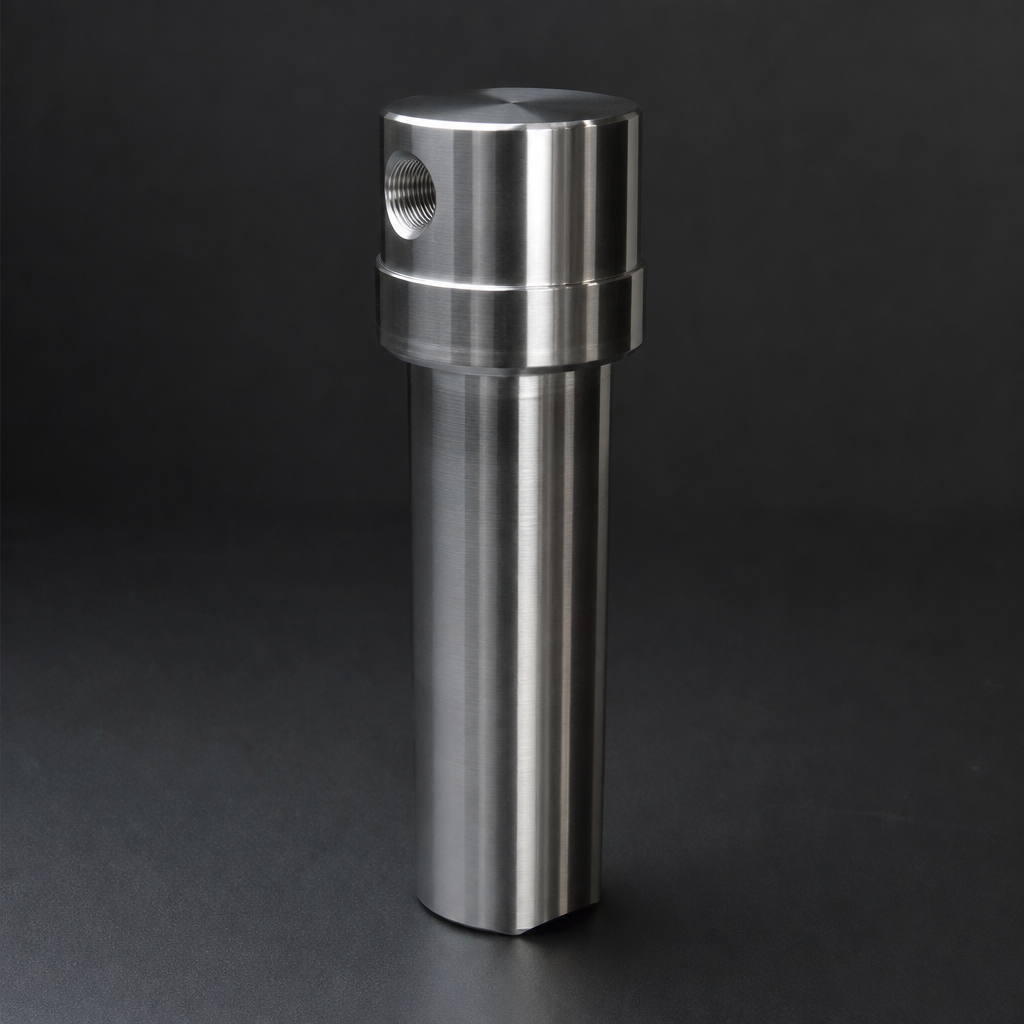
R+F FilterElements offers Hastelloy housing variants on request for its process gas filter range. These are engineered to order for specific chlorine and HCl applications, with full material traceability and pressure-test certification. For lower-severity HCl service where concentrations are modest and the gas is dry, 316L stainless steel housings such as the RF-H-150 (rated to 100 bar) or RF-H-160 (rated to 250 bar) may be acceptable — but this must be confirmed by a corrosion engineer based on actual process conditions.
Seal and Element Materials for Halogen Service
Housing alloy selection is only half the equation. Seals and filter elements must be equally resistant.
Seal Compounds
PTFE (polytetrafluoroethylene) is the universal choice for chlorine and HCl service. With a service temperature up to 260 °C and near-total chemical inertness, PTFE O-rings and gaskets resist both dry and wet halogen environments. FKM/Viton seals offer partial resistance to dry HCl but are not recommended for wet chlorine or high-concentration HCl streams. NBR and EPDM seals should never be used in halogen service.
Filter Elements
Standard borosilicate glass-fibre elements with organic binders are not suitable for wet chlorine or HCl service. The acidic condensate attacks the binder, causing the element to shed fibres into the process stream — the opposite of filtration. For halogen gas filtration, R+F FilterElements recommends:
- PTFE-coated or PTFE-membrane elements — chemically inert, suitable for both Cl₂ and HCl, available as particulate or coalescing grades
- Sintered PTFE elements — absolute-rated, no binder, no fibre shedding, rated to 200 °C
- Sintered metal elements (316L or Hastelloy) — for high-temperature or high-pressure halogen service where polymer elements are unsuitable
The R+F filter element range includes PTFE-membrane variants specifically designed for aggressive gas service. These elements provide 99.99% efficiency at ≥ 0.3 µm with no risk of binder dissolution or fibre migration.
Sintered metal elements (316L or Hastelloy)
Material Compatibility at a Glance
| Material | Dry Cl₂ | Wet Cl₂ | Dry HCl | Wet HCl |
|---|---|---|---|---|
| Carbon steel | ✗ Poor | ✗ Fails rapidly | ✗ Poor | ✗ Fails rapidly |
| 316L Stainless Steel | ⚠ Limited | ✗ Pitting risk | ✓ Acceptable (dry, low conc.) | ✗ Pitting risk |
| Hastelloy C-276 | ✓ Excellent | ✓ Excellent | ✓ Excellent | ✓ Excellent |
| PTFE (seals/elements) | ✓ Excellent | ✓ Excellent | ✓ Excellent | ✓ Excellent |
| NBR / EPDM seals | ✗ Fails | ✗ Fails | ✗ Fails | ✗ Fails |
| FKM/Viton seals | ⚠ Limited | ✗ Not recommended | ✓ Acceptable (dry) | ✗ Not recommended |
Use our free Engineering Tool to get a filtration recommendation for your specific application in under 2 minutes.
Application Areas: Chlor-Alkali, PVC, and Water Treatment
The three primary industrial applications for chlorine and HCl gas filtration each present slightly different challenges:
Chlor-Alkali Production
Chlor-alkali plants produce chlorine gas as a primary product via electrolysis of brine. The gas leaving the electrolyser cells is saturated with moisture and contains entrained brine droplets. Coalescing filtration upstream of the drying train is essential to protect the sulphuric acid drying towers and downstream compression equipment. Hastelloy housings with PTFE-coated coalescing elements are the standard specification. See also our guide on hydrogen electrolysis filtration for related electrochemical process considerations.
PVC and Vinyl Chloride Monomer (VCM) Production
HCl is a by-product of VCM production via the balanced process. Dry HCl streams at elevated temperatures require particulate filtration to protect downstream reactors and heat exchangers. Sintered metal elements in Hastelloy or 316L housings are preferred for high-temperature service above 150 °C. For lower-temperature streams, PTFE-membrane elements in the RF-H-160 housing (250 bar rated) provide reliable particulate removal.
Water Treatment and Disinfection
Chlorine gas used for water disinfection is typically handled at lower pressures and concentrations than industrial chemical processes, but the corrosion risk remains significant. Cylinder-fed systems require particulate filtration to remove iron oxide and other contaminants from the gas supply. Instrumentation-grade filters in 316L stainless steel with PTFE seals are often sufficient for this lower-severity application, provided the gas is dry.
Specifying a Chlorine or HCl Filter: Key Parameters
When enquiring about a filter for halogen gas service, provide the following data to enable accurate material and sizing recommendations:
- Gas composition (Cl₂ or HCl concentration, moisture content, other contaminants)
- Operating pressure and temperature (min/max)
- Flow rate (Nm³/h or kg/h)
- Required filtration grade (particulate size, coalescing efficiency)
- Upstream and downstream equipment to be protected
- Maintenance interval requirements
R+F FilterElements' engineering team will assess these parameters and recommend the appropriate housing alloy, element type, and seal material. Hastelloy housings are available on request and are quoted individually based on configuration. For standard dry HCl service at moderate pressures, the RF-H-150 or RF-H-160 stainless steel housings with PTFE seals and PTFE-membrane elements may be the most cost-effective solution.
For a broader overview of process gas filtration principles, visit our natural gas solutions page or use the R+F Engineering Sizing Tool to generate a preliminary filter specification.
- Chlorine gas is a powerful oxidiser.
- For sustained chlorine and HCl service, nickel-based superalloys — particularly Hastelloy C-276 and Hastelloy C-22 — are the materials of choice.
- PTFE-coated or PTFE-membrane elements
- The three primary industrial applications for chlorine and HCl gas filtration each present slightly different challenges:
Related Reading
- Oxygen Filtration Safety — Why Material Compatibility Is Non-Negotiable
- Hydrogen Electrolysis Filtration — Protecting Electrolyser Stacks
- Coalescing vs Particulate Filter Elements — Which Do You Need?
Try our Engineering Sizing Tool → or discuss your requirements with our team.