Why Filtration at the CNG Dispenser Is the Last Line of Defence for Your Vehicle Fleet
Compressed natural gas (CNG) fuelling stations operate at pressures between 200 and 250 bar — conditions that place extraordinary demands on every component in the dispensing circuit. At those pressures, even microscopic particulate contamination can score dispenser nozzle seats, jam solenoid valves, and ultimately find its way into the vehicle's on-board fuel system. For fleet operators and station owners alike, a reliable CNG dispenser filter is not an optional accessory; it is the critical barrier that protects both capital equipment and the vehicles it serves.
This article examines the contamination risks specific to high-pressure CNG dispensing, the engineering requirements a filter must meet at 200–250 bar, and how R+F FilterElements' process-gas filter housings address those requirements in a compact, maintenance-friendly package.
Understanding the Contamination Challenge at 200–250 Bar
Natural gas arriving at a CNG station has typically already passed through pipeline filtration and compression stages. Yet contamination is introduced — or concentrated — at every step of the compression and storage process:
- Compressor wear particles: Reciprocating and diaphragm compressors shed metallic and polymeric debris. At high pressure, these particles are driven at velocity into downstream components.
- Scale and pipe debris: High-pressure storage vessels and interconnecting pipework accumulate iron oxide scale, weld spatter, and thread sealant fragments that dislodge during pressure cycling.
- Lubricant carryover: Oil-lubricated compressors introduce aerosol droplets and vapour. Even trace quantities of oil can degrade elastomeric seals in vehicle fuel systems and foul injectors.
- Moisture and condensate: Although CNG is dried before compression, temperature swings during storage cause localised condensation. Liquid slugs at 250 bar can cause hydraulic shock in precision nozzle components.
The dispenser nozzle and breakaway coupling are the most vulnerable points: tight tolerances, fast-acting valves, and direct contact with the vehicle receptacle mean that any contamination passing through the final filter will cause measurable harm. A correctly specified CNG fuelling station filter installed immediately upstream of the dispenser hose eliminates this risk.
What a High-Pressure CNG Filter Must Deliver
Selecting a filter for compressed natural gas dispensing is not simply a matter of choosing the smallest micron rating available. Several engineering criteria must be satisfied simultaneously:
Pressure Rating and Safety Margin
CNG storage and dispensing systems in Europe are typically designed to a maximum allowable working pressure (MAWP) of 250 bar, with cascade storage banks sometimes reaching 300 bar. The filter housing must carry a pressure rating that provides a meaningful safety margin above MAWP, and it must be certified to the relevant Pressure Equipment Directive (PED 2014/68/EU) or equivalent standard. Housings fabricated from 316L stainless steel offer the combination of strength, corrosion resistance, and material compatibility with natural gas that aluminium or carbon steel cannot match at these pressures.
Material Compatibility
Natural gas at high pressure is an aggressive environment for elastomers. Rapid gas decompression (RGD) — the explosive expansion of gas absorbed into a seal during a pressure drop — can cause blistering and cracking of standard NBR compounds. Seal materials must be selected for RGD resistance; FKM (Viton) is the standard choice for CNG service, offering compatibility up to 200 °C and excellent resistance to hydrocarbon swelling.
Filtration Efficiency and Particle Size
Dispenser nozzle manufacturers typically specify a maximum particle size of 10 µm at the inlet. A particulate filter rated to remove 99.99% of particles ≥ 0.3 µm provides a substantial margin of protection and guards against the finest compressor debris. Where oil carryover from the compression stage is a concern, a coalescing stage upstream of the particulate element will capture aerosol droplets before they reach the final filter.
Compact Envelope and Inline Installation
Space at a CNG dispenser cabinet is constrained. The filter must fit within the existing pipework layout — typically a ½" or ¾" NPT or BSP inline connection — without requiring structural modifications to the dispenser enclosure. Low pressure drop across the filter element is equally important: at 250 bar, even a modest restriction translates to a meaningful reduction in available fill pressure for the vehicle.
R+F FilterElements High-Pressure Solutions for CNG Dispensing
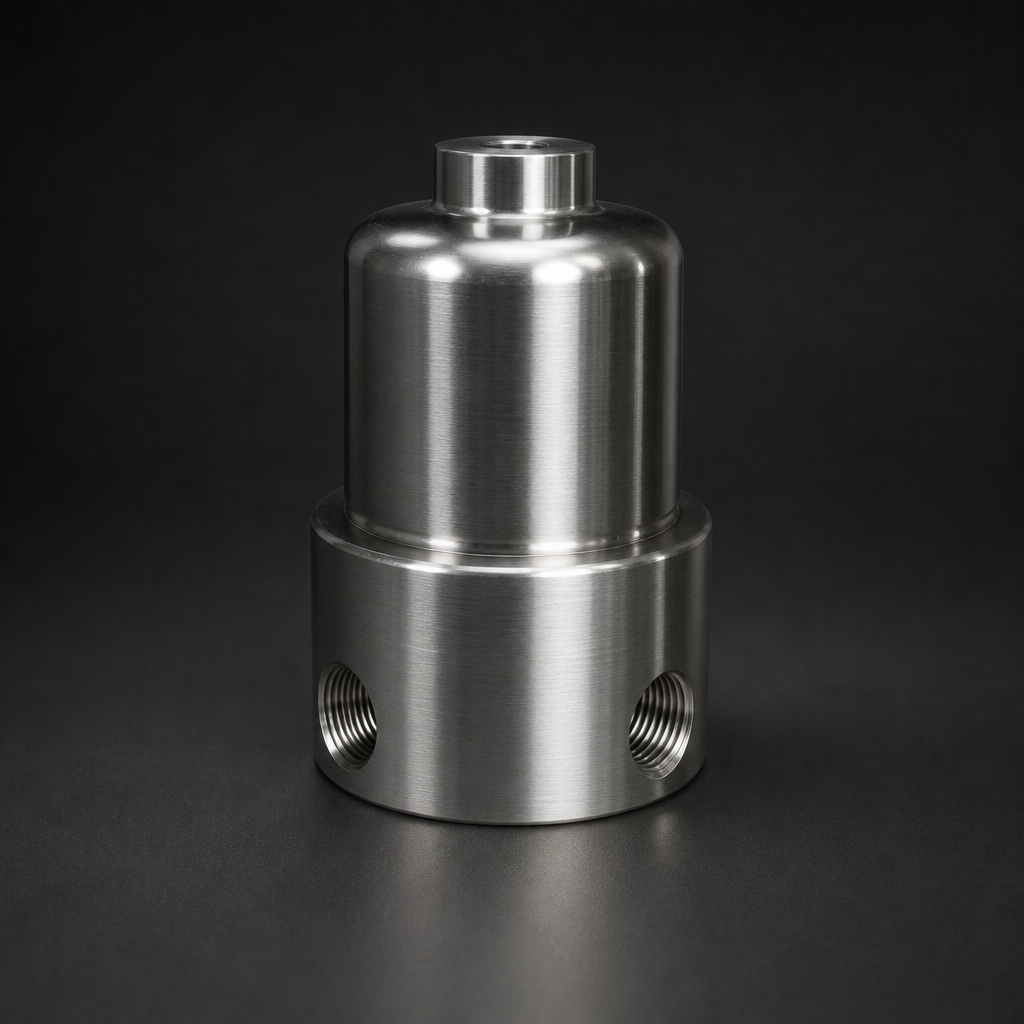
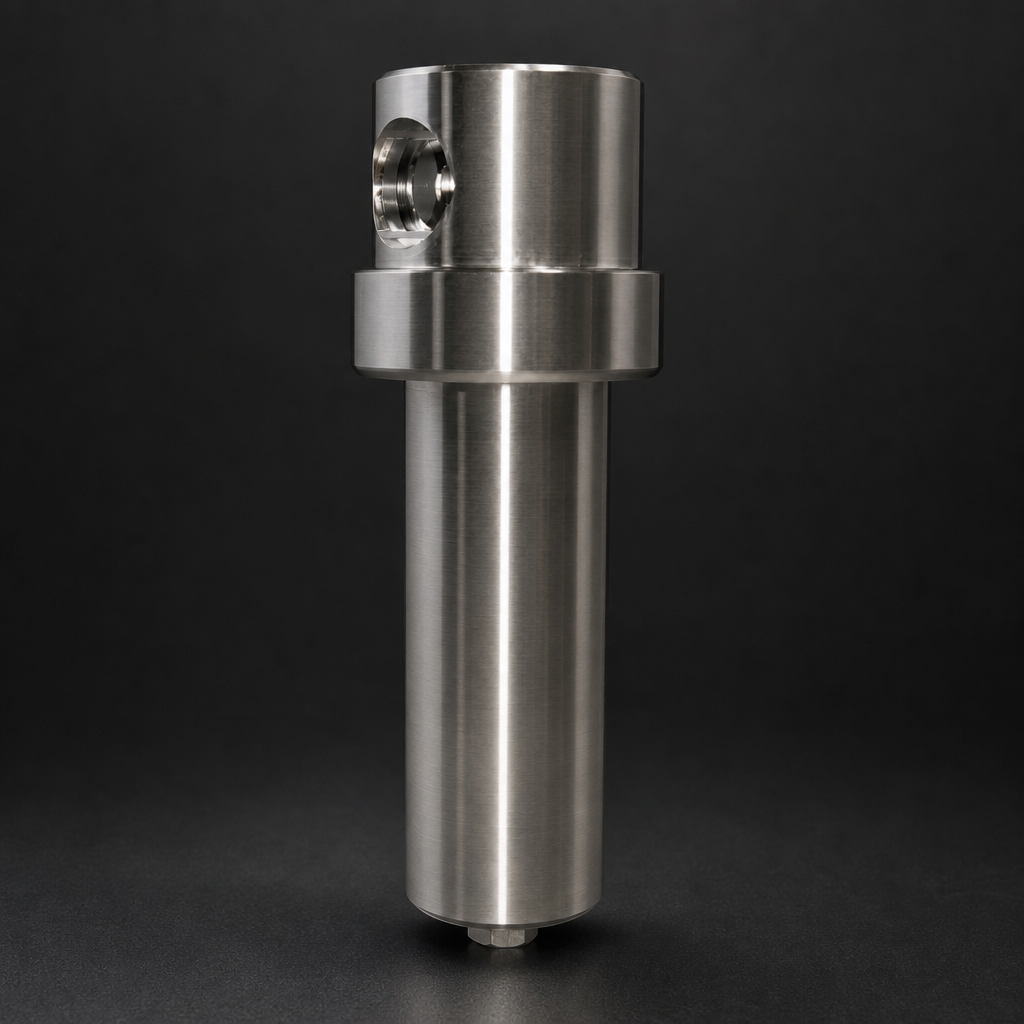
R+F FilterElements offers its own range of process-gas filter housings engineered specifically for high-pressure natural gas service. Two models are particularly well suited to CNG dispenser applications.
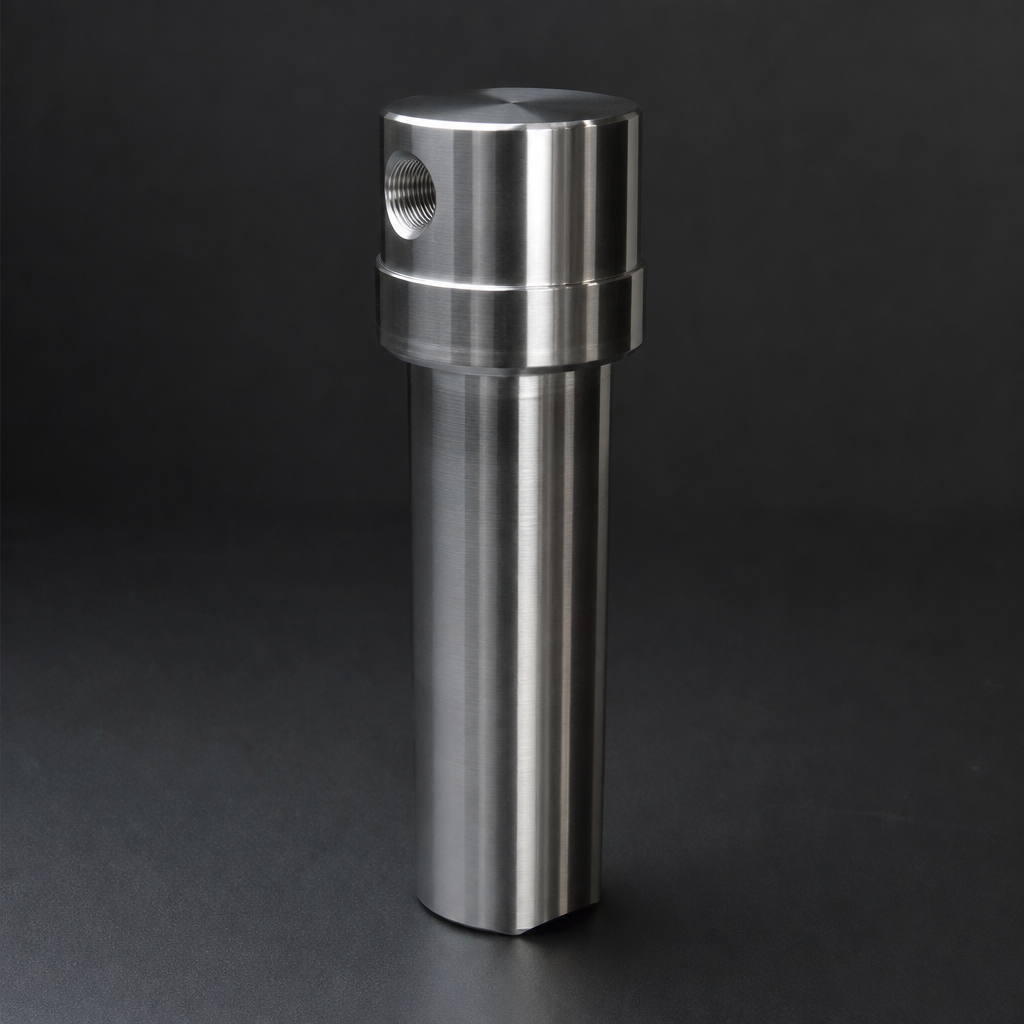
RF-H-140HP — Compact High-Pressure Inline Filter
The RF-H-140HP is a compact 316L stainless steel inline filter housing designed for pressures up to 350 bar. Its small body diameter and short face-to-face dimension make it ideal for installation within the confined space of a CNG dispenser cabinet. The housing accepts standard RF-C coalescing or RF-P particulate elements, allowing the station operator to configure the filter for the specific contamination profile of their compression system.
Key features of the RF-H-140HP include a single-piece body machined from bar stock (no welds in the pressure boundary), FKM O-ring seals as standard for CNG service, and ½" BSP or NPT end connections. Element change-out is achieved by removing the end cap — a straightforward procedure that can be completed during routine maintenance without disconnecting the housing from the pipework.
RF-H-150 — Process Gas Housing for Higher Flow Rates
Where a CNG station serves multiple dispensers from a common high-pressure manifold, a single centralised filter upstream of the distribution point is often more practical than individual dispenser filters. The RF-H-150 is a compact process gas housing rated to 100 bar in its standard configuration, with high-pressure variants available to 250 bar. Its 316L stainless steel construction and FKM seals make it fully compatible with compressed natural gas filtration duty, and its larger element capacity reduces maintenance frequency compared with smaller inline units.
Both housings are available from R+F FilterElements with full material traceability documentation, pressure test certificates, and PED compliance declarations — the paperwork that station operators and their insurers require.
compressed natural gas filtration
Technical Specification Comparison
| Parameter | RF-H-140HP | RF-H-150 (HP variant) |
|---|---|---|
| Body material | 316L stainless steel | 316L stainless steel |
| Max. working pressure | 350 bar | 250 bar |
| Connection size | ½" BSP / NPT | ½" – ¾" BSP / NPT |
| Standard seal material | FKM (Viton) | FKM (Viton) |
| Compatible elements | RF-C (coalescing), RF-P (particulate) | RF-C (coalescing), RF-P (particulate) |
| Element efficiency | 99.99% ≥ 0.1 µm (RF-C) / ≥ 0.3 µm (RF-P) | 99.99% ≥ 0.1 µm (RF-C) / ≥ 0.3 µm (RF-P) |
| Typical CNG application | Point-of-dispenser inline filter | Centralised manifold filter |
| Certifications | PED 2014/68/EU, pressure test cert. | PED 2014/68/EU, pressure test cert. |
Designing the Filtration Train for a CNG Fuelling Station
A well-designed CNG high pressure filter installation considers the entire contamination pathway from the gas supply inlet to the vehicle receptacle. R+F FilterElements recommends a two-stage approach for most CNG fuelling stations:
Stage 1 — Coalescing Filter After the Compressor
Install an RF-H-150 (HP variant) fitted with RF-C coalescing elements immediately downstream of the compressor outlet, before the high-pressure storage cascade. This stage captures compressor oil aerosol and bulk liquid water, protecting the storage vessels from contamination build-up and reducing the load on downstream filters. At this location, the filter sees the full compression pressure and must be rated accordingly.
Stage 2 — Particulate Filter at the Dispenser
Install an RF-H-140HP fitted with RF-P particulate elements at each dispenser, upstream of the hose connection. This final-stage filter captures any scale or debris that has migrated from the storage cascade or distribution pipework. Because the coalescing stage has already removed liquid contamination, the particulate element at this point will have a long service life — typically 12 months or one million fill cycles, whichever comes first.
This two-stage arrangement is consistent with the guidance published by the European Industrial Gases Association (EIGA) and aligns with the requirements of EN ISO 16923 (CNG stations for vehicles — design and construction). For stations where gas quality data is available, R+F FilterElements' online sizing tool can assist in confirming element selection and predicting differential pressure at operating flow rates.
Use our free Engineering Tool to get a filtration recommendation for your specific application in under 2 minutes.
Maintenance Considerations for High-Pressure CNG Filters
Maintenance of filters in a CNG dispensing environment requires careful attention to safe working practices. At 200–250 bar, residual pressure in the filter housing after isolation represents a significant stored energy hazard. R+F FilterElements recommends the following procedure for element replacement:
- Isolate the filter using the upstream and downstream block valves.
- Vent residual pressure through the drain/vent port to a safe location — never assume the housing is depressurised based on gauge reading alone.
- Confirm zero pressure with a calibrated gauge before breaking any connection.
- Replace the element and O-ring seal as a set; never reuse a compressed O-ring from a high-pressure application.
- Pressure-test the reassembled housing to 1.1× MAWP with nitrogen before returning to service.
FKM O-ring replacement kits for both the RF-H-140HP and RF-H-150 are available directly from R+F FilterElements' natural gas solutions team, ensuring that only correctly specified seal materials are used in service.
Regulatory and Safety Context
CNG fuelling infrastructure in Europe is subject to a layered regulatory framework. The Pressure Equipment Directive (PED 2014/68/EU) governs the design and conformity assessment of pressure-bearing components, including filter housings. EN ISO 16923 provides station-level design requirements, including filtration provisions. Additionally, vehicle manufacturers specify maximum allowable contamination levels at the vehicle inlet receptacle — typically aligned with ISO 8573-1 Class 1 for particles.
R+F FilterElements, as a German-based filtration specialist operating to European engineering standards, supplies filter housings with the full documentation package required for PED compliance: Declaration of Conformity, material certificates (EN 10204 3.1), and hydrostatic test records. This documentation is essential for station commissioning sign-off and ongoing insurance compliance.
Choosing the Right Filter for Your CNG Station
The correct filter specification depends on several station-specific factors: compression technology (oil-lubricated vs. oil-free), storage cascade pressure, dispenser flow rate, and the gas quality data available from the network operator. R+F FilterElements' engineering team can review these parameters and recommend the appropriate housing model, element type, and maintenance interval for your application.
For stations currently operating without a dedicated CNG fuelling station filter at the dispenser, the risk of nozzle damage and vehicle fuel system contamination is real and ongoing. Retrofitting an RF-H-140HP at each dispenser is a straightforward task that can typically be completed during a scheduled maintenance shutdown, with no modification to the dispenser cabinet structure required.
To discuss your CNG filtration requirements or to request a quotation, contact R+F FilterElements at our enquiry page or by email at [email protected].
- Compressor wear particles:
- Selecting a filter for compressed natural gas dispensing is not simply a matter of choosing the smallest micron rating available.
- compressed natural gas filtration
- CNG high pressure filter