Why Chemical Vapour Contamination Is a Hidden Threat in Process Gas Systems
In many industrial gas applications — from chemical processing and pharmaceutical manufacturing to food-grade CO₂ handling — the real contamination risk is not particulate matter or liquid aerosols. It is chemical vapour: trace concentrations of volatile organic compounds (VOCs), CO₂, hydrogen sulphide, or solvent vapours that pass straight through conventional coalescing and particulate filters. Left unaddressed, these contaminants degrade product quality, poison catalysts, damage instrumentation, and create compliance failures against ISO 8573-1 purity classes.
Adsorber housings filled with granular activated carbon or molecular sieve media are the engineered solution. But selecting the right housing — and pairing it correctly with upstream pre-filtration — is where many engineers make costly mistakes. This guide explains how R+F process gas adsorber housings are designed, what makes the RF-AC and RF-DIA series different, and how to build a complete vapour-removal train that actually works.
How Adsorber Housings Work: The Hollow-Tube Principle
Unlike standard filter housings that hold a single cylindrical element, R+F adsorber housings use a hollow-tube design. The gas stream enters the housing and flows through a bed of granular adsorption media — typically activated carbon, silica gel, or molecular sieve — packed around a central perforated tube. This geometry maximises contact time between the gas and the adsorbent, which is critical for achieving low residual concentrations.
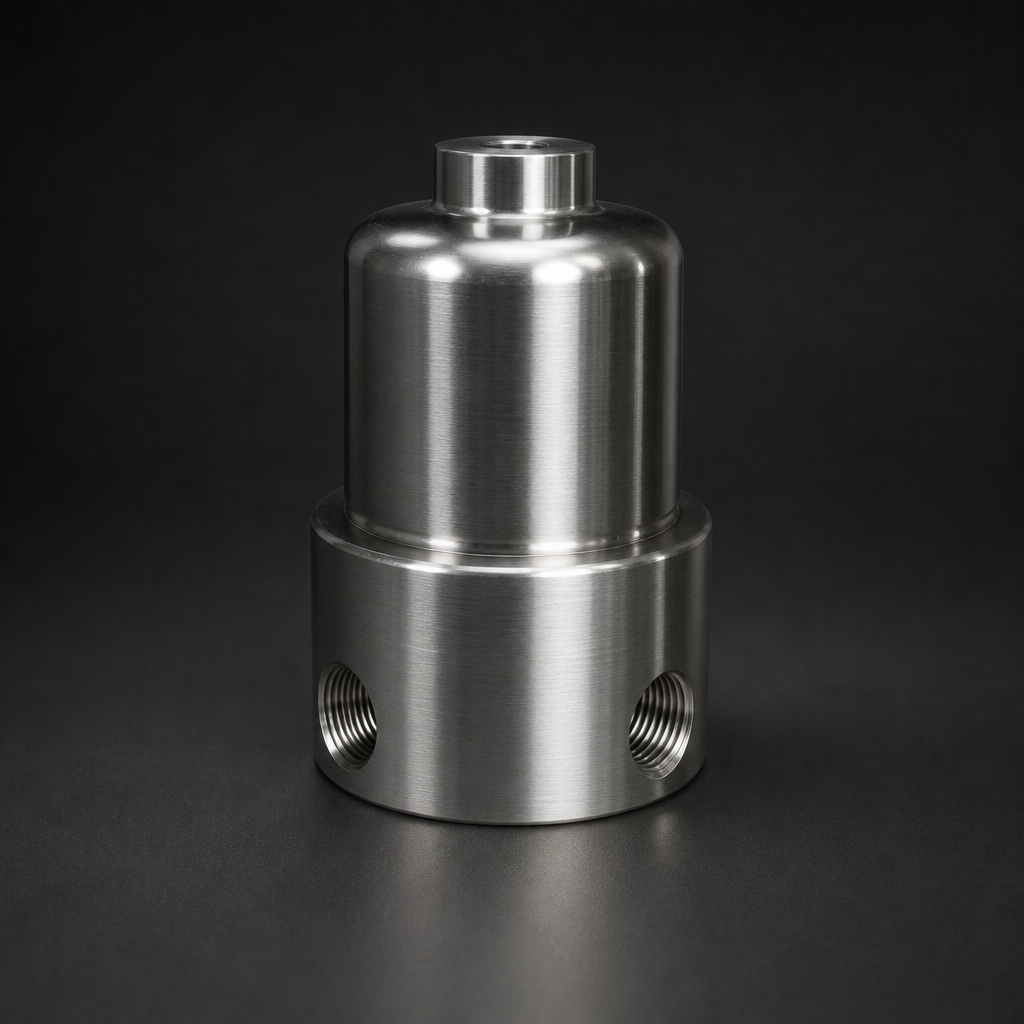
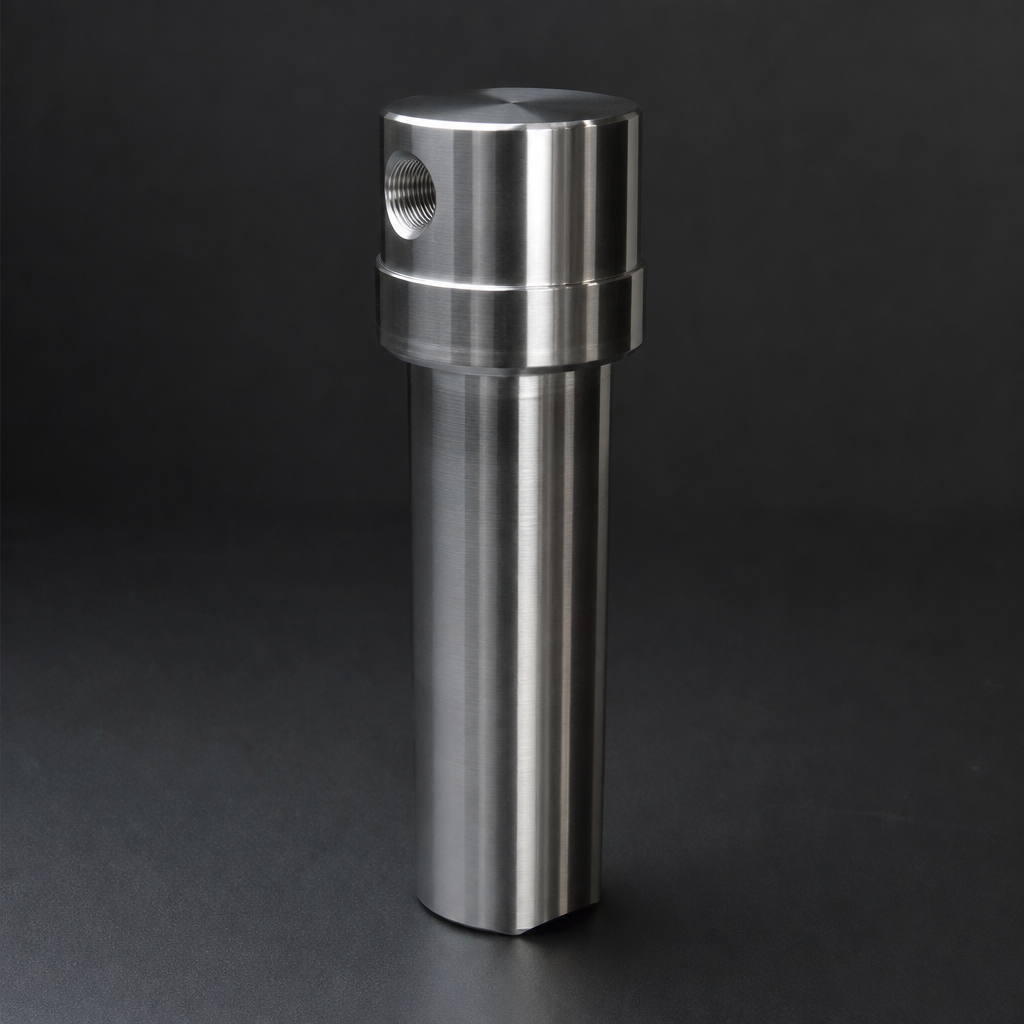
The RF-AC series adsorption elements are designed to fit directly into compatible R+F process gas housings, including the RF-H-150 (rated to 100 bar) and RF-H-160 (rated to 250 bar). This means the same stainless steel housing body can be used for both coalescing pre-filtration and adsorption duty — simply by swapping the element type. For lower-pressure applications, the RF-DIA disposable inline adsorber provides a compact, tool-free solution for point-of-use vapour removal.
The RF-AC and RF-DIA Series: What Sets Them Apart
The RF-AC activated carbon element is manufactured from high-activity coconut-shell carbon with a surface area exceeding 1,000 m²/g. It achieves a residual oil vapour concentration of less than 0.003 mg/m³ — meeting ISO 8573-1 Class 1 for total oil content when used downstream of a coalescing stage. The element body is constructed from 316L stainless steel with FKM seals as standard, making it compatible with aggressive process gases including CO₂, natural gas, and light hydrocarbons.
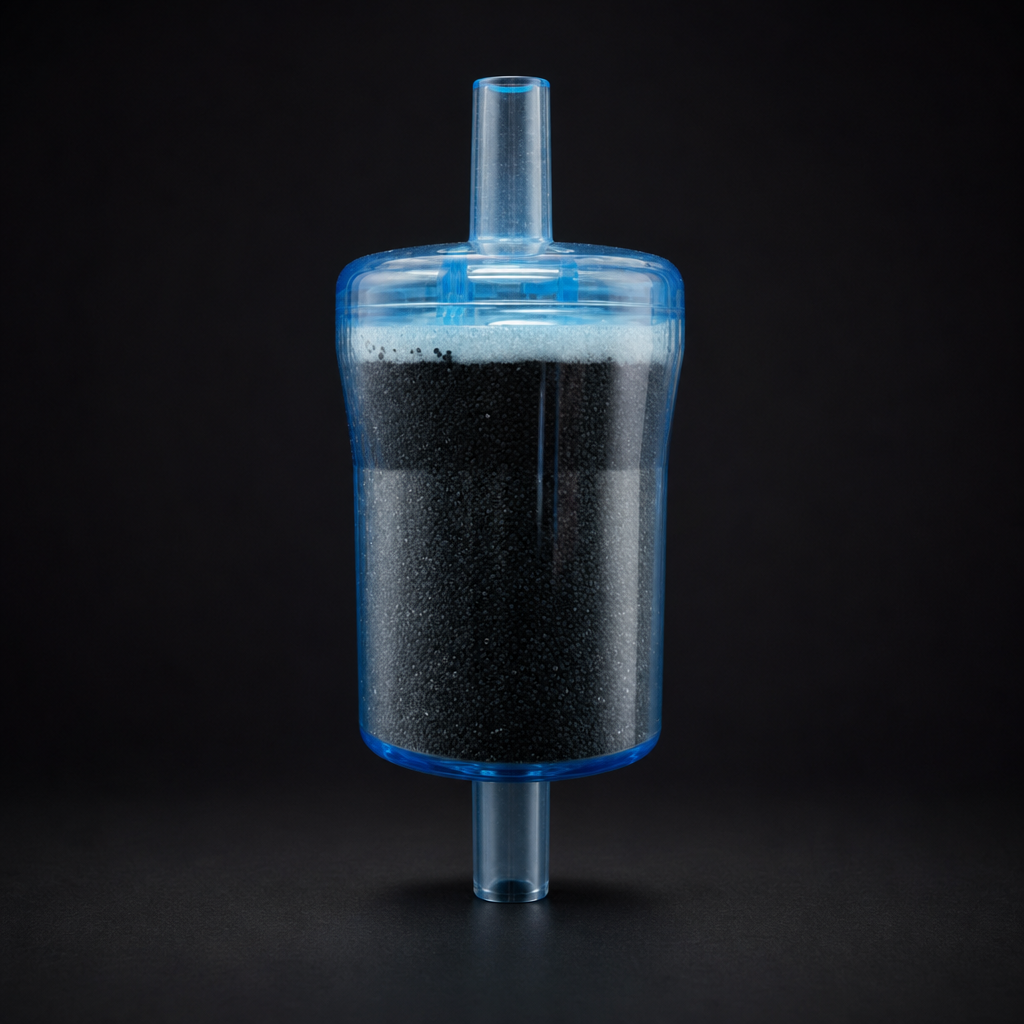
The RF-DIA inline adsorber takes a different approach: a self-contained disposable cartridge with an integral particulate pre-filter layer, activated carbon bed, and downstream retention screen — all in a single compact body. This makes it ideal for instrument sample lines, analyser protection, and laboratory gas supply where installation space is limited and maintenance access is infrequent. The RF-DIA is available in both activated carbon and molecular sieve variants, the latter being preferred for CO₂ removal and moisture control in sensitive applications.
Building the Right Filtration Train for Vapour Removal
Adsorbers do not work in isolation. A correctly designed vapour-removal train for process gas applications typically consists of three stages:
- Coalescing pre-filter (RF-C element): Removes liquid water and oil aerosols down to 0.01 µm. This protects the adsorber bed from liquid loading, which would rapidly saturate and deactivate the carbon. See our guide on coalescing vs particulate filter elements for selection criteria.
- Adsorber stage (RF-AC or RF-DIA): Removes vapour-phase contaminants — VOCs, odours, trace CO₂, and residual oil vapour — by adsorption onto the granular media bed.
- Downstream particulate filter (RF-P element): Captures any carbon fines that may be released from the adsorber bed, protecting downstream equipment and ensuring gas purity.
For CO₂-specific applications — such as food-grade CO₂ purification or CO₂ recovery systems — molecular sieve media (zeolite 13X or 4A) is preferred over activated carbon. Molecular sieves offer higher selectivity for CO₂ and water vapour, and can be regenerated by heating, making them suitable for continuous-duty systems with regeneration cycles.
Downstream particulate filter (RF-P element):
Servicing and Media Replacement: The Easy-Access Advantage
One of the key design features of R+F adsorber housings is ease of servicing. The hollow-tube element design allows the entire adsorption media cartridge to be withdrawn and replaced without disturbing the housing body or process pipework. This is particularly valuable in high-pressure applications where re-making pipe connections is time-consuming and requires pressure testing.
For the RF-H-150 and RF-H-160 housings, element replacement is a straightforward procedure: isolate the housing, depressurise, unscrew the end cap, withdraw the spent element, insert the new RF-AC cartridge, and re-pressurise. No special tools are required. The integral filter screen at the housing outlet retains any residual carbon fines during the changeover, preventing downstream contamination.
Replacement intervals depend on the vapour load and gas flow rate. R+F FilterElements recommends monitoring outlet vapour concentration using a simple colorimetric indicator tube — when breakthrough is detected, the element should be replaced within 24 hours. For critical applications, a dual-vessel arrangement with automatic switchover ensures uninterrupted operation during element changes.
Use our free Engineering Tool to get a filtration recommendation for your specific application in under 2 minutes.
Adsorber Housing Selection: Key Parameters
| Parameter | RF-DIA Inline | RF-AC in RF-H-150 | RF-AC in RF-H-160 |
|---|---|---|---|
| Max. pressure | 16 bar | 100 bar | 250 bar |
| Body material | Polypropylene / SS316L | 316L stainless steel | 316L stainless steel |
| Media options | Activated carbon, mol. sieve | Activated carbon (RF-AC) | Activated carbon (RF-AC) |
| Residual oil vapour | < 0.003 mg/m³ | < 0.003 mg/m³ | < 0.003 mg/m³ |
| Typical application | Instrument lines, lab gas | Process gas, CO₂ systems | High-pressure gas purification |
| Element replacement | Disposable (full unit) | Cartridge swap | Cartridge swap |
Compliance and Standards
For food-grade CO₂ and pharmaceutical gas applications, adsorber housings must comply with relevant purity standards. The RF-AC element, when used downstream of a coalescing stage, achieves ISO 8573-1 Class 1 for total oil content (≤ 0.01 mg/m³) and supports compliance with Class 1 for solid particles when paired with an RF-P downstream filter. All R+F branded housings are manufactured to PED 2014/68/EU requirements and are available with material certificates (EN 10204 3.1) on request.
For hydrogen applications — where adsorber housings are increasingly used to remove trace hydrocarbons from electrolysis output — the RF-H-150 and RF-H-160 housings are compatible with hydrogen service. Consult our hydrogen electrolysis filtration guide for specific recommendations on seal materials and element selection for H₂ duty.
For natural gas and biogas applications where H₂S removal is required alongside VOC adsorption, impregnated activated carbon variants are available. These use potassium iodide or potassium permanganate impregnation to chemically react with H₂S, providing both physical adsorption and chemisorption capacity. Contact the R+F FilterElements engineering team via the enquiry form to discuss media selection for sour gas duty.
- Unlike standard filter housings that hold a single cylindrical element, R+F adsorber housings use a hollow-tube design.
- The RF-AC activated carbon element is manufactured from high-activity coconut-shell carbon with a surface area exceeding 1,000 m²/g.
- Coalescing pre-filter (RF-C element):
- One of the key design features of R+F adsorber housings is ease of servicing.
Related Reading
- Coalescing vs Particulate Filter Elements: Which Do You Need?
- Inline Adsorbers: A Practical Guide to Point-of-Use Vapour Removal
- ISO 8573-1 Compressed Air Quality Classes Explained
Try our Engineering Sizing Tool → or discuss your requirements with our team.