When chemical vapours, odours, or CO₂ contaminate a gas stream, particulate and coalescing filters alone cannot solve the problem. Adsorption is the only reliable mechanism for removing gaseous contaminants — and the housing that holds the adsorber media is just as critical as the media itself. This guide explains how adsorber housings work, when to use them, and how to select the right configuration for your process gas application.
What Is an Adsorber Housing?
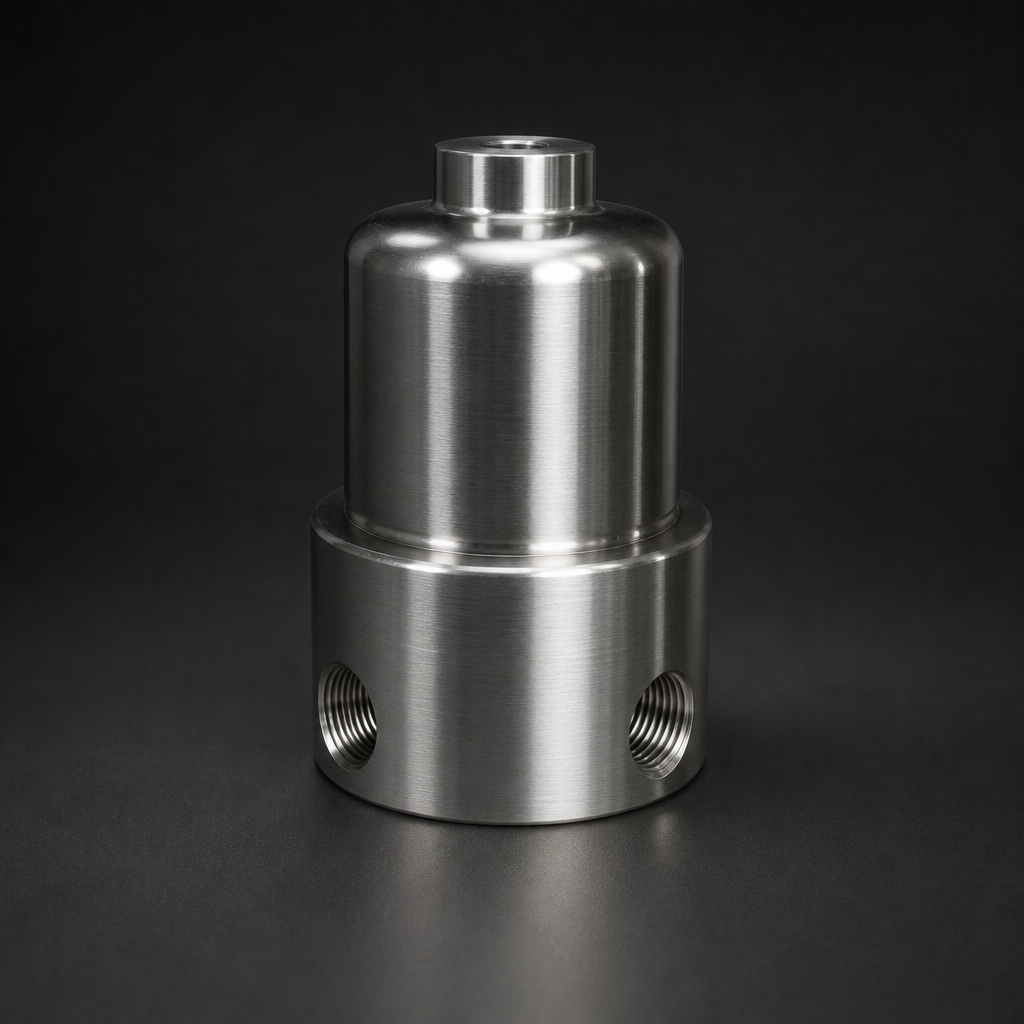
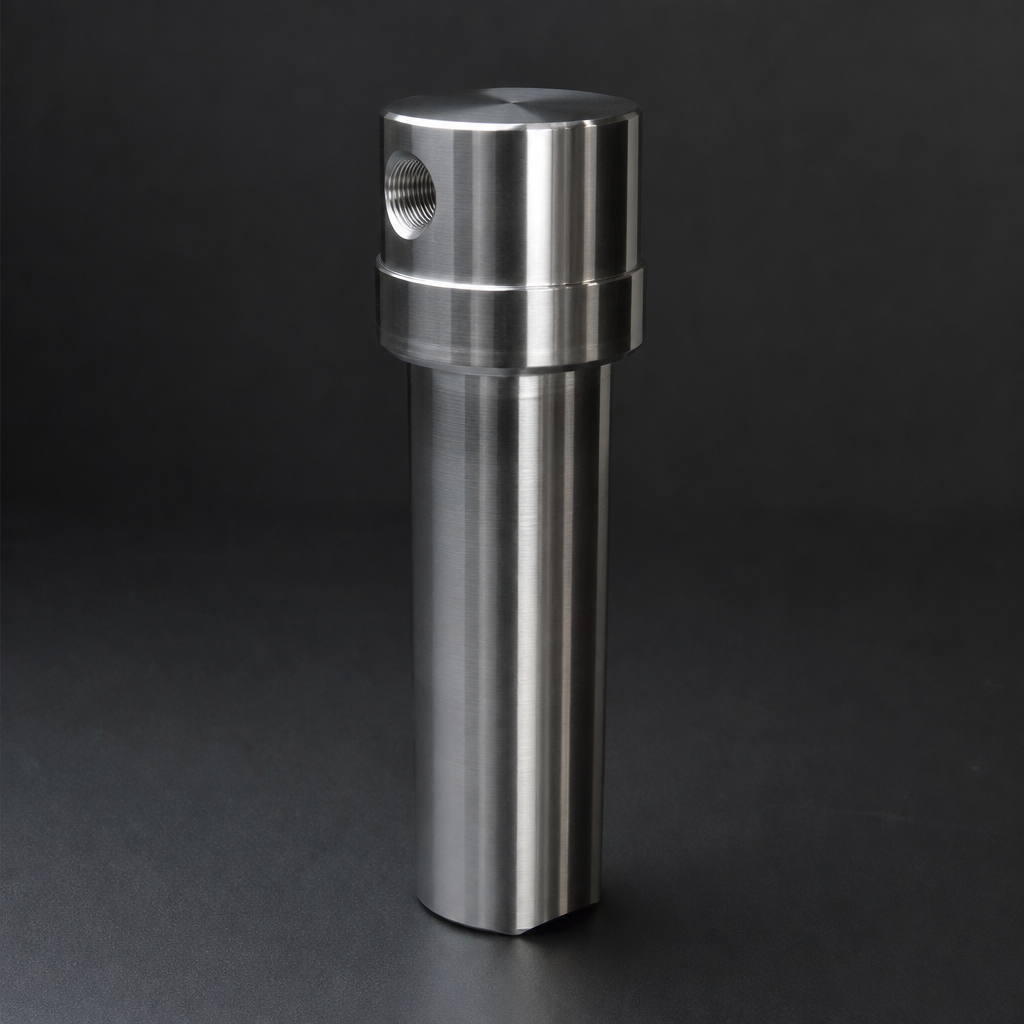
An adsorber housing is a pressure vessel designed to hold granular adsorber media — most commonly activated carbon, molecular sieve, or silica gel — through which a contaminated gas stream passes. Unlike a standard filter housing, an adsorber housing must ensure that every molecule of gas contacts the adsorber bed for a sufficient dwell time. This requires a specific internal flow geometry.
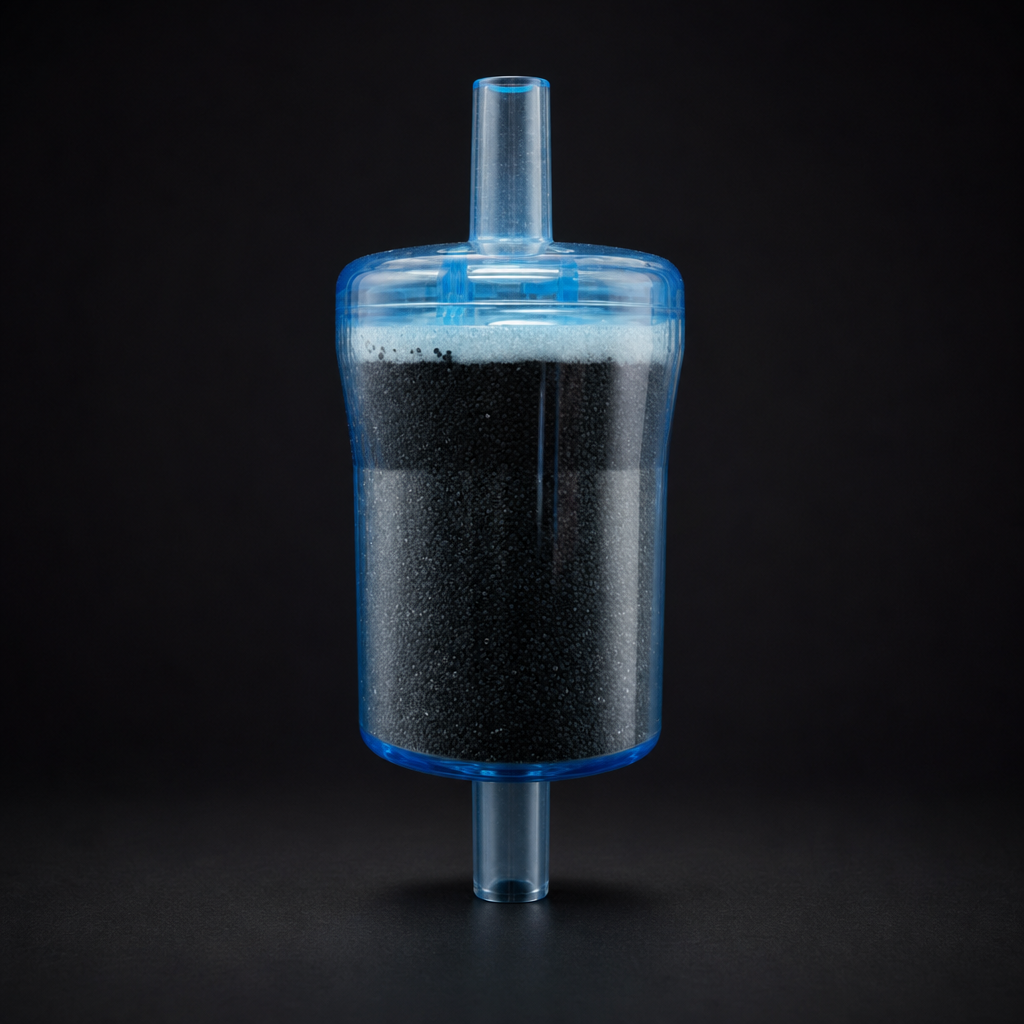
The integral filter element inside the housing serves a dual purpose: it retains the granular media within the bowl and acts as a final particulate barrier, preventing granule fines from migrating downstream into sensitive instrumentation or process equipment. The RF-DIA inline adsorber series uses this same principle in a compact, disposable format for point-of-use applications.
CO₂ Scrubbing and Chemical Vapour Removal
CO₂ removal from compressed gas or process gas streams is a common requirement in food and beverage production, laboratory gas supply, and certain chemical processes. Activated carbon is effective for removing a wide range of organic vapours, hydrocarbons, and odour compounds. Molecular sieve media extends this capability to polar molecules including water vapour and CO₂ at higher concentrations.
The RF-AC series of activated carbon adsorber housings available from R+F FilterElements is designed for exactly these applications. The housings are available in polymer and 316L stainless steel body materials, with port sizes of ¼ inch and ½ inch in NPT, BSPT, and BSPP thread forms to suit both metric and imperial pipework systems.
Why Pre-Filtration Is Non-Negotiable
Activated carbon and molecular sieve media are highly susceptible to liquid contamination. Even small quantities of entrained oil mist or water aerosol will coat the adsorber granules, blocking the active surface area and dramatically reducing adsorption capacity. A saturated adsorber bed that has been liquid-fouled cannot be regenerated by simple drying — the media must be replaced entirely.
For most compressed gas and process gas applications, the recommended installation sequence is: particulate pre-filter → coalescing filter → adsorber housing. This three-stage approach removes bulk particulate first, then liquid aerosols, before the gas contacts the adsorber media. The coalescing vs particulate filter guide on this blog explains the distinction between these two upstream stages in detail.
Need help selecting the right adsorber housing?
Adsorber Housing Selection: Key Parameters
| Parameter | RF-AC Series (Activated Carbon) | RF-DIA Inline Adsorber |
|---|---|---|
| Body material | Polymer or 316L stainless steel | Polymer (disposable) |
| Port sizes | ¼" and ½" NPT / BSPT / BSPP | ¼" and ½" push-in / threaded |
| Media type | Activated carbon granules (refillable) | Activated carbon or molecular sieve |
| Seal standard | Viton (FKM); alternatives available | NBR standard |
| Servicing | Bowl removal without disturbing line connections | Full unit replacement |
| Best for | Continuous process, high flow, CO₂ scrubbing | Point-of-use, low flow, laboratory |
Use our free Engineering Tool to get a filtration recommendation for your specific application in under 2 minutes.
Servicing Adsorber Housings in the Field
One of the most practical advantages of the RF-AC housing design is the ability to remove the filter bowl for media replacement without disturbing the line connections. The housing head remains fixed in the pipework; only the bowl is unscrewed and lowered. This significantly reduces maintenance downtime in installations where the housing is mounted in a tight panel or manifold assembly.
When the bowl is removed, the spent granular media can be emptied, the bowl cleaned, and fresh activated carbon or molecular sieve granules loaded before the bowl is refitted. The integral filter element should be inspected at each service interval and replaced if granule fines have accumulated on the downstream face. For applications where media change frequency is high, the RF-DIA disposable inline adsorber may offer a lower total cost of ownership through simplified replacement.
Seal Selection for Chemical Compatibility
The standard seal material for RF-AC adsorber housings is Viton (FKM), which provides excellent resistance to hydrocarbons, aromatic solvents, and many aggressive chemical vapours up to 200 °C. For applications involving oxygen-enriched streams, EPDM seals are available. PTFE seals extend chemical compatibility to the most aggressive media, including concentrated acids and strong oxidisers, up to 260 °C.
Seal selection should always be confirmed against the specific gas composition and operating temperature. The R+F FilterElements engineering team can advise on seal compatibility for unusual gas mixtures or elevated temperature applications. For high-pressure process gas applications above 100 bar, the RF-H-150 and RF-H-160 process gas housings provide the pressure ratings required for demanding upstream conditions.
Inline Adsorbers for Point-of-Use Applications
Where flow rates are low and installation space is at a premium — laboratory gas panels, analyser sample conditioning systems, or instrument air supplies — the RF-DIA inline adsorber series provides a compact, disposable solution. These units connect directly into ¼ inch or ½ inch tubing runs and require no tools for replacement. The activated carbon or molecular sieve fill is factory-sealed, eliminating the risk of media spillage during servicing.
For analyser protection applications, the RF-DIA is frequently installed as the final stage before the analyser inlet, downstream of a coalescing pre-filter. This configuration protects the analyser from both liquid aerosols and residual chemical vapours that could interfere with measurement accuracy. See the inline adsorbers guide for a detailed comparison of media types and selection criteria for analyser applications.
- An adsorber housing is a pressure vessel designed to hold granular adsorber media — most commonly activated carbon, molecular sieve, or silica gel — through which a contaminated gas stream passes.
- CO₂ removal from compressed gas or process gas streams is a common requirement in food and beverage production, laboratory gas supply, and certain chemical processes.
- Activated carbon and molecular sieve media are highly susceptible to liquid contamination.
- One of the most practical advantages of the RF-AC housing design is the ability to remove the filter bowl for media replacement without disturbing the line connections.
Related Reading
- Coalescing vs Particulate Filter Elements — Which Do You Need?
- Inline Adsorbers: Activated Carbon vs Molecular Sieve Selection Guide
- ISO 8573-1 Compressed Air Quality Classes Explained
Try our Engineering Sizing Tool → or discuss your requirements with our team.