Filtration in chemically aggressive gas streams is one of the most demanding challenges in process engineering. Whether you are handling hydrochloric acid (HCl) vapour from a pickling line, sulphuric acid (H₂SO₄) aerosols from a battery formation process, hydrogen fluoride (HF) from semiconductor etch chambers, or solvent-laden exhaust from chemical reactors — standard compressed-air filter elements will fail rapidly, often within hours. The consequences range from contaminated downstream equipment to catastrophic seal failure and unplanned shutdowns.
This guide explains how to select filter media, housing materials, and seal compounds that genuinely withstand corrosive and aggressive gas environments, and how R+F FilterElements process gas housings and purpose-built K-type elements address these challenges.
Why Standard Filter Elements Fail in Aggressive Gas Streams
Most coalescing and particulate filter elements use borosilicate glass microfibre bonded with a phenolic or acrylic resin. In dry, neutral gas streams this combination is highly effective — delivering 99.99% efficiency at ≥ 0.1 µm. However, in the presence of strong acids, halogens, or aggressive solvents, the binder degrades first. The element loses structural integrity, fibres migrate downstream, and the housing itself may be attacked if it is aluminium or polycarbonate.
A second failure mode is condensation. Many aggressive gas streams carry moisture, and when the gas cools below its dew point inside the filter housing, liquid acid condenses on the element surface. This accelerates binder attack and can cause rapid corrosion of aluminium housings. The solution is a combination of 316L stainless steel housings, PTFE-lined internals, and elements rated for wet acid service.
Material Selection: The Four Layers of Chemical Resistance
Selecting the right filter for a corrosive gas application requires matching four distinct material layers: the filter medium, the binder, the housing, and the seals. Getting any one of these wrong will result in premature failure.
Filter Medium: Borosilicate Glass vs PTFE Membrane
Borosilicate glass microfibre is the workhorse of industrial gas filtration. Its silica-rich composition gives it outstanding resistance to most mineral acids at concentrations encountered in process exhaust streams. The critical exception is hydrofluoric acid (HF): fluoride ions attack the silica network directly, dissolving the fibre. For HF service — semiconductor etch exhaust, fluoropolymer production, aluminium smelting off-gas — PTFE membrane elements are the only viable choice.
PTFE membrane elements, such as those used in the R+F FilterElements range, offer near-universal chemical resistance. They are inert to virtually all acids, bases, solvents, and oxidising agents. The trade-off is higher differential pressure and lower dirt-holding capacity compared to depth-filtration glass fibre elements. For high-particulate loads, a pre-filter stage using K-type borosilicate elements upstream of a PTFE membrane polishing stage is the recommended configuration.
Binder: PVDF vs Phenolic Resin
Standard filter elements use phenolic or acrylic resin binders — adequate for neutral gas streams but vulnerable to strong acids and many solvents. K-type elements available from R+F FilterElements use a PVDF (polyvinylidene fluoride) binder, which is chemically inert to most acids, bases, and halogenated solvents. PVDF also tolerates continuous operating temperatures up to 150 °C, making K-type elements suitable for hot acid gas service where standard elements would soften and collapse.
Housing Material: 316L Stainless Steel
Aluminium housings — standard for compressed air filtration — are incompatible with acid gas service. Even dilute HCl or H₂SO₄ aerosols will corrode aluminium rapidly, producing hydrogen gas and aluminium salts that contaminate the downstream process. Polycarbonate bowl guards are similarly vulnerable to many solvents and strong acids.
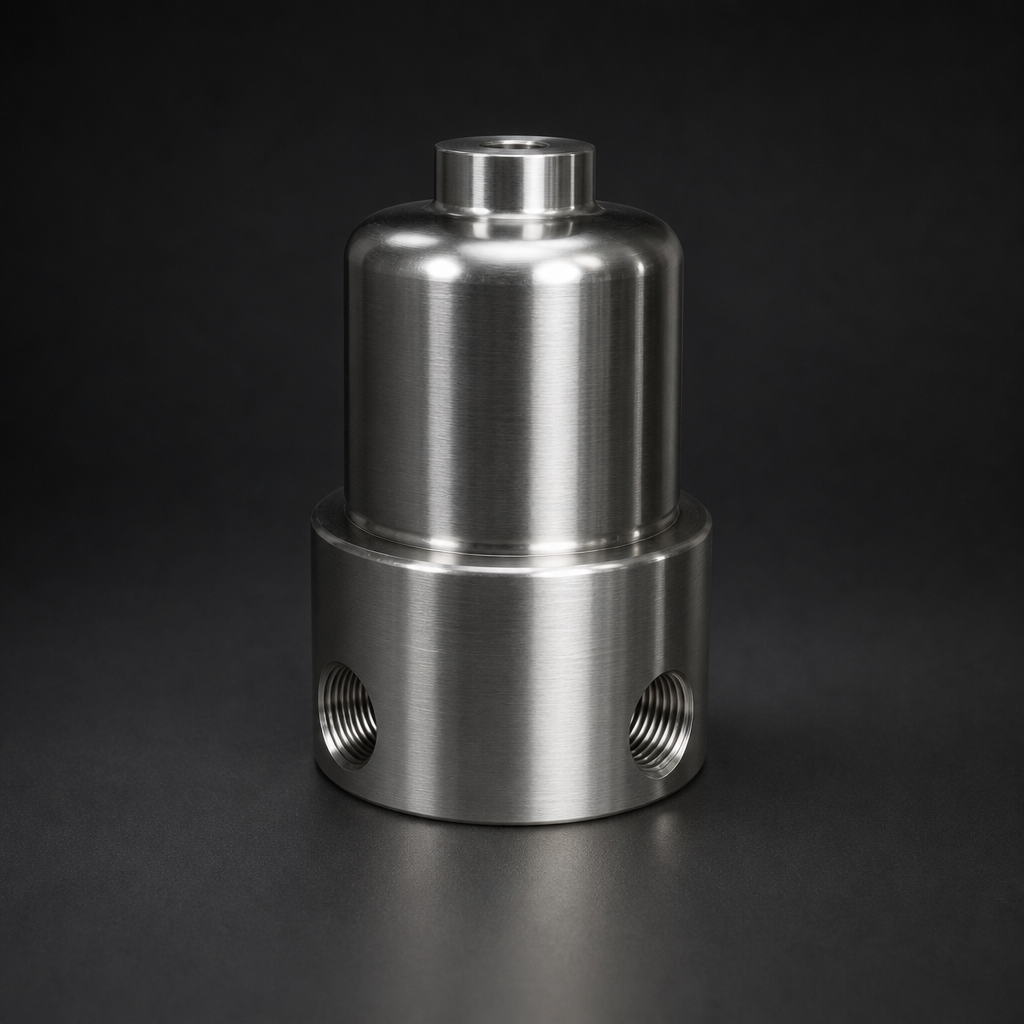
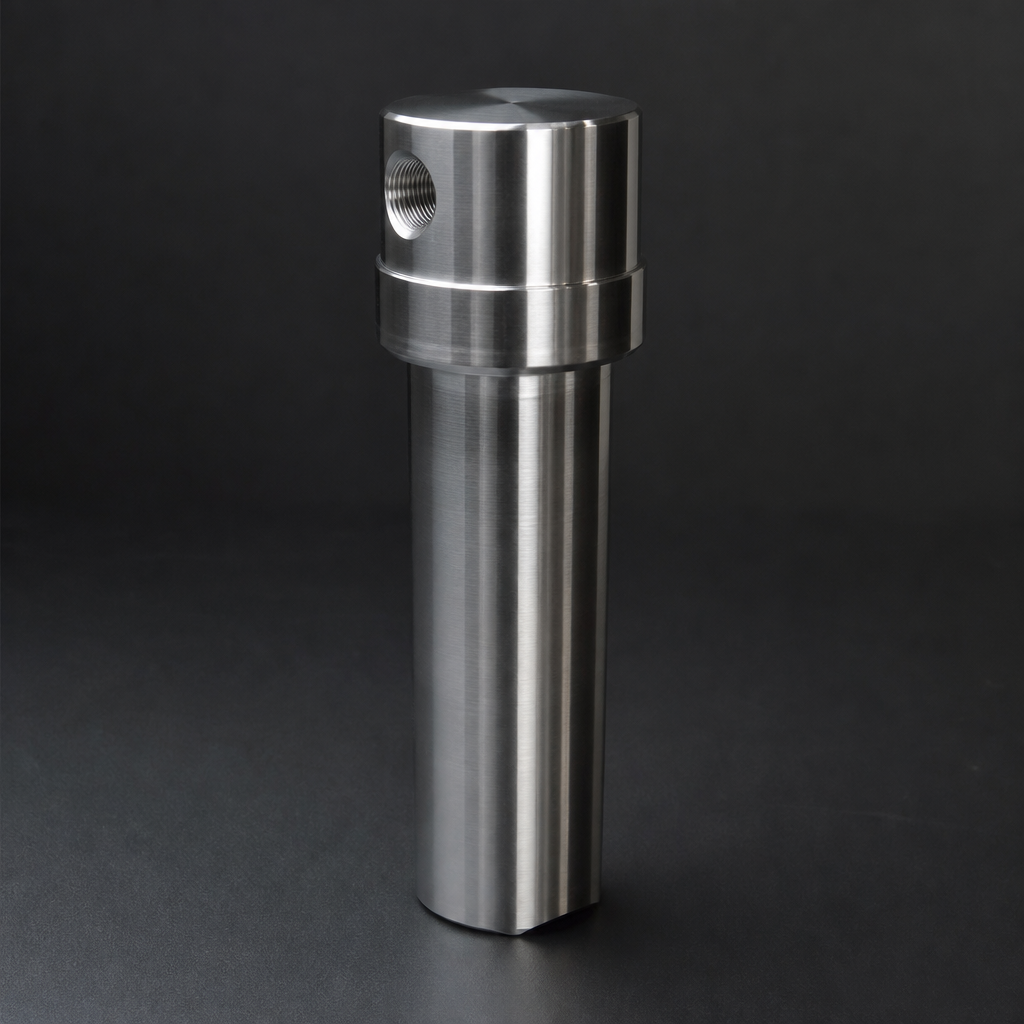
For corrosive gas filtration, 316L stainless steel housings are the standard choice. The RF-H-150 (100 bar, compact process gas housing) and RF-H-160 (250 bar) are available from R+F FilterElements in 316L SS with electropolished internals, providing a smooth, crevice-free surface that resists acid attack and is easy to decontaminate. For particularly aggressive streams — concentrated HCl, mixed acid exhaust, or chlorinated solvent vapours — Hastelloy C-276 or PTFE-lined housings may be specified.
Seals: PTFE and Kalrez for Aggressive Media
Seal selection is frequently overlooked but is often the first point of failure in aggressive gas service. Standard NBR (nitrile) seals are attacked by most acids, ketones, and chlorinated solvents. FKM/Viton seals offer improved chemical resistance and are suitable for many acid gas applications up to 200 °C, but they are not recommended for steam, hot water, or certain ketones and esters.
For the most demanding applications — HF, concentrated H₂SO₄, chlorine, or mixed aggressive streams — PTFE seals (rated to 260 °C) or Kalrez (perfluoroelastomer, rated to 275 °C) are specified. R+F FilterElements offers PTFE and Kalrez seal options across the instrumentation and process gas housing range, including the RF-H-150 and RF-H-160 series.
Chemical Resistance Comparison: Filter Media and Seal Materials
| Chemical / Medium | Borosilicate (Standard) | K-Type (PVDF Binder) | PTFE Membrane | Recommended Seal |
|---|---|---|---|---|
| HCl (dry/wet) | ⚠ Binder attack | ✓ Good | ✓ Excellent | PTFE / Kalrez |
| H₂SO₄ aerosol | ⚠ Binder attack | ✓ Good | ✓ Excellent | PTFE / FKM |
| HF (hydrofluoric acid) | ✗ Fibre attack | ✗ Fibre attack | ✓ Excellent | Kalrez only |
| Chlorinated solvents | ⚠ Binder attack | ✓ Good | ✓ Excellent | PTFE / Kalrez |
| Ketones / esters | ⚠ Binder attack | ✓ Good | ✓ Excellent | PTFE (not FKM) |
| H₂S / sour gas | ⚠ Binder attack | ✓ Excellent | ✓ Excellent | FKM / PTFE |
Need help selecting the right filter for your corrosive gas application?
Use our free Engineering Tool to get a filtration recommendation for your specific application in under 2 minutes.
Real-World Applications: Where Corrosive Gas Filtration Is Critical
Galvanic and Surface Treatment Exhaust
Electroplating and anodising lines generate exhaust streams containing HCl, H₂SO₄, chromic acid mist, and cyanide compounds. These streams must be filtered before entering scrubbers or being discharged to atmosphere. K-type elements in 316L stainless housings — such as the RF-H-150 with PTFE seals — are the standard specification for galvanic exhaust filtration. The PVDF binder resists the acid mist, while the stainless housing prevents corrosion from condensed acid droplets.
Semiconductor Etch Gas Exhaust
Semiconductor fabrication uses HF, Cl₂, BCl₃, and other aggressive etch gases. Exhaust streams from etch chambers must be filtered to protect abatement equipment and prevent cross-contamination. PTFE membrane elements in PTFE-lined or Hastelloy housings are specified for these applications. The same principles of ultra-pure gas handling that apply to hydrogen electrolysis apply here: any contamination of the filter element itself becomes a contamination source.
Chemical Process Exhaust and Reactor Off-Gas
Chemical reactors handling halogenated compounds, strong acids, or aggressive solvents produce off-gas streams that challenge standard filtration equipment. Temperature cycling — as reactors heat up and cool down — causes condensation inside filter housings, concentrating acid on element surfaces. The combination of K-type elements (for particulate and aerosol removal) with a downstream PTFE membrane polishing stage provides robust protection across the full operating cycle.
Chlorine and Chlorinated Gas Handling
Chlorine gas (Cl₂) and chlorinated compounds are among the most aggressive media encountered in industrial filtration. Dry chlorine is compatible with borosilicate glass fibre, but wet chlorine — or any stream where moisture condensation is possible — will attack standard binders and aluminium housings rapidly. For chlorine service, coalescing elements with PVDF binders in 316L stainless housings with PTFE seals are the minimum specification. Consult R+F FilterElements engineering for streams above 50 ppm Cl₂ or where liquid chlorine carryover is possible.
Specifying a Corrosive Gas Filter: Key Questions
When specifying a filter for an aggressive gas application, the following information is needed to select the correct element type, housing, and seal material:
- Gas composition: which acids, solvents, or reactive species are present?
- Concentration: ppm or % by volume for each aggressive component
- Temperature: inlet gas temperature and minimum expected temperature (condensation risk)
- Pressure: operating pressure and maximum allowable differential pressure
- Flow rate: Nm³/h or m³/h at operating conditions
- Particulate load: estimated concentration and particle size distribution
- Moisture content: relative humidity or dew point at filter inlet
R+F FilterElements provides application engineering support for corrosive gas filtration projects. Use the Engineering Sizing Tool for initial sizing, or contact the team directly for complex multi-component streams.
- Most coalescing and particulate filter elements use borosilicate glass microfibre bonded with a phenolic or acrylic resin.
- Selecting the right filter for a corrosive gas application requires matching four distinct material layers: the filter medium, the binder, the housing, and the seals.
- Electroplating and anodising lines generate exhaust streams containing HCl, H₂SO₄, chromic acid mist, and cyanide compounds.
- When specifying a filter for an aggressive gas application, the following information is needed to select the correct element type, housing, and seal material:
Related Reading
- Coalescing vs Particulate Filter Elements — Which Do You Need?
- Hydrogen Electrolysis Filtration — Protecting Electrolysers and Downstream Equipment
- ISO 8573-1 Compressed Air Quality Classes Explained
Try our Engineering Sizing Tool → or discuss your requirements with our team.