In dairy processing, compressed air is far more than a utility — it is a direct participant in product safety. From the pneumatic valves that control milk flow to the air jets that dry packaging before filling, compressed air touches your product at every stage. A single contamination event traced back to compressed air quality can trigger a BRC or IFS audit finding, a product recall, or worse. Yet many dairy plants still treat compressed air as an afterthought, relying on ageing filtration equipment that was never designed for food-grade duty.
This guide explains the two categories of compressed air contact in dairy environments, the filtration standards that apply, and how to specify the right compressed air filtration equipment to protect both your product and your audit record.
Direct vs Indirect Contact Air: Why the Distinction Matters
Regulatory bodies and food safety standards distinguish between two types of compressed air contact in food and beverage production:
- Direct contact air — air that physically touches the product, ingredient, or product-contact surface. Examples include air used to convey milk powder, purge filling nozzles, or blow-dry bottle interiors before filling.
- Indirect contact air — air that drives pneumatic actuators, cylinders, and valves where a seal failure could allow air to enter the product stream. Examples include the pneumatic valves on pasteurisation lines and CIP (clean-in-place) circuits.
The practical consequence is that direct-contact air must meet the most stringent quality classes under ISO 8573-1, whilst indirect-contact air — though less critical — still requires oil-free, dry, and particle-controlled supply to prevent valve seal degradation and cross-contamination risk from seal failure.
The Oil-Free Requirement in Dairy
Oil contamination in dairy compressed air is a zero-tolerance issue. Lubricating oil aerosols from reciprocating or rotary screw compressors carry hydrocarbons that can taint flavour, compromise pasteurisation efficacy, and introduce allergen risks if the compressor lubricant contains nut-derived esters. Even "oil-free" compressors — those with oil-free compression stages — can introduce oil vapour from the ambient air they draw in, particularly in plant rooms adjacent to maintenance workshops.
The solution is a three-stage filtration train at each point of use: a coalescing pre-filter to remove bulk liquid and aerosols, an activated carbon adsorber to strip oil vapour to below 0.003 mg/m³, and a final particulate filter to capture any carbon fines. R+F FilterElements offers its own range of coalescing elements (RF-C series) and activated carbon adsorbers (RF-AC series) specifically suited to this duty.
Key Performance Data for Dairy Compressed Air Filtration
Need help selecting the right filter for your dairy line?
CIP Compatibility: A Dairy-Specific Challenge
Clean-in-place (CIP) cycles present a unique challenge for compressed air filtration in dairy plants. During CIP, hot caustic and acid solutions — often at 80–90 °C — are circulated through product-contact pipework. If compressed air is used to purge lines before or after CIP, or to actuate valves during the cycle, the filtration equipment must withstand both the thermal shock and the chemical exposure.
Standard NBR seals are unsuitable for CIP environments. R+F FilterElements recommends FKM/Viton seals (rated to 200 °C) for all filter housings in CIP-adjacent service, and S-type filter elements (also rated to 200 °C) where steam sterilisation is used. The RF-H-310 to RF-H-395 housing series is available with FKM seal options and is compatible with standard dairy CIP chemicals when correctly specified.
Use our free Engineering Tool to get a filtration recommendation for your specific application in under 2 minutes.
Filtration Specification Comparison: Dairy Contact Air Classes
| Contact Type | ISO 8573-1 Oil Class | ISO 8573-1 Particle Class | Recommended Filtration Train | R+F Products |
|---|---|---|---|---|
| Direct product contact | Class 1 (<0.01 mg/m³) | Class 1 (<0.1 µm) | Coalescing → Activated Carbon → Particulate | RF-C + RF-AC + RF-P elements |
| Indirect contact (pneumatic valves) | Class 2 (<0.1 mg/m³) | Class 2 (<1 µm) | Coalescing → Particulate | RF-C + RF-P elements |
| Instrument air (non-contact) | Class 3 (<1 mg/m³) | Class 3 (<5 µm) | Coalescing | RF-C elements |
Monitoring for BRC and IFS Audits
Both the BRC Global Standard for Food Safety (Issue 9) and the IFS Food Standard (Version 8) require documented evidence that compressed air quality is monitored and controlled where air contacts food or food-contact surfaces. This means periodic microbiological and chemical testing at point-of-use, with results retained as part of your HACCP documentation.
Practically, this requires:
- Defined sampling points at each direct-contact air outlet
- Scheduled testing intervals (typically quarterly for oil content, annually for microbiological counts)
- Documented filter element change intervals with traceability records
- Differential pressure indicators on each filter housing to detect element blockage
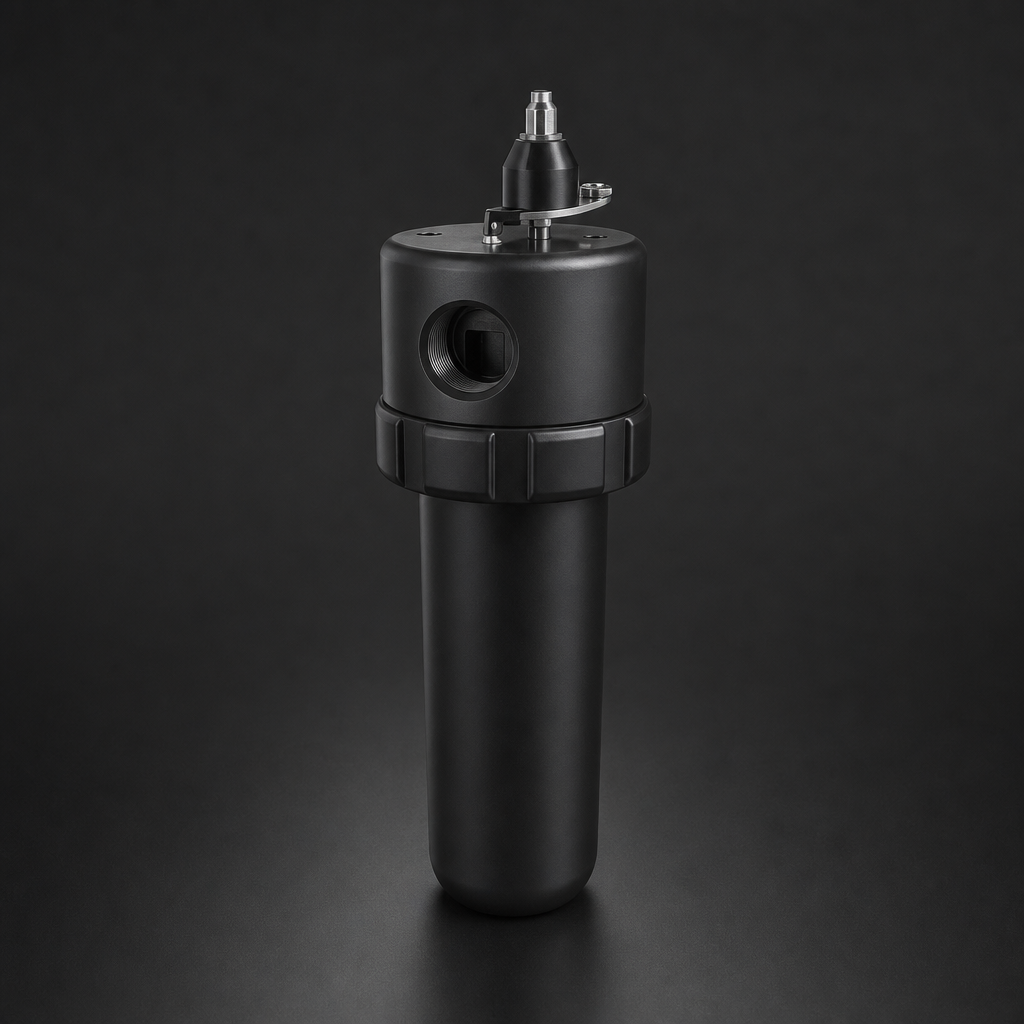
R+F FilterElements supplies filter housings with integrated differential pressure indicator ports as standard on the RF-H-310 to RF-H-395 series, making it straightforward to install continuous monitoring. For plants requiring automated alarm integration, inline filter assemblies with 4–20 mA transmitter outputs are available from R+F FilterElements.
For a broader understanding of how compressed air quality classes apply across food and beverage production, see our guide to ISO 8573-1 compressed air quality classes. If your plant also uses coalescing and particulate elements in parallel trains, our comparison of coalescing vs particulate filter elements explains when to use each type.
- Regulatory bodies and food safety standards distinguish between two types of compressed air contact in food and beverage production:
- Oil contamination in dairy compressed air is a zero-tolerance issue.
- Clean-in-place (CIP) cycles present a unique challenge for compressed air filtration in dairy plants.
- Both the BRC Global Standard for Food Safety (Issue 9) and the IFS Food Standard (Version 8) require documented evidence that compressed air quality is monitored and controlled where air contacts food or food-contact surfaces.
Specifying the Right Housing for Your Dairy Line
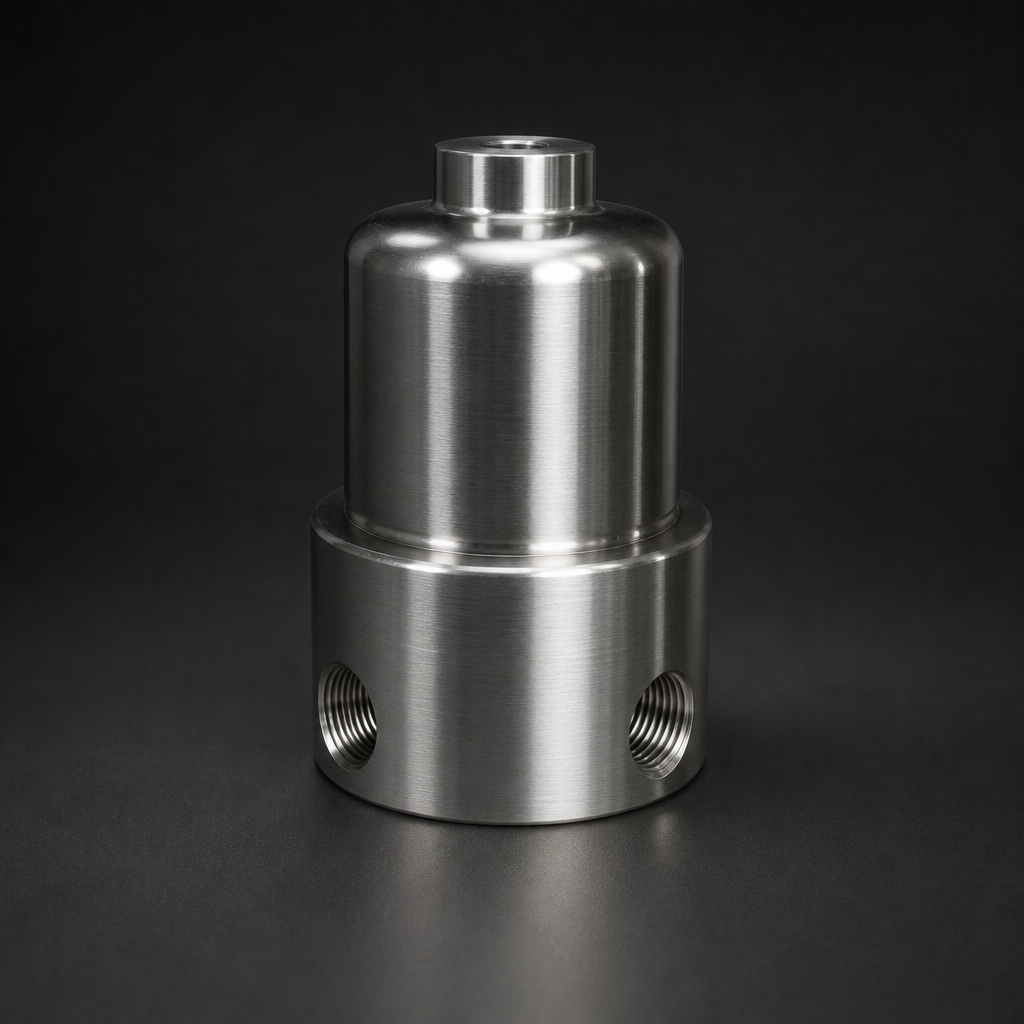
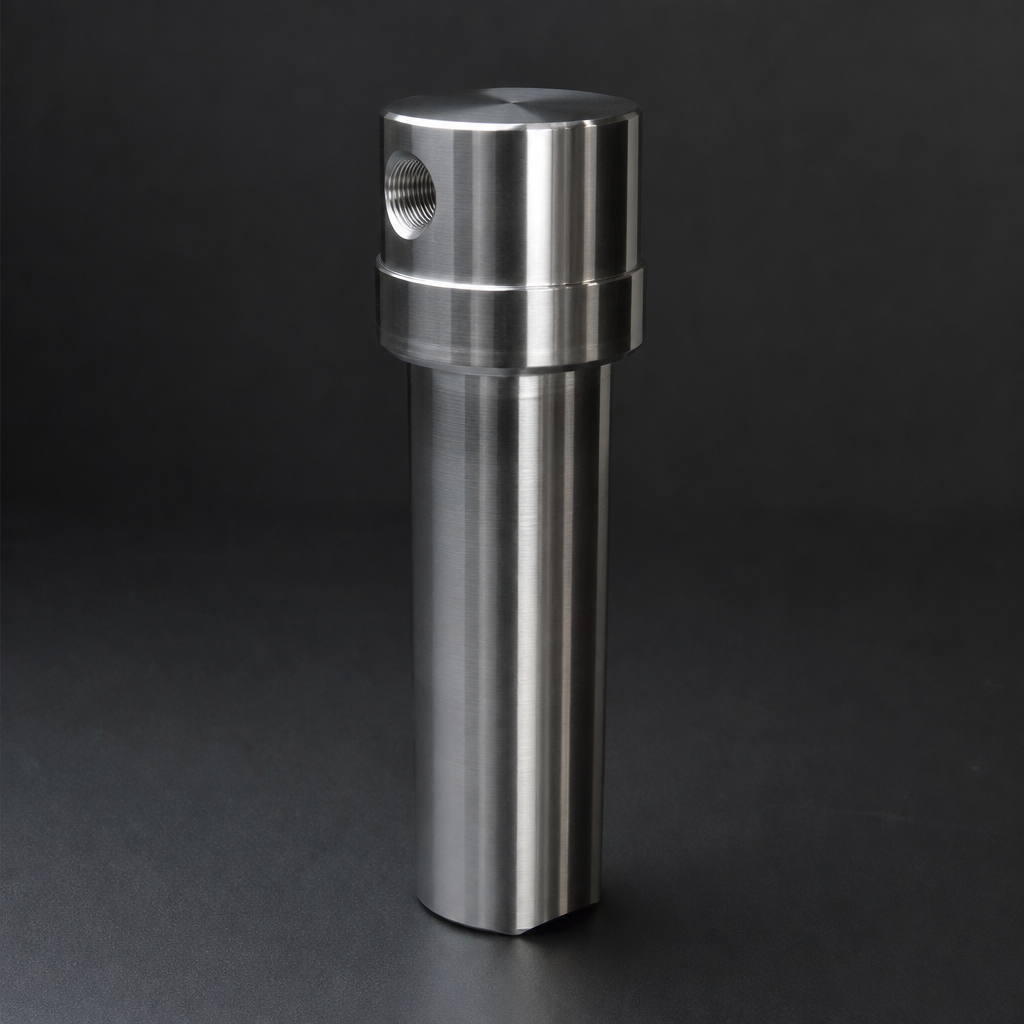
Flow rate, operating pressure, and installation space all influence housing selection. The RF-H-310 to RF-H-395 series covers flows from a few Nm³/h at a single valve actuator up to 12,000 Nm³/h for a central compressed air header serving an entire dairy hall. All housings in this range accept both RF-C coalescing and RF-P particulate elements, allowing a single housing type to be used throughout the plant for simplified spares management.
For point-of-use protection at individual filling machines or CIP stations, RF-DIL disposable inline filters offer a compact, low-cost solution that can be replaced without tools during scheduled maintenance windows — an important consideration in high-throughput dairy environments where downtime is costly.
Use our Engineering Sizing Tool to select the correct housing and element combination for your specific flow rate, pressure, and ISO 8573-1 target class.
Related Reading
- ISO 8573-1 Compressed Air Quality Classes Explained
- Coalescing vs Particulate Filter Elements: Which Do You Need?
- Oxygen Filtration Safety in Industrial Applications
Try our Engineering Sizing Tool → or discuss your requirements with our team.