In alkaline and AEM electrolysis systems, the gas leaving the electrolyser stack is never clean. It carries a cocktail of potassium hydroxide (KOH) mist, fine aerosols, and water vapour — all of which must be removed before the hydrogen reaches downstream compression, drying, or end-use equipment. Two technologies are commonly specified for this duty: demisters (sometimes called bubblers) and coalescing filters. Understanding what each one does — and why you almost always need both — is essential for reliable, long-term operation.
How Demisters and Bubblers Work
A demister in the context of alkaline electrolysis is not simply a mesh pad. The most effective configuration is a bubbler demister: the raw hydrogen gas is routed through a vessel containing deionised (DI) water, where it bubbles upward through the liquid. As the gas passes through the water column, bulk KOH droplets and electrolyte mist are absorbed into the DI water — a process driven by the high solubility of KOH and the intimate gas-liquid contact. The cleaned gas then exits from the top of the vessel.
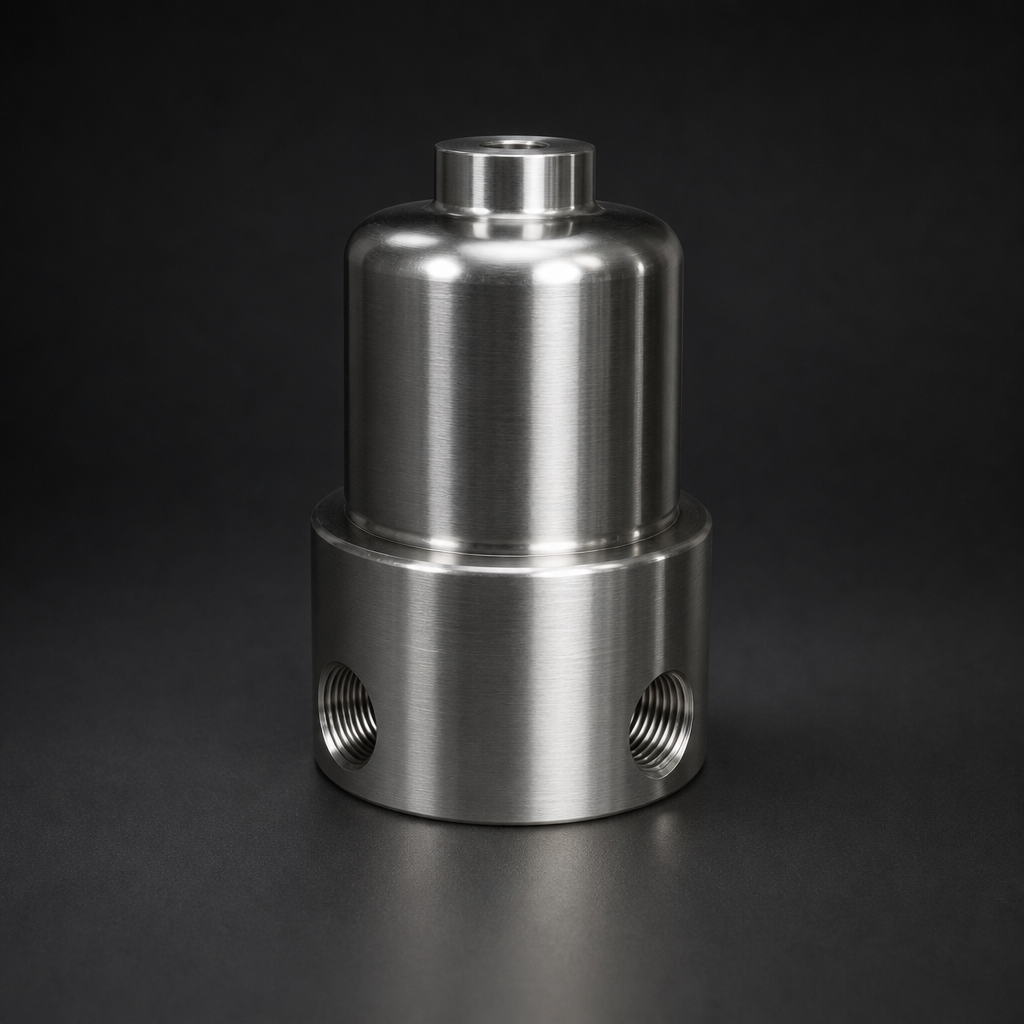
The R+F RF-DM-148G demister housing is designed specifically for this duty: 316L stainless steel construction, Kalrez seals rated for concentrated KOH service, and a compact footprint suited to 10–100 kW stack systems. The vessel is sized to provide sufficient residence time for effective KOH absorption without excessive pressure drop.
Why Coalescing Filters Alone Are Insufficient
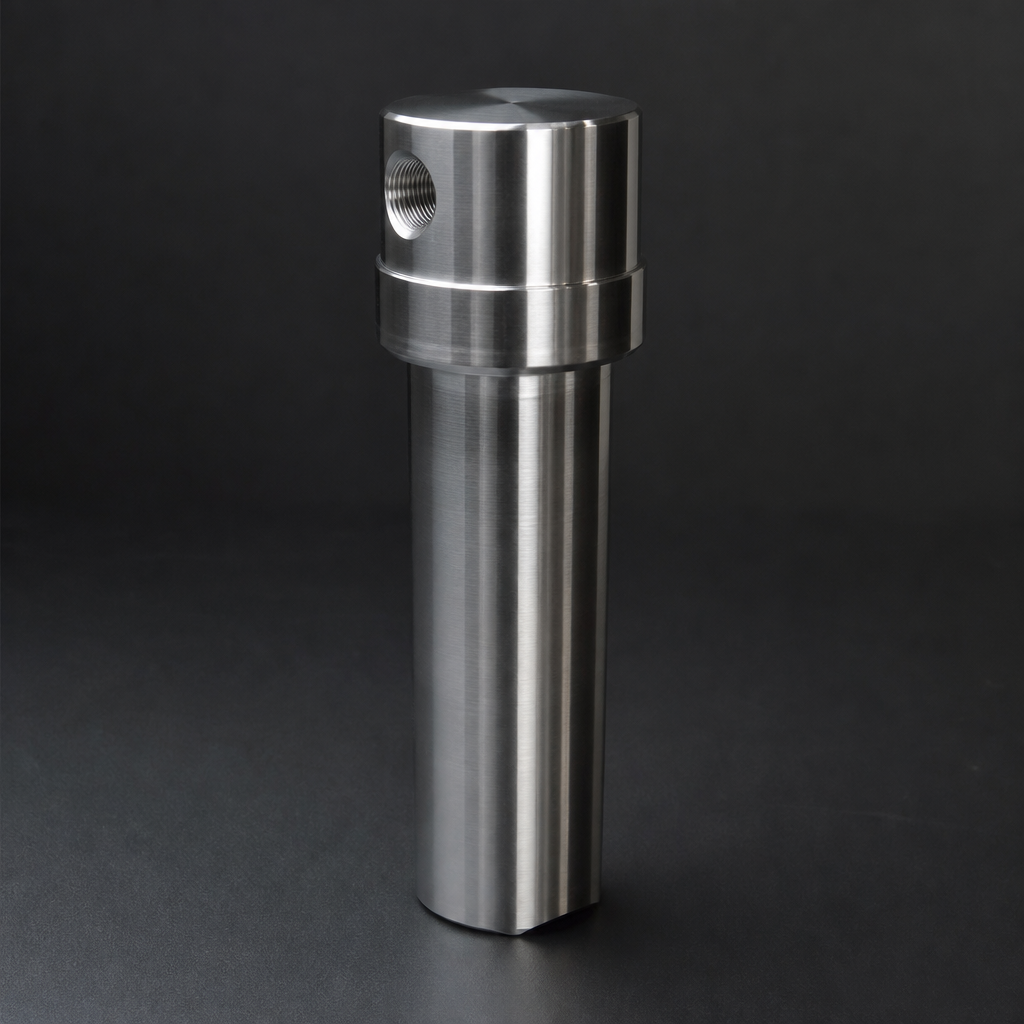
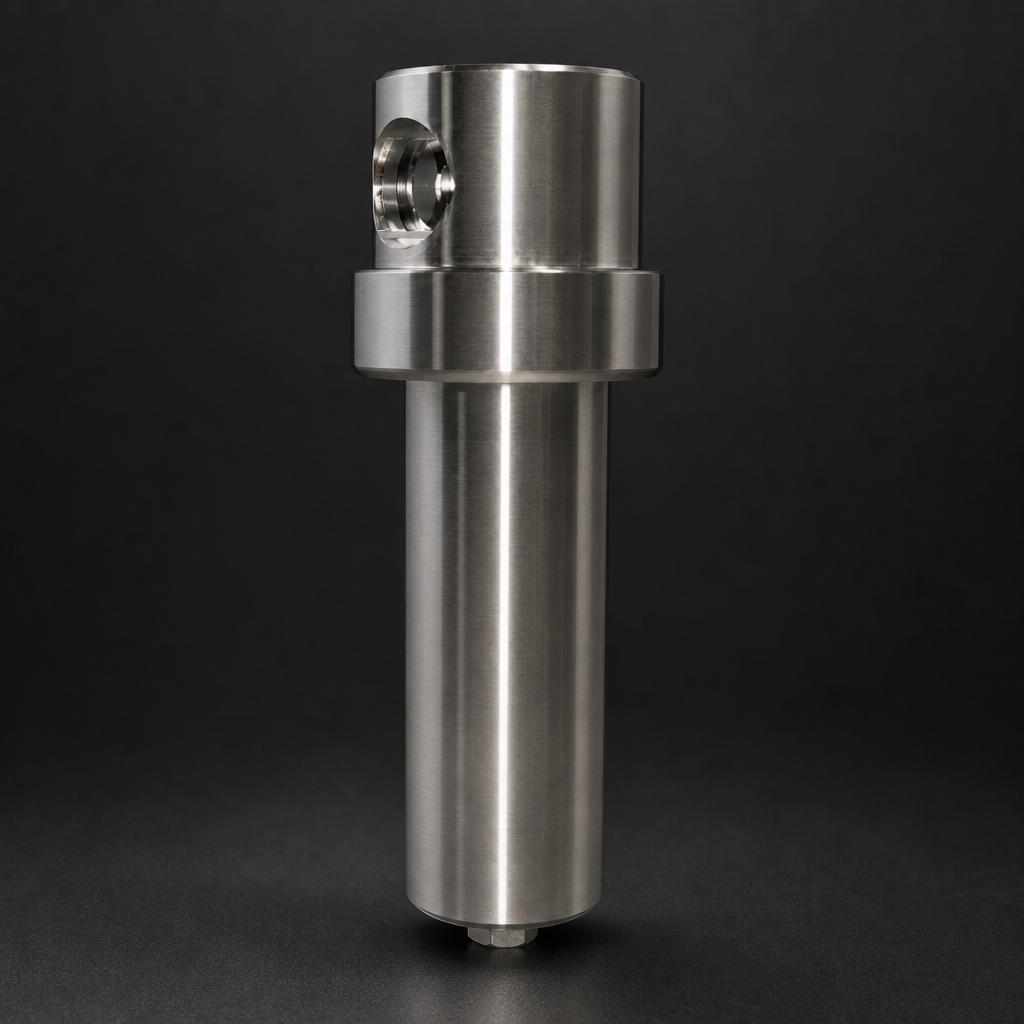
Coalescing filters — such as those using the R+F RF-H-132 coalescing housing with borosilicate glass microfibre elements — are outstanding at capturing fine aerosols down to 0.1 µm at 99.99% efficiency. However, they are not designed to handle the heavy KOH loading that comes directly off an alkaline electrolyser stack.
KOH is hygroscopic and highly corrosive. When it saturates a borosilicate glass microfibre element, it attacks the binder and degrades filtration efficiency. In worst cases, the element can fail structurally, releasing a slug of concentrated electrolyte into the gas stream. The coalescing filter's role is aerosol polishing — not bulk electrolyte removal.
The Correct Installation Sequence
For alkaline and AEM electrolysis systems, the validated installation sequence is:
- Stage 1 — Bubbler Demister (RF-DM-148G): Removes bulk KOH mist and electrolyte carryover via DI water absorption. Protects all downstream equipment.
- Stage 2 — Coalescing Filter (RF-H-132 with RF-C element): Captures residual fine aerosols and sub-micron droplets to <0.01 mg/m³. Provides the polished gas quality required for compression and drying.
- Stage 3 — Dryer / Adsorber: Removes water vapour to the required dew point. A clean, aerosol-free gas stream is essential for efficient dryer operation and long adsorbent bed life.
This three-stage approach is consistent with the guidance in our article on hydrogen electrolysis filtration and aligns with best practice for systems from 10 kW pilot scale up to multi-MW installations.
Stage 2 — Coalescing Filter (RF-H-132 with RF-C element):
Material Requirements for KOH Service
KOH is one of the most aggressive media encountered in gas filtration. Standard NBR or FKM seals will swell and fail within weeks of exposure to concentrated KOH at elevated temperatures. For alkaline electrolyser duty, the following material specification is mandatory:
- Wetted metalwork: 316L stainless steel as a minimum; Hastelloy C-276 for high-concentration or high-temperature service
- Seals: Kalrez (FFKM) — the only elastomer with proven long-term resistance to hot, concentrated KOH
- Filter elements: Borosilicate glass microfibre with PTFE-treated outer wrap; avoid cellulose or polyester media
- Housing coatings: No epoxy or phenolic coatings — bare 316L or electropolished finish only
The RF-DM-148G demister and RF-H-132 coalescing housing are both available from R+F FilterElements with Kalrez seal packages as standard for hydrogen/KOH service. See our process gas filter range for full specifications.
Use our free Engineering Tool to get a filtration recommendation for your specific application in under 2 minutes.
Demister vs Coalescing Filter: Side-by-Side Comparison
| Parameter | Bubbler Demister (RF-DM-148G) | Coalescing Filter (RF-H-132) |
|---|---|---|
| Primary duty | Bulk KOH / electrolyte removal | Fine aerosol polishing |
| Removal mechanism | Absorption into DI water | Coalescence on glass microfibre |
| Particle size range | Bulk droplets >10 µm | Aerosols ≥ 0.1 µm |
| KOH loading tolerance | High — designed for heavy carryover | Low — element blinding risk |
| Maintenance | DI water top-up / drain | Element replacement (periodic) |
| Installation position | First stage (immediately after stack) | Second stage (after demister) |
| Seal material | Kalrez (FFKM) | Kalrez (FFKM) |
Real-World Application: 10–100 kW Stack Systems
In a typical 50 kW alkaline electrolyser skid operating at 30 bar and 80 °C, the hydrogen gas exits the stack at near-saturation humidity with KOH concentrations in the gas phase that can reach several hundred mg/m³ during transient operation. Without a demister, this loading would blind a standard coalescing element within days.
With the RF-DM-148G bubbler demister installed as the first stage, KOH carryover is reduced to below 5 mg/m³ before the gas reaches the RF-H-132 coalescing filter. The coalescing stage then reduces residual aerosols to below 0.01 mg/m³, delivering gas quality suitable for the downstream pressure swing adsorption (PSA) dryer. Element change intervals on the coalescing filter extend from days to months — a significant reduction in operating cost and maintenance burden.
For system designers working on green hydrogen solutions, this two-stage approach is the baseline specification. It applies equally to AEM electrolysers, which use dilute KOH or pure water but still generate electrolyte mist under dynamic load conditions.
For a broader comparison of electrolyser technologies and their filtration implications, see our guide on coalescing vs particulate filter elements. For KOH mist removal specifics, our dedicated article provides further detail on hydrogen electrolysis filtration.
- A demister in the context of alkaline electrolysis is not simply a mesh pad.
- Coalescing filters — such as those using the R+F RF-H-132 coalescing housing with borosilicate glass microfibre elements — are outstanding at capturing fine aerosols down to 0.
- Stage 1 — Bubbler Demister (RF-DM-148G):
- KOH is one of the most aggressive media encountered in gas filtration.
Selecting the Right Configuration
When specifying filtration for an alkaline or AEM electrolyser, the key parameters to define are:
- Stack operating pressure (bar) — determines housing pressure rating
- KOH concentration in electrolyte (typically 25–30 wt%) — determines demister sizing
- Gas flow rate (Nm³/h) — determines housing and element size
- Operating temperature (°C) — determines seal and element material selection
- Downstream gas quality requirement — determines whether a third-stage adsorber is needed
R+F FilterElements offers engineering support for system designers specifying filtration for hydrogen production. Use the Engineering Sizing Tool to generate a preliminary specification, or contact our team directly for complex or high-pressure applications.
Related Reading
- Hydrogen Electrolysis Filtration — Full System Guide
- Coalescing vs Particulate Filter Elements — Which Do You Need?
- ISO 8573-1 Compressed Air Quality Classes Explained
Try our Engineering Sizing Tool → or discuss your requirements with our team.