If your facility manufactures sterile medicinal products, the 2023 revision of EU GMP Annex 1 is not optional reading — it is a compliance obligation. After more than a decade of consultation, the European Medicines Agency published the updated text in August 2022, with full implementation required by 25 August 2023. For compressed gas systems, the changes are substantial: tighter requirements around filter integrity testing, mandatory redundancy in critical zones, and a new emphasis on contamination control strategy (CCS) documentation that explicitly covers gas filtration.
This article walks through the key changes that affect gas filtration in sterile manufacturing, explains what they mean in practice, and shows how the R+F FilterElements range can help you meet the new standard without over-engineering your system.
Why Compressed Gas Filtration Matters Under Annex 1
Compressed gases — nitrogen, carbon dioxide, compressed air, and instrument air — contact product, primary packaging, and critical surfaces throughout a sterile manufacturing facility. A single contamination event traced to a gas supply can trigger a batch recall, a regulatory warning letter, or worse. Annex 1 has always required that these gases be filtered, but the 2023 revision is far more prescriptive about how that filtration is validated, monitored, and documented.
Section 4.35 of the revised Annex 1 states that gases that come into contact with the product or product-contact surfaces in Grade A and B zones must pass through a sterilising-grade filter. The filter must be integrity-tested — typically by a bubble-point or diffusion test — before first use and at a frequency defined in the site's CCS. For many facilities, this means moving from annual integrity testing to pre-use testing for every production campaign.
The Four Key Changes for Gas Filtration
1. Sterilising-Grade Filters Are Now Mandatory in Grade A/B
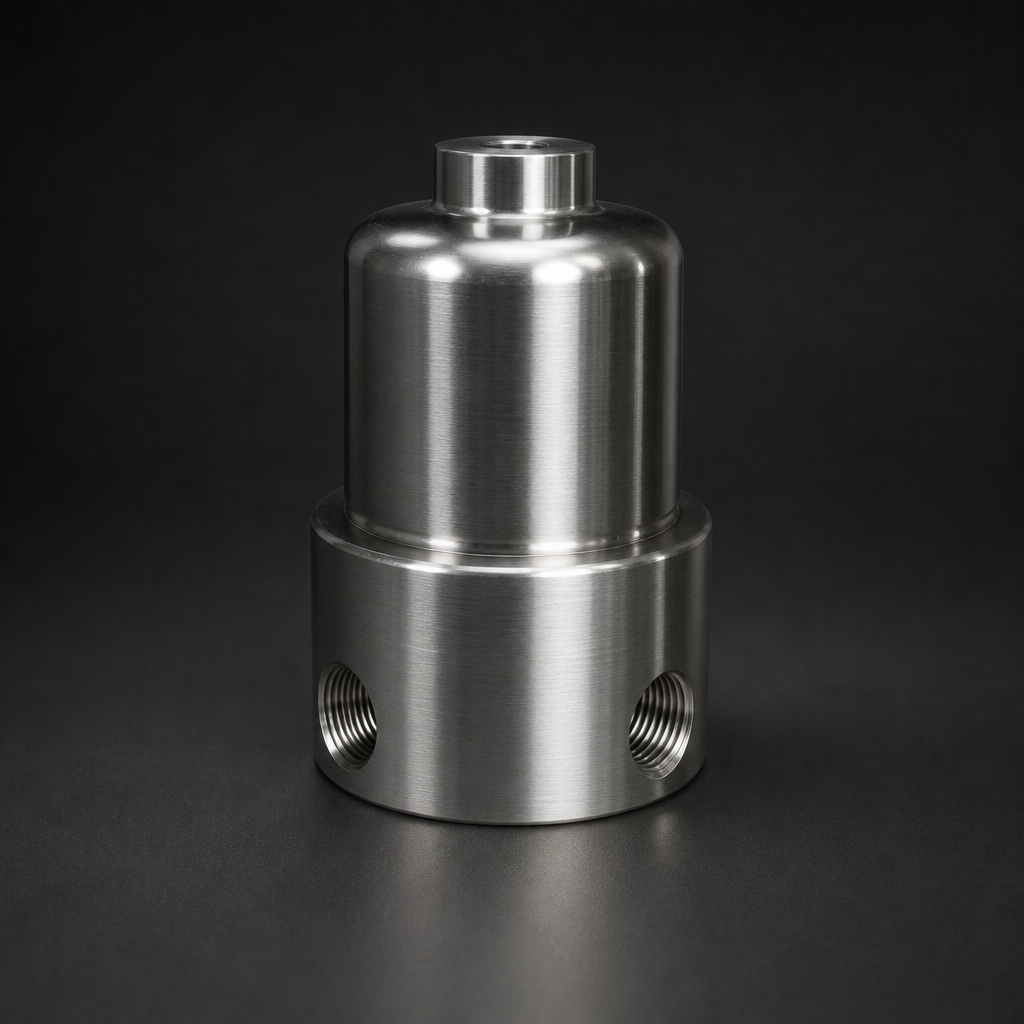
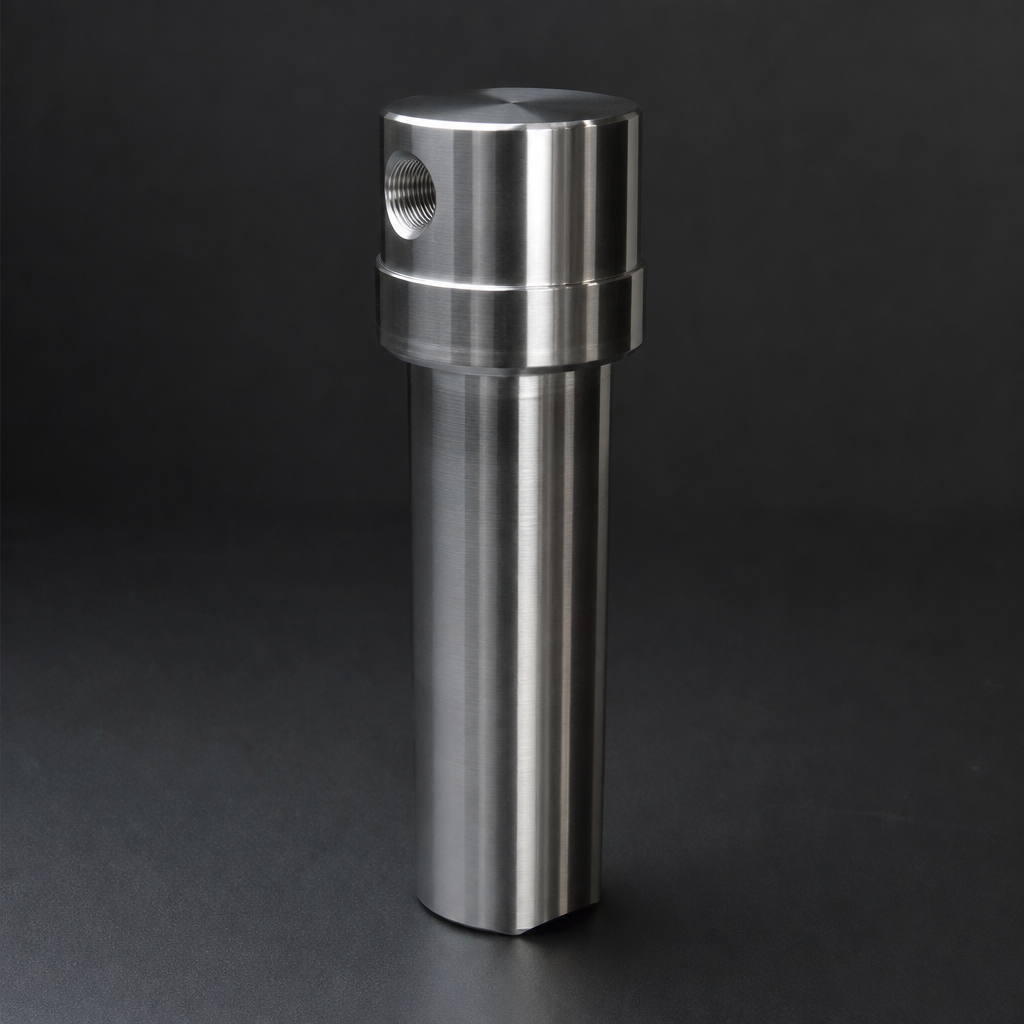
Previously, many facilities used high-efficiency coalescing or particulate filters upstream of Grade A filling lines and relied on environmental monitoring to demonstrate control. The 2023 revision closes this gap: a sterilising-grade filter (0.2 µm or finer, validated for bacterial retention) is now explicitly required at the point of use in Grade A and B environments. Upstream coalescing filtration — such as the RF-H-310 to RF-H-395 series — remains essential for protecting the sterilising-grade filter from liquid aerosols and particulate that would shorten its service life, but it no longer substitutes for the terminal filter.
2. Integrity Testing Frequency Has Increased
The revised text requires integrity testing at a frequency commensurate with risk. For Grade A gas supplies, pre-use integrity testing is now the expected norm. This has significant operational implications: filters must be designed for repeated testing without damage, and the testing procedure must be validated and documented within the CCS. Filters with hydrophobic PTFE membranes — such as the RF-GMS-170 membrane separator — are well-suited to repeated bubble-point testing because the hydrophobic surface prevents wetting artefacts that can give false-fail results.
3. Redundancy Requirements in Critical Zones
Annex 1 now explicitly addresses filter redundancy. For gas supplies to Grade A environments, a single point of failure in the filtration train is no longer acceptable. The expectation is either a validated bypass procedure (which must itself be risk-assessed) or a redundant filter in parallel or series. In practice, most facilities are moving to a dual-filter arrangement: a coalescing pre-filter followed by a redundant sterilising-grade terminal filter, with the ability to change one element without interrupting supply.
4. Contamination Control Strategy Must Cover Gas Filtration
Perhaps the most far-reaching change is the requirement for a site-wide Contamination Control Strategy document. The CCS must address every route by which contamination could enter the product — and compressed gas is explicitly listed. Your CCS must document the filter specification, the integrity test method and acceptance criteria, the change-out frequency, and the monitoring approach for each gas point of use in Grade A and B zones. This is not a one-time exercise: the CCS must be reviewed and updated whenever process changes occur.
What This Means for Your Filtration Train
A compliant gas filtration train for a Grade A filling line under the 2023 Annex 1 revision typically looks like this:
The upstream stage — typically an RF-H-series coalescing filter fitted with an RF-C-25064 or RF-C-51230 element — removes liquid aerosols, oil mist, and bulk particulate. This protects the downstream sterilising-grade filter from premature blockage and ensures that integrity test results are not confounded by liquid bridging across the membrane. The terminal sterilising-grade filter, typically a validated 0.2 µm hydrophobic PTFE unit, provides the bacterial retention barrier required by Annex 1.
Need help selecting the right filter for your Annex 1 compliance project?
Use our free Engineering Tool to get a filtration recommendation for your specific application in under 2 minutes.
Comparing Pre-2023 and Post-2023 Requirements
| Requirement | Pre-2023 Annex 1 | 2023 Revision |
|---|---|---|
| Sterilising-grade filter in Grade A/B | Implied / interpreted | Explicitly mandated |
| Integrity testing frequency | Typically annual | Pre-use for Grade A; risk-based for others |
| Filter redundancy | Not specified | Required for Grade A gas supplies |
| CCS documentation | Not required | Mandatory; must cover gas filtration |
| Upstream pre-filtration | Good practice | Strongly recommended to protect terminal filter |
Selecting the Right R+F FilterElements Products
R+F FilterElements offers a range of products suited to building a compliant Annex 1 gas filtration train. For the upstream coalescing stage, the RF-H-310 to RF-H-395 series housings accept RF-C coalescing elements (borosilicate glass microfibre, 99.99% efficiency at ≥ 0.1 µm) and RF-P particulate elements (99.99% efficiency at ≥ 0.3 µm). These are available from R+F FilterElements in a range of sizes to match your flow requirement, from small instrument lines to large-volume nitrogen blanketing systems.
For point-of-use protection and inline redundancy, the RF-DIL disposable inline filter range provides a compact, single-use solution that eliminates the need for element change-out validation at the point of use. For facilities requiring a validated hydrophobic membrane at the terminal position, the RF-GMS-170 PTFE membrane separator provides an absolute liquid barrier alongside its particulate retention function.
All R+F FilterElements products are supplied with full material traceability documentation, making it straightforward to populate the filter specification section of your CCS. For guidance on sizing your filtration train to meet the flow and pressure requirements of your specific process, the R+F Engineering Sizing Tool provides a structured starting point.
- Compressed gases — nitrogen, carbon dioxide, compressed air, and instrument air — contact product, primary packaging, and critical surfaces throughout a sterile manufacturing facility.
- Previously, many facilities used high-efficiency coalescing or particulate filters upstream of Grade A filling lines and relied on environmental monitoring to demonstrate control.
- A compliant gas filtration train for a Grade A filling line under the 2023 Annex 1 revision typically looks like this:
- R+F FilterElements offers a range of products suited to building a compliant Annex 1 gas filtration train.
Practical Steps for Compliance
If you have not yet reviewed your gas filtration systems against the 2023 Annex 1 requirements, a structured gap assessment is the logical starting point. Map every compressed gas point of use in your Grade A and B environments, confirm the filter specification at each point, and check whether integrity testing records exist and are current. Where gaps exist — missing sterilising-grade filters, outdated integrity test records, or absent CCS documentation — prioritise the Grade A points first, as these carry the highest regulatory risk.
For further background on filter element selection and the difference between coalescing and particulate filtration, see our guide on coalescing vs particulate filter elements. For facilities also handling oxygen or nitrogen in critical applications, our article on oxygen filtration safety covers the additional material compatibility requirements that apply. A thorough understanding of ISO 8573-1 compressed air quality classes will also help you align your gas quality targets with the Annex 1 contamination control requirements.
Try our Engineering Sizing Tool → or discuss your requirements with our team.