In high-pressure gas systems operating above 20 bar, one of the most insidious failure modes is rarely discussed until it causes a costly shutdown — or worse, a safety incident. Explosive decompression, also known as rapid gas decompression (RGD), occurs when dissolved gas trapped within elastomer seals expands violently during depressurisation, causing blistering, cracking, and catastrophic seal failure. Understanding when and why this happens — and how to specify the correct seal material — is essential for any engineer working with compressed gas, natural gas, hydrogen, or CO₂ systems.
What Is Explosive Decompression?
Under high pressure, gas molecules dissolve into the polymer matrix of elastomer seals — a process governed by Henry's Law. When pressure drops rapidly (as during an emergency shutdown, blowdown, or even a routine depressurisation cycle), the dissolved gas cannot escape fast enough through the seal material. Instead, it nucleates into bubbles within the elastomer, expanding with enormous force. The result is internal blistering, surface cracking, or complete structural failure of the seal.
The risk increases significantly above 20 bar and is particularly acute with gases that have high solubility in elastomers — CO₂, H₂S, and hydrocarbons being the most aggressive. Even nitrogen and hydrogen, while less soluble, can cause RGD failure in poorly specified seals at very high pressures (above 200 bar).
When Are EDR Seals Required?
The threshold for mandatory EDR seal specification is generally accepted as 20 bar operating pressure, though many operators apply EDR requirements from 10 bar when aggressive gases are present. Key trigger conditions include:
- Operating pressure ≥ 20 bar with any hydrocarbon, CO₂, or sour gas (H₂S)
- Rapid depressurisation rates exceeding 3.5 bar/min
- Cyclic pressurisation/depressurisation duty (e.g., CNG dispensing, gas sampling systems)
- Offshore or subsea applications where NORSOK compliance is mandatory
- Any system where seal failure would result in uncontrolled gas release
Testing Standards for EDR Seals
Two primary standards govern EDR seal qualification:
NORSOK M-710 (Norwegian Oil and Gas standard) is the most widely recognised EDR testing protocol. It subjects elastomer specimens to high-pressure gas exposure followed by controlled rapid decompression cycles, evaluating blistering, cracking, and volume change. Seals must pass multiple decompression cycles without failure to achieve certification.
Total GS EP PVV 142 is the Total Energies internal specification, widely adopted across the oil and gas industry as an alternative or complementary standard to NORSOK M-710. It specifies test conditions for specific gas compositions and pressure/temperature combinations relevant to upstream production environments.
Need help selecting the right seal material for your high-pressure gas filter?
Use our free Engineering Tool to get a filtration recommendation for your specific application in under 2 minutes.
EDR Seal Material Options
Selecting the correct EDR seal material requires balancing chemical compatibility, temperature range, and the specific gas composition in service. The main options are:
| Material | Temp Range | Best For | Limitations |
|---|---|---|---|
| FKM EDR | -20 to +200 °C | Hydrocarbons, CO₂, H₂S, natural gas | Not suitable for steam or hot water |
| HNBR EDR | -40 to +150 °C | Sour gas (H₂S), oilfield applications | Limited resistance to aromatic hydrocarbons |
| FFKM EDR | -20 to +260 °C | Aggressive chemicals, ultra-high pressure | High cost; specialist sourcing required |
| PTFE | -200 to +260 °C | Oxygen, aggressive chemicals, ultra-pure gas | Not elastomeric; used as backup ring or encapsulated seal |
R+F Seal Options for High-Pressure Gas Filters
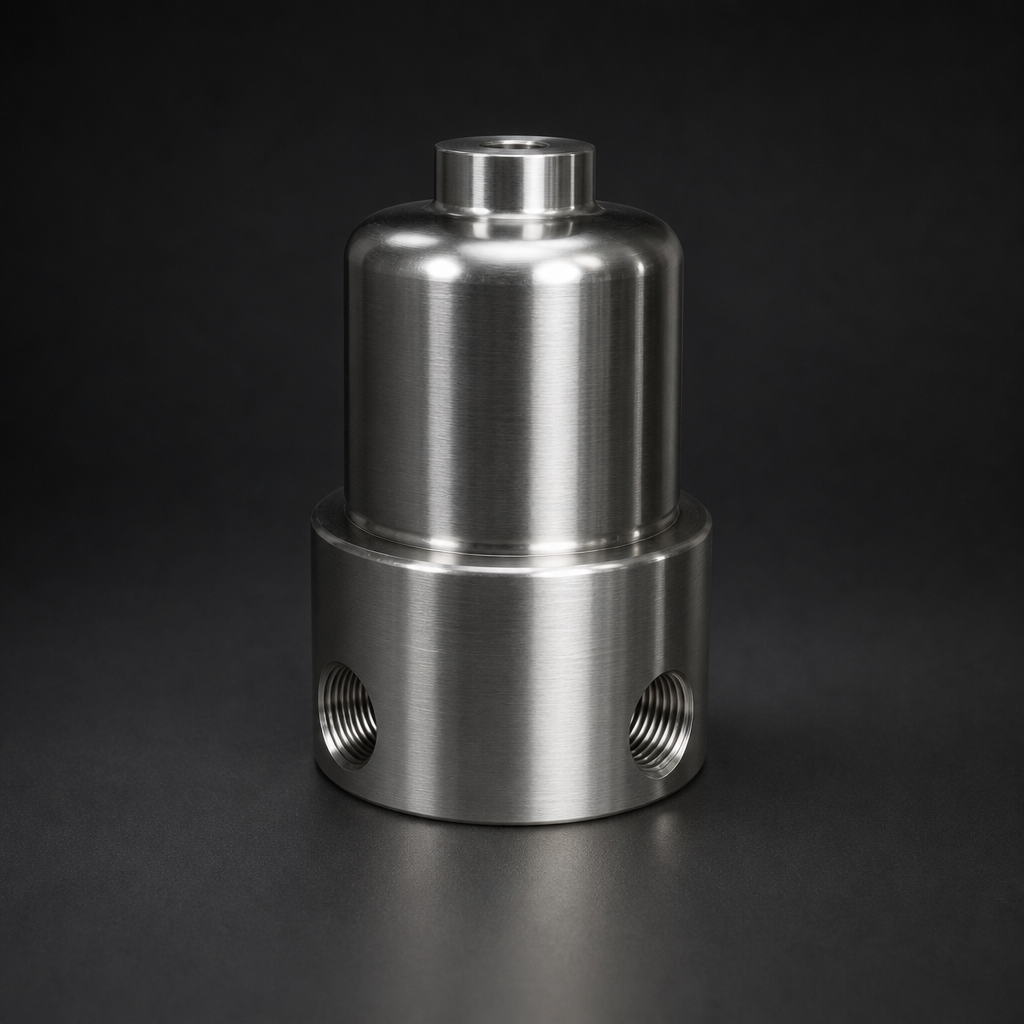
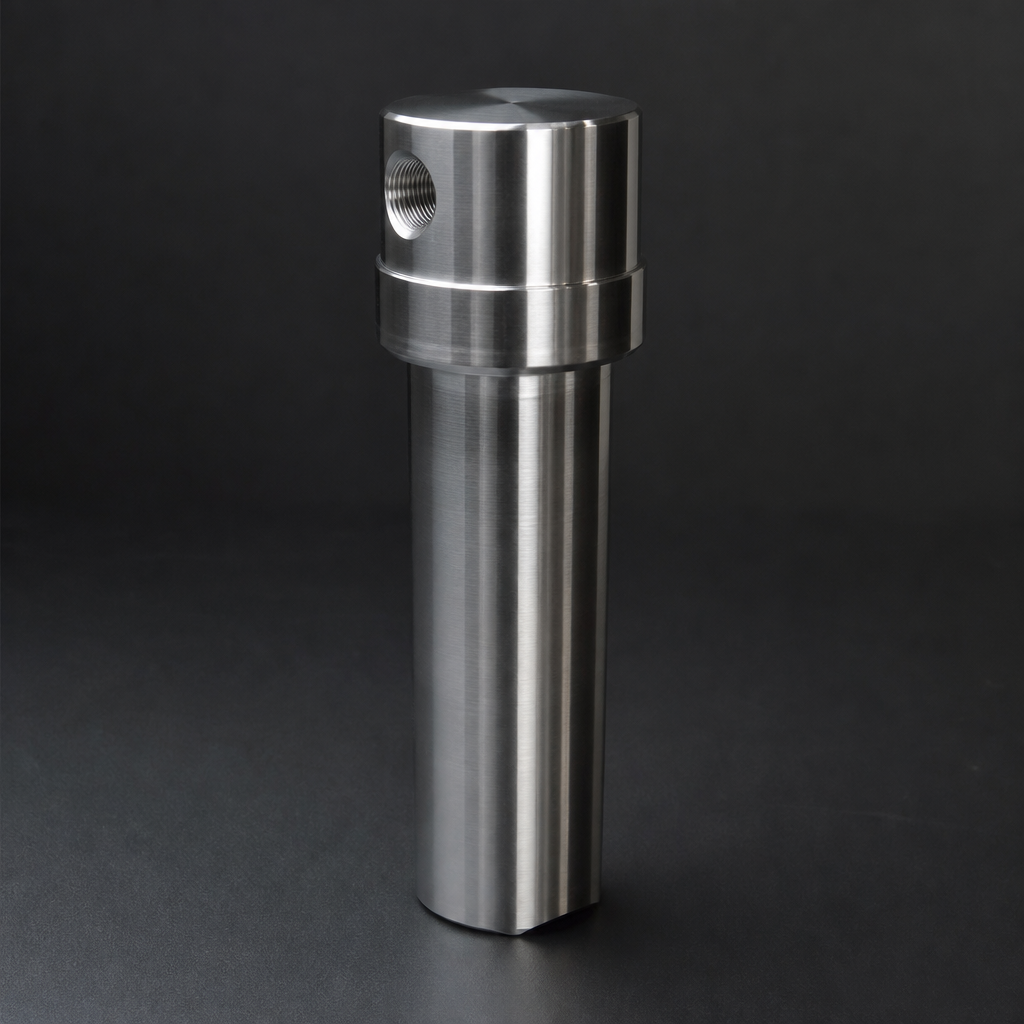
The R+F process gas filter range is designed for demanding high-pressure applications and is available with a selection of seal materials to match your service conditions. The RF-H-150 (100 bar) and RF-H-160 (250 bar) housings are available with FKM seals as standard, with EPDM-O₂ seals for oxygen service and PTFE seals for aggressive chemical environments.
For the most demanding applications — ultra-high pressure analyser protection above 400 bar — the RF-H-170 series (rated to 700 bar in HP variants) is available with PTFE seals and SilcoNert-coated internals for ultra-pure or semiconductor gas service. Where EDR-rated FKM or FFKM seals are required for offshore or sour gas duty, R+F FilterElements can source and specify these materials as part of a complete filter assembly — contact the engineering team to discuss your specific requirements.
It is important to note that R+F FilterElements is not a seal manufacturer. The seal options available from R+F branded filter assemblies are selected from qualified suppliers and matched to the housing design. For applications requiring NORSOK M-710 certified EDR seals, R+F can advise on the appropriate configuration and supply documentation to support your engineering review.
- Under high pressure, gas molecules dissolve into the polymer matrix of elastomer seals — a process governed by Henry's Law.
- The threshold for mandatory EDR seal specification is generally accepted as 20 bar operating pressure, though many operators apply EDR requirements from 10 bar when aggressive gases are present.
- Two primary standards govern EDR seal qualification:
- Selecting the correct EDR seal material requires balancing chemical compatibility, temperature range, and the specific gas composition in service.
Practical Guidance: Specifying EDR Seals in Your Filter System
When specifying a gas filter for high-pressure service, the following checklist will help ensure correct seal selection:
- Identify the gas composition — CO₂ content, H₂S concentration, hydrocarbon dew point, and any trace contaminants that may affect elastomer compatibility.
- Confirm the maximum operating pressure and depressurisation rate — if the system can be depressurised faster than 3.5 bar/min, EDR seals should be specified regardless of pressure.
- Check applicable standards — NORSOK M-710 for offshore/subsea, Total GS EP PVV 142 for upstream oil and gas, or your company's internal specification.
- Select the seal material — FKM EDR for most hydrocarbon/CO₂ service; HNBR EDR for sour gas; FFKM EDR for aggressive chemicals or very high temperatures; PTFE for oxygen or ultra-pure gas.
- Request material certification — ensure the filter supplier can provide material test certificates and, where required, NORSOK M-710 test reports for the specific seal compound.
For a broader overview of filter selection for process gas applications, visit our material compatibility guide for aggressive gases or use the R+F Engineering Sizing Tool to configure a filter assembly for your operating conditions.
Related Reading
- Material Compatibility for Aggressive Gases — FKM, EPDM, PTFE Compared
- Oxygen Filtration Safety — Why Seal and Element Material Selection Is Critical
- ISO 8573-1 Compressed Air Quality Classes Explained
Try our Engineering Sizing Tool → or discuss your requirements with our engineering team.