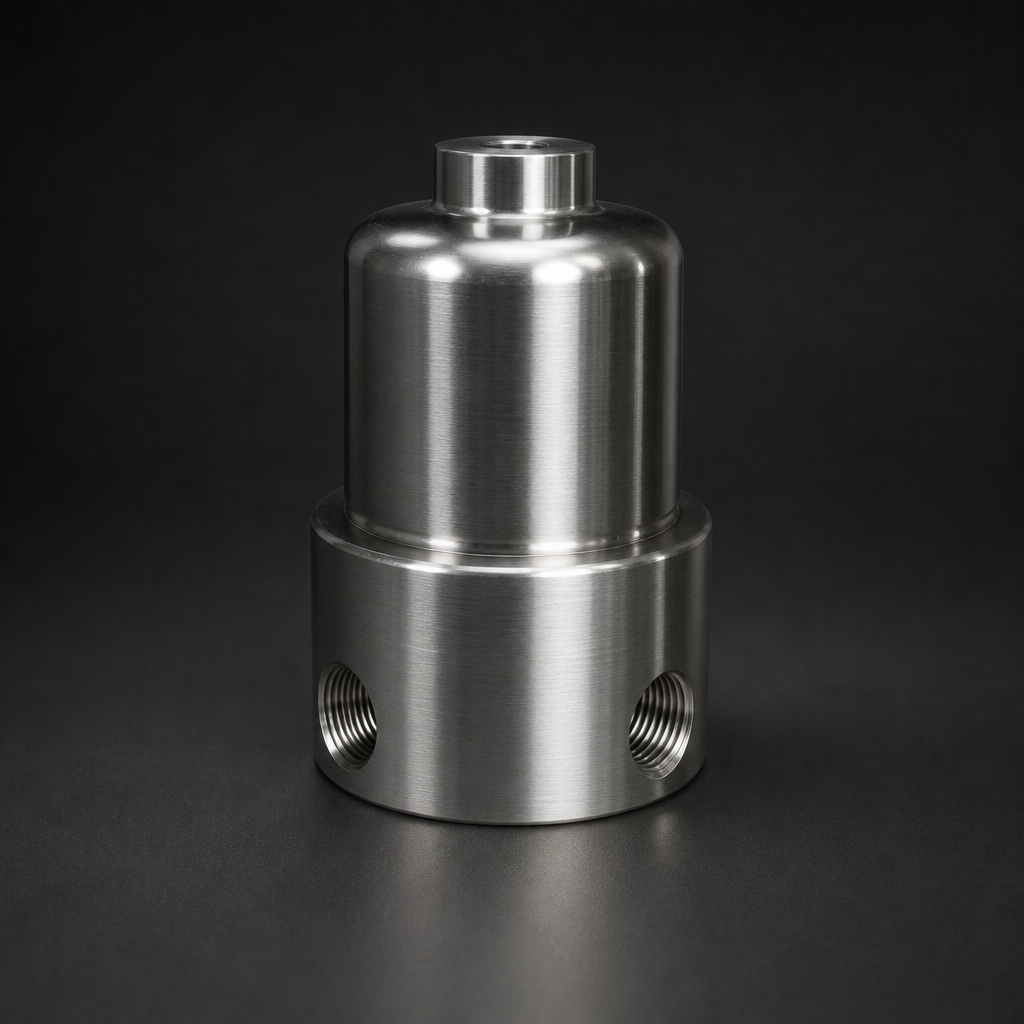
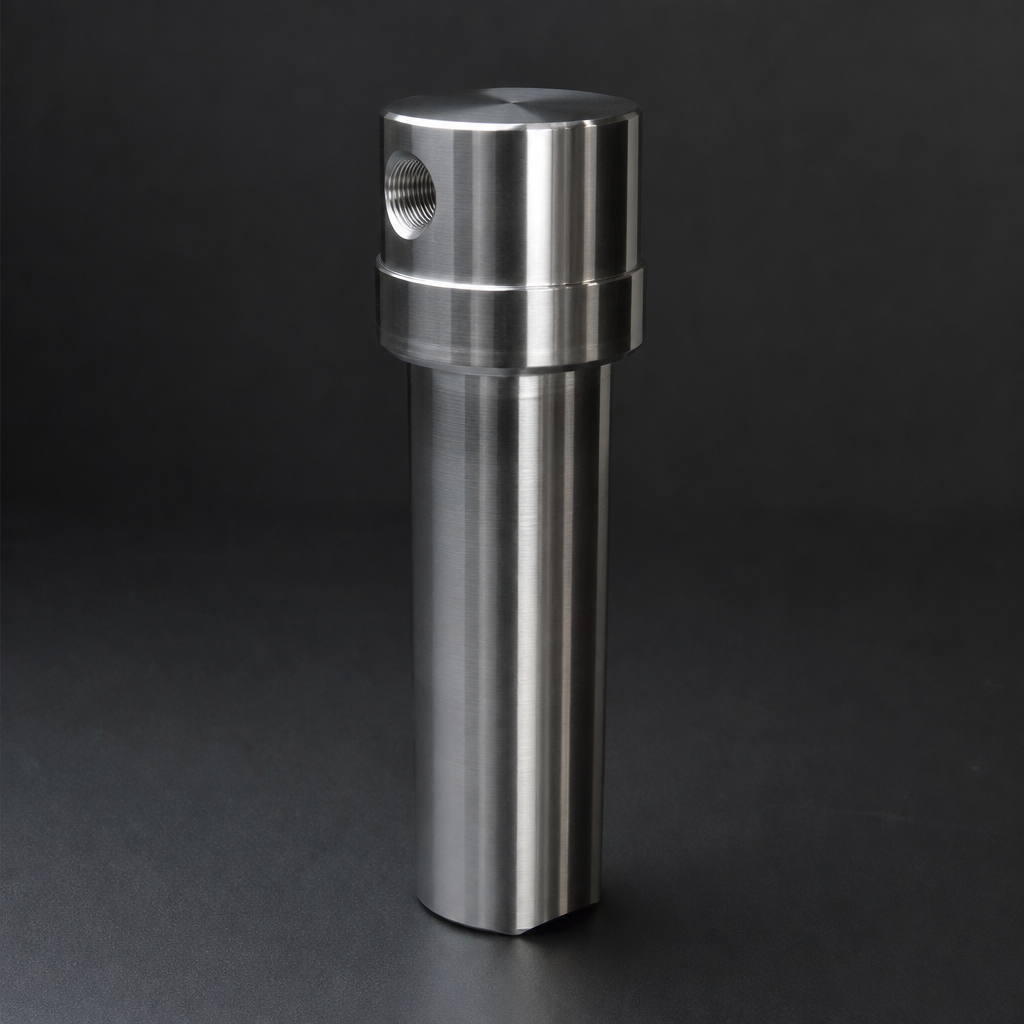
Supplying sterile gas to a bioreactor is one of the most critical — and most frequently underestimated — steps in any fermentation process. Whether you are sparging compressed air into a mammalian cell culture or delivering pure oxygen to a high-density microbial fermentation, the gas entering the vessel must be absolutely free of viable micro-organisms, particulate contamination, and moisture. A single contamination event can destroy weeks of upstream work and cost tens of thousands of euros in lost batches. This guide explains how to select, validate, and maintain the right filtration system for bioreactor gas supply.
Why Sterile Gas Filtration Is Non-Negotiable in Fermentation
Bioreactors operate under carefully controlled conditions — temperature, pH, dissolved oxygen, and nutrient concentration — all optimised to maximise cell growth or product yield. Introducing unfiltered or inadequately filtered gas disrupts every one of these parameters simultaneously. Airborne bacteria and fungal spores are ubiquitous; even a brief lapse in sterile barrier integrity can seed a culture with fast-growing contaminants that outcompete the production organism within hours.
Beyond microbial contamination, unfiltered compressed air carries compressor oil aerosols, rust particles, and water vapour — all of which can inhibit enzyme activity, alter culture pH, or damage downstream chromatography resins. Proper gas filtration therefore protects not just the culture, but the entire downstream purification train.
Understanding the Sparger Gas Path
In a typical stirred-tank bioreactor, gas enters through a sparger — a porous ring or tube at the vessel base — and rises as fine bubbles through the culture medium. The gas path from the compressor or cylinder to the sparger typically includes:
- A bulk particulate pre-filter to remove gross contamination
- A coalescing stage to strip oil aerosols and bulk moisture
- A final absolute-rated 0.2 µm membrane filter immediately upstream of the vessel
The final membrane filter is the critical control point. It must be positioned as close to the bioreactor inlet as possible to minimise the risk of post-filter contamination. For process gas applications in pharmaceutical manufacturing, R+F FilterElements offers validated membrane filter housings designed specifically for this duty.
Autoclavable vs Disposable Membrane Filters
The choice between autoclavable (reusable) and single-use (disposable) membrane filters is one of the first decisions engineers face when designing a bioreactor gas supply system. Each approach has distinct advantages depending on scale, regulatory strategy, and operational philosophy.
Autoclavable stainless steel housings — such as the RF-H-150 compact process gas housing — are the traditional choice for large-scale fermentation. They can be sterilised in-place (SIP) using saturated steam at 121–134 °C, validated for a defined number of cycles, and reused across multiple batches. The RF-H-150 is constructed from 316L stainless steel with EPDM-O₂ seals for oxygen compatibility, making it suitable for both air and pure O₂ sparging duties.
| Parameter | Autoclavable (RF-H-150) | Disposable (RF-DIL) |
|---|---|---|
| Housing material | 316L stainless steel | Polypropylene / PTFE |
| Sterilisation method | SIP / autoclave (121–134 °C) | Pre-sterilised (gamma or EtO) |
| Membrane rating | 0.2 µm absolute (PTFE) | 0.2 µm absolute (PTFE) |
| Reuse cycles | ≥50 validated SIP cycles | Single-use (discard after batch) |
| Validation burden | Higher (cycle qualification) | Lower (supplier CoC accepted) |
| Best suited for | Large-scale, multi-batch campaigns | Clinical / small-scale / flexible mfg |
Need help selecting the right sterile gas filter for your bioreactor?
Steam-in-Place (SIP) Considerations for Gas Filters
SIP sterilisation of gas filters introduces thermal and mechanical stresses that must be carefully managed. During a SIP cycle, steam at 121–134 °C flows through the filter housing and membrane, condensing on cooler surfaces and generating condensate that must be drained. Key engineering considerations include:
The PTFE hydrophobic membrane used in the RF-GMS-170 membrane separator is inherently resistant to steam sterilisation and provides an absolute liquid barrier, preventing condensate from passing downstream into the bioreactor. This makes it an excellent choice as the final sterile barrier in SIP-capable systems. For oxygen service, EPDM-O₂ seals must be specified — standard NBR seals are not compatible with pure oxygen at elevated temperatures.
Pressure integrity testing (bubble point or diffusion test) should be performed after every SIP cycle to confirm membrane integrity before the bioreactor is inoculated. R+F FilterElements recommends integrating an automated integrity test step into the SIP programme using a validated test instrument connected to the filter vent port.
Use our free Engineering Tool to get a filtration recommendation for your specific application in under 2 minutes.
Oxygen Sparging: Additional Safety Considerations
Pure oxygen sparging is increasingly common in high-density fermentation, where the oxygen demand of the culture exceeds what air alone can supply. Oxygen service introduces additional hazards that must be reflected in the filter specification:
- Seal compatibility: Only EPDM-O₂ or PTFE seals should be used in oxygen service. FKM/Viton seals are acceptable at moderate pressures but must be verified against the specific oxygen concentration and temperature.
- Cleanliness: All wetted surfaces must be degreased and cleaned to oxygen-service standards (ASTM G93 / ISO 15001) before installation. Hydrocarbon contamination in an oxygen-rich environment is a fire and explosion hazard.
- Flow velocity: Excessive gas velocity through fittings and valves can cause adiabatic compression ignition. Size the filter housing and pipework to keep velocities within safe limits.
For detailed guidance on oxygen filtration safety, see our dedicated article on oxygen filtration safety. The RF-H-150 process gas housing is available in an oxygen-cleaned, bagged, and certified configuration for direct installation into O₂ service.
Selecting the Right Filter for Your Bioreactor
Filter selection depends on bioreactor volume, gas flow rate, operating pressure, sterilisation method, and regulatory strategy. For most stirred-tank bioreactors in the 50–2,000 L range, the following configuration is recommended:
- Pre-filtration: RF-H-310 series coalescing filter with RF-C element to remove oil aerosols and bulk moisture upstream of the sterile filter
- Sterile barrier: RF-H-150 housing with 0.2 µm PTFE membrane element, SIP-capable, EPDM-O₂ seals
- Exhaust filtration: A second 0.2 µm hydrophobic membrane filter on the bioreactor exhaust to prevent ingress of environmental contaminants during pressure fluctuations
For single-use bioreactor platforms, the RF-DIL disposable inline filter range provides pre-sterilised, gamma-irradiated 0.2 µm membrane filters in standard tubing-connection formats compatible with most single-use manifold systems. These eliminate the need for SIP validation entirely and reduce changeover time between batches.
Use our Engineering Sizing Tool to calculate the correct filter size based on your bioreactor volume, sparge rate (vvm), and operating pressure. The tool outputs a recommended housing model, element size, and pressure drop estimate.
- Bioreactors operate under carefully controlled conditions — temperature, pH, dissolved oxygen, and nutrient concentration — all optimised to maximise cell growth or product yield.
- In a typical stirred-tank bioreactor, gas enters through a sparger — a porous ring or tube at the vessel base — and rises as fine bubbles through the culture medium.
- The choice between autoclavable (reusable) and single-use (disposable) membrane filters is one of the first decisions engineers face when designing a bioreactor gas supply system.
- SIP sterilisation of gas filters introduces thermal and mechanical stresses that must be carefully managed.
Related Reading
- Oxygen Filtration Safety — Seals, Cleaning, and Pressure Limits
- Coalescing vs Particulate Filter Elements — Which Do You Need?
- ISO 8573-1 Compressed Air Quality — A Practical Guide
Try our Engineering Sizing Tool → or discuss your requirements with our team.