Hydrogen sulphide (H₂S) is one of the most destructive contaminants encountered in process gas applications. Whether you are handling raw biogas from an anaerobic digester, sour natural gas from a wellhead, or landfill gas destined for a combined heat and power (CHP) unit, H₂S presents a dual threat: it corrodes standard filtration materials at an alarming rate, and it poses serious safety and regulatory risks if not properly managed. Selecting the right H2S sour gas filtration strategy — including appropriate filter housings, elements, and seal materials — is therefore not a minor engineering detail but a fundamental requirement for safe, reliable plant operation.
Why H₂S Is So Damaging to Standard Filter Components
Standard compressed-air or process-gas filter elements are typically manufactured with carbon-steel or mild-steel end caps, galvanised centre tubes, and NBR (nitrile) seals. In dry, clean gas streams these materials perform reliably for years. Introduce even modest concentrations of H₂S — as low as 50 ppm in a wet gas — and the picture changes dramatically.
H₂S attacks metals through two distinct mechanisms. The first is straightforward wet corrosion: dissolved H₂S forms a weak acid in the presence of moisture, aggressively pitting carbon steel and zinc coatings. The second, and often more insidious, mechanism is sulphide stress cracking (SSC). High-strength steels and certain nickel alloys can absorb atomic hydrogen generated during the corrosion reaction; this hydrogen diffuses into the metal lattice and causes sudden, brittle fracture at stress levels well below the material's nominal yield strength. SSC failures are particularly dangerous because they occur without visible warning and can result in catastrophic housing rupture.
Elastomeric seals are equally vulnerable. NBR degrades rapidly in H₂S service, swelling and losing tensile strength within weeks. Even FKM (Viton) — the standard upgrade for aggressive chemical service — can suffer accelerated ageing at elevated H₂S concentrations combined with high temperatures.
The practical consequence for plant operators is clear: a filter element or housing that is perfectly adequate for clean natural gas or instrument air will fail prematurely — and potentially dangerously — when exposed to sour gas. This is why sour gas material compatibility must be evaluated at the design stage, not after the first element change-out.
Understanding NACE MR0175 / ISO 15156
The international standard governing material selection for equipment in H₂S-containing environments is NACE MR0175 / ISO 15156. Originally developed for the oil and gas industry, it is now widely referenced across biogas, landfill gas, and sour-service process applications. The standard defines the conditions under which SSC is a credible risk — primarily a function of H₂S partial pressure, pH, and temperature — and specifies which alloys and heat-treatment conditions are acceptable for each service environment.
Key points for filtration engineers:
- Carbon steel and low-alloy steels must meet hardness limits (typically ≤ 22 HRC / 248 HV) to be considered NACE-compliant.
- Austenitic stainless steels such as 316L are generally acceptable for sour service at moderate H₂S partial pressures, provided they are in the annealed condition and free from cold-work hardening.
- Certain precipitation-hardened or high-strength alloys are explicitly excluded unless tested and qualified under the standard.
- Elastomers are not covered by NACE MR0175 directly, but operators should select seal materials with demonstrated H₂S resistance and verify compatibility with the specific gas composition and temperature.
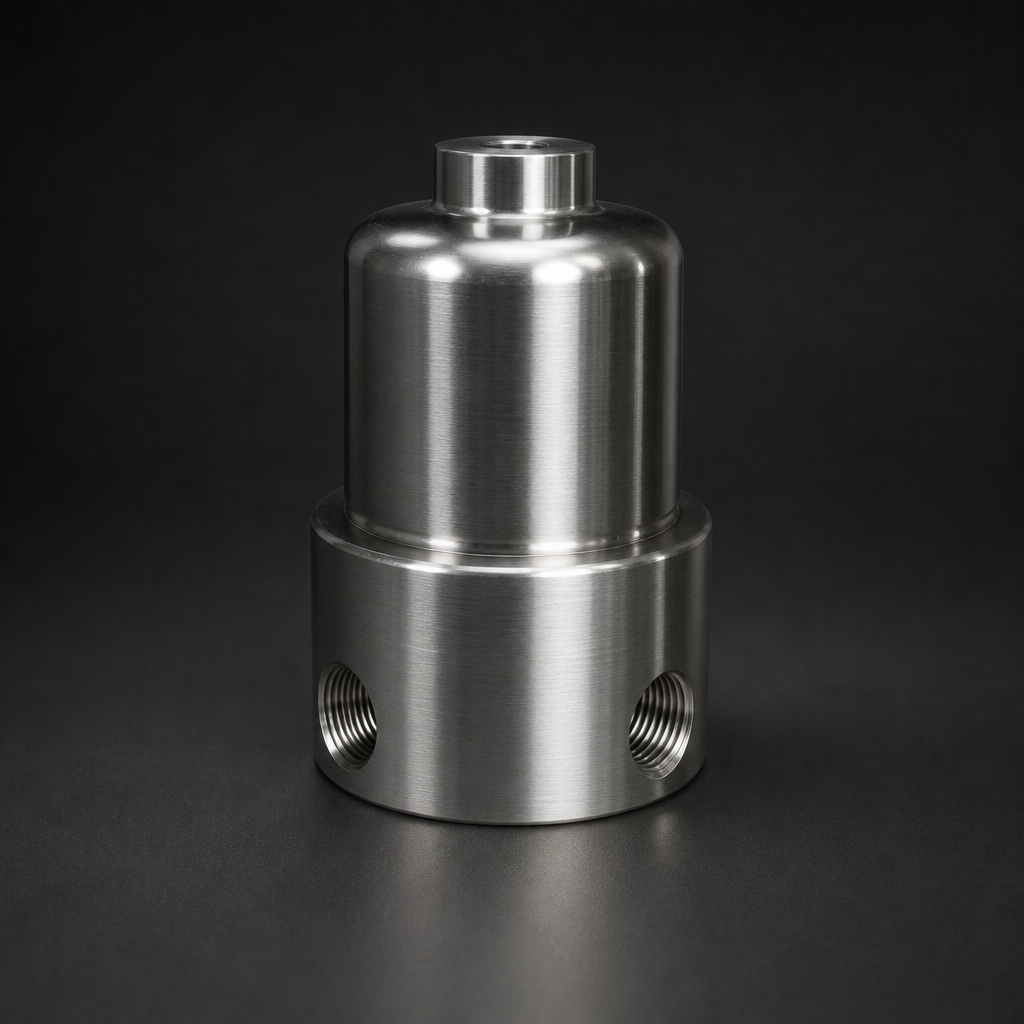
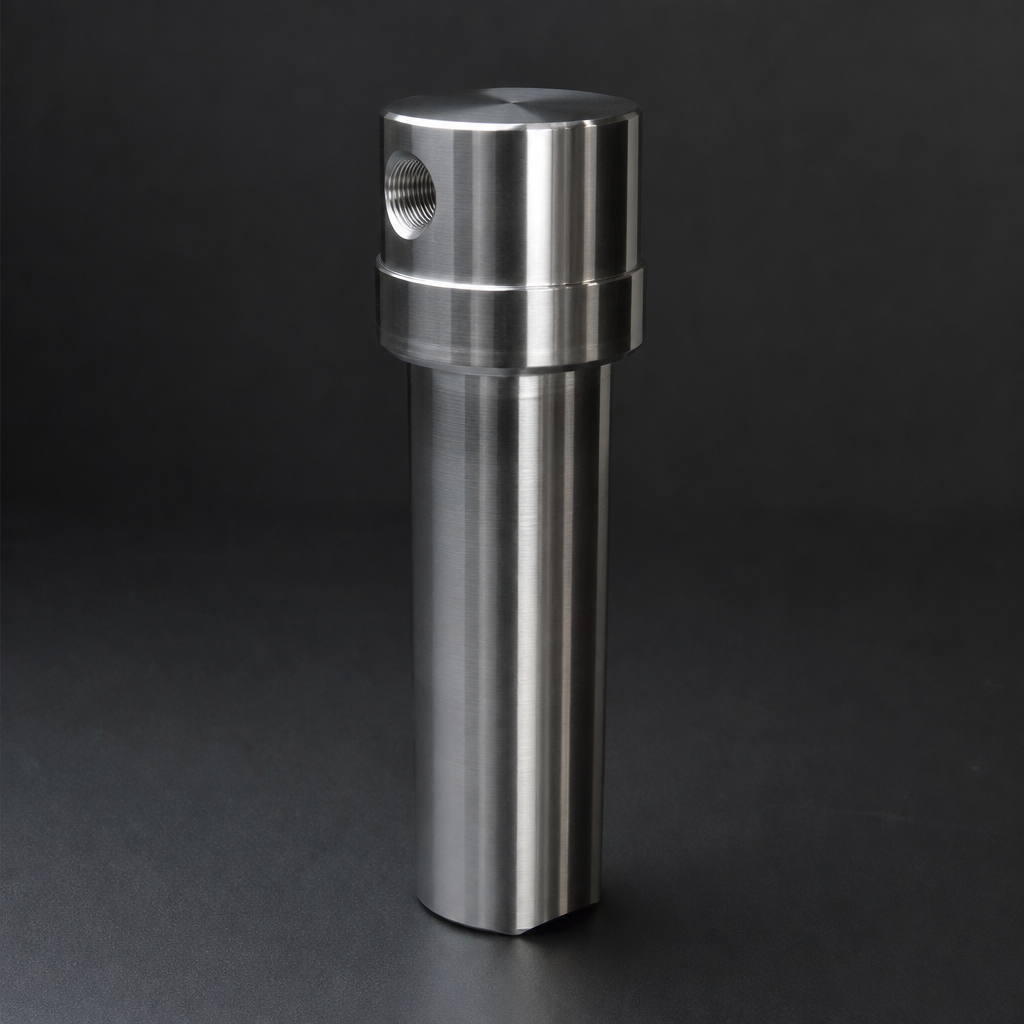
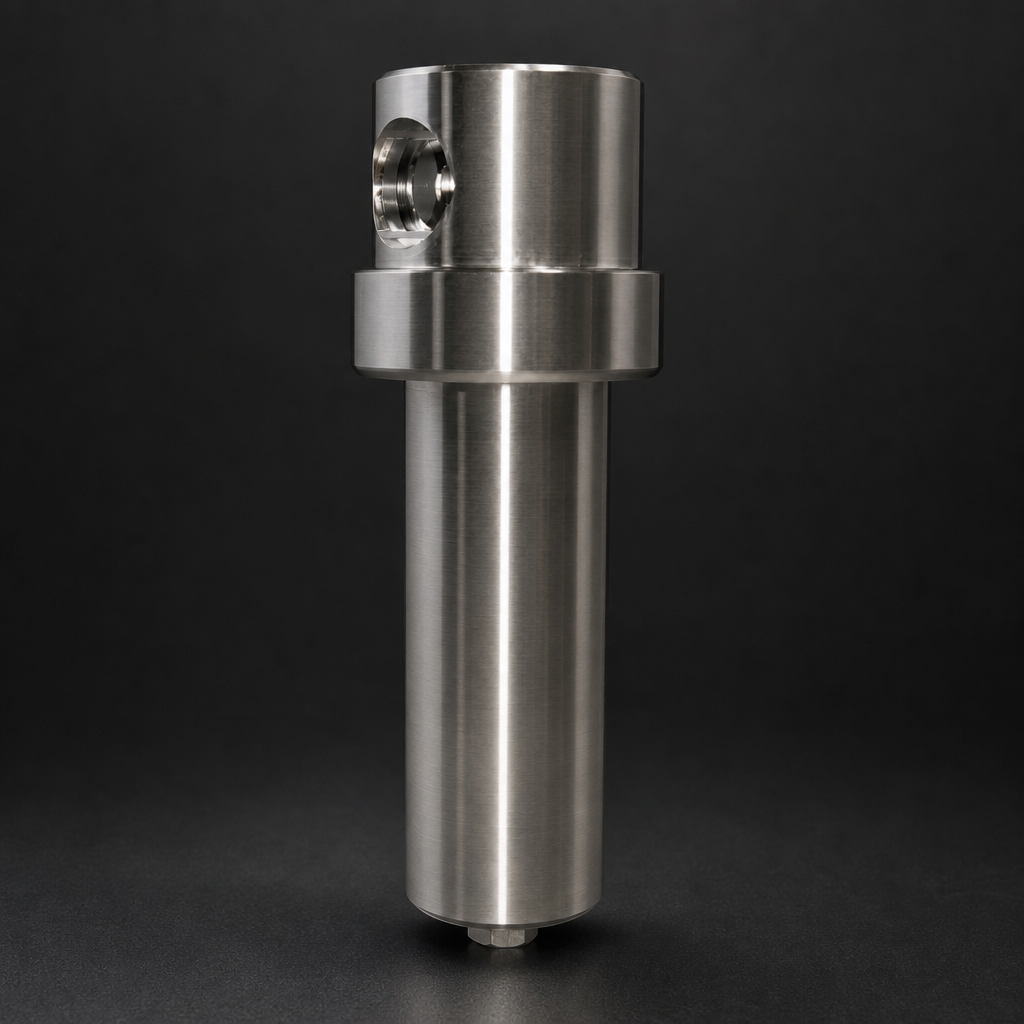
For most biogas and sour natural gas applications, specifying filter housings in 316L stainless steel with NACE-compliant documentation is the most straightforward path to compliance. R+F FilterElements offers its own range of process gas housings in 316L SS — including the RF-H-150 (rated to 100 bar) and RF-H-160 (rated to 250 bar) — that are well suited to sour-service duty when paired with appropriate elements and seals.
K-Type Elements: Engineered for Sour Gas Service
Even when the housing material is correctly specified, the filter element itself remains a potential weak point. Standard coalescing and particulate elements use metallic end caps and centre tubes that may not be compatible with H₂S. R+F FilterElements addresses this with its K-type element range, specifically designed for hydrogen sulphide and sour gas filtration duty.
K-type elements differ from standard elements in several important respects:
- End caps and centre tubes: Manufactured from 316L stainless steel rather than carbon steel or galvanised mild steel, eliminating the primary corrosion pathway.
- Filter media: Borosilicate glass microfibre, which is chemically inert to H₂S and does not absorb or react with sulphur compounds.
- Seal material: PTFE or FKM seals selected for H₂S compatibility, replacing standard NBR.
- Binder system: Acid-resistant binder formulation that maintains structural integrity in wet, acidic gas streams.
The result is a hydrogen sulphide gas filter element that can be deployed in raw biogas, sour natural gas, and landfill gas streams without the accelerated degradation seen with standard elements. K-type elements are available across the standard R+F element size range, making them a drop-in upgrade for existing housings that are already constructed from compatible materials.
For new installations, R+F FilterElements recommends pairing K-type elements with the RF-H-150 or RF-H-160 process gas housings to create a fully sour-service-compatible filtration assembly. Both housings are available with NACE MR0175 material certification on request.
Analyser and instrument protection:
Biogas H₂S Removal: Typical Filtration Challenges
Biogas from anaerobic digestion typically contains 200–5,000 ppm H₂S, depending on the feedstock. Landfill gas can reach similar concentrations. Before biogas can be used in a CHP engine, upgraded to biomethane, or injected into the gas grid, H₂S must be reduced — often to single-digit ppm levels for sensitive downstream equipment.
Filtration plays a role at several points in the biogas treatment chain:
- Pre-treatment coalescing: Removing entrained water and liquid droplets before the gas enters a biological or chemical desulphurisation unit. Wet gas dramatically accelerates H₂S corrosion, so effective liquid removal upstream is critical.
- Post-desulphurisation polishing: Even after biological iron-sponge or activated-carbon desulphurisation, residual particulate (iron sulphide, carbon fines) must be removed to protect downstream compressors and engines.
- Analyser and instrument protection: Sample conditioning lines feeding gas analysers require fine filtration and, in sour service, fully compatible materials throughout.
For the coalescing duty, R+F FilterElements K-type coalescing elements (RF-C series, K-type) achieve 99.99% efficiency at ≥ 0.1 µm, removing sub-micron liquid aerosols that would otherwise carry dissolved H₂S into downstream equipment. For particulate polishing, K-type RF-P elements provide equivalent efficiency at ≥ 0.3 µm. Both are available from R+F FilterElements as part of the biogas filtration solution range.
Material Selection Summary for Sour Gas Filtration
The table below summarises the recommended material choices for key filter components in H₂S sour gas service, compared with standard compressed-air or clean-gas specifications.
| Component | Standard Service | Sour Gas / H₂S Service | Notes |
|---|---|---|---|
| Housing body | Aluminium or carbon steel | 316L stainless steel (NACE MR0175) | Annealed condition; hardness ≤ 22 HRC |
| Element end caps | Carbon steel / galvanised | 316L stainless steel (K-type) | Eliminates SSC risk at end cap |
| Element centre tube | Galvanised steel | 316L stainless steel (K-type) | Resists wet H₂S corrosion |
| Filter media | Borosilicate glass microfibre | Borosilicate glass microfibre | Chemically inert; no change required |
| O-ring / seal | NBR (100 °C) | FKM/Viton or PTFE | NBR degrades rapidly in H₂S |
| Binder system | Standard resin | Acid-resistant binder (K-type) | Maintains integrity in wet acid gas |
| Connections | Carbon steel / brass | 316L SS or duplex stainless | Verify all wetted parts |
Use our free Engineering Tool to get a filtration recommendation for your specific application in under 2 minutes.
Sizing and Pressure Drop Considerations
Sour gas streams often carry higher liquid loads than clean gas applications, which has implications for element sizing and change-out intervals. An undersized coalescing element will saturate quickly, leading to liquid carry-over and elevated differential pressure. R+F FilterElements recommends using the online sizing wizard to calculate the correct element size and housing configuration based on actual flow rate, operating pressure, temperature, and expected liquid loading.
As a general guideline, biogas coalescing filters should be sized for a clean differential pressure of no more than 15–20 mbar at maximum flow, leaving adequate headroom before the element requires replacement. In high-liquid-load applications — for example, immediately downstream of a gas cooler — a pre-separator or knock-out vessel upstream of the coalescing filter will significantly extend element life.
For sour gas applications where H₂S concentrations exceed 500 ppm, R+F FilterElements also recommends specifying a differential pressure gauge or transmitter across the filter housing. Because K-type elements in wet sour gas can accumulate iron sulphide deposits more rapidly than standard elements in clean gas, monitoring differential pressure provides the earliest indication that an element change-out is due — before liquid breakthrough occurs.
Compliance Documentation and Traceability
Many operators in the oil and gas, biogas, and industrial gas sectors are required to demonstrate material compliance as part of their pressure equipment documentation. R+F FilterElements can supply material test certificates (EN 10204 3.1) for 316L stainless steel housings, and NACE MR0175 compliance statements for K-type element assemblies, on request at the time of order.
For projects subject to the European Pressure Equipment Directive (PED 2014/68/EU), R+F FilterElements process gas housings are available with the appropriate conformity documentation. Early engagement with the R+F technical team — ideally at the FEED or detailed design stage — ensures that the correct documentation package is specified and delivered with the equipment, avoiding delays at commissioning.
Practical Recommendations for Plant Operators
If you are currently operating standard filter elements in a biogas or sour gas application, the following steps will help you assess and mitigate the risk of premature failure:
- Audit your current elements: Check whether installed elements have carbon-steel or galvanised end caps and centre tubes. If so, they are not suitable for sustained H₂S service and should be replaced with K-type equivalents at the next scheduled maintenance.
- Check seal materials: Confirm that O-rings and gaskets throughout the filtration train are FKM or PTFE, not NBR. This includes housing seals, connection gaskets, and any inline valve packing.
- Review housing materials: If housings are aluminium or carbon steel, assess whether H₂S concentrations and moisture levels are sufficient to cause corrosion. In most biogas applications, 316L SS housings are the appropriate long-term solution.
- Establish a differential pressure monitoring regime: Install gauges or transmitters and set change-out triggers based on differential pressure rather than fixed time intervals.
- Engage your filtration supplier early: Material selection for sour service is not a catalogue exercise. Contact R+F FilterElements at the enquiry page to discuss your specific gas composition, flow conditions, and compliance requirements.
R+F FilterElements, a German-based filtration specialist operating to European engineering standards, offers its own range of K-type elements and 316L stainless steel process gas housings specifically configured for sour gas and biogas H₂S filtration duty. The RF-H-150 and RF-H-160 housings, combined with K-type RF-C coalescing or RF-P particulate elements, provide a fully compatible, NACE-referenceable filtration assembly for the most demanding sour service applications.
- sulphide stress cracking (SSC)
- NACE MR0175 / ISO 15156
- End caps and centre tubes:
- Pre-treatment coalescing: