Diesel exhaust and emission analyser systems operate in some of the harshest conditions in industrial monitoring. Hot, moisture-laden exhaust gases carry particulate matter, condensable hydrocarbons, and corrosive compounds that can destroy sensitive analyser components within weeks if filtration is inadequate. The single most common cause of analyser failure in emission monitoring rigs is condensation forming inside the sample line — and the solution is a properly specified heated filter housing.
Why Heating Is Non-Negotiable in Exhaust Gas Sampling
Emission analysers measure pollutants such as NOₓ, CO, CO₂, SO₂, and particulate matter in real time. Accurate measurement depends on the sample gas reaching the analyser in the same state it left the exhaust stream. The dew point of diesel exhaust can exceed 60 °C when sulphur compounds are present, and heavy hydrocarbons begin to condense at temperatures well above ambient. A cold filter housing acts as a condenser, stripping the very compounds the analyser is trying to measure.
Heated filter housings solve this by maintaining the filter body and element at a controlled temperature — typically 120–180 °C — throughout the sample conditioning train. This keeps all condensable species in the vapour phase until they reach the analyser cell, where they are measured accurately. For instrumentation and analyser protection applications, this is not an optional upgrade; it is a fundamental design requirement.
Design Features of Heated Filter Housings
Compatibility with External Heating
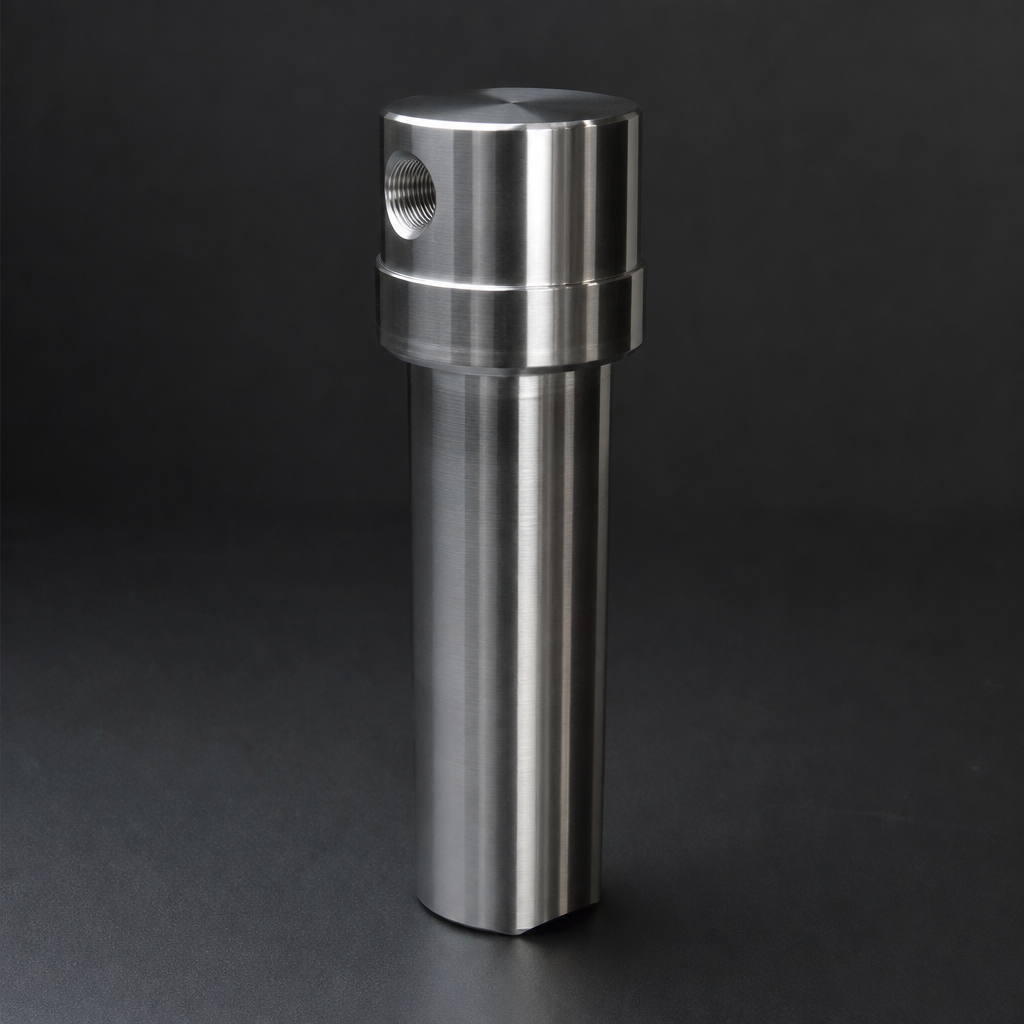
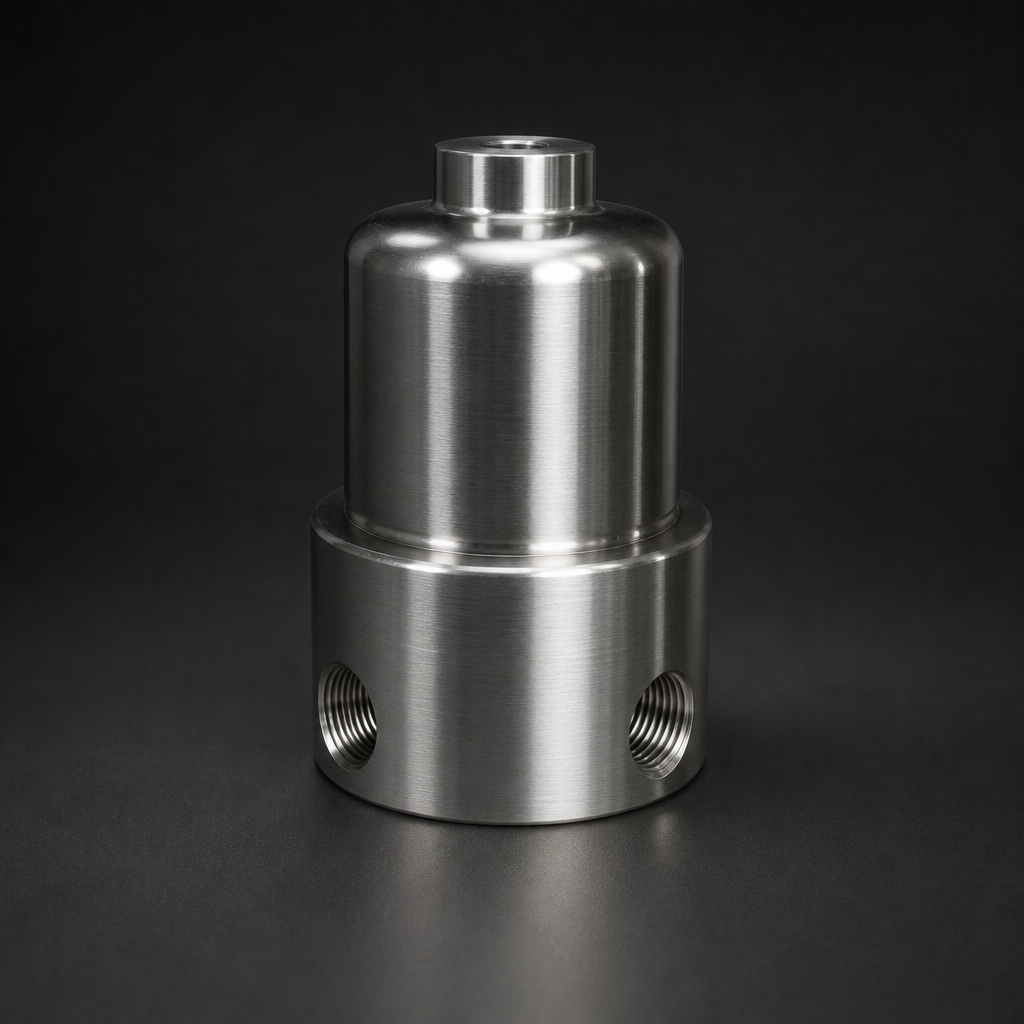
Most heated filter housings used in emission monitoring are designed to accept external heating bands, silicone heating jackets, or to be mounted inside a heated cabinet or oven. The housing body must be manufactured from a material with good thermal conductivity and chemical resistance — 316L stainless steel is the standard choice for diesel exhaust duty. The R+F specialty housing range includes compact stainless steel bodies with smooth external profiles that accept standard heating bands without modification.
Quick-Release Heads for Fast Element Servicing
In emission monitoring installations, filter elements must be changed regularly — often during scheduled maintenance windows that are tightly constrained. A housing with a threaded bowl that requires tools to remove is a liability when the system is hot and the maintenance team is working to a deadline. Quick-release head designs, using a quarter-turn or bayonet mechanism, allow element replacement in under two minutes without tools. This feature is particularly valuable in mobile emission testing rigs and continuous emission monitoring systems (CEMS) where downtime directly affects compliance reporting.
Housing Sizes and Configurations
Emission analyser sample flows are typically low — from a few litres per minute up to around 50 Nm³/h for large CEMS installations. This means the filter housing does not need to be large, but it does need to be robust. The RF-H-110 to RF-H-170 instrumentation housing series from R+F FilterElements covers this range precisely. These 316L stainless steel housings are rated to 700 bar in high-pressure variants, making them suitable for pressurised exhaust sampling as well as atmospheric monitoring.
For standard atmospheric emission monitoring, the RF-H-150 (rated to 100 bar) provides an excellent balance of compact size, chemical resistance, and thermal compatibility. For higher-pressure sample conditioning systems, the RF-H-160 (250 bar) and RF-H-170 (400 bar) offer additional headroom. All three accept the same family of filter elements, simplifying spare parts management across a fleet of analysers.
Filter Element Selection for Exhaust Gas Applications
Choosing the correct filter element for diesel exhaust sampling is as important as choosing the housing. The exhaust stream contains a complex mixture of solid particulates (soot, ash), liquid aerosols (unburnt fuel, lubricating oil), and condensable vapours (water, sulphuric acid, heavy hydrocarbons). A single element type rarely handles all of these effectively.
For most emission monitoring applications, a two-stage approach is recommended:
- Stage 1 — Coalescing: An RF-C coalescing element removes liquid aerosols and sub-micron oil mist before they reach the analyser. Borosilicate glass microfibre construction provides 99.99% efficiency at ≥ 0.1 µm and is chemically resistant to the acidic condensates found in diesel exhaust.
- Stage 2 — Particulate: An RF-P particulate element captures solid soot and ash particles at 99.99% efficiency ≥ 0.3 µm, protecting the analyser's optical or electrochemical cells from abrasive contamination.
For applications where the sample gas temperature is maintained above 200 °C throughout the conditioning train, the RF-CS vacuum-type element with silica binder offers heat resistance to 200 °C — suitable for high-temperature heated line systems. Explore the full R+F filter element range to identify the correct specification for your exhaust gas duty.
Need help selecting the right heated filter housing for your emission analyser?
Heated Filter Housing Comparison: Key Specifications
| Housing | Max Pressure | Material | Seal Options | Typical Application |
|---|---|---|---|---|
| RF-H-150 | 100 bar | 316L SS | NBR, FKM, PTFE | Atmospheric CEMS, mobile emission rigs |
| RF-H-160 | 250 bar | 316L SS | FKM, PTFE | Pressurised sample conditioning |
| RF-H-170 | 400 bar (700 bar HP) | 316L SS | FKM, PTFE | High-pressure analyser protection |
Use our free Engineering Tool to get a filtration recommendation for your specific application in under 2 minutes.
Compliance and Emission Monitoring Standards
Continuous emission monitoring systems must comply with standards such as EN 14181 (QAL1/QAL2/AST procedures) and the Industrial Emissions Directive (IED). These standards require that the sample conditioning system — including the filter — does not alter the sample composition. A heated filter housing that maintains the sample above its dew point throughout the filtration stage is a prerequisite for compliance. For guidance on meeting emission compliance requirements, R+F FilterElements can advise on housing and element selection for your specific exhaust gas matrix.
It is also worth noting that the filter housing itself must not introduce contamination. 316L stainless steel is the preferred material because it is inert to the acidic compounds in diesel exhaust and does not off-gas at elevated temperatures. SilcoNert-coated variants of the RF-H-170 are available for ultra-trace analysis where even stainless steel surface adsorption is unacceptable.
Installation Considerations
Heated filter housings should be installed as close to the sample extraction point as possible to minimise the length of unheated sample line. The housing should be oriented vertically with the drain port at the bottom to allow any condensate that forms during start-up or shutdown to drain away from the element. For CEMS installations, a condensate pot downstream of the filter is recommended to capture any liquid that passes through during transient conditions.
Trace heating of the sample line between the extraction probe and the filter housing is strongly recommended. Even a short section of unheated tubing can act as a cold spot where condensation occurs, defeating the purpose of the heated housing. The principles of hot gas filtration discussed in our crankcase ventilation guide apply equally to diesel exhaust sampling — the goal is always to keep the sample above its dew point from extraction to analysis.
For a broader understanding of how filtration interacts with gas quality standards, the ISO 8573-1 compressed air quality guide provides useful context on contamination classes and removal mechanisms, many of which translate directly to exhaust gas sample conditioning.
- Emission analysers measure pollutants such as NOₓ, CO, CO₂, SO₂, and particulate matter in real time.
- Most heated filter housings used in emission monitoring are designed to accept external heating bands, silicone heating jackets, or to be mounted inside a heated cabinet or oven.
- Stage 1 — Coalescing:
- Continuous emission monitoring systems must comply with standards such as EN 14181 (QAL1/QAL2/AST procedures) and the Industrial Emissions Directive (IED).
Related Reading
- Coalescing vs Particulate Filter Elements — Which Do You Need?
- Crankcase Ventilation Filtration: Protecting Engines and the Environment
- ISO 8573-1 Compressed Air Quality: A Practical Guide
Try our Engineering Sizing Tool → or discuss your requirements with our team.